
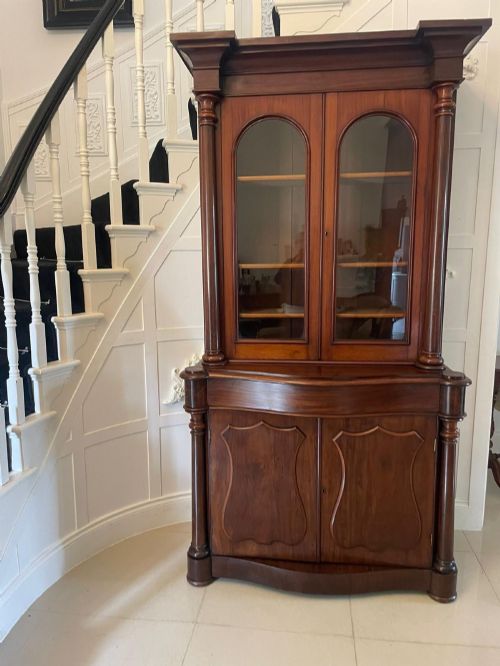
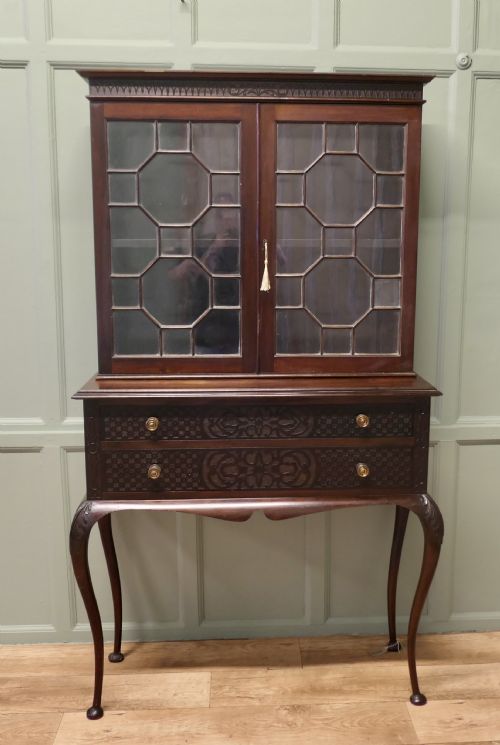
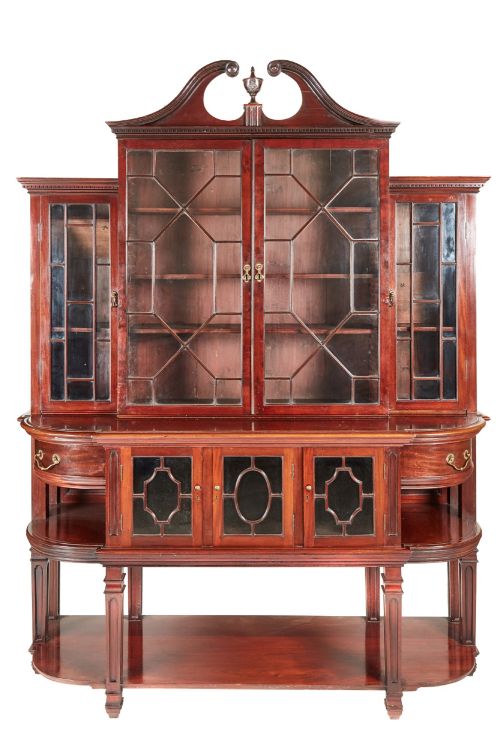
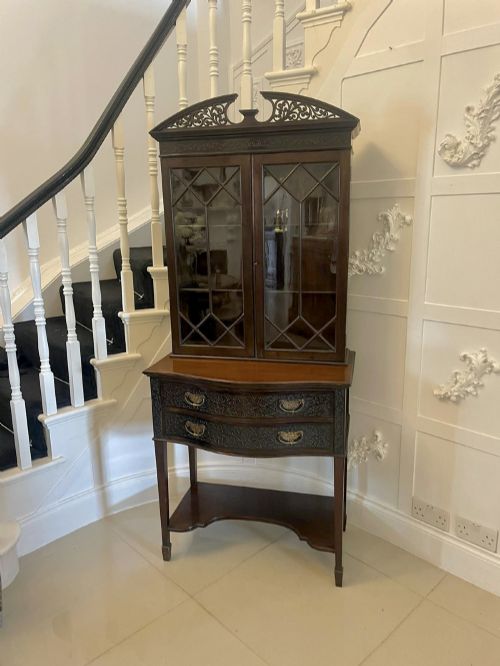


Antique Mahogany China Display
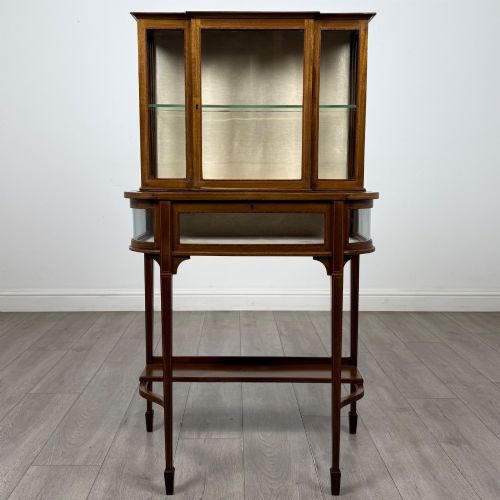
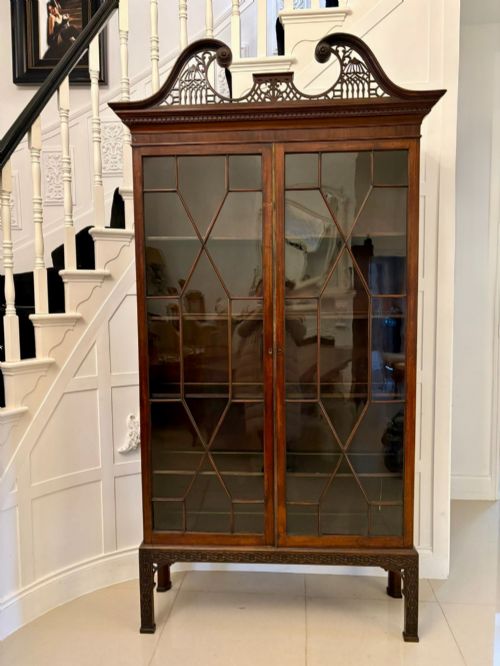
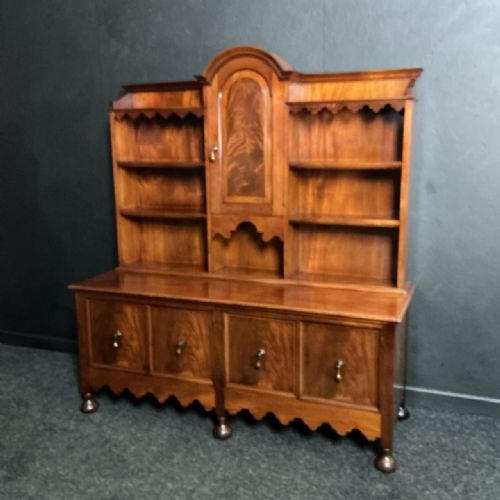
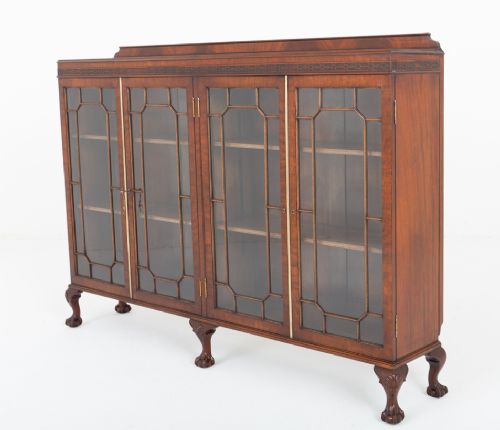
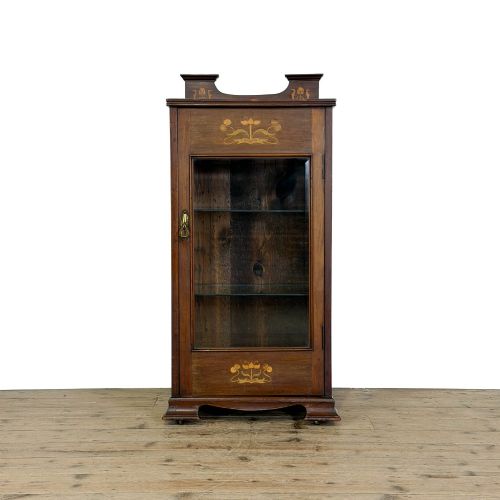
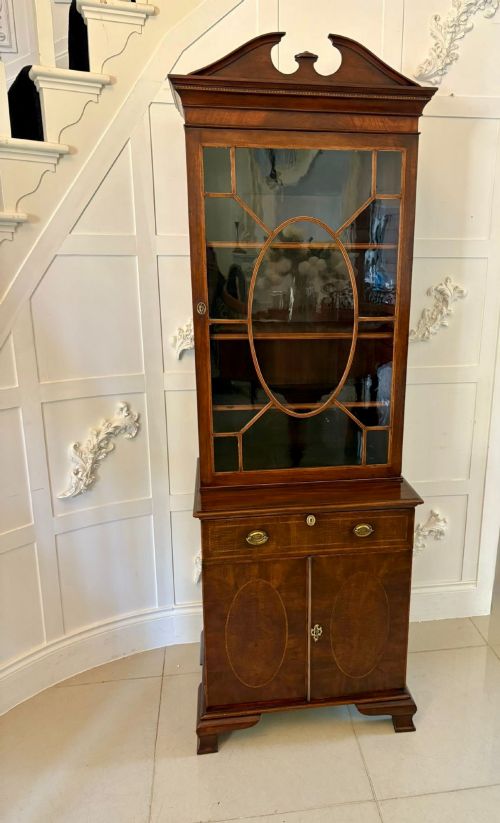
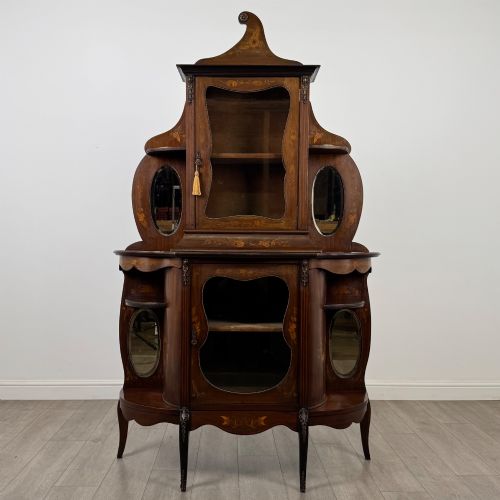
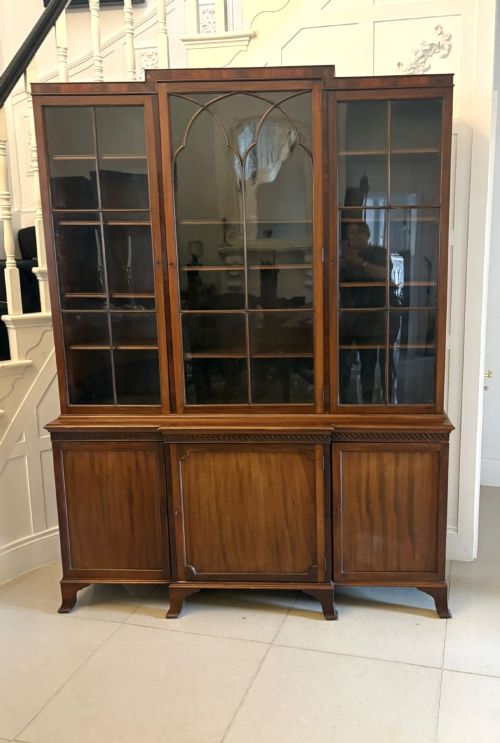
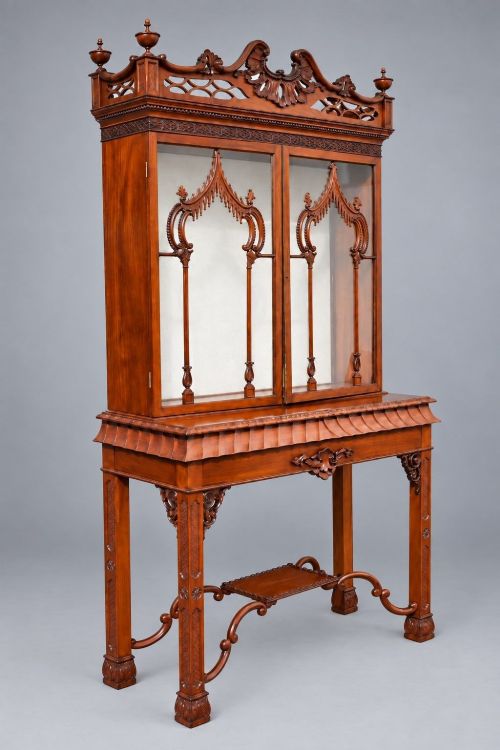
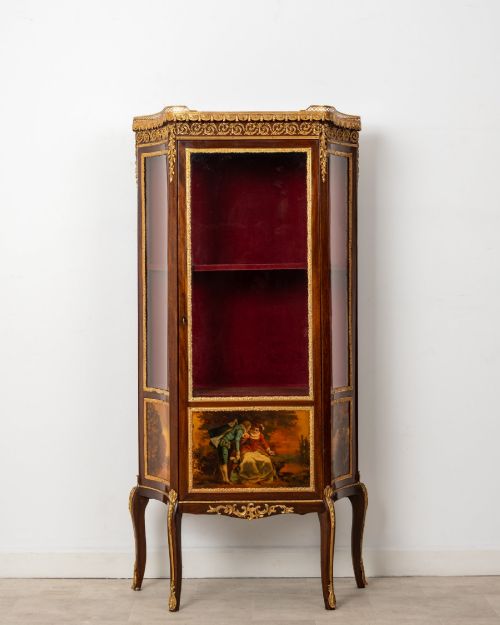
These pieces of antique mahogany china display cabinetry bring polished timber and clear glass together to hold porcelain.
Antique Mahogany China Display
When you search for antique mahogany china display cabinets, you encounter freestanding furniture designed to show and protect ceramic collections behind glazed doors. The pieces span the Georgian period, the Victorian era, and the Edwardian decades, utilising forms ranging from slim corner cupboards to large breakfront bookcases.
You meet various interpretations of classic furniture vocabularies, including Chinese Chippendale style and Sheraton Revival design. Many examples combine bookshelf storage below with glass-fronted display compartments above, while others stand as dedicated vitrines built solely to exhibit fine china.
Edwardian and late Victorian variations dominate the selection, frequently incorporating satinwood inlay, marquetry, and painted decoration. These cabinets serve today precisely as they did originally, organising domestic tableware while introducing warm timber tones to an interior.
How They Were Made
Cabinet makers utilised solid mahogany and rich mahogany veneers over secondary timbers, often selecting figured grains like fiddleback for visual depth. Structural integrity depended on tight joinery, while glass panes were held securely within slender timber glazing bars.
Surface ornamentation relied on contrasting satinwood inlay, delicate marquetry motifs, and occasional hand-painted details. Brass hardware, mirrored backs, and fabric-lined interiors completed the construction of these refined storage pieces.
Some cabinets hide precious collections behind glazed doors while secretly storing extra tea services below.
What Varies in Quality
The degree of hand-carved detail and the crispness of the inlay separate standard production items from exceptional workshop output. Timber selection dictates much of the visual success, with figured grain patterns and carefully matched veneers elevating a piece.
Proportion and architectural balance define the higher tiers of cabinet making, where glazing bars remain slender and harmonious. Original glass, intact brass fittings, and preserved painted or inlaid decorations contribute significantly to the standing of an individual piece.
Jas Shoolbred·Edwards & Roberts·Maple & Co
The Antique Mahogany China Display Glossary
- Astragal
- A narrow moulding used to hold glass panes within a door or window frame. These wooden strips form grid patterns across the glazed doors of display cabinets.
- Breakfront
- A piece of furniture whose central section projects forward from the flanking wings. This architectural arrangement creates depth and visual interest in large bookcases.
- Vitrine
- A glass-sided cabinet specifically constructed for displaying porcelain and curiosities. Such cases prioritise visibility from multiple angles.
- Marquetry
- Decorative patterns formed by fitting together small pieces of veneered wood. Craftsmen arrange contrasting timbers to create floral or geometric designs on cabinet doors.
- Sheraton Revival
- A late nineteenth and early twentieth century design movement inspired by late eighteenth century neoclassicism. Pieces in this style utilise light satinwood inlay and tapered legs.
Antique Mahogany China Display: Frequently Asked Questions
How do I tell Victorian from Edwardian cabinets?
Victorian examples tend to display heavier proportions, darker timber finishes, and substantial carved detailing. They often utilise robust architectural cornices and sturdy bracket feet.
Edwardian pieces generally present lighter, more slender frames with extensive satinwood inlay and Sheraton Revival motifs. The overall aesthetic shifts toward brightness and delicate classical ornamentation.
Where should I place a display cabinet?
These cabinets suit dining rooms, drawing rooms, and hallways where natural light can illuminate the glazed display sections. Positioning them away from direct sunlight protects both the timber finish and the displayed porcelain.
Ensure the floor surface is level so the doors hang correctly and close smoothly within their frames.
How do I care for mahogany timber?
Dust the timber regularly with a soft, dry cloth to prevent the accumulation of abrasive particles. Avoid using silicone-based sprays that can penetrate the grain and damage the antique finish.
Maintain stable room humidity to prevent the mahogany and its delicate inlay from warping or splitting over time.