


Antique Magazine Caddy
An antique magazine caddy keeps your periodicals tidy with the timeless craftsmanship of Georgian, Regency, and Victorian design.
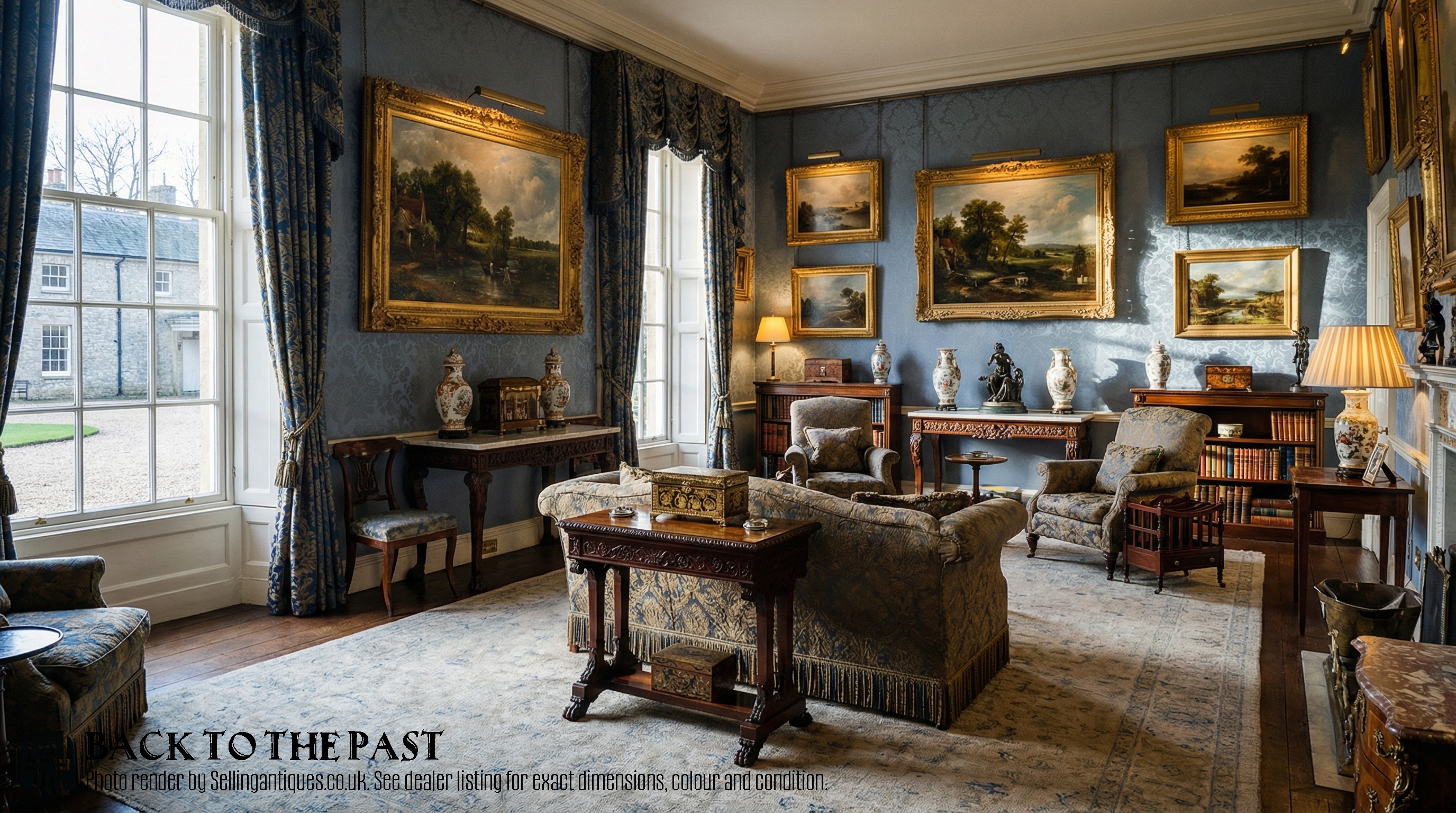
Antique Magazine Caddy
When you search for an antique magazine caddy, you are looking at items designed for holding periodicals, folios, and newspapers in domestic libraries and living rooms. The pieces on this page span several centuries, encompassing Georgian, Regency, Victorian, and Edwardian eras.
The forms vary from traditional canterburys with partitioned divisions and carrying handles to open-front slope-shelf book troughs and music stands. You are most likely to meet mahogany canterburys featuring pierced scroll divisions, alongside oak and rosewood newspaper racks.
Origins stretch across English workshops, embracing distinct stylistic revivals such as Arts and Crafts, Georgian Revival, and Victorian Revival. Each object reflects the changing domestic requirements for storing reading material through the nineteenth and early twentieth centuries.
Materials and construction methods
Makers utilised solid timbers and veneers, predominantly employing mahogany, rosewood, oak, and burr walnut. Woodwork often incorporated intricate marquetry inlay, painted finishes, and polished surfaces.
Metal elements appear in brass newspaper stands and carrying handles, combining structural durability with decorative contrast. Divisions were frequently pierced, turned, or scrolled to separate sections while maintaining a lighter visual weight.
Antique Magazine Caddy Retail Price Guide 2026
Typical asking prices for magazine caddy among the pieces listed under this phrase on Sellingantiques today, from the lower quarter to the upper quarter. They describe what is for sale here now, not the wider market.
Some nineteenth-century canterburys included wheels on their feet, allowing musicians to easily roll their sheet music across the drawing room floor.
Distinctions in craftsmanship
Quality reveals itself in the selection of timber figures, such as the rich grain of rosewood or the depth of burr walnut, alongside the precision of inlaid marquetry. Finer examples display carefully shaped scroll divisions and robust joinery designed to bear the weight of heavy folios.
The presence of integrated carrying handles, well-turned uprights, and balanced proportions separates standard utilitarian pieces from exceptional library furnishings. Details like pierced woodwork and harmonious revival styling distinguish pieces produced by skilled cabinet makers.
The Antique Magazine Caddy Glossary
- Canterbury
- A low, freestanding stand with partitioned divisions used for holding loose sheet music, folios, or periodicals. Originating in the late eighteenth century, it frequently incorporates a carrying handle.
- Book Trough
- An open-front or slope-shelf receptacle designed to hold books and magazines upright on desks, tables, or floors. These items often feature decorative end panels.
- Marquetry
- Decorative veneer work formed by fitting together small pieces of wood, shell, or ivory to create pictorial or geometric patterns on furniture surfaces.
- Pierced Divisions
- Interior partitions cut through with fretwork or scroll designs to reduce weight and add ornamental detail.
- Folio Stand
- A larger standing rack intended for oversized books, prints, and newspapers in libraries or drawing rooms.
Antique Magazine Caddy: Frequently Asked Questions
What is a canterbury used for?
A canterbury serves as a moveable stand for holding sheet music, books, and periodicals near seating areas or musical instruments.
Originally designed in the late eighteenth century, these items kept everyday reading material organised and accessible within domestic rooms.
How do I date a mahogany magazine rack?
Dating relies on observing stylistic markers, timber choices, and construction techniques associated with periods like the Georgian, Regency, or Victorian eras.
Earlier pieces from the late eighteenth and early nineteenth centuries often exhibit refined proportions and distinct brass or turned wooden details.
Can I use these for modern magazines?
These pieces accommodate contemporary periodicals, journals, and books perfectly within their traditional partitioned divisions and troughs.
Their sturdy timber construction provides practical daily storage while adding period character to a modern interior.