
Antique Low Bench Table
These antique low bench tables span centuries of utilitarian function, offering sturdy timbers and low profiles that suit modern living spaces.
Antique Low Bench Table
An antique low bench table serves as a versatile anchor in a room, functioning equally well as a coffee table, window seat, or low display platform. When searching for an antique low bench table, buyers encounter a diverse mix of forms that originated as practical workshop pieces, domestic seating, or overseas imports.
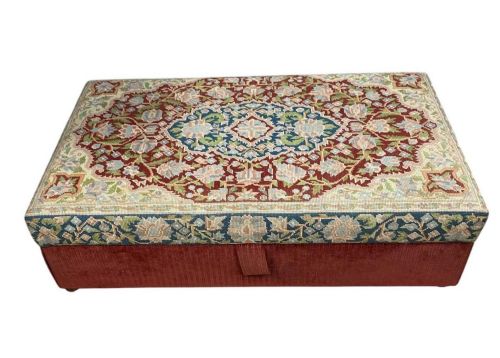
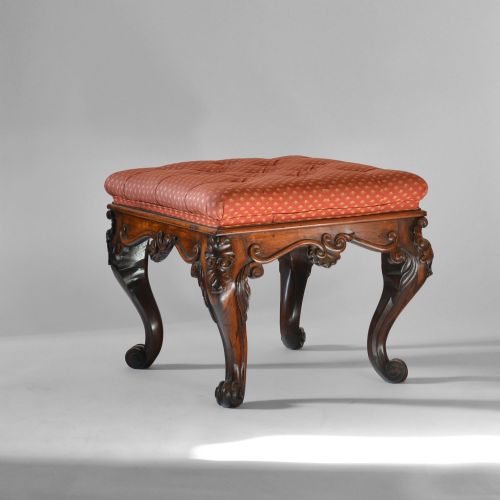
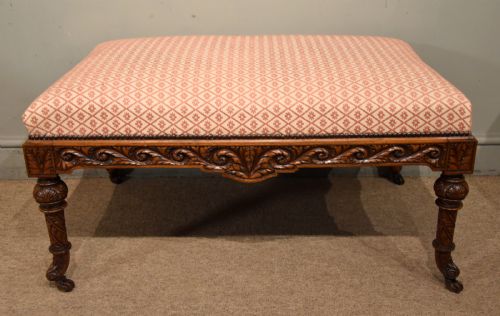
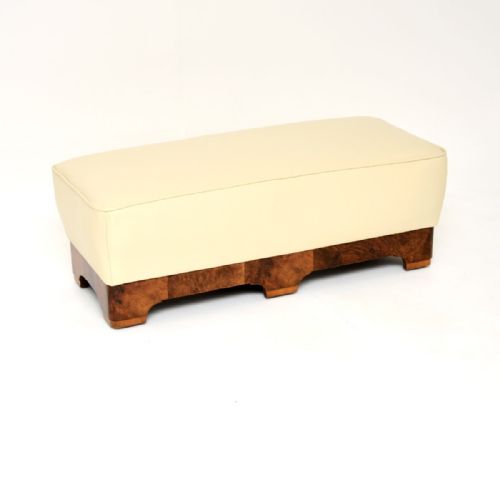
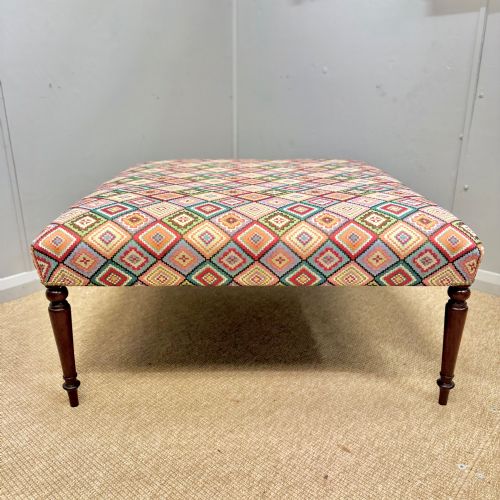
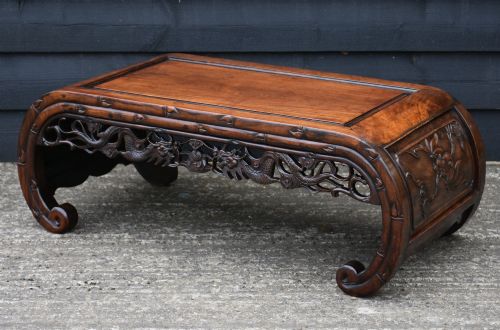
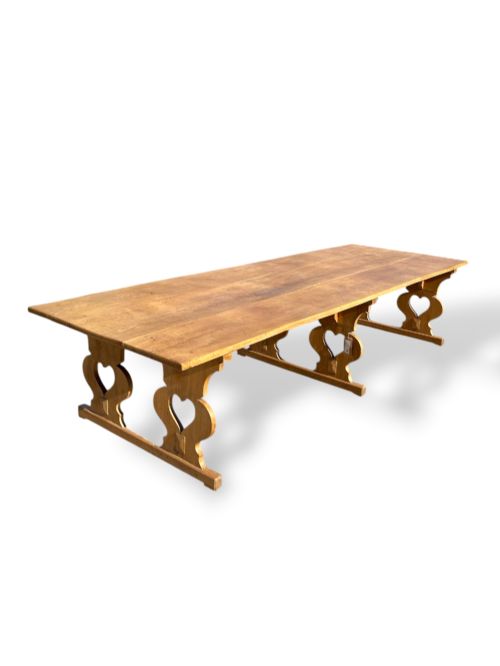
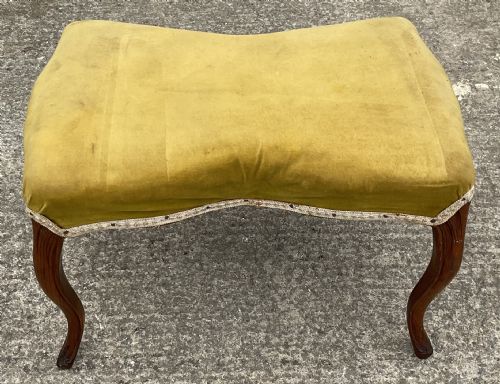
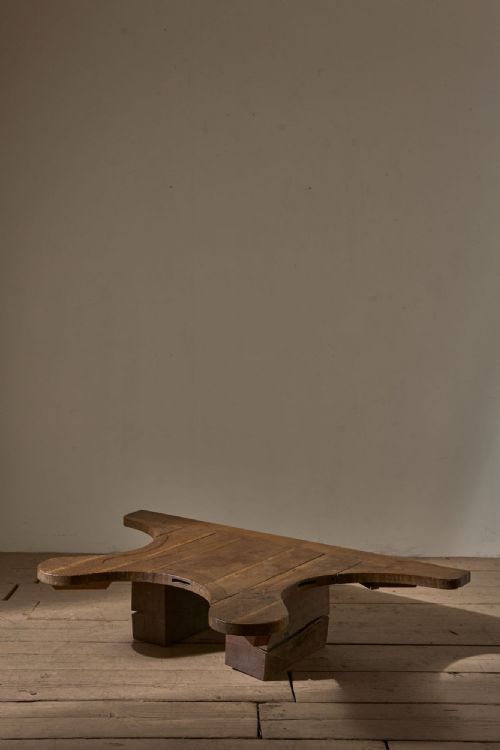
The pieces on this page draw from several distinct traditions, ranging from English oak pig benches and cheese press tables to Chinese hardwood opium tables and Anglo-Indian daybeds. Stools, ottomans, and low trestle tables also populate the selection, providing low horizontal surfaces shaped by their original utilitarian purposes.
How they were made
Cabinet makers and rural joiners relied on solid hardwoods like oak, walnut, mahogany, elm, ash, and sycamore to build these low forms. Structural stability was paramount, achieved through mortise and tenon joinery, cross stretchers, and sturdy turned legs that could withstand heavy daily use.
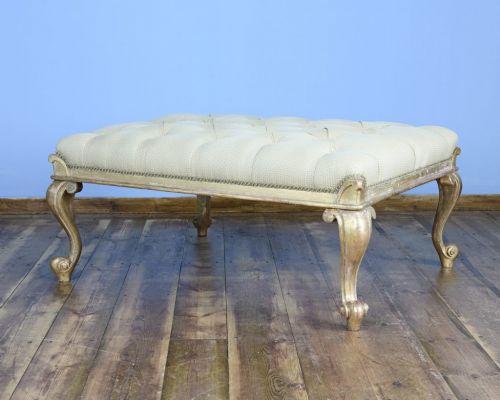
Surface treatments and secondary materials varied by origin, incorporating carved details, brass accents, leather inserts, fabric upholstery, and needlepoint. Regional vernacular pieces often display straightforward pegged construction, while formal revival styles exhibit refined carving and parcel gilding.
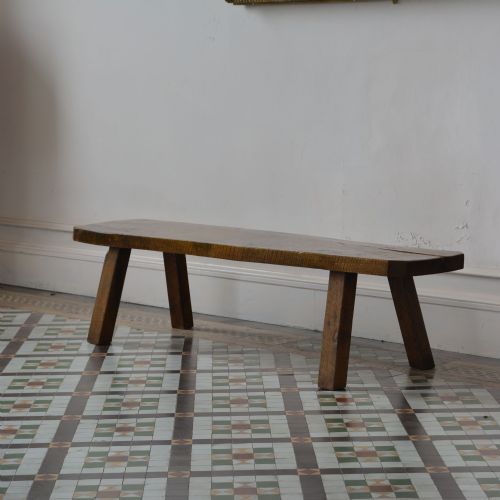
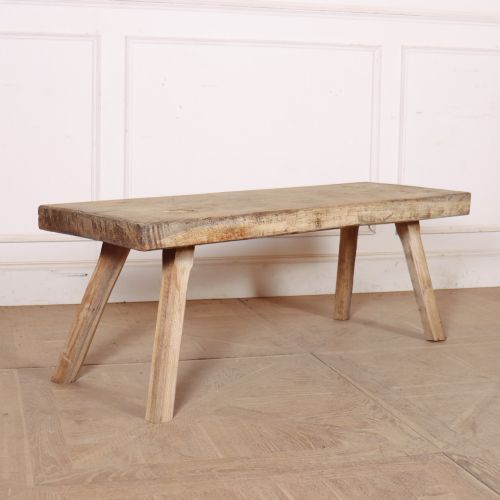
Several heavy wooden benches on this page spent their earliest working lives supporting cheese presses and farmyard tasks before retiring to the sitting room.
What varies in quality
The distinction between ordinary utility items and exceptional pieces rests upon the integrity of the timber and the refinement of the execution. Dense, well-figured woods such as rosewood or burr maple command attention, particularly when paired with crisp, hand-carved ornamentation rather than plain geometric surfaces.
Proportion and structural survival dictate desirability. Pieces that retain their original untrimmed height, uncompromised joinery, and honest surface patination stand apart from those altered or heavily restored over generations of domestic adaptation.
The Antique Low Bench Table Glossary
- Pig bench
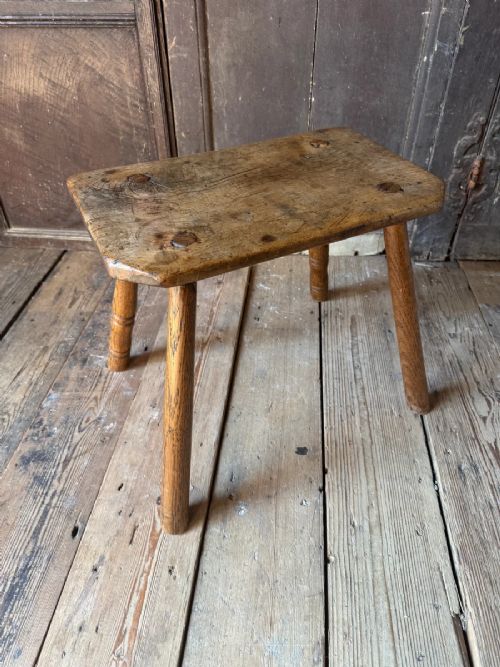
- A low, narrow wooden bench traditionally used in agricultural settings, now repurposed as a coffee table due to its low height and sturdy plank construction.
- Opium table
- A low Chinese table designed for domestic use while seated on cushions or platforms, frequently constructed from dense hardwoods and featuring carved details.
- Cross stretcher
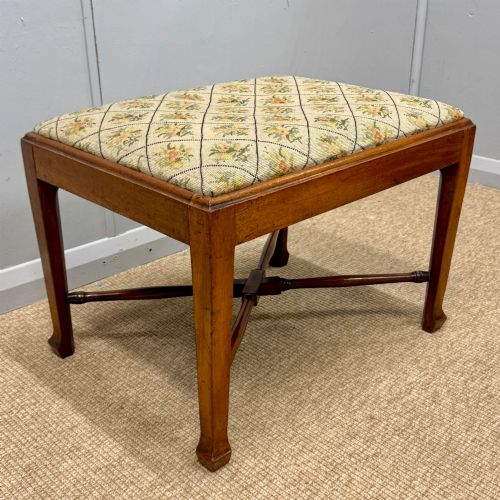
- An interconnecting horizontal timber brace between the legs of a table or stool that adds structural rigidity.
- Cabriole leg
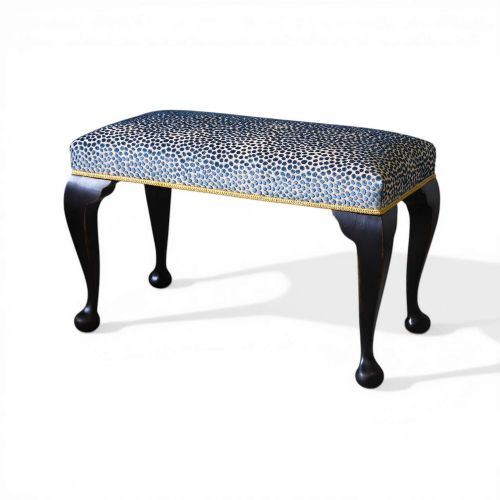
- A furniture leg that curves outward at the knee and tapers inward toward the foot, typical of formal revival styles.
- Trestle table
- A table comprising horizontal beams supported by vertical uprights or trestles at each end, allowing for sturdy low-profile construction.
Antique Low Bench Table: Frequently Asked Questions
How do I use a low bench table?
These pieces function naturally as central coffee tables in living rooms, providing a stable surface for books and daily objects while maintaining open sightlines across the room.
Alternatively, narrower examples serve effectively as window seats, dressing stools, or low display platforms for plants and decorative objects.
How do I tell an English pig bench apart from other low tables?
English pig benches display narrow rectangular proportions, heavy timber construction in oak, elm, or hardwood, and simple pegged joints designed for agricultural utility.
Unlike formal cabinet furniture, they show honest wear, thick tops, and low clearances that reflect their original working life.
What is the difference between a stool and an antique low bench table?
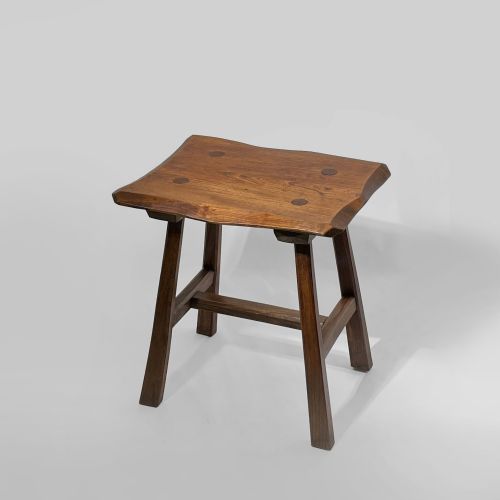
Stools were originally built for seating or dressing, featuring square or compact rectangular proportions designed to support human weight rather than hold objects.
Many stools share dimensions and heights with low tables, leading to crossover use as coffee tables once upholstered seats are modified or appreciated for their wooden frames.
How do I care for antique hardwood tables?
Protect wooden surfaces from direct sunlight and extreme humidity fluctuations to prevent timber movement, drying, or cracking over time.
Apply occasional appropriate wax polish to nourish the grain and maintain the natural patination built up through decades of use.