




Antique Long Sideboard Table
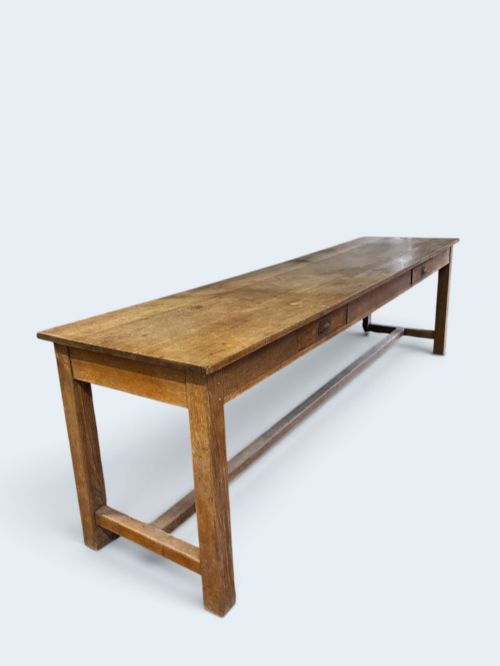
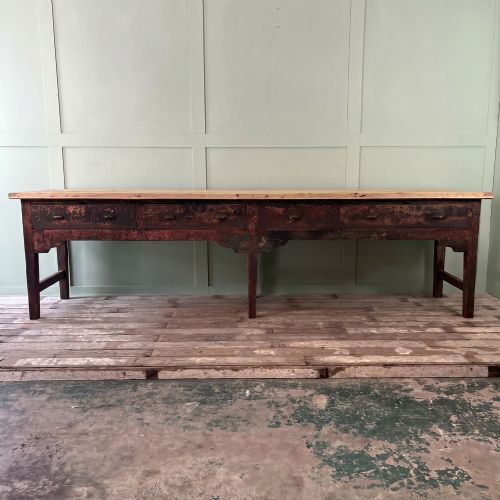
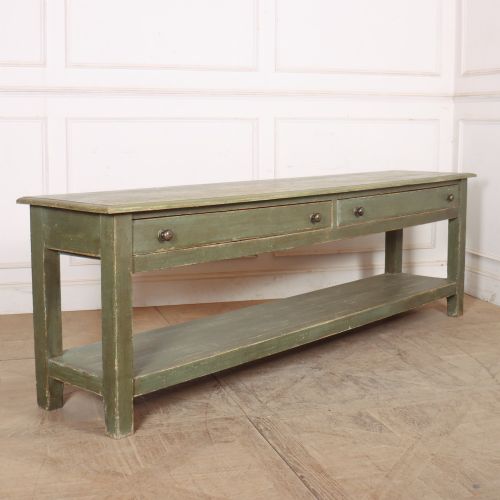
These antique long sideboard table pieces bring substantial timber presence and honest utility to any dining space or hallway.
Antique Long Sideboard Table
An antique long sideboard table groups together long serving tables, dresser bases, drapers tables, and console tables designed for extended proportions. Buyers seeking an antique long sideboard table encounter forms originating from English and French country houses, alongside Georgian country examples.
The materials span solid oak, pine, painted wood, and walnut, frequently featuring potboards or lower pot-shelves for storage. Dating stretches from the Georgian period through the nineteenth century and into the early twentieth century.
Serving tables and dresser bases dominate the selection, offering generous surface lengths suited to hospitality or hallway display. Functional variants include workbenches and drapers tables adapted to domestic interiors.
How they were made
Construction relies heavily on solid oak and pine, providing the structural integrity required for long tabletops and heavy bases. Joinery is straightforward and robust, designed to withstand daily utility in kitchens, halls, and dining rooms.
Surface treatments vary between natural timber finishes, bleached oak, and original paint applications. Iron and brass hardware such as drawers and pulls appear on select examples to aid daily function.
Some substantial workbenches measure over eight feet long, proving that historical meal preparation required serious workspace.
What varies in quality
Proportion and timber selection dictate the character of each piece, with solid oak examples offering greater durability than softer pine variants. The presence of original paint or bleached oak finishes alters the visual weight in a room.
Construction details such as potboards, lower shelves, and drawers elevate utility and demonstrate the regional workshop traditions of English and French country furniture.
The Antique Long Sideboard Table Glossary
- Potboard
- A lower open shelf built into a serving table or dresser base for storing pots and kitchen utensils. This traditional feature provides stability and extra storage space.
- Dresser Base
- A low sideboard or cabinet featuring drawers and sometimes a pot-shelf beneath the main surface. Originally used in country kitchens for food preparation and storage.
- Drapers Table
- A long, narrow table historically used in textile shops for folding cloth. Their extended proportions make them popular as narrow sideboards or console tables.
- Bleached Oak
- Oak timber treated to lighten its natural colour. This finish gives the wood a softer, sun-washed appearance.
- Console Table
- A table designed to stand flat against a wall, frequently supported by brackets or legs. They serve decorative and functional roles in hallways and dining areas.
Antique Long Sideboard Table: Frequently Asked Questions
Where should I place a long sideboard table?
These long tables suit hallways, dining rooms, and kitchens where extended surface space is required.
Their narrow depth allows them to sit against walls without obstructing walkways.
What is the difference between a serving table and a dresser base?
Serving tables typically offer open frames with potboards underneath for display and storage.
Dresser bases incorporate rows of drawers beneath the main top surface for enclosed storage.
How do I care for painted wooden tables?
Maintain painted surfaces by dusting with a dry cloth and avoiding harsh chemical cleaners.
Protect the original paint from excessive moisture and direct heat sources.
Are these tables suitable for daily use?
Built from solid timbers like oak and pine, these pieces were designed for enduring utility.
Their robust construction handles everyday demands in modern homes.
How do I identify a drapers table?
Drapers tables feature exceptionally long and narrow proportions designed originally for measuring fabric.
They often include simple legs and minimal decoration to maximise working surface area.