





Antique Long Footstool
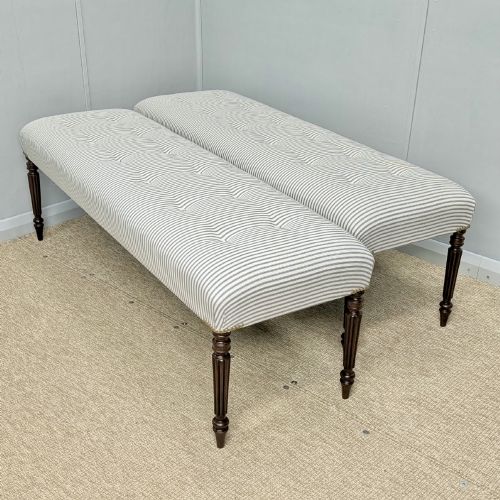
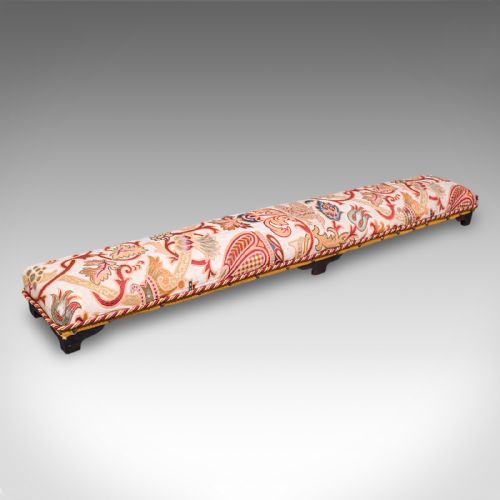
An antique long footstool offers generous proportions for fireside resting or window seating, combining sturdy timber frames with traditional upholstery.

Antique Long Footstool
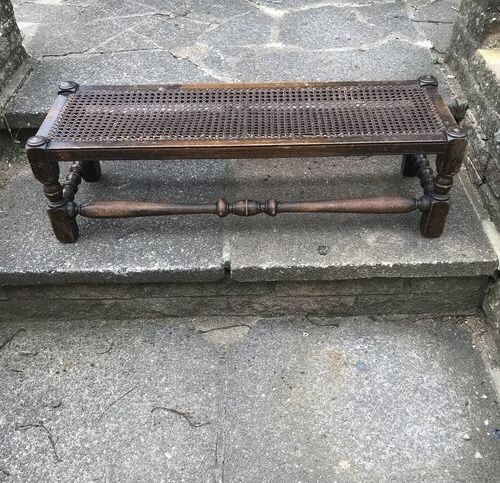
An antique long footstool is primarily encountered in Victorian and Georgian incarnations, alongside Edwardian and early twentieth century examples. These pieces serve various domestic functions, appearing as fender stools, piano duet seats, window benches, and carriage rests.
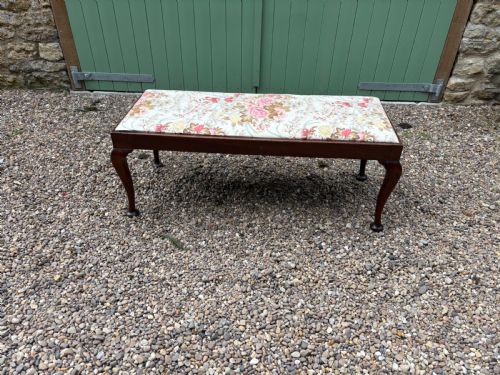
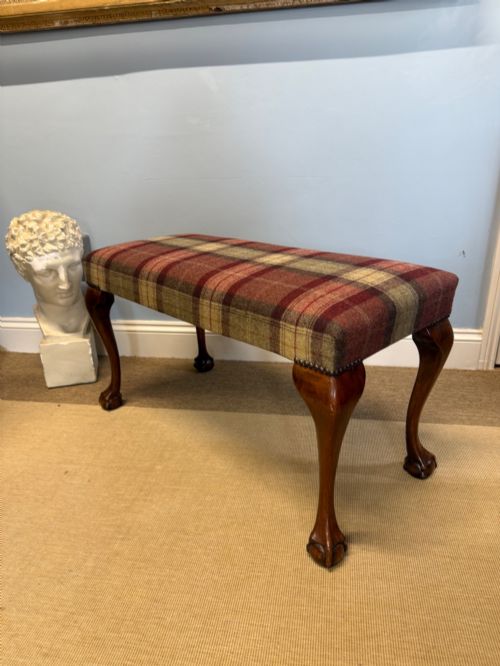
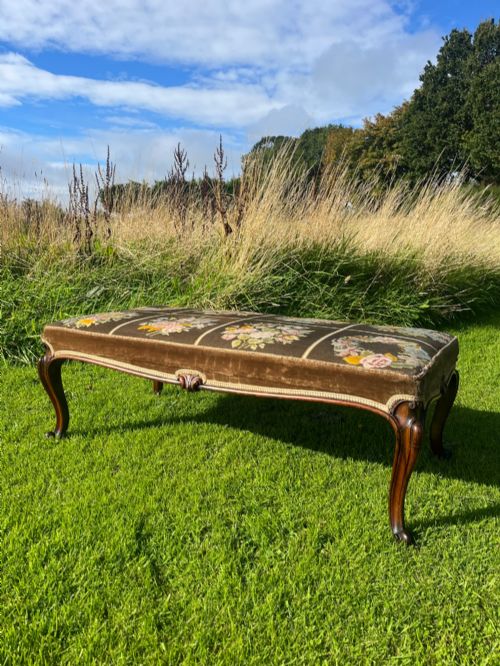
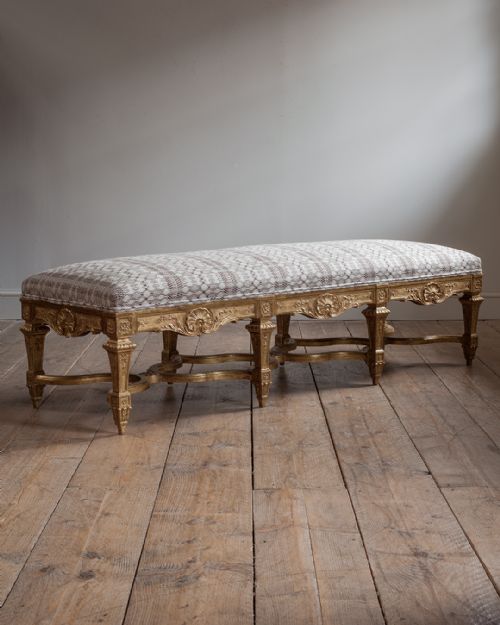
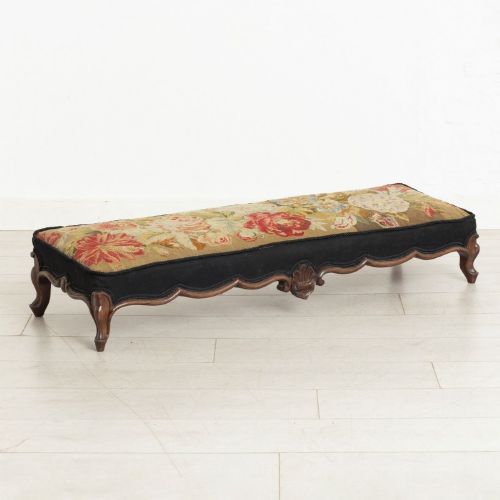
Makers utilise forms ranging from simple rectangular frames to cabriole leg designs, often drawing upon Queen Anne, George III, and revival styles. The selection spans standard footstools to extended benches upholstered in diverse textiles.
Materials and Construction
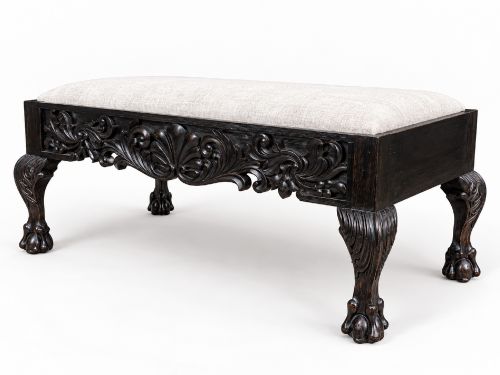
Frames rely upon hardwoods such as mahogany, walnut, oak, and rosewood, occasionally finished with gilding or paint. Structural details include turned legs, ball and claw feet, and brass studding.
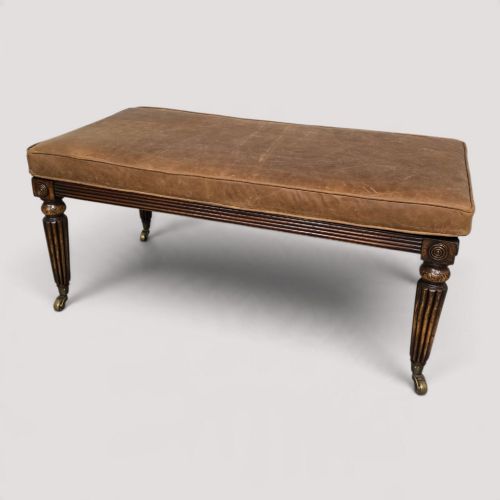
Upholstery incorporates traditional fabrics including wool, leather, cane, tweed, kilim, and velvet, sometimes featuring buttoning or specific designer textile prints.
Antique Long Footstool Retail Price Guide 2026
Typical asking prices for long footstool among the pieces listed under this phrase on Sellingantiques today, from the lower quarter to the upper quarter. They describe what is for sale here now, not the wider market.
Listings feature mahogany, walnut, oak, and rosewood alongside fabrics such as leather, cane, wool, and velvet across the nineteenth and twentieth centuries.
Distinguishing Quality
The standard of a piece rests upon the elegance of its proportions and the execution of the timber framing, from hand-carved details to well-drawn cabriole legs. Superior examples display harmonious balance between the length of the frame and the height of the supports.
The integrity of the materials, whether the grain of the solid mahogany or walnut or the retention of original upholstery and cane work, dictates the character and distinction of the individual stool.
Heals of London·Morris & Co.
The Antique Long Footstool Glossary
- Cabriole leg
- A furniture leg that curves outward and tapers inward to a formal foot, typical of eighteenth century and revival designs.
- Fender stool
- A low, elongated seat designed to sit in front of a hearth fender for fireside warmth.
- Duet stool
- A wider seating form originally intended for two people sharing a piano or seating bench.
- Kilim
- A flatwoven textile used historically for durable and decorative upholstery coverings.
Antique Long Footstool: Frequently Asked Questions
What was an antique long footstool used for?
These long stools served multiple domestic purposes, functioning as fireside rests, window seats, and piano duet benches. Their elongated proportions allowed multiple people to sit or permitted an individual to recline.
In earlier domestic settings, low variants also acted as carriage footstools or gout stools to keep feet elevated away from cold floors.
How do I identify a Victorian footstool?
Victorian examples often feature dark hardwoods such as walnut or mahogany, frequently mounted upon cabriole legs. They commonly utilise original fabric, leather, or needlework upholstery.
Details such as buttoning and fender configurations help distinguish this period from earlier Georgian or later Edwardian items.
Are these stools suitable for daily use?
Most solid timber frames provide sturdy construction suited to modern seating or resting requirements. Upholstery condition varies, meaning some pieces may benefit from careful conservation or reupholstery depending on their age.
Checking the stability of the joints and timber frame ensures safe everyday placement in a home.
What is a fender stool?
A fender stool is a specifically proportioned low bench designed to sit lengthwise along a hearth fender. It provided comfortable seating close to the fire during colder months.
These pieces typically present low profiles and extended lengths to match fireplace dimensions.