


Antique London Watercolour
An antique london watercolour captures the capital through hand-applied pigment on paper, offering a direct view of the city as artists recorded it across past centuries.
Antique London Watercolour
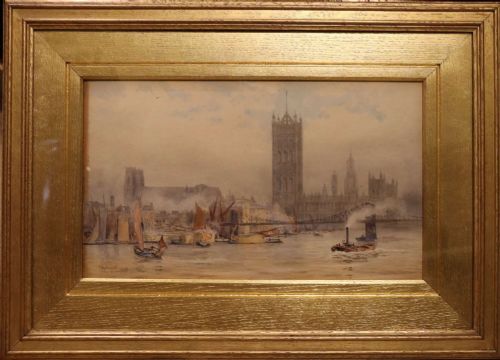
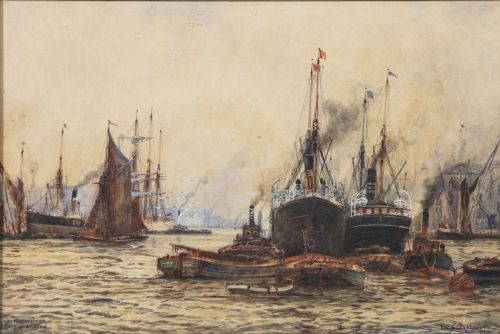
When you search for an antique london watercolour, you encounter original paintings executed on paper that depict recognizable cityscapes, rivers, and landmarks. The subjects range from bustling river pools and maritime scenes to quiet parks and architectural studies.
Most pieces you meet on this page hail from the nineteenth and early twentieth centuries, spanning periods from the Victorian era through the Edwardian years and into the 1930s. These works frequently record historical phases of the Thames, Westminster, St Pauls Cathedral, and surrounding districts.
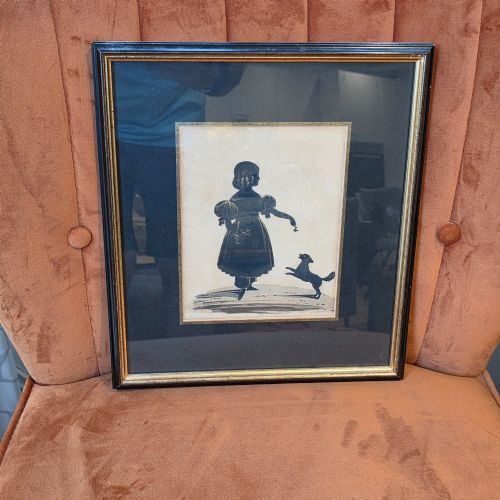
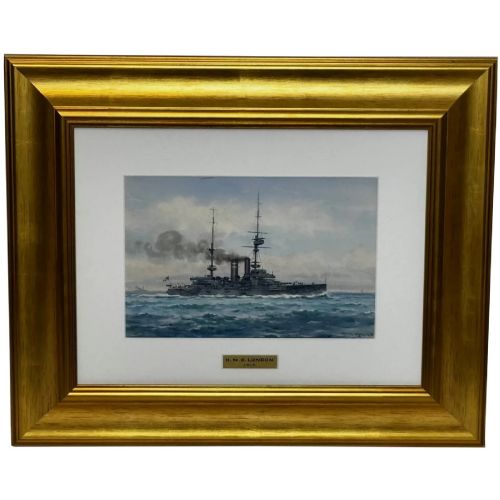
The selections include topographical views, marine watercolours, and detailed architectural designs. Alongside framed fine art paintings, you may also discover specialised items such as cut paper and watercolor silhouettes or preparatory wallpaper design artwork produced for London firms.
Materials and Technique
The physical foundation of these artworks relies primarily on paper sheets, often combined with watercolor paint and ink to build both sharp architectural lines and fluid atmospheric washes. Artists also utilised bodycolour and pencil underdrawings to define light and shadow.
Framed works commonly incorporate protective glass alongside wood, gilt wood, or gold leaf frames that secure and complement the paper. These framing elements range from simple period mouldings to decorative surrounds tailored to the aesthetic of the time.
Several artists captured the city simply as 'Smokey London', proving that persistent grey skies inspired painters long before modern photography.
Distinctions in Quality
Quality in these watercolours rests upon the precision of the draughtsmanship and the artist's ability to capture light and atmosphere on paper. Master works demonstrate confident brushwork and acute topographical accuracy, whereas lesser examples may rely on formulaic composition and stiff linework.
The sophistication of the palette and the preservation of the paper pigment also separate finer pieces from ordinary examples. Stronger works retain vibrant colour values and subtle tonal gradations without excessive fading or discoloration from age.
H Medlycott·William James Hubard·Frank Watson Wood·Frank William Scarbrough·Charles James Lauder·Rowland Henry Hill·David Small·Walter Duncan·Harold E Frecker·Beatrice Parsons·Frances E Nesbitt·William A Macdonald·Herbert John Finn·WD Scull·Samuel Scott·Edwin Dolby·Edwin Thomas Dolby·F J Lees·T Girtin·P Finch·G R Vawser
The Antique London Watercolour Glossary
- Watercolour Paint
- A water-based medium composed of pigments suspended in a water-soluble vehicle. It is applied in translucent layers onto paper to create luminous washes.
- Topographical Watercolour
- An artwork that records specific geographical locations and buildings with factual accuracy. These pieces serve as historical visual records of urban growth and landscape changes.
- Gilt Wood
- Wood that has been coated with a thin layer of gold leaf or metallic gilt paint. This traditional framing material adds reflective warmth to the presentation of works on paper.
- Grisaille
- A painting executed entirely in shades of grey or neutral monochrome. This technique emphasises form and light distribution over colour.
Antique London Watercolour: Frequently Asked Questions
How should I hang an antique watercolour?
Keep watercolours away from direct sunlight to prevent the pigments on paper from fading permanently over time.
Ensure rooms maintain stable humidity levels to protect both the paper support and the antique wooden or gilt frame.
What subjects appear most often?
River views along the Thames featuring bridges, shipping pools, and St Pauls Cathedral recur frequently across these nineteenth and twentieth-century works.
City parks, historic arches, and London street scenes also form a major part of the available topographical record.
How do I date these paintings?
Look for artist signatures, dates inscribed directly on the paper, and stylistic clues tied to the Victorian, Edwardian, or early twentieth-century periods.
Framing materials, backboards, and old gallery labels on the reverse often provide additional chronological evidence for uncredited pieces.
Are these works always original?
The listings consist of hand-painted original artworks rather than modern mass-produced reproductions or mechanical prints.
Each piece displays the individual brush marks, paper texture, and pigment variations unique to a hand-executed painting.