

Antique Locking Chest
An antique locking chest provides secure storage while bringing rich period timber and clever mechanical security into a room.

Antique Locking Chest
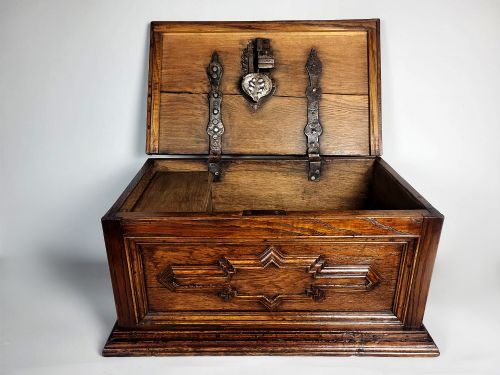
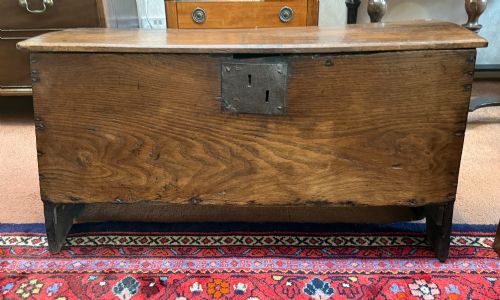
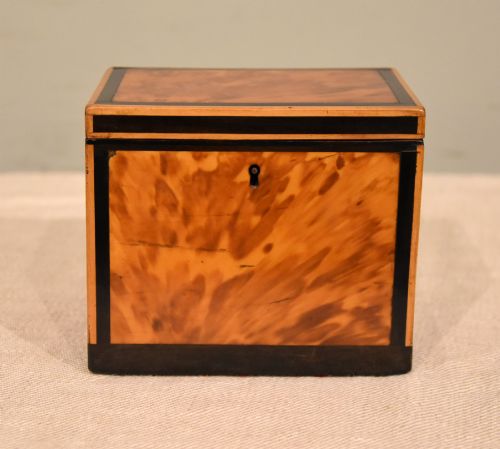
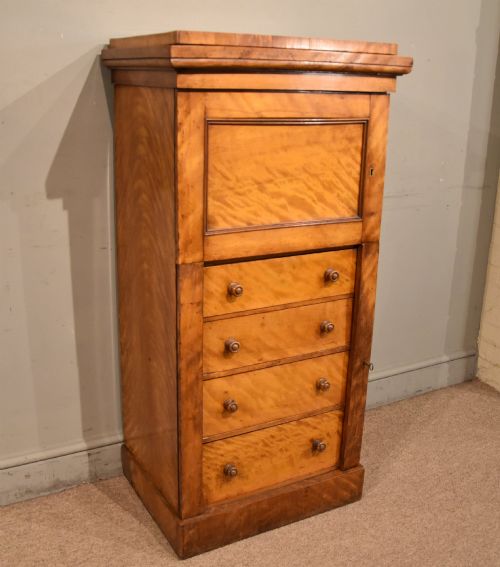
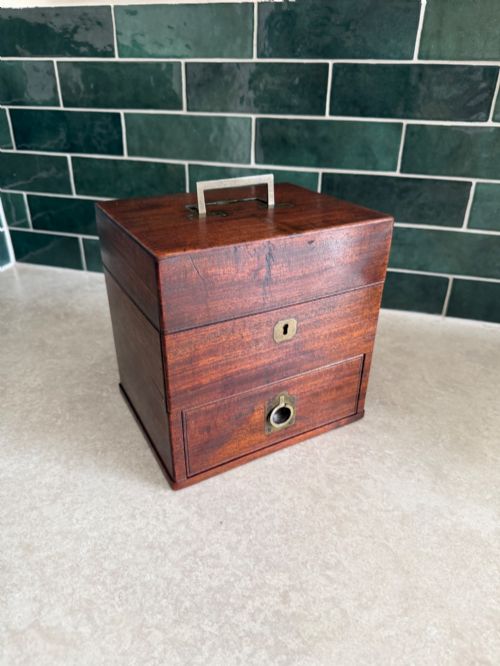
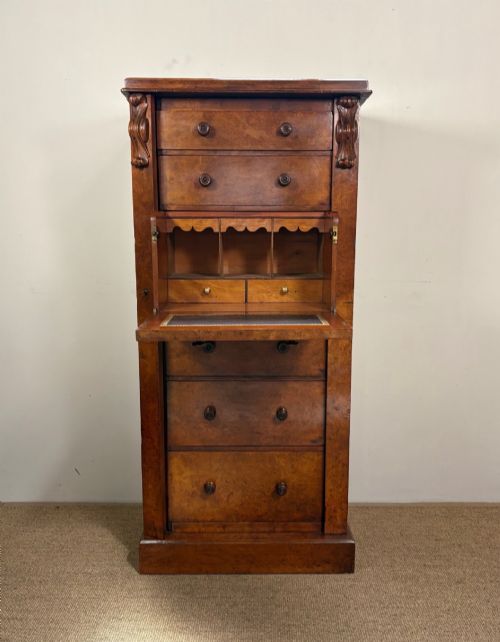
When searching for an antique locking chest, buyers encounter a diverse selection of secure containers spanning multiple centuries. These pieces range from early oak coffers and table boxes to tall Victorian Wellington chests, small tea caddies, and sturdy travelling trunks.
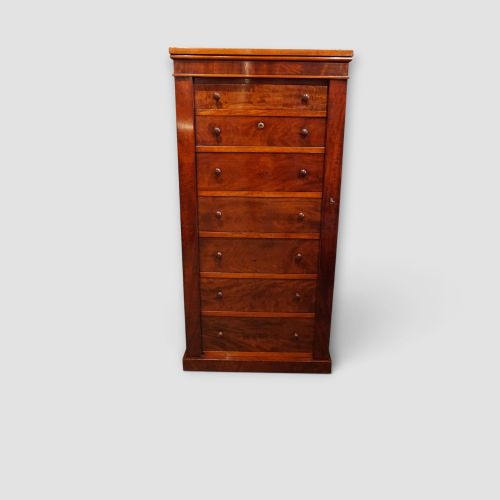
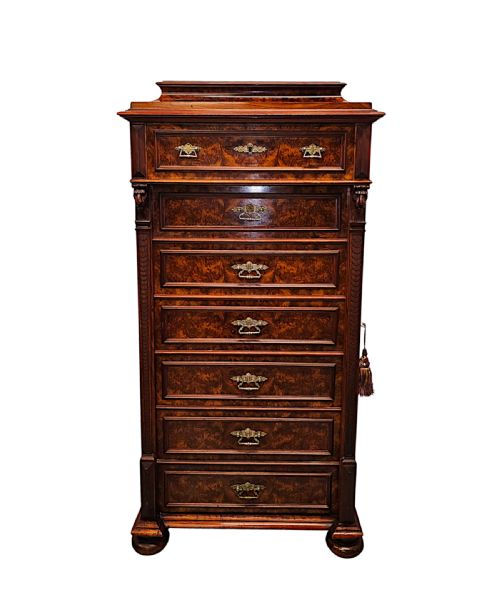
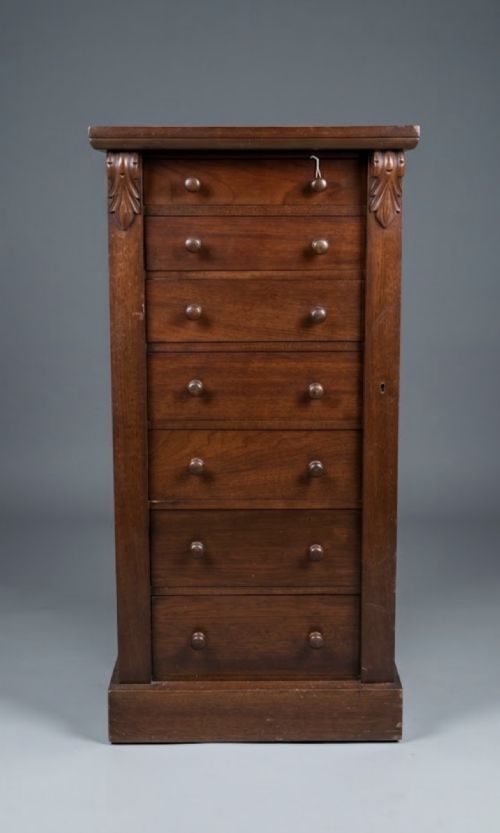
The most common examples on this page are Victorian mahogany and walnut Wellington chests, alongside rustic oak coffers and small boxes. Each form was designed to keep valuable possessions safe using integrated locks, keys, or complex internal mechanisms.
Materials and construction methods
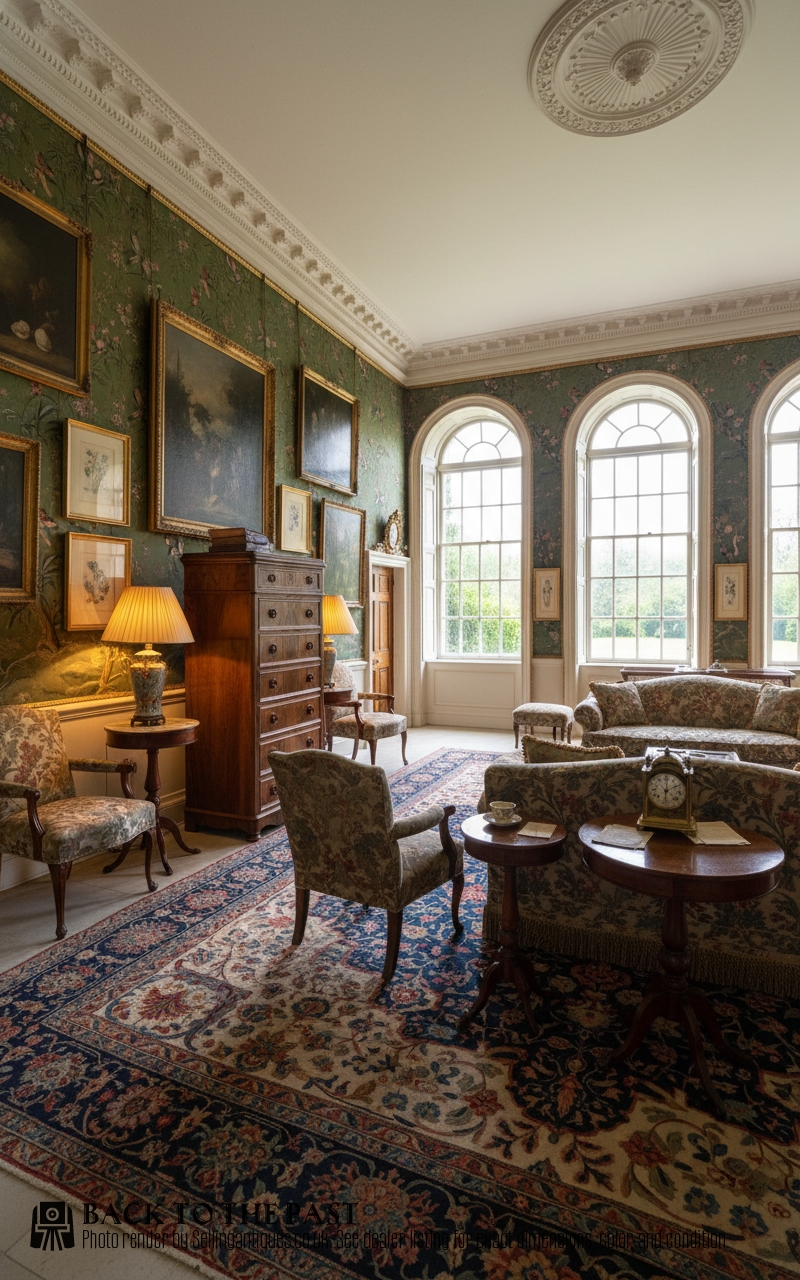
Craftsmen utilised robust native and exotic timbers such as oak, mahogany, walnut, and elm to build these secure containers. Solid construction techniques ensured durability, while decorative veneers like burr walnut and tortoiseshell added visual refinement to finer pieces.
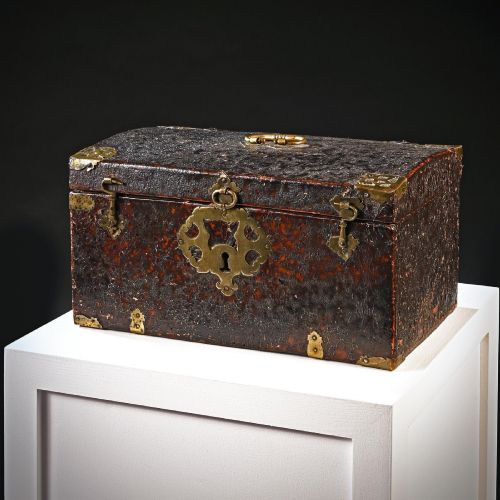
Security relied heavily on metalwork, incorporating brass mounts, iron straps, and complex steel locks. Drawers and lids frequently featured locking flaps or bars that secured multiple compartments simultaneously with a single turn of a key.
Antique Locking Chest Retail Price Guide 2026
Typical asking prices for locking chest among the pieces listed under this phrase on Sellingantiques today, from the lower quarter to the upper quarter. They describe what is for sale here now, not the wider market.
Listings feature items spanning from the seventeenth century through to the Edwardian period, constructed in mahogany, oak, walnut, and leather.
Assessing quality and craftsmanship
Quality in these pieces rests on the integrity of the timber selection and the sophistication of the locking mechanism. Superior examples display finely figured veneers, well-fitted internal drawers, and original operational locks with matching keys.
The precision of the joinery and the condition of the secondary woods further distinguish finer items from simpler utilitarian versions. Retaining original hardware and untouched surface patination elevates the standing of any piece considerably.
Gillows·J Shoolbred
The Antique Locking Chest Glossary
- Wellington chest
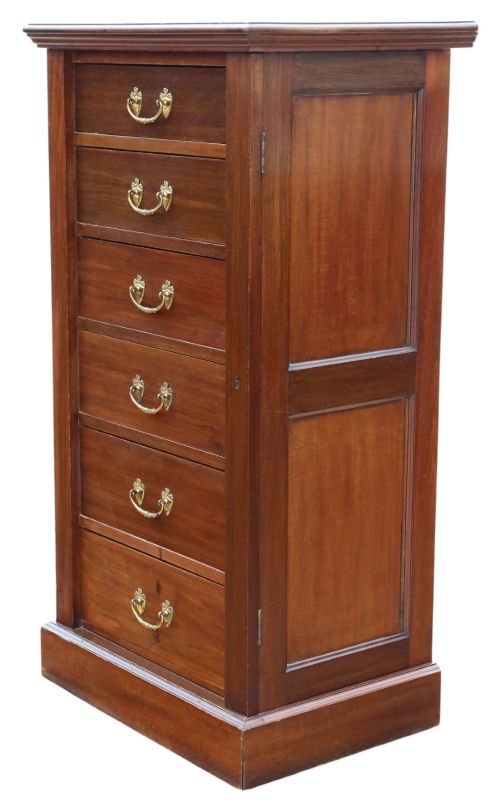
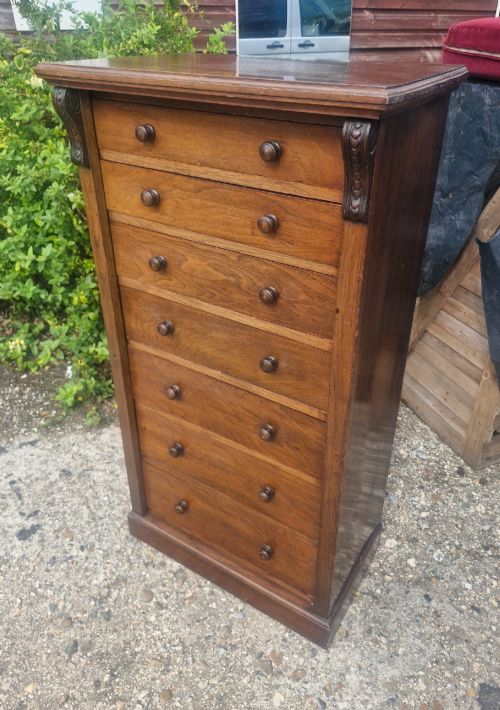
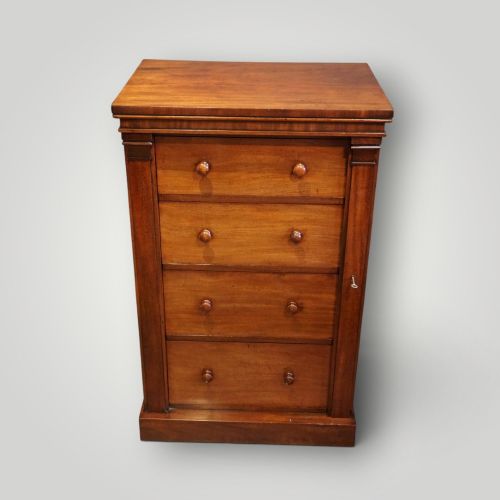
- A tall, narrow chest of drawers typically featuring a hinged locking stile on one side that secures all drawers when locked. This clever design originated in the nineteenth century.
- Cofer
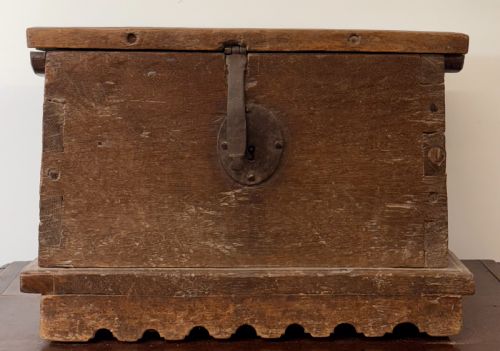
- A large wooden chest traditionally used for storing valuables, garments, or documents. Early versions often utilised heavy oak planks and iron strapwork.
- Tea caddy
- A small box designed to store loose tea leaves securely under lock and key. These containers frequently featured internal compartments and glass mixing bowls.
- Secretaire
- A cabinet or chest incorporating a pull-out writing drawer with a drop-front flap. They often include smaller internal pigeonholes and secret compartments.
- Tantalus
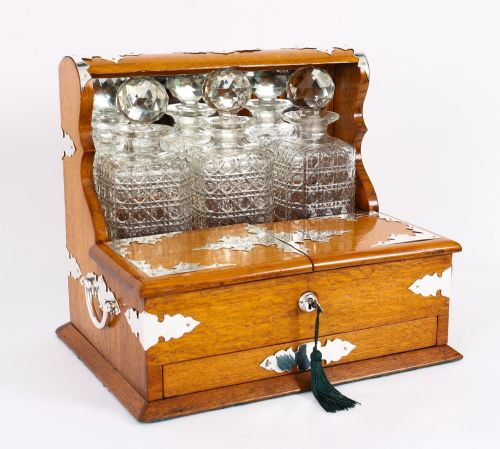
- A decorative beverage cabinet holding decanters locked beneath a metal bar. The mechanism prevents guests from pouring drinks without the key.
Antique Locking Chest: Frequently Asked Questions
What is a Wellington chest?
A Wellington chest is a tall, narrow set of drawers distinguished by a vertical locking bar on the right side. This locking flap fastens over the drawer edges and is secured with a key.
Created in the nineteenth century, this form maximises vertical storage while keeping contents safely enclosed behind a single locked barrier.
How do I use a locking chest today?
These chests function well as bedside tables, hallway storage, or bespoke sideboards in modern living spaces. Their deep drawers and compartments accommodate everyday items discreetly.
Many owners utilise the secure compartments to store jewellery, documents, or collections safely out of sight.
Are original keys usually included?
Some pieces retain their original working keys and complex steel mechanisms, while others require professional key replacement. Locks can often be serviced by specialist locksmiths if needed.
Checking listing details helps clarify whether a functional key accompanies the chest.
What woods were used for these chests?
Cabinetmakers selected dense hardwoods like mahogany, walnut, and oak to ensure structural strength and durability. Decorative veneers such as burr walnut and satin birch were applied to finer pieces for visual appeal.
Earlier examples rely heavily on solid oak and elm, reflecting regional vernacular traditions.