



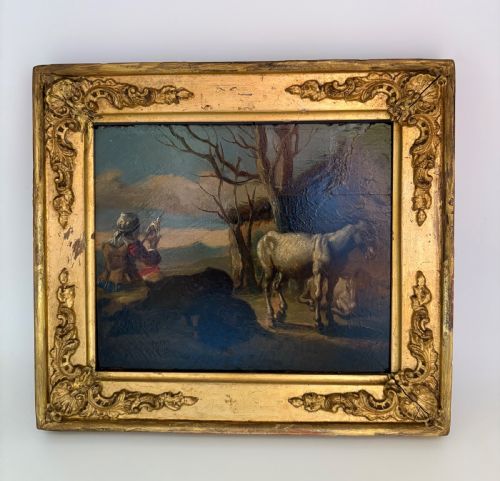

Antique Livestock Oil Painting
These antique livestock oil paintings capture rural history on canvas, offering buyers charming depictions of cattle, sheep and pastoral scenes.
What They Are
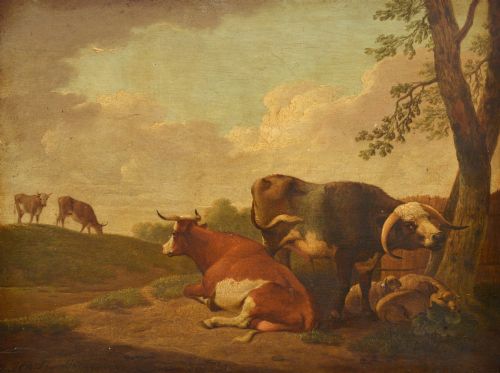
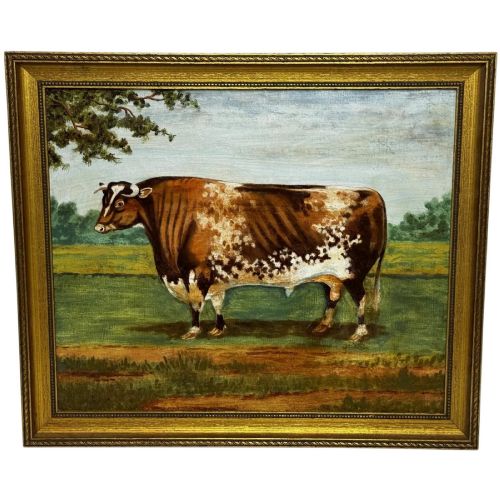
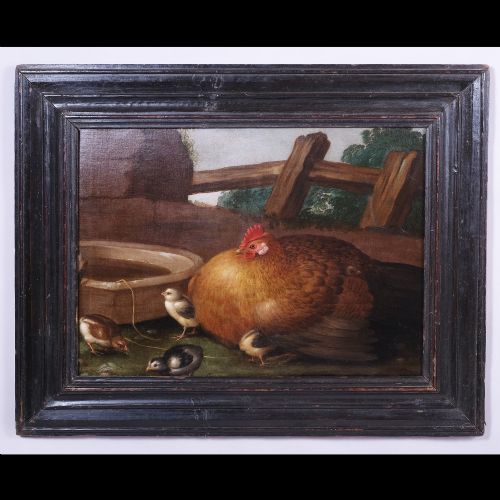
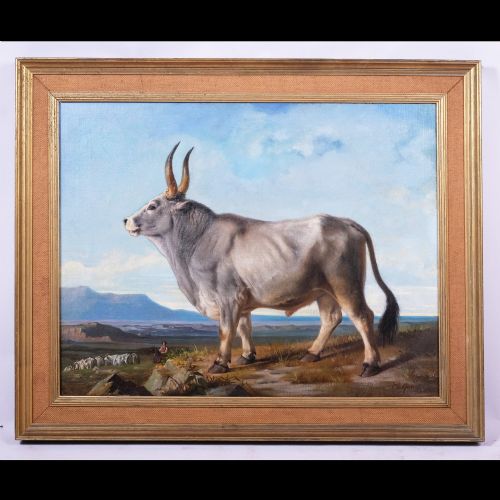
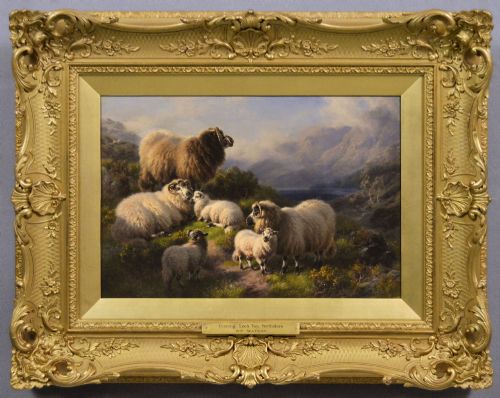
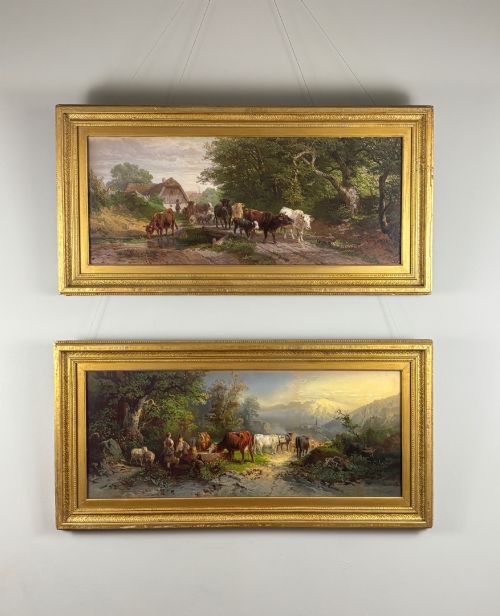
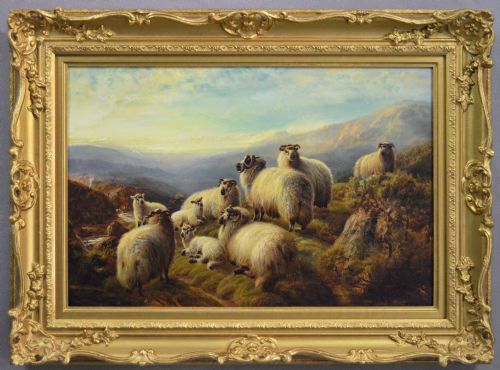
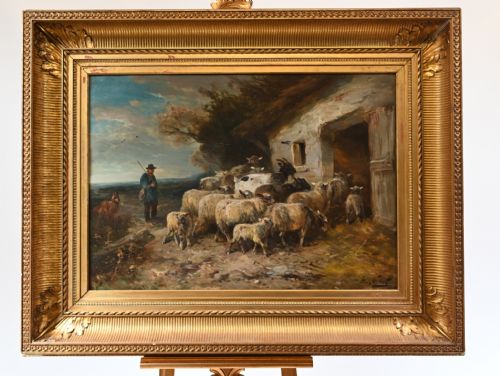
An antique livestock oil painting presents rural scenes focusing on farm animals such as cattle, sheep and calves within pastoral landscapes. These works emerge from periods including the eighteenth century, the nineteenth century, the Victorian era and the nineteen-twenties.
The compositions vary from intimate portraits of a single bull resting to wider rural landscapes featuring figures feeding animals. Painters from this category work in distinct traditions like nineteenth-century realism, Georgian styles, Edwardian pastoral and Victorian fine art.
How They Were Made
These artworks are created using oil paint applied to canvas supports, framed traditionally in wood, giltwood, or plaster finished with gold leaf. Artists build up the surface with layered oils to capture the texture of animal coats and the light of rural settings.
The physical construction of these pieces relies on stretched canvas secured within timber stretchers, often housed inside heavy moulded frames that reflect the decorative tastes of their respective periods.
Retail Price Guide 2026
Typical UK retail prices for livestock oil painting, calculated from the Sellingantiques database of over a million retail prices indexed since 2003. This retail price guide relies exclusively on Sellingantiques data; no external sources or auction records are used, so the figures do not describe the wider market.
Listings feature works from the eighteenth and nineteenth centuries alongside Victorian and nineteen-twenty examples, utilising oil on canvas and giltwood frames.
What Varies in Quality
The distinction between standard works and finer pieces rests upon the anatomical precision of the animals and the atmospheric depth of the surrounding landscape. Master artists handle light and shadow with subtlety, lending presence and realism to the livestock.
Framing also influences the overall presentation, with original period giltwood and gold leaf frames providing greater historical integrity compared to later replacements.
Johann Friedrich Voltz·Heinrich Harder·Julius Caesar Ibbetson·Claude Cardon·A Davis·Thomas Sydney Cooper
The Antique Livestock Oil Painting Glossary
- Oil on Canvas
- A traditional painting medium where pigmented oil paints are applied to a woven fabric stretched across a wooden frame.
- Giltwood Frame
- A wooden picture frame covered with a thin layer of gold leaf or gold paint, standard for framing fine art from the eighteenth and nineteenth centuries.
- Pastoral
- An artistic style or genre that idealises rural life, featuring shepherds, farm animals and bucolic countryside settings.
- Realism
- An art movement focusing on the everyday, unidealised depiction of subjects, prominent in nineteenth-century interpretations of farm life.
Frequently Asked Questions
What periods do these paintings come from?
The available works span from the eighteenth century through the Victorian period up to nineteen-twenty. They reflect the shifting artistic preferences of these eras.
Each period brings distinct stylistic approaches to framing, canvas preparation and pastoral subject matter.
What materials are used in these frames?
Frames typically consist of wood, giltwood and plaster adorned with gold leaf. These materials were chosen to complement the richness of the oil paintings.
Original frames provide context regarding the era in which the artwork was displayed.
How are the animals depicted in the artworks?
Animals appear both as focused portraits, such as a bull resting, and as part of broader rural landscapes. Figures of farmers or handlers sometimes accompany the livestock.
Artists pay close attention to the natural postures and environments of the creatures.
What styles define these pastoral paintings?
Styles range across nineteenth-century realism, Georgian compositions, Edwardian pastoral and Victorian fine art. Each style interprets rural scenes through the lens of its contemporary culture.
This variety allows collectors to select works matching specific historical aesthetics.