


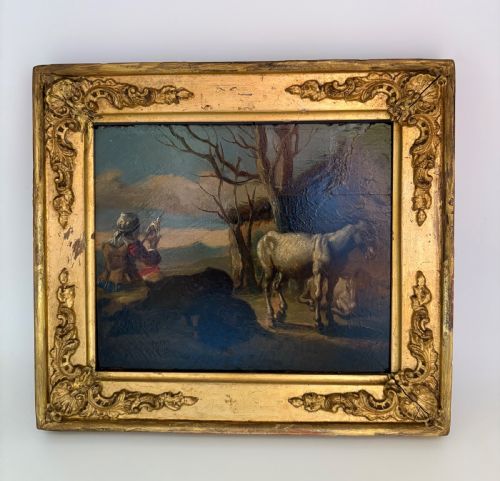


Antique Livestock Artwork
Antique livestock artwork captures the rural economy and pastoral life of earlier centuries through oil and watercolour.
Antique Livestock Artwork
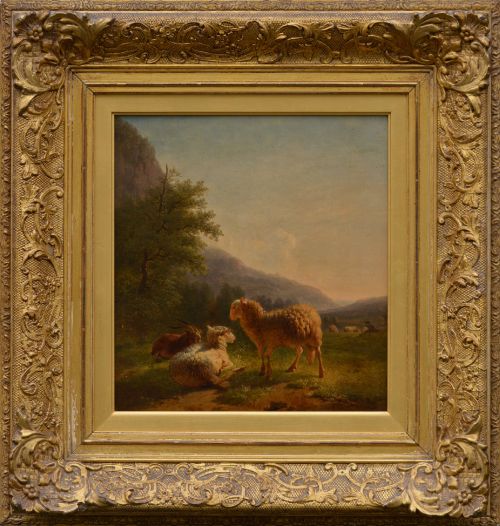
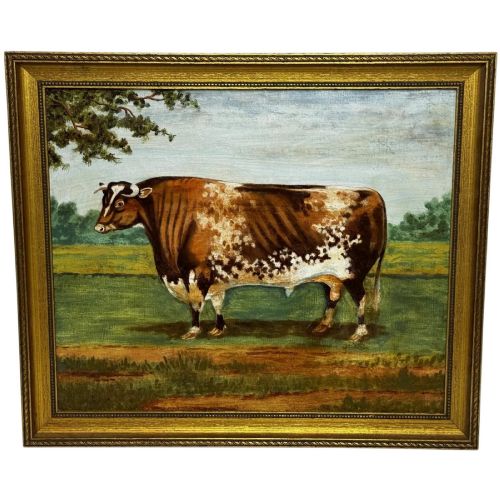
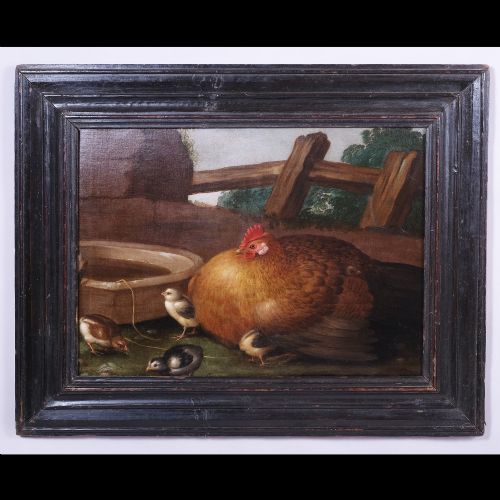
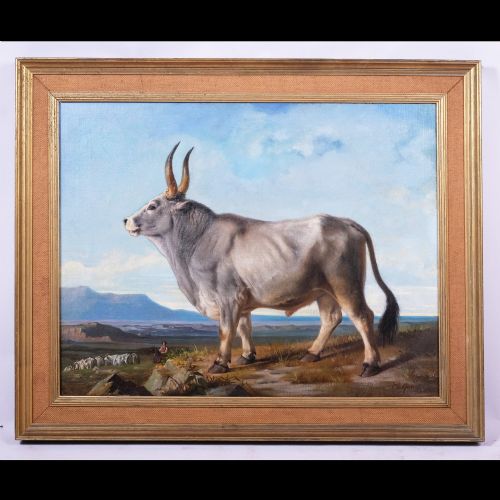
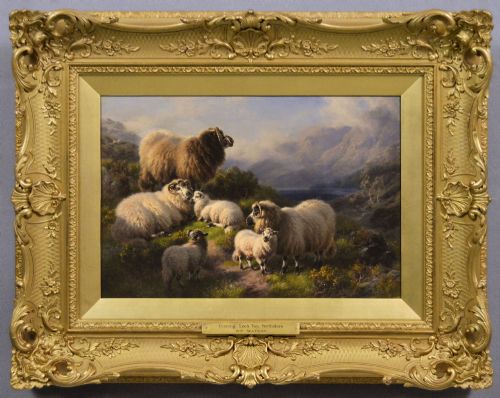
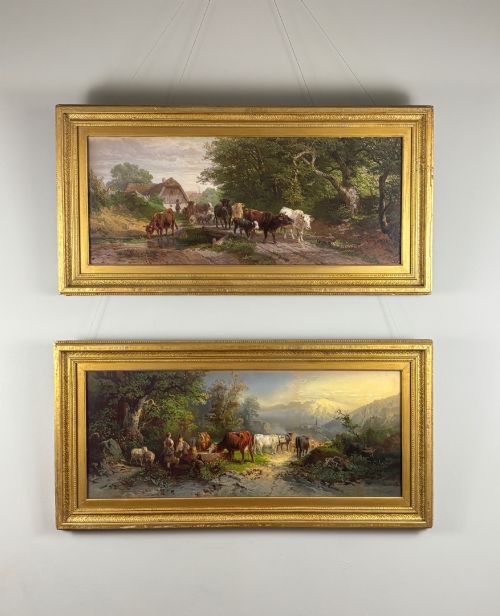
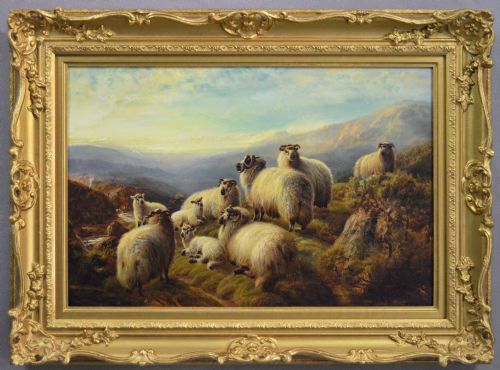
These works centre on farm animals, bulls, sheep, horses and poultry depicted within rural landscapes, pastoral scenes and farmyard settings. The search phrase antique livestock artwork brings together paintings executed primarily during the nineteenth and eighteenth centuries.
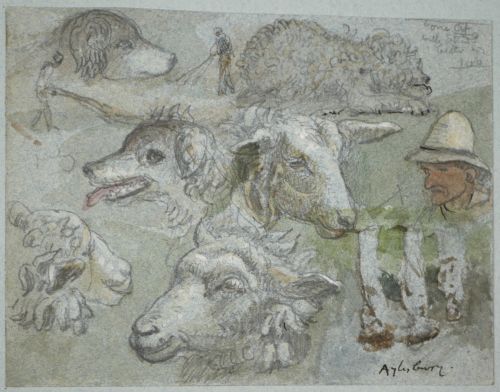
Buyers frequently encounter nineteenth-century canvases and watercolours portraying cattle and sheep in varied British, Scottish and continental settings. Oil on canvas and watercolour on paper dominate the selection, often housed in period giltwood and gesso frames.
Materials and construction
Artists painted primarily with oil paint upon stretched canvas or occasionally wood panels, building rich textures for animal coats and atmospheric skies. Watercolours on paper offer a lighter alternative, frequently preserved behind glass within original frames.
Many surviving pieces retain their period frames constructed from wood ornamented with moulded gesso and finished in gold leaf.
Listings feature works spanning the 18th, 19th, and early 20th centuries, executed in oil and watercolour.
Evaluating the standard
Quality rests upon the anatomical precision of the animals and the handling of light within the surrounding landscape. Skilled brushwork distinguishes careful studies of cattle and sheep from simpler, more formulaic compositions.
The preservation of the original paint surface and the intact condition of the accompanying giltwood frame influence the overall integrity of the piece.
Eugène Verboeckhoven·James Smetham·William Watson Jnr·Johann Friedrich Voltz·Robert Watson·A M Gauci·William Henry Mander·Thomas Sidney Cooper·Franz van Severdonck·Ernest Pile Bucknall·Heinrich Harder·James de Rijk·Julius Caesar Ibbetson·Basil Bradley·Charles Jones·Arthur Charles Dodd·Claude Cardon·John W Morris
The Antique Livestock Artwork Glossary
- Oil on Canvas
- A traditional painting medium where pigments are suspended in drying oil and applied to a woven fabric support. This combination allows for deep colour blending and visible brush texture.
- Watercolour
- A paint consisting of colour pigments suspended in a water-soluble vehicle, typically applied to paper. It yields translucent washes of colour.
- Giltwood
- Wood carved and coated with a thin layer of gold leaf or metallic powder. It provides a reflective decorative border for traditional frames.
- Gesso
- A paint mixture consisting of a neutral binder mixed with chalk, gypsum, or pigment. It serves as a smooth preparation layer for gilding on wooden frames.
Antique Livestock Artwork: Frequently Asked Questions
What periods do these artworks cover?
The available selection spans from the seventeenth century through the Victorian era and into the early twentieth century.
Nineteenth-century pieces form the largest portion of the works currently listed.
How should I hang these paintings?
Display these works away from direct sunlight and damp conditions to protect the canvas and traditional giltwood frames.
Ensure wall fixings securely support the weight of the heavier framed oil paintings.
Are watercolours framed differently from oils?
Watercolours on paper require protective glass and are generally lighter in construction than heavy oil canvases.
Oils on canvas allow direct exposure of the paint surface and often utilise deep moulded gesso frames.
What subjects appear alongside the animals?
Compositions frequently incorporate shepherds, farmers, stables and rural landscape elements such as rivers, mountains and coastal backdrops.
Some pieces focus purely on farmyard scenes featuring cattle, sheep, horses and poultry together.