
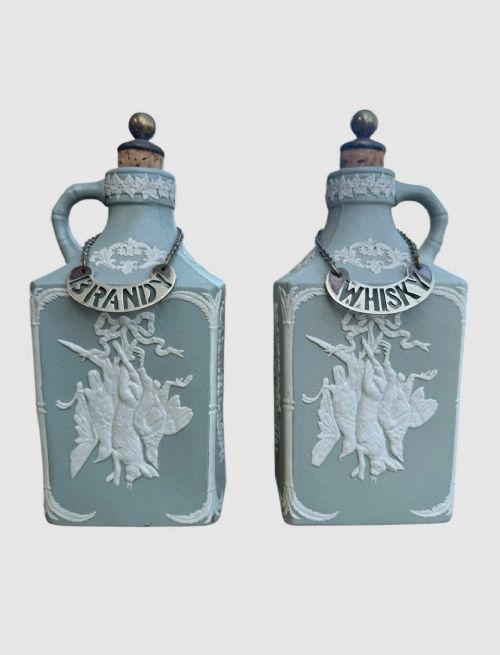


Antique Liquor Set
An antique liquor set brings together fine decanters, glassware and secure stands designed to display and preserve spirits.
Antique Liquor Set
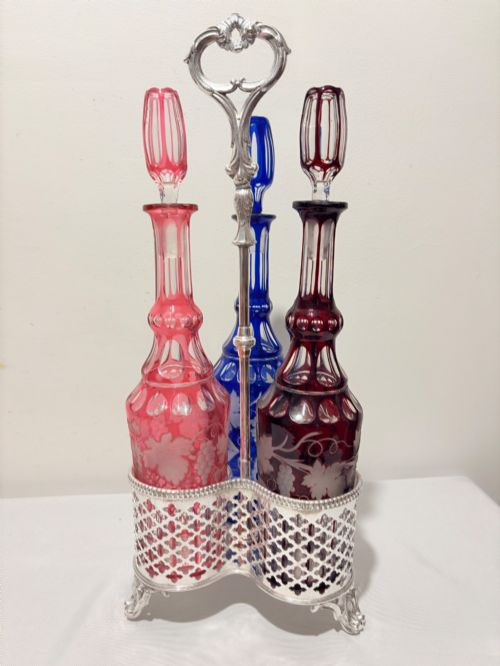
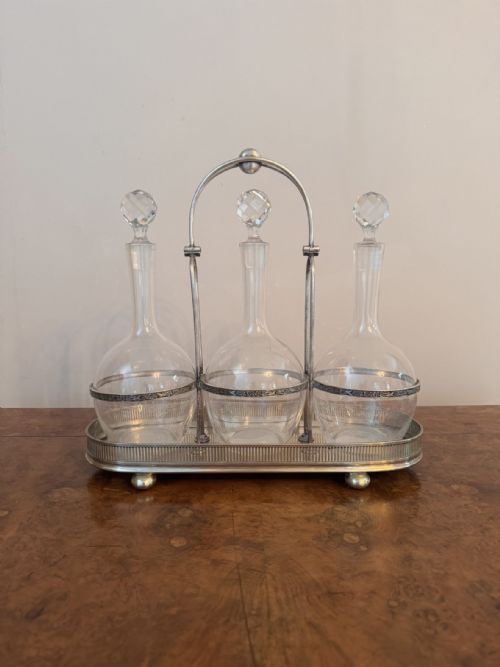
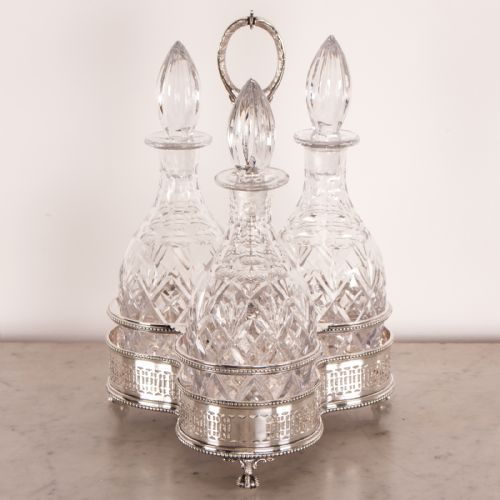
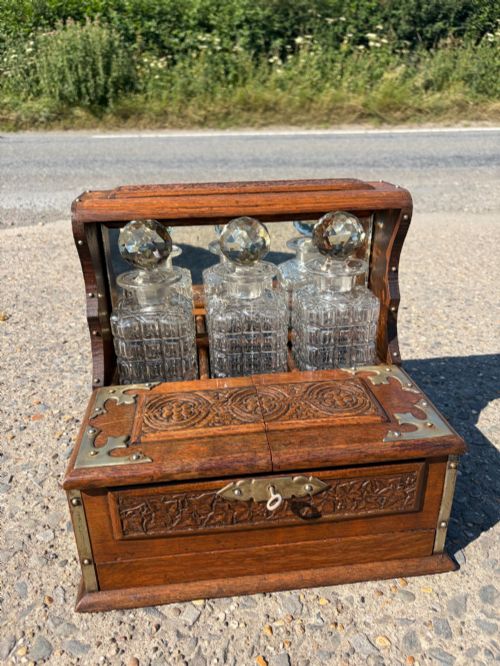
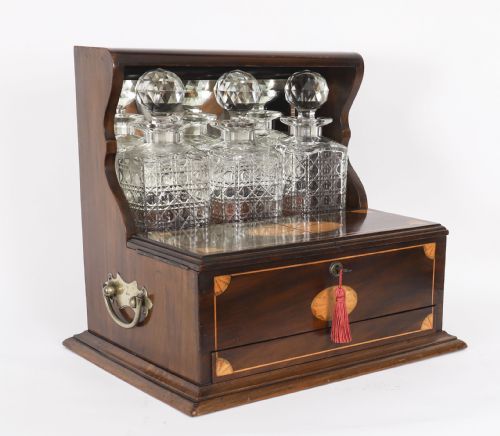
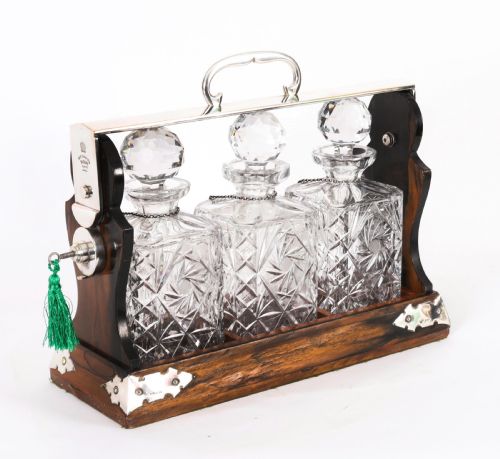
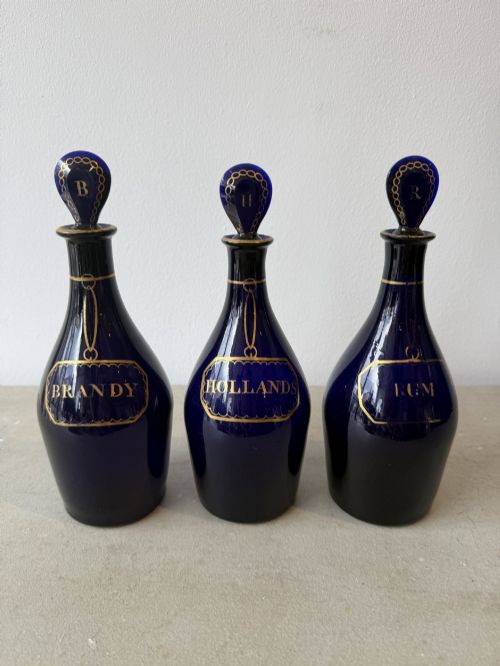
An antique liquor set comprises matched vessels and housing designed for the containment and presentation of spirits. You will frequently encounter robustly mounted tantalus frames, fitted wooden boxes, and silver-plated stands holding multiple bottles.
These arrangements span the Victorian, Edwardian, and Art Deco eras, drawing on traditional forms such as three-bottle frames, spirit barrels, and locking liqueur cases. The components range from simple glass decanters in plated stands to elaborately inlaid cabinet work incorporating games compendiums.
Materials and construction
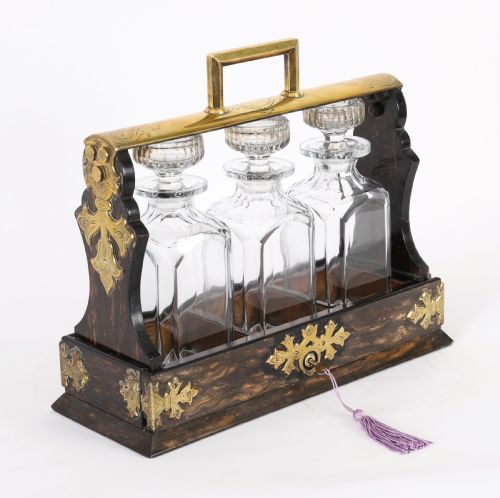
Makers utilised heavy timbers such as oak, mahogany, walnut, and exotic coromandel for the protective housings and stands, often embellishing them with brass mounts, marquetry stringing, and internal velvet linings. The structural frames require precise joinery to house locking mechanisms and secure heavy crystal bottles.
The vessels themselves rely on glass and cut crystal production, shaped through blowing and deep wheel-cutting, then complemented by silver plating, brass fittings, and enamel details. Stands incorporate cast metal bases and electroplated mounts designed to secure the bottles during transit or display.
Distinctions in manufacture
Quality rests upon the crispness of the crystal cutting, the weight of the silver plating or ormolu mounts, and the integrity of the cabinet work. Superior examples exhibit tightly fitted locking mechanisms with working keys, flawless veneers, and heavy, well-balanced decanters that match the original housing precisely.
Lower tiers display simpler moulded glass rather than hand-cut crystal, lighter base metals beneath thin plating, and machine-cut rather than hand-finished woodwork. The presence of matching sets of glasses, original stoppers, and branded maker details elevates the overall execution.
Walker & Hall·Betjemann·James Powell·Elkington·Val Saint Lambert
The Antique Liquor Set Glossary
- Tantalus
- A locking drink cabinet or stand that holds decanters securely by their necks, preventing removal until the frame is unlocked. It takes its name from the mythological figure of Tantalus, as the drinks remain visible yet unreachable.
- Cave a liqueur
- A French fitted box or casket containing a set of liqueur decanters and matching glasses, often featuring Ormolu mounts and fine wood veneers. These portable cellars were designed for elegant entertaining.
- Old Sheffield plate
- A composite material made by fusing a thin sheet of silver to a thicker copper base. This technique was widely employed before the invention of electroplating.
Antique Liquor Set: Frequently Asked Questions
What is a tantalus?
A tantalus is a locking wooden or metal frame designed to secure decanters by their stoppers and necks. This mechanism kept expensive spirits safe from unauthorised access by domestic staff while displaying the contents.
Most versions permit the removal of the bottles only when a key is turned to lower or slide the locking bar. They became particularly popular in late Victorian and Edwardian household bars.
How do I date a liquor set?
Dating relies on stylistic clues, manufacturing techniques, and materials such as oak, coromandel, or cut crystal. Victorian examples often feature heavy oak frames and ornate silver plating, whereas Art Deco sets show geometric glass designs from the nineteen thirties.
Look for maker marks, hallmarks on silver elements, or patent stamps on locking mechanisms. These details help anchor the piece to a specific decade or reign.
Are stoppers usually original?
Stoppers frequently get separated or replaced over decades of use, making original matches uncommon. Inspect the ground glass portion of the stopper and the neck of the decanter for matching numbers or identical grinding marks.
Even when stoppers are later replacements, well-fitted pieces maintain the visual balance of the decanter. Collectors prefer matching glass types and tints across the entire set.
How were liquor sets used?
These sets served spirits such as whisky, brandy, and liqueurs in the dining room, study, or drawing room. They provided hosts with a convenient way to offer drinks to guests after dinner or during gatherings.
Many incorporated games compendiums or storage for cards and chips beneath the bottle tray. This combined refreshment with evening entertainment in a single portable cabinet.