




Antique Lion Paw Table
An antique lion paw table brings robust neoclassical presence into a room, anchoring the space with carved or cast animalistic strength.
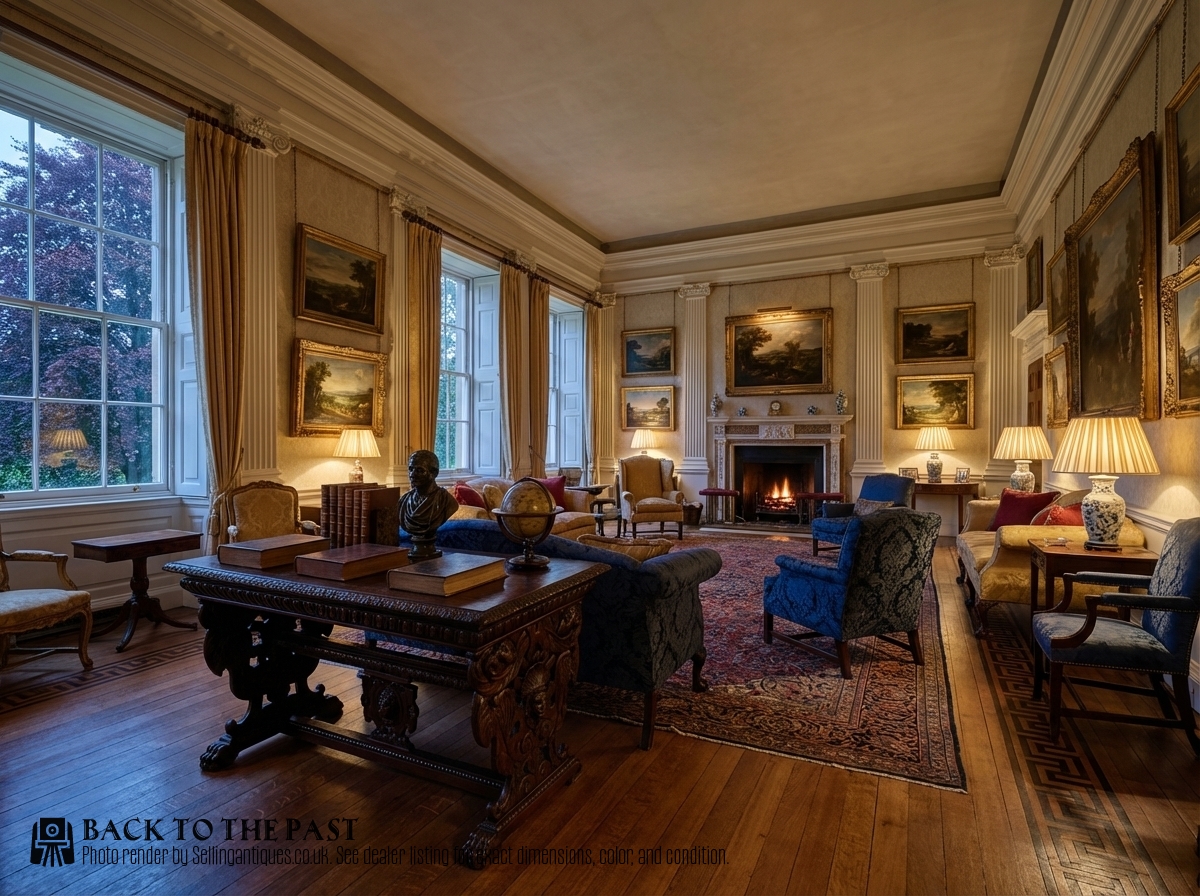
Antique Lion Paw Table
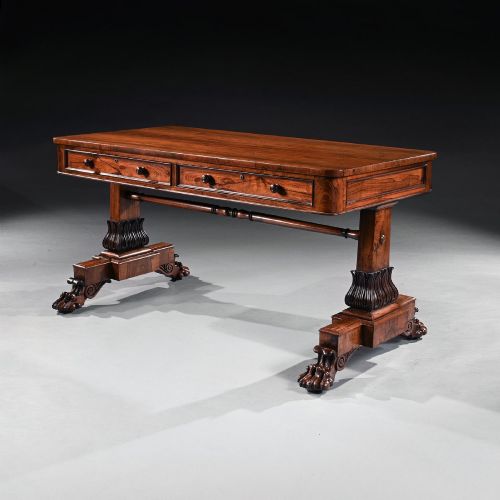
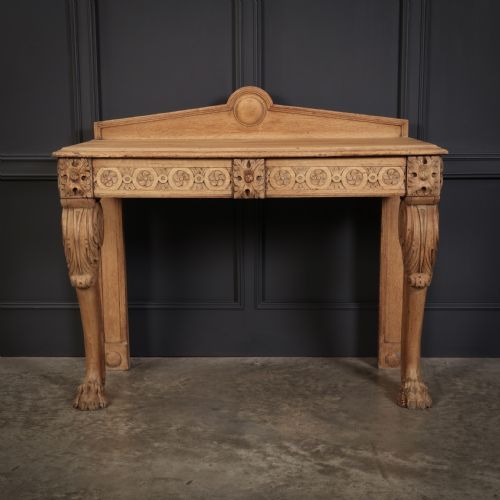
When you search for an antique lion paw table, you are looking at heavy timber furniture defined by distinctive carved or cast supports shaped like the feet of a lion. These pieces span centuries of design, drawing on Regency, Victorian, and continental revival movements to create commanding focal points in halls, libraries, and drawing rooms.
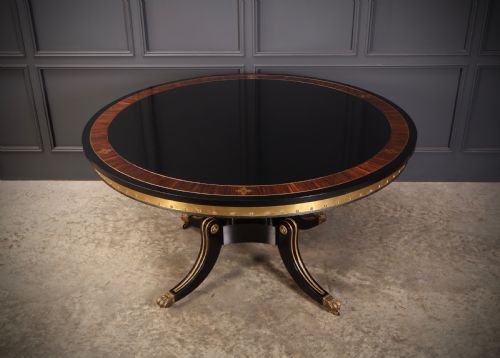
The most common examples you will meet on this page are centre tables and console tables rendered in rich timbers like mahogany, rosewood, and oak. Many incorporate marble tops or brass detailing, shifting from formal dining furniture to smaller display surfaces and writing desks.
Origins vary across British, Irish, French, and Italian workshops, reflecting a broad European appetite for classical motifs. Whether you find a circular centre table on a split pedestal or a grand console supported by gilded wood, the unifying feature remains the powerful animal foot.
Materials and construction
Cabinetmakers relied on dense hardwoods such as mahogany, rosewood, and oak as the structural foundation for these pieces, often applying flame mahogany veneers or ebonised finishes to create deep visual contrast. Marble tops, particularly breccia varieties, were frequently fitted to heavy console tables to provide a cool, durable surface.
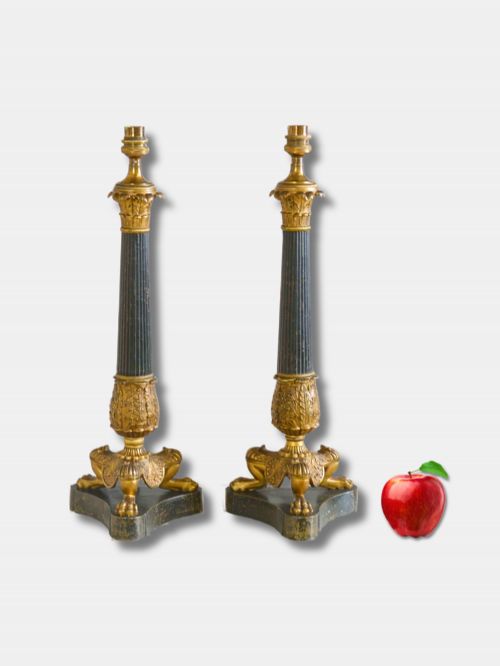
Carving and casting demanded high levels of craftsmanship, with timber feet laboriously hand-carved from solid blocks or mahogany blanks, while metal elements utilised brass and ormolu. Giltwood and gesso found extensive use in ornate revival pieces, building up intricate surfaces before gilding.
Some nineteenth-century tables come equipped with ships' iron fittings, proving that even a lion likes to go to sea.
What separates the finest examples
The depth and vigour of the carving dictate the artistic success of the support, distinguishing sharply between a flat, mechanical rendition and a deeply undercut paw with articulated claws and fur. Timber selection plays an equal role, where highly figured flame mahogany or rich rosewood displays superior grain matching across large table tops.
Structural integrity and the retention of original mounts determine long-term value, as replacements or later additions to the feet and columns alter the historical honesty of the piece. Tables retaining their original brass castors, ormolu enrichments, and heavy marble slabs demonstrate greater coherence from workshop to market.
Mack Williams and Gibton·Gillows
The Antique Lion Paw Table Glossary
- Console table
- A table designed to stand against a wall, frequently secured to it with brackets because of its narrow depth. These pieces often feature elaborate front legs and plain rear supports.
- Ormolu
- Gilded bronze or brass applied as decorative mounts to furniture or fashioned into lighting. The technique requires an amalgam of mercury and gold fired onto the metal base.
- Gesso
- A plaster-like mixture applied to wood surfaces as a base for carving or gilding. It allows artisans to shape sharp, crisp relief details before applying gold leaf.
- Breccia marble
- A composite marble made of angular rock fragments embedded in a fine-grained matrix. It yields complex, mottled patterns highly prized for grand table tops.
- Ebonised wood
- Timber treated with chemical stains or black finishes to imitate ebony. This dark, light-absorbing surface was particularly popular during nineteenth-century revival periods.
Antique Lion Paw Table: Frequently Asked Questions
What periods do these tables come from?
The listings span the eighteenth through the early twentieth centuries, with strong representation from the Regency and Victorian eras. You will also encounter continental revival styles that borrow heavily from earlier neoclassical designs.
Dates are established through timber analysis, construction methods, and stylistic markers typical of British, French, and Italian workshops of those decades.
How do I use a console table?
Console tables are traditionally positioned flat against a wall in hallways, reception rooms, or dining spaces. Because many feature flat backs or structural wall brackets, they serve as stable ledges for lamps, mirrors, and decorative objects without blocking floor space.
In larger rooms, grander examples with marble tops act as visual anchors beneath large paintings or architectural mirrors.
Are the paws carved or cast?
The paws are executed in multiple ways depending on the material of the table base. Wooden supports feature hand-carved solid mahogany, oak, walnut, or giltwood feet, whilst metal components utilise cast brass or ormolu.
Close inspection usually reveals the tool marks of the woodcarver or the seam lines and chasing work characteristic of metal casting.
How do I care for marble tops?
Breccia and specimen marble tops require simple dusting and immediate wiping of liquid spills to prevent staining. Acidic substances like wine, vinegar, or citrus juice can etch polished stone surfaces if left unattended.
Avoid placing abrasive objects directly onto the stone, and clean periodically with a damp cloth and mild neutral soap.