


Carved Walnut Entry Table
A carved walnut entry table brings rich grain and solid presence to a hallway, offering a surface that anchors the space.
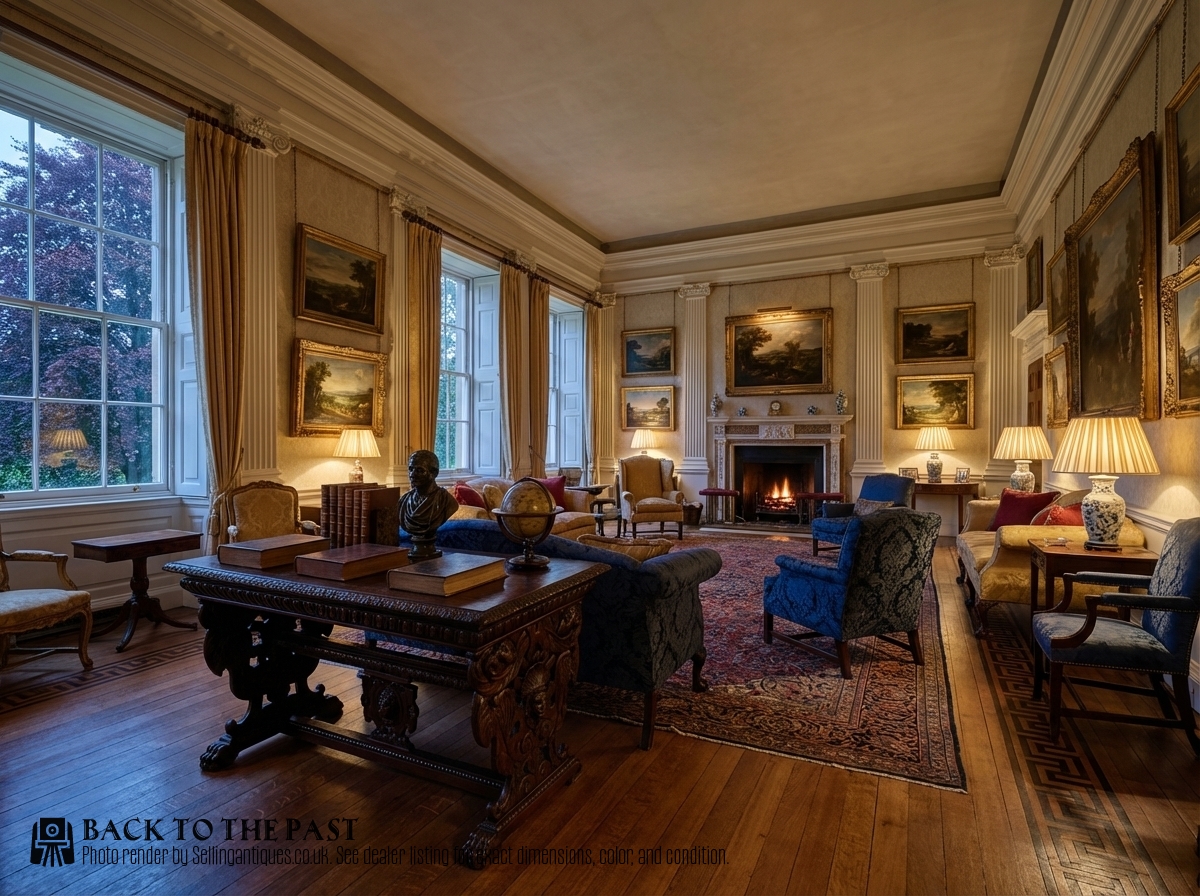
Carved Walnut Entry Table
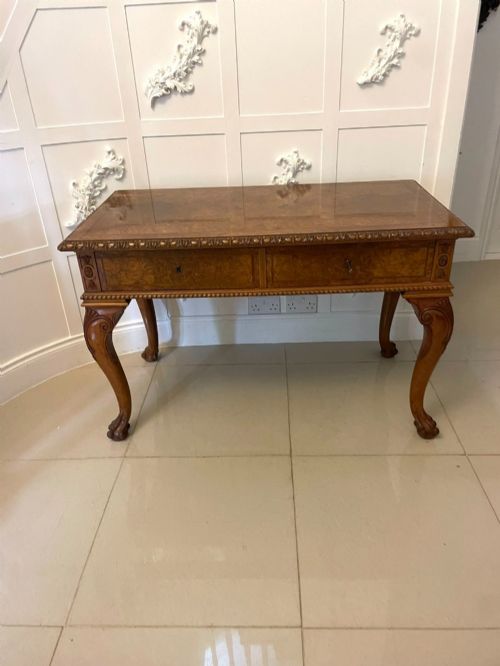
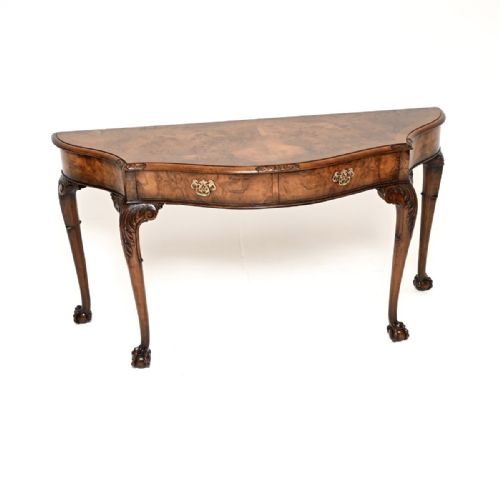
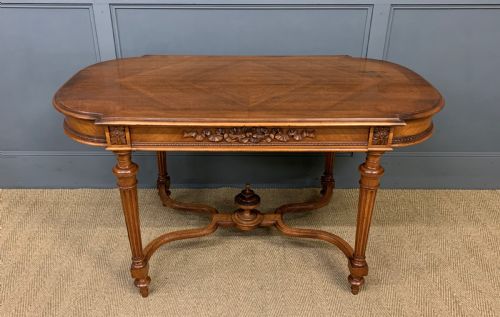
A carved walnut entry table appears mainly in forms such as console tables, side tables, and centre tables spanning the nineteenth century through the early twentieth century. These pieces emerge in revival designs including Queen Anne, Rococo, and French Empire styles, often featuring figured grain or burr veneers.
The selection here draws heavily upon the Edwardian era alongside Victorian examples, presenting substantial proportions suited to entrance halls and narrow corridors. Makers adapted these historical idioms to create functional hall furniture utilising durable hardwoods.
Materials and Construction
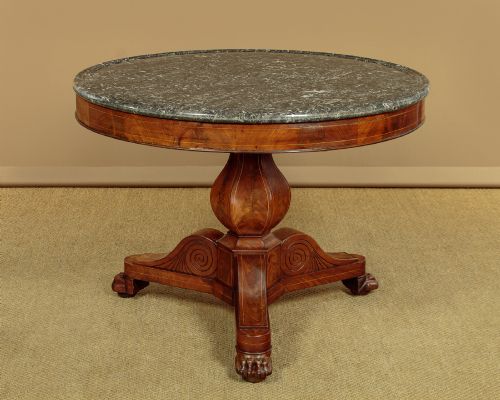
Construction relies upon solid walnut and burr walnut veneers applied to secondary timbers, occasionally supplemented by marble tops or brass mounts. Artisans shaped these materials using traditional joinery methods, incorporating carved details and turned supports such as barley twists.
Surface finishing involved hand-polishing to enhance the natural figure of the wood, while heavier pieces integrated inset marble slabs or ceramic elements for durability in high-traffic areas.
Listings feature walnut, burr walnut, and mahogany combined with marble tops, spanning the nineteenth century and the early twentieth century.
Distinguishing Quality in Walnut Tables
Quality rests in the selection of the timber, particularly the depth and movement within burr walnut veneers, alongside the crispness of hand-carved ornamentation. Superior examples display thoughtful book-matching across the top and harmonious proportions between the base and the surface.
The integrity of the construction, from the tightness of the joints to the weight of integrated marble tops, separates standard production from exceptional cabinet work.
Maple and Co·Epstein and Co
The Carved Walnut Entry Table Glossary
- Console table
- A table designed to stand against a wall, frequently secured with brackets or featuring front legs only. These pieces suit entryways and hallways where floor space is limited.
- Burr walnut
- A veneer taken from the warted growths on a walnut tree, prized for its swirling, highly figured grain patterns. Cabinet makers used it on prominent surfaces to create decorative impact.
- Gueridon
- A small French round table, typically supported by a central pillar or three legs. Originating in the seventeenth century, these tables frequently feature marble tops.
- Serpentine
- A furniture front or top shaped with a curving contour that convexly bulges in the middle and concavely recedes at the sides. This technique adds visual movement to heavy timber.
Carved Walnut Entry Table: Frequently Asked Questions
How do I style a hallway with one of these tables?
Place the table against a clear wall in the entrance hall to create an immediate focal point upon entering the home. Keep the surface uncluttered with perhaps a single lamp or a small tray for daily items.
Allow the carved details and figured wood grain to remain visible rather than crowding the top with excessive objects. A mirror hung directly above completes the arrangement and reflects light through the space.
Were these tables originally made for hallways?
Many nineteenth-century console and side tables served formal reception rooms rather than narrow entryways, often positioned between windows. Their shallow depth and decorative fronts made them adaptable for circulation spaces over time.
As domestic architecture evolved, these surfaces naturally migrated to hallways to serve as convenient places for incoming letters and accessories.
How do I care for a walnut surface?
Maintain the timber by dusting regularly with a soft, dry cloth and avoiding silicone-based sprays that build up over time. Keep the wood away from direct heat sources and strong sunlight to prevent the finish from drying out.
Apply a traditional beeswax polish occasionally to nourish the grain and protect the surface from minor moisture marks.