


Antique Lighting Set Four
An antique lighting set four brings matched illumination to a room, offering uniform style across multiple sconces or candlesticks.
Antique Lighting Set Four
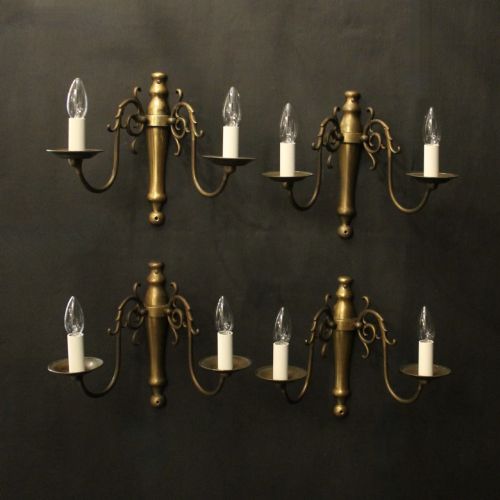
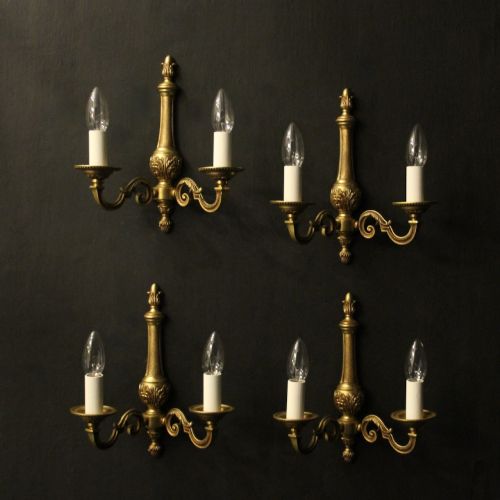
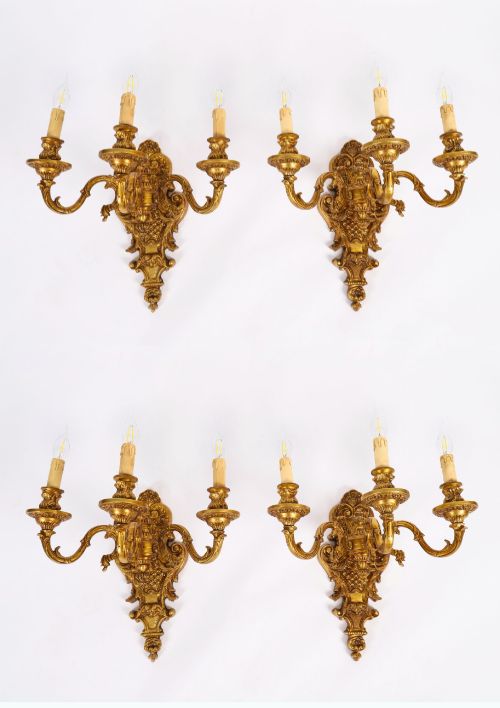
An antique lighting set four comprises matching groups of wall lights, sconces, candlesticks, or ceiling lights gathered from periods spanning the nineteenth and early twentieth centuries. Buyers seeking an antique lighting set four typically encounter wall-mounted appliques and table-standing candlesticks designed for symmetrical placement in traditional interiors.
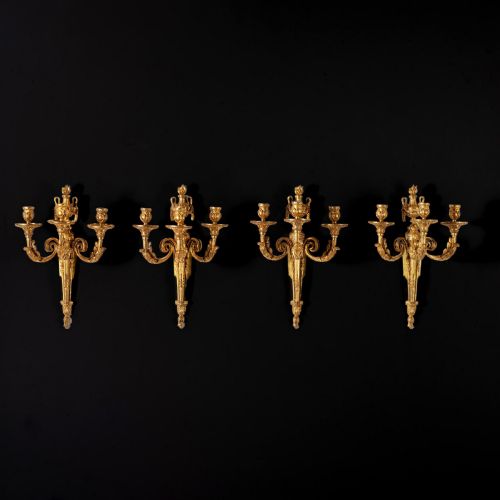
The selections include English, French, and Italian examples spanning the Georgian, Victorian, Edwardian, and later twentieth-century eras. Common forms range from twin-arm brass wall fixtures to multi-branch ormolu sconces and heavy ecclesiastical candlesticks.
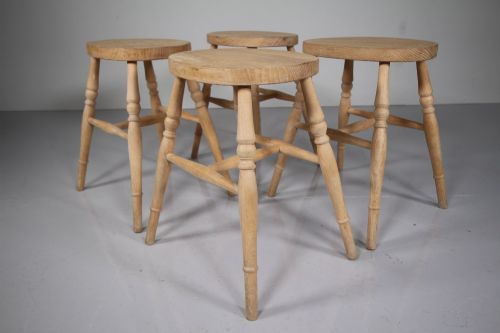
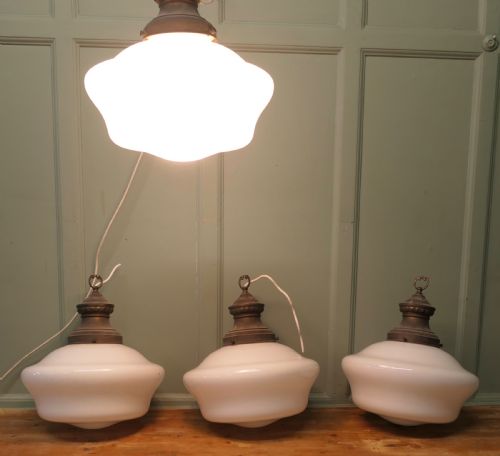
Alongside wall lights and table lamps, the offerings occasionally feature dining stools, chairs, and industrial ceiling lights within matched groups of four. These sets provide cohesive illumination and period character for dining rooms, hallways, and formal living spaces.
Materials and construction methods
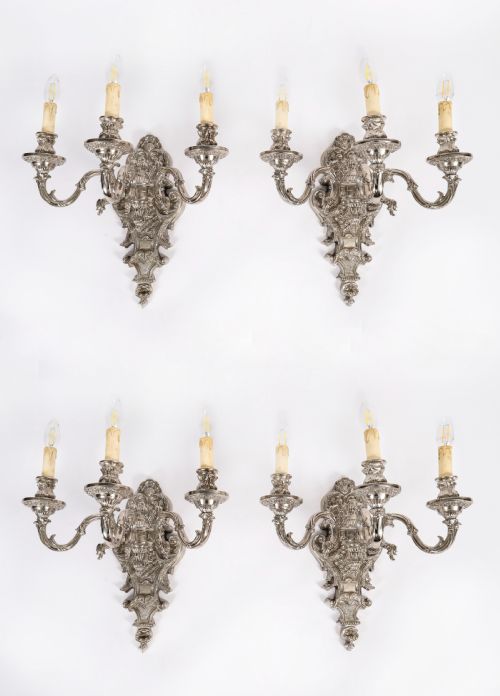
Metalworking forms the foundation of these pieces, utilising cast brass, bronze, and gilt metal shaped into intricate frames and arms. Many fixtures employ ormolu or silver plating over base metals to achieve a polished, reflective finish suited to formal interiors.
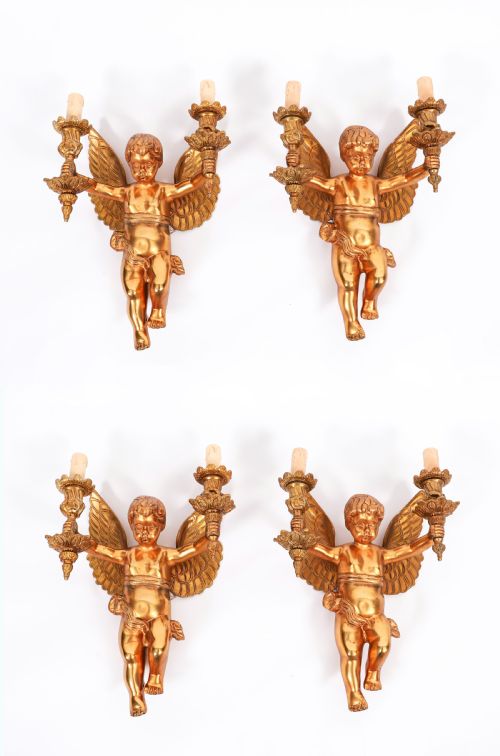
Foundry techniques of the nineteenth and early twentieth centuries allowed makers to cast detailed ornamentation, such as cherubs, rococo scrolls, and classical motifs, directly into the metal body. Sconces and wall lights were constructed with integrated backplates and secure branch joints to support multiple candle or lamp holders safely.
Listings feature brass, gilt bronze, ormolu, and silver-plated materials across wall lights, candlesticks, and ceiling lights spanning the nineteenth and twentieth centuries.
Factors that define quality
The sophistication of the casting and chiseled detail separates standard production from finer examples, particularly in the crispness of foliate scrolls and figural elements like cherubs. Heavier gauge metals and deeply chased gilt bronze or ormolu reflect greater input from skilled metalworkers.
Consistency across all four pieces determines the integrity of a set, as matched groups require uniform wear, plating retention, and identical components. Pieces retaining their original gilding, silver plating, or integrated hardware command greater interest from collectors.
Smith & Sissons & Co·William McGeoch & Co
The Antique Lighting Set Four Glossary
- Ormolu
- Gilded bronze applied to decorative hardware and lighting mounts during the eighteenth and nineteenth centuries. This technique involved coating a bronze base with a mercury and gold amalgam before heating.
- Applique
- A wall-mounted lighting fixture designed to hold candles or electric bulbs, also known as a wall sconce. These pieces often feature decorative backplates that reflect light into the room.
- Gimbal
- A pivoted ring mounting that allows a lamp or candlestick to remain upright despite movement or inclination. This mechanism was frequently utilised on marine and specialised lighting fittings.
- Ecclesiastical
- Pertaining to the Christian church and clergy, often describing heavy brass candlesticks and altar fittings produced for religious use. These items are typically robust in construction.
- Old Sheffield Plated
- A fused composite material made by melting a sheet of silver onto a thicker copper base before rolling them together. This method predated modern electroplating techniques.
Antique Lighting Set Four: Frequently Asked Questions
How were four-piece lighting sets used historically?
Matched sets of four wall lights or candlesticks were positioned symmetrically around a room, often flanking a mirror, fireplace, or architectural feature. This arrangement balanced illumination evenly across the space before the advent of central electric lighting.
In larger reception rooms and dining halls, multiple matched sconces created a unified decorative scheme that reflected candlepower off gilded surfaces and polished wood paneling.
What periods do these lighting sets come from?
The available lighting sets span the nineteenth century, the Edwardian era, and the early twentieth century, incorporating revival styles such as Louis XV, French Rococo, and Gothic Revival. Earlier Georgian and eighteenth-century influences also appear through later reproductions and enduring design traditions.
Materials and decorative motifs often reflect the prevailing aesthetic of their manufacturing decade, ranging from heavy Victorian brass to ornate Edwardian and French gilt bronze.
Are these lights converted for modern electricity?
Many wall lights, sconces, and table lamps among these groups have been adapted for electrical use over time, while others retain their original configuration for candles or heavy wax usage. Some listings specifically describe ceiling lights and light fittings equipped with shades.
Buyers should examine individual descriptions to determine whether a set requires professional rewiring or conversion to suit domestic electrical standards.
How do I care for antique brass and bronze lighting?
Maintenance involves gentle dusting with a soft, dry cloth to prevent the accumulation of dirt within intricate cast details like cherubs and rococo scrolls. Abrasive cleaners and harsh chemical polishes must be avoided to protect original finishes, gilt bronze, and silver plating.
Preserving the natural patina ensures the historical character and visual depth of the metal remain intact across all four pieces in the set.