

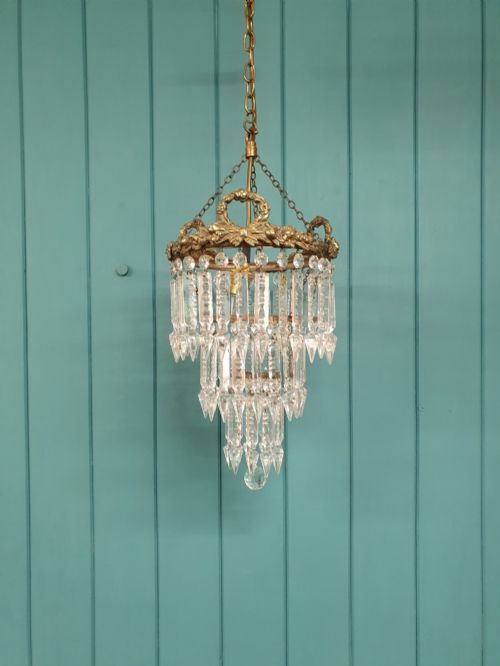


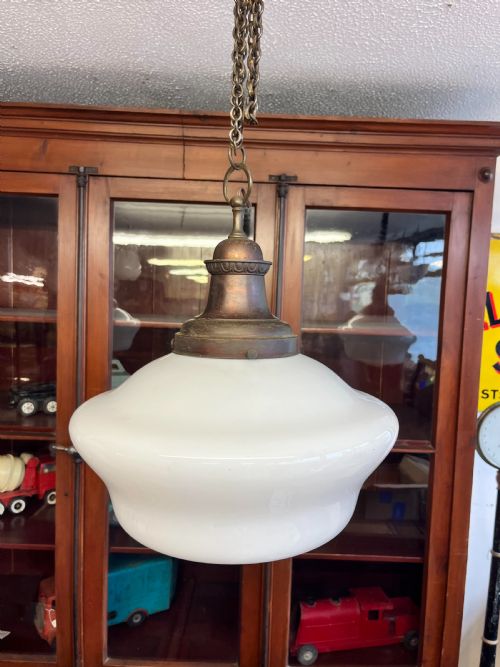

Vintage Brass Gallery Pendant
These vintage brass gallery pendant lights bring warm, diffused illumination and historic character directly into modern spaces.
Vintage Brass Gallery Pendant
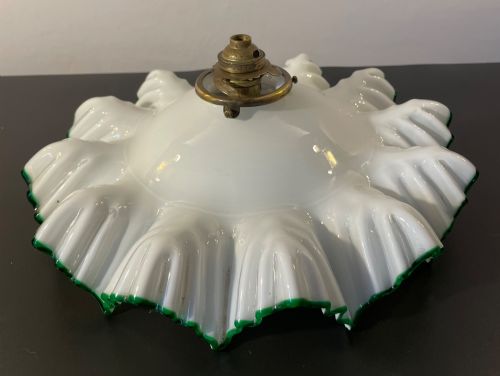
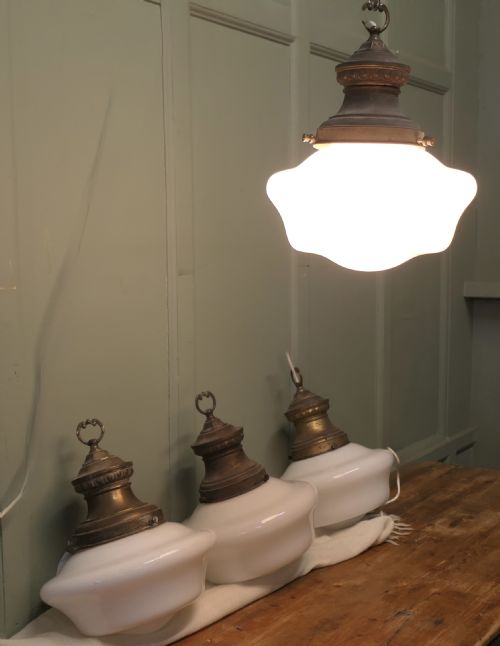
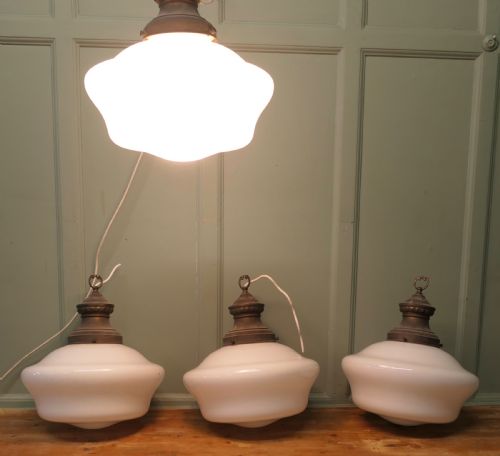
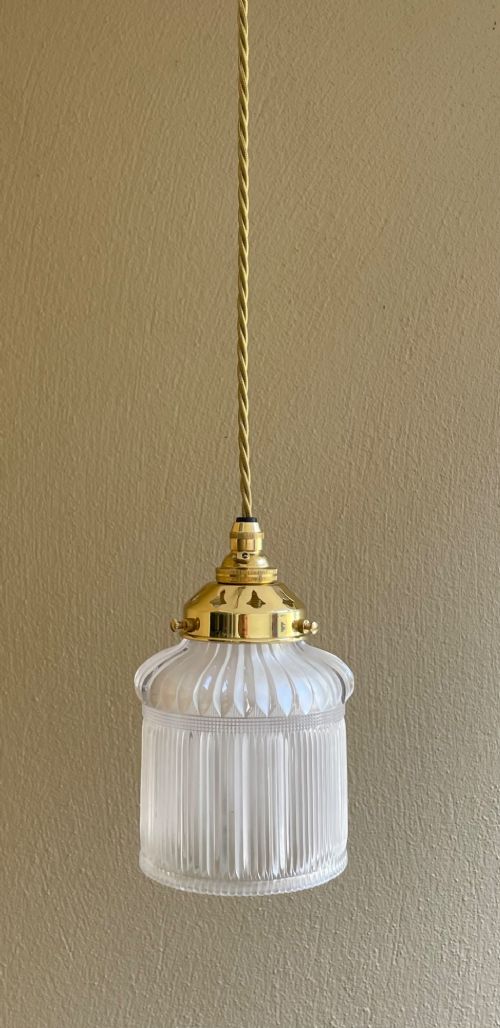
When you search for a vintage brass gallery pendant, you are looking at ceiling-hung fixtures that combine metal mountings with glass or crystal shades. The selection spans periods from the nineteenth century through the Edwardian era, the 1920s, 1930s, and into the 1940s. These pieces range from simple industrial workshop shades to decorative hallway lanterns and chandeliers.
The most common examples you will meet here are single pendant lights featuring opaline glass, prismatic glass, or cut glass shades held by brass fittings. Styles stretch across industrial, Art Deco, French country, and Edwardian designs, reflecting the domestic and commercial lighting needs of their respective decades.
Materials and construction methods
The physical build relies heavily on solid brass for the galleries, fitments, and ceiling roses, paired with various moulded, blown, or cut glass forms. Workshops utilised opaline glass for soft light diffusion, while industrial designs often incorporated prismatic glass to maximise illumination across factory floors and commercial interiors.
Manufacturing techniques combined metal spinning and casting for the brass components with specialised glass blowing for shades like pear-shaped opaline or conical pendants. Edges were often fitted into brass galleries designed to secure the glass firmly while presenting a neat decorative border.
Listings here feature brass paired with opaline, prismatic, and cut glass across periods spanning the nineteenth century to the 1940s.
Factors that separate the range
Quality in these hanging lights rests on the weight and finish of the brass components and the clarity and thickness of the glass shade. Superior examples show crisp casting in the metalwork and unblemished glass free from heavy distortion.
Subtleties in proportion and the integrity of the original fitments elevate certain pieces above standard utilitarian items. Details such as fine enamelling, matched period ceilings roses, or specialised prismatic patterning indicate higher original production standards.
The Vintage Brass Gallery Pendant Glossary
- Gallery
- The metal ring or collar that grips the top of a glass lampshade and connects it to the suspension cord or chain. This brass mount often defines the decorative character of the fixture.
- Opaline Glass
- A milky, translucent glass used widely for nineteenth and early twentieth-century lighting. It softens harsh lamp glare while emitting a warm, even glow.
- Prismatic Glass
- Moulded glass featuring geometric ribs or prisms designed to refract and diffuse light efficiently. It is strongly associated with industrial lighting from the early twentieth century.
- Ceiling Rose
- The decorative plate affixed to the ceiling that conceals the electrical wiring junction. Period examples are frequently fashioned from matching brass.
- Bag Chandelier
- A small, compact chandelier configuration where glass drops enclose the internal light source in a bag-like silhouette. These pieces were popular during the Edwardian period.
Vintage Brass Gallery Pendant: Frequently Asked Questions
How do I hang a vintage pendant?
Most of these fixtures suspend from a ceiling rose using a cord, chain, or rigid brass rod. You should consult a qualified electrician to ensure the wiring meets current safety standards before installation.
Consider the height of your ceiling and the intended use of the room when deciding on the drop length. Hallways and kitchens often require shorter clearance than dining tables.
Are these pendants suitable for low ceilings?
Certain compact forms, such as diminutive shades, hallway pendants, or shallow flush fittings, work well in rooms with restricted headroom. Measuring the total drop from ceiling to the base of the glass shade helps determine suitability.
Longer chain or cord suspensions can often be adjusted during installation to fit specific spatial requirements within a home.
How do I clean opaline glass shades?
Gentle washing with warm water and mild dish soap is usually sufficient for removing dust and everyday grime from glass components. Avoid harsh abrasive cleaners that might scratch the surface or damage brass galleries.
Carefully remove the shade from the brass gallery if possible to clean the inner rims safely, ensuring the glass is completely dry before reassembly.
Can modern bulbs be used in these?
Standard modern LED or incandescent bulbs that fit the original lampholder size can generally be used. Checking the dimensions of the glass shade ensures the bulb fits comfortably without touching the interior walls.
Opting for warm white bulbs helps replicate the traditional amber glow intended by the original nineteenth and early twentieth-century designs.