


Early Twentieth Century Lights
Early twentieth century lights bring practical illumination and period character to a room through solid brass, glass, and enamel.
Early Twentieth Century Lights
Early twentieth century lights encompass a range of functional and decorative fixtures from the Edwardian era through the nineteen-thirties. Buyers searching for early twentieth century lights encounter ceiling lights, chandeliers, desk lamps, pendant lights, and table lamps.
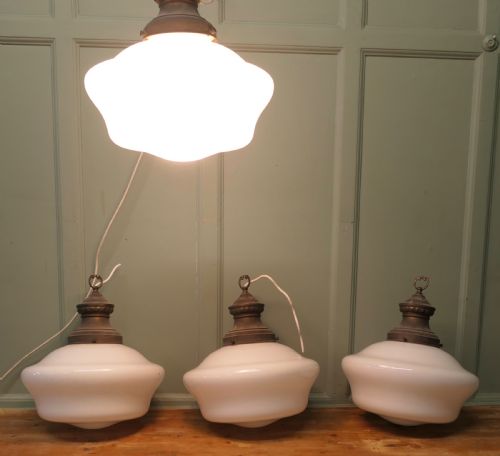
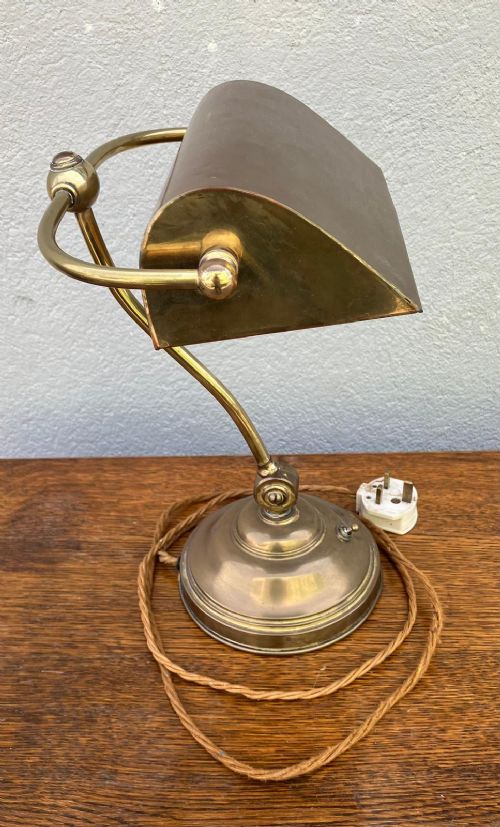
The selection includes industrial factory pendants, brass chandeliers, and desk lamps constructed from brass, iron, glass, and enamel. Pieces originate from periods spanning the nineteen hundreds, nineteen tens, nineteen twenties, and nineteen thirties.
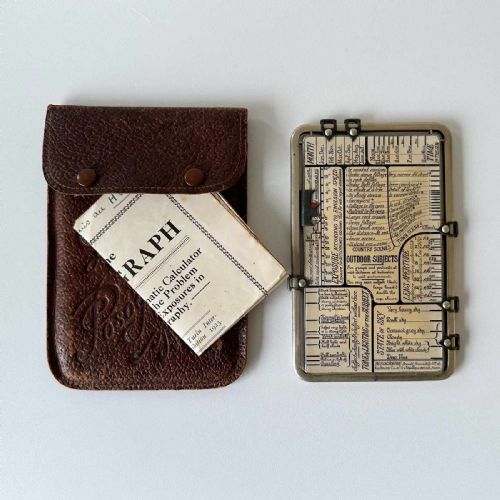
Stylistic influences vary across the selection, featuring Edwardian, industrial, Amsterdam School, neoclassical revival, and fairground designs. Candlesticks and scientific instruments also appear alongside standard domestic lighting forms.
How early twentieth century lights were made
Makers utilised solid brass, iron, and glass to construct durable frames and fittings designed for daily use in homes, factories, and public spaces. Metal components were cast, turned, or forged, often combining brass and iron elements in single fixtures such as pricket candlesticks.
Shades and diffuser elements incorporate opal glass, crystal, and green enamel finishes applied to metal surfaces for task and ambient illumination. Industrial pendants and factory lights relied on robust enamel coatings to withstand demanding environments.
Listings feature items from the Edwardian period through the nineteen thirties, constructed in brass, glass, iron, and enamel.
What varies in quality
The distinction between standard items and superior examples lies in the weight of the metal, the intricacy of the casting, and the integrity of the original components. Heavier gauge brass and ironwork provide structural stability and durability.
Finishes such as hand-applied enamel, cut crystal, and detailed brass ornamentation separate utility lighting from decorative statement pieces. The retention of original patination and specialised fittings indicates a higher grade of manufacture.
Auguste Robert Kauffman
The Early Twentieth Century Lights Glossary
- Chandelier
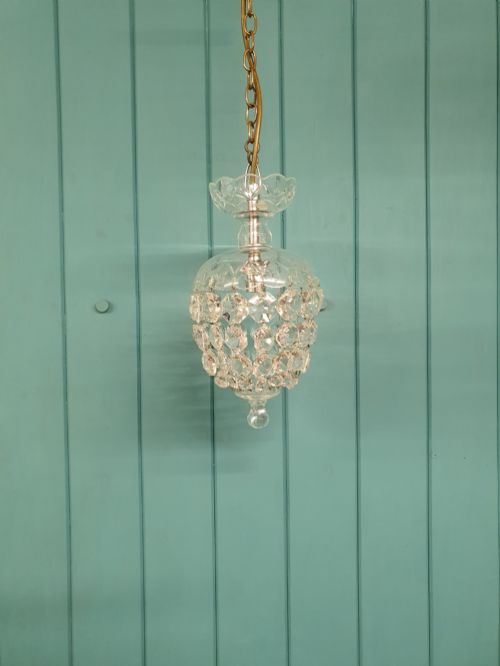
- A branched ceiling-mounted lighting fixture designed to hold multiple lamps or candles. These fixtures range from drop designs to multi-arm brass configurations.
- Pricket candlestick
- A candlestick featuring a central spike, or pricket, that pushes into the base of a candle to secure it. This form appears in heavy brass and iron pairings.
- Opal glass
- A translucent, milky white glass used for light shades to soften illumination and reduce glare. It diffuses light evenly across workspaces and living areas.
- Amsterdam School
- An architectural and design movement from the early twentieth century characterised by expressive, rounded forms and traditional craftsmanship. Pieces from this style utilise brass and iron.
- Pendant light
- A hanging light fixture suspended from the ceiling by a cord, chain, or metal rod. Industrial versions frequently incorporate enamel shades.
Early Twentieth Century Lights: Frequently Asked Questions
What styles define early twentieth century lights?
The selection includes industrial factory pendants, Edwardian brass chandeliers, Amsterdam School pieces, and neoclassical revival designs.
These varied styles reflect both domestic elegance and functional workspace requirements from the nineteen hundreds to the nineteen thirties.
What materials were used to make these lights?
Manufacturers primarily utilised solid brass, iron, and glass, alongside enamel finishes and crystal elements.
Metals were cast or forged into durable frames, while opal glass and enamel provided functional light diffusion.
How do I choose between a pendant and a chandelier?
Pendants typically hang from a single point and suit task areas or smaller spaces, often utilising industrial enamel or glass shades.
Chandeliers feature multiple arms or drop configurations designed to provide ambient lighting for larger rooms.
Are these lights suitable for modern electrical systems?
Most antique fixtures accommodate standard wiring updates performed by qualified professionals during installation.
Buyers should inspect the internal fittings and consult an electrician to ensure compatibility with current safety standards.