



Antique Landscape Dog Art
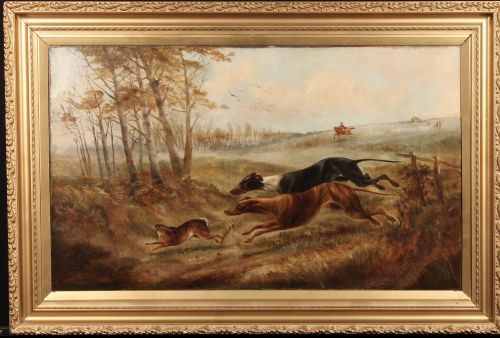
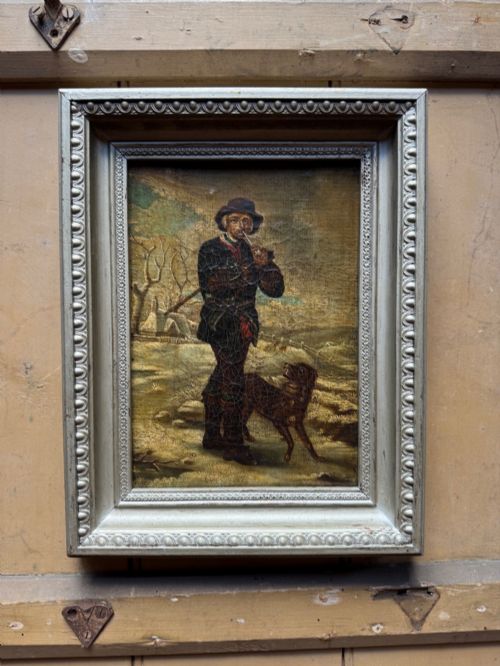
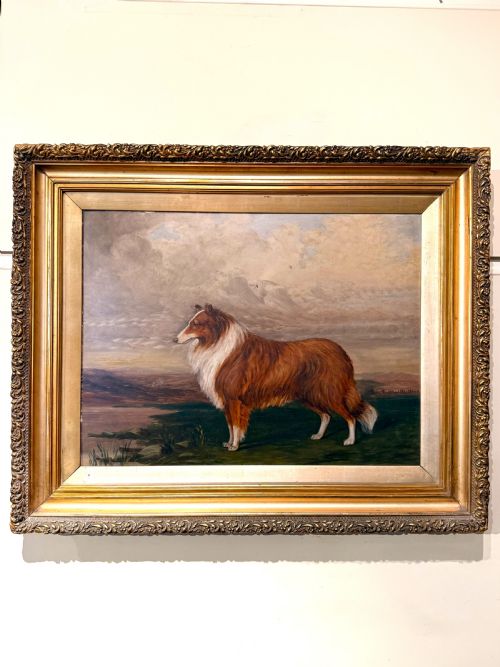
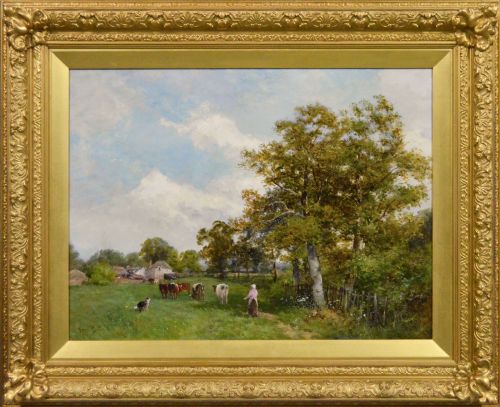
Antique landscape dog art brings together pastoral settings and canine companions, mostly captured through oil paintings on canvas during the nineteenth century.
Antique Landscape Dog Art
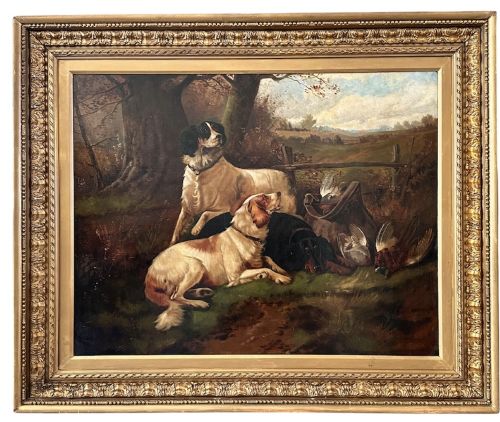
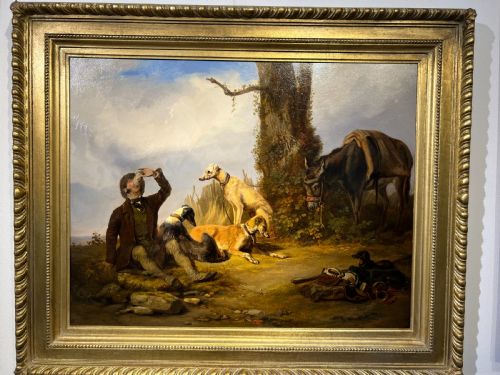
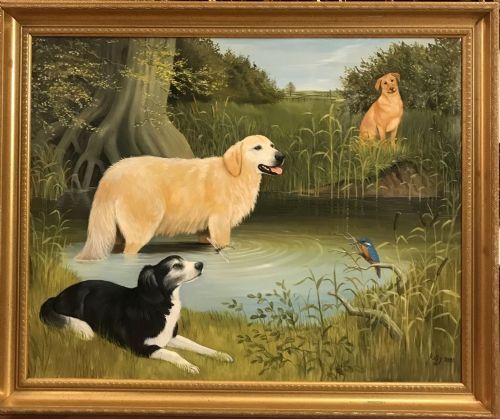
Antique landscape dog art captures canine subjects set within rural, moorland, or pastoral views, reflecting the strong sporting and domestic traditions of the nineteenth century.
The works most commonly encountered on this page take the form of oil paintings on canvas or board, alongside occasional watercolours, spanning periods from the eighteenth to the early twentieth century.
Animals appear both as working gun dogs and hounds participating in field sports, and as cherished pets resting beside farmworkers, children, or country houses.
How they were made
Painters relied primarily on oil paint applied to canvas or wood panels, building up rich textures for animal coats and atmospheric depth for background landscapes.
Finished works found their homes within heavy wooden frames, frequently enhanced with gesso and giltwood details to complement the domestic interiors of the period.
Several hounds manage to look remarkably unimpressed while participating in major winter fox hunts.
What varies in quality
The ability of the artist to render canine anatomy with conviction and individual expression separates standard records from masterly works.
The harmony between the animal subject and its surrounding landscape determines the overall artistic achievement of the composition.
George Armfield·David Bates·John Sargent Noble·Sir Edwin Henry Landseer·John Emms·John Frederick Herring Senior·Thomas Hicks·Arthur Wardle·William Barraud·Fannie Moody·Colin Graeme Roe·John Alfred Wheeler·Robert Cleminson·George Cole·Charles Bilger Spalding·George Stubbs·Henry Frederick Lucas-Lucas·James Ward
The Antique Landscape Dog Art Glossary
- Oil on Canvas
- Pigment mixed with drying oil applied to a stretched woven fabric support. This surface allows for subtle blending of tones across expansive skies and textured animal coats.
- Giltwood
- Wood carved and covered with a thin layer of gold leaf or metallic powder. These frames provide a traditional decorative border suited to nineteenth-century paintings.
- Sporting Art
- Genre depicting field sports, horses, and hounds in outdoor settings. These works record rural pursuits and valued working animals of the landed classes.
- Gesso
- A paint mixture consisting of a neutral binder mixed with chalk, gypsum, or pigment. It served as a smooth preparation base for wooden panels and decorative frame mouldings.
Antique Landscape Dog Art: Frequently Asked Questions
What subjects appear in these paintings?
Canine subjects range from working gun dogs and hunting packs to domestic pets positioned outdoors.
They appear alongside horses, farmworkers, children, and expansive country estates.
Which periods do these artworks represent?
Most surviving examples originate from the nineteenth century, particularly the Victorian era.
Earlier eighteenth-century compositions and pieces from the early twentieth century also feature among these selections.
How should I display these frames?
Giltwood and carved wooden frames require stable indoor environments away from direct sunlight.
Wall placement should avoid excessive humidity changes to protect both the canvas and the original framing.
Are these works signed by artists?
Many canvases carry signatures or attributions to recorded animal and landscape painters of the period.
Unsigned works typically reflect the output of regional schools or anonymous contemporary practitioners.