



Victorian Pet Portrait Art
Victorian pet portrait art captures beloved animals in oil on canvas and needlework, offering a direct window into nineteenth-century domestic life.
Victorian Pet Portrait Art
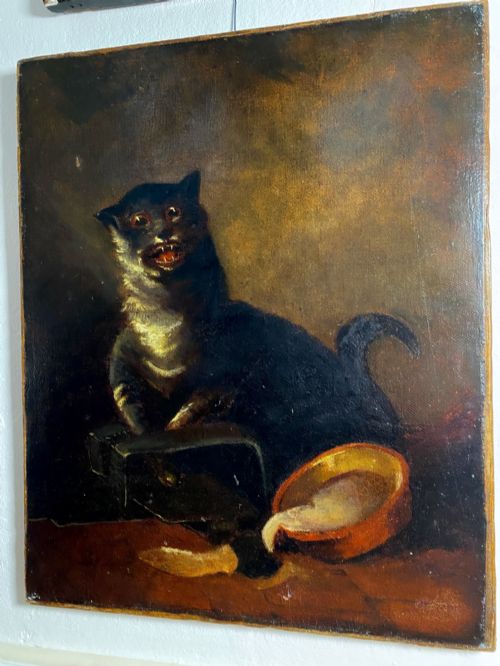
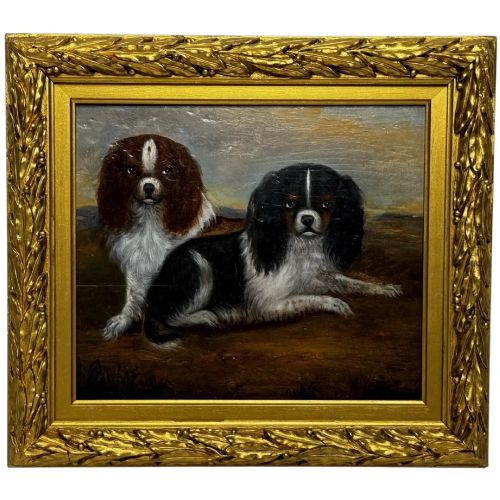
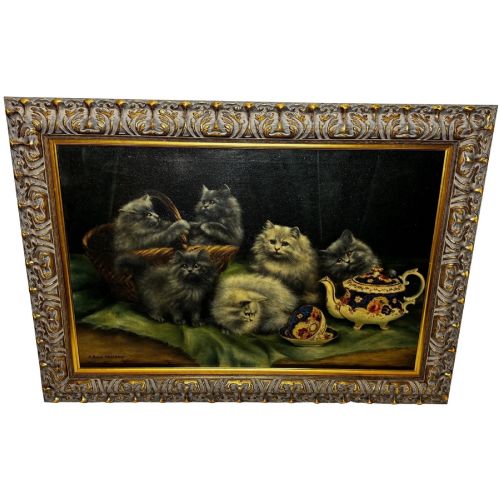
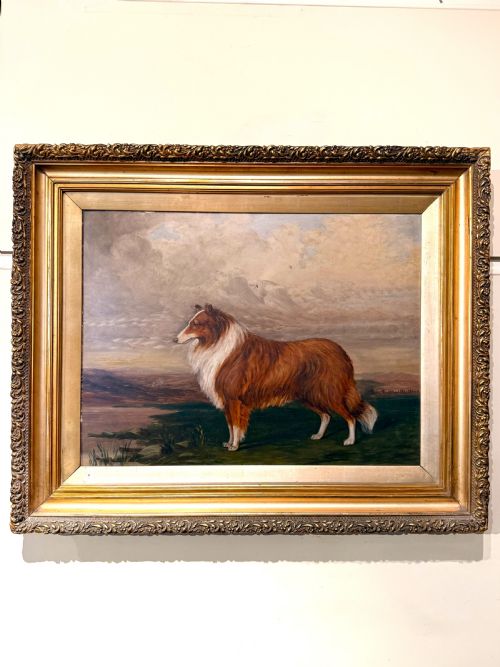
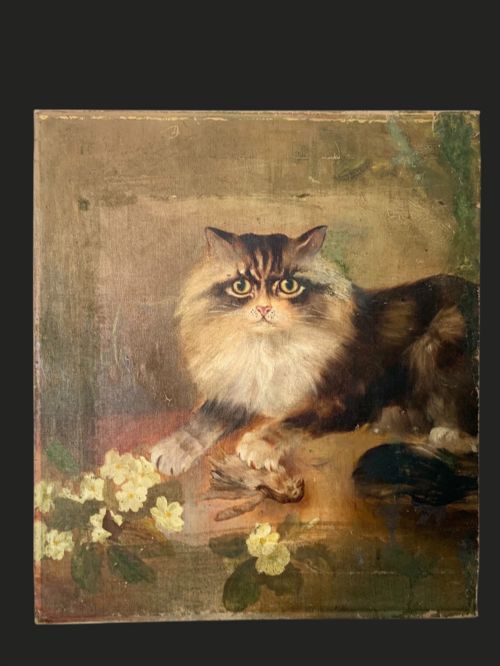
Victorian pet portrait art places dogs, cats, rabbits and other companions at the centre of the frame, rendered in oil paint or executed in needlework. These works range from naive school representations to detailed realism produced by professional artists.
Canvases and boards depict spaniels, terriers, greyhounds and kittens either as individual subjects or gathered in playful interior scenes. Buyers encounter both original oil paintings and period framed prints or textiles.
The periods span the nineteenth century into the early twentieth century, encompassing Regency examples and Edwardian pieces alongside standard Victorian works. Provincial English school pieces sit alongside signed works by named animal painters.
Materials and techniques
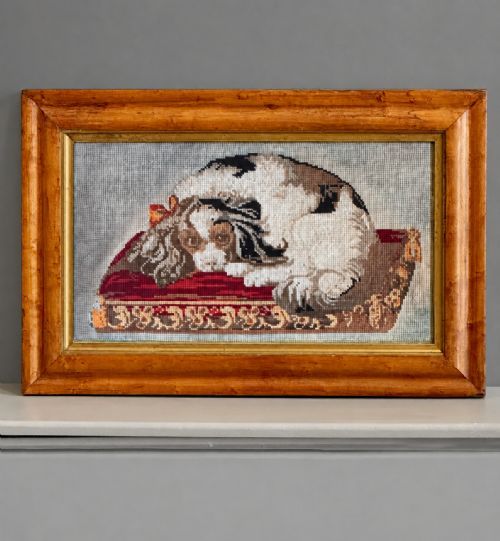
Artists built these images using oil paint applied to canvas or wood board, often housed within frames featuring gesso, gold leaf or burr maple. The physical construction relies on traditional stretched canvas supports or wooden panels.
Needlework pieces such as Berlin work utilise wool thread to build textured depictions of dogs. Framed prints and chromolithographs offer alternative mechanical and reproductive methods from the period.
Victorian Pet Portrait Art Retail Price Guide 2026
Typical asking prices for victorian pet portrait art among the pieces listed under this phrase on Sellingantiques today, from the lower quarter to the upper quarter. They describe what is for sale here now, not the wider market.
Listings feature oil paintings, oil on board, canvas, wood, gesso, gold leaf, and Berlin work needlework from the 19th century, Victorian, Regency, and Edwardian periods.
Distinctions in quality
Anatomical accuracy and the rendering of animal expression separate accomplished academic works from simpler naive school examples. The handling of fur texture and interior lighting demonstrates the painter's brush control.
The original framing contributes significantly to the integrity of a piece, particularly where burr maple and period gesso ornamentation remain intact. Signed works by recognised animal painters carry greater attribution weight than anonymous provincial studies.
Martin Theodore Ward·William Barraud·Agnes Augusta Talboys·John Henry Dell·Valentine Thomas Garland·Philip Eustace Stretton·Charles Burton Barber·Francisco Jose Domingo y Marques·Samuel John Carter·Jules Le Roy
The Victorian Pet Portrait Art Glossary
- Berlin work
- A type of nineteenth-century needlework using wool on canvas, charted on squared paper to create coloured patterns of animals and figures.
- Oil on board
- A painting executed with oil colour directly onto a wooden panel or stiff card rather than stretched canvas.
- Naive school
- Art produced by self-taught or provincial painters working outside academic traditions, often noted for flat perspective and direct charm.
- Chromolithograph
- A colour lithographic print used in the nineteenth century to reproduce original artworks commercially.
- Gesso
- A plaster-like mixture applied to wooden frames as a base for moulding and gilding with gold leaf.
Victorian Pet Portrait Art: Frequently Asked Questions
What animals appear most often?
Dogs and cats dominate these works, particularly spaniels, terriers and kittens shown resting or playing.
Other subjects include rabbits and greyhounds depicted as racing champions or loyal companions.
Are these works signed?
Many oil paintings carry signatures or attributions to professional animal artists of the nineteenth century.
Others originate from provincial schools or naive painters who left their canvases unsigned.
How do I identify the period?
Dates rely on artist life spans, inscribed years on the canvas, and stylistic markers associated with the nineteenth century.
Framing materials like burr maple and gesso also provide clues to the era of production.
What supports are used?
Artists painted primarily on stretched canvas or wooden board using oil colours.
Alternative mediums include Berlin work needlework and chromolithograph prints.