




Antique Lalique Dish
An antique lalique dish brings tactile glass artistry from the early twentieth century into modern interiors through moulded forms and opalescent finishes.
Antique Lalique Dish
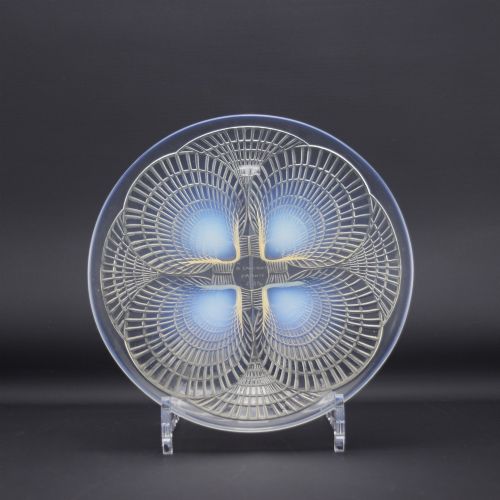
An antique lalique dish spans decorative bowls, shallow plates, chargers, and pin dishes originating primarily from the nineteen-twenties and nineteen-thirties. These glass items take many forms, including footed vessels, open coupes, and small powder boxes.
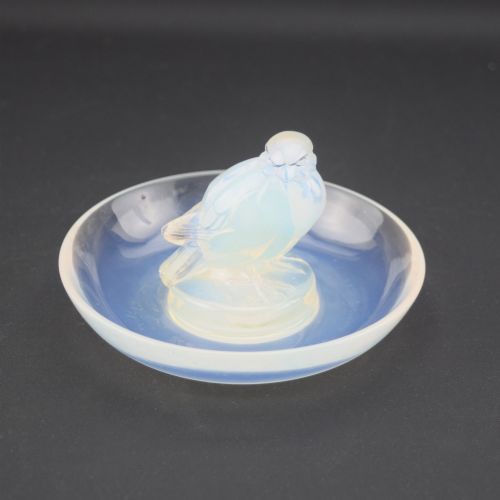
Pieces range from compact pin dishes intended for dressing tables to large chargers and deep bowls designed to command attention in a room. Buyers encounter various glass treatments, from clear and frosted surfaces to amber tones and opalescent effects.
How they were made
Makers utilised techniques involving pressed, moulded, and crystal glass to shape intricate reliefs and three-dimensional motifs into the material. Artisans manipulated the thickness of the glass to control how light interacted with the vessel.
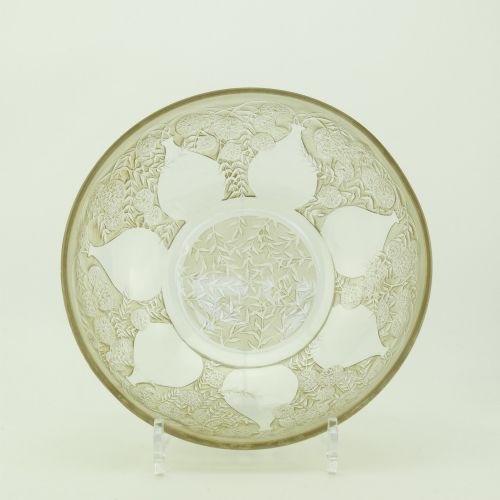
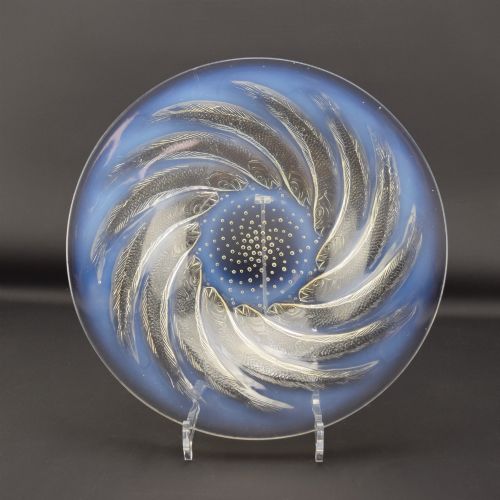
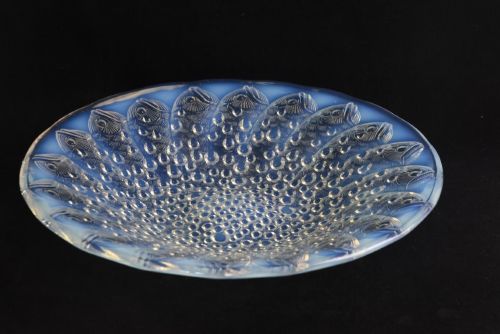
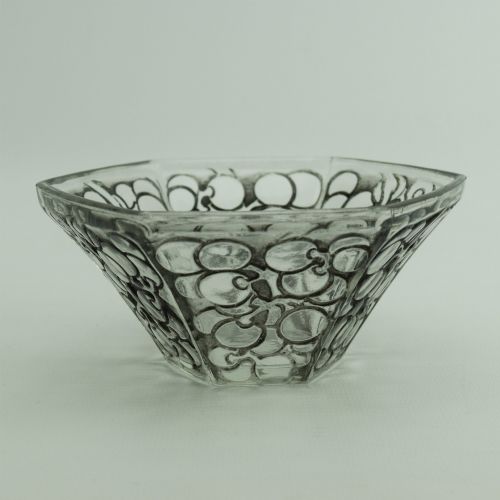
Surfaces frequently received secondary treatments such as sepia staining, grey enamel, or patination to highlight the moulded details of fish, flora, and figures. Opalescent glass required precise thermal manipulation during cooling to achieve its signature milky blue glow when lit from the front.
Listings span the Edwardian period through the nineteen-thirties, featuring Art Nouveau and Art Deco styles in moulded, frosted, and opalescent glass.
What varies in quality
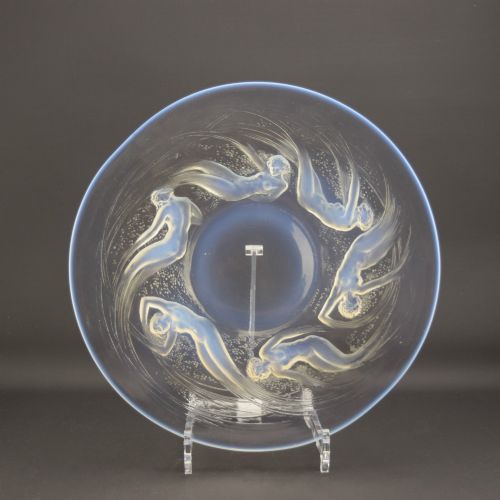
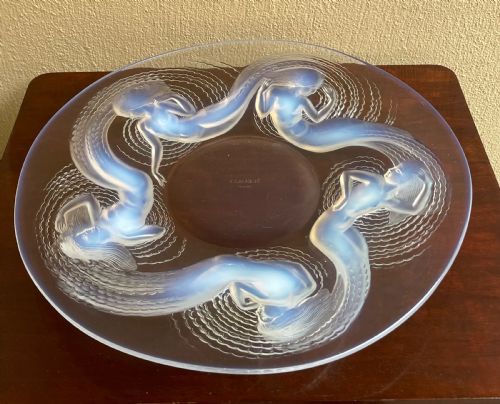
The crispness of the moulded relief and the depth of the sepia or enamel staining dictate the visual impact of each piece. Superior examples display sharp definition in complex subjects like sirens, fish, and feathers.
The quality of the opalescent effect varies according to the glass formulation and the firing process, producing stronger colour shifts between transmitted and reflected light in finer vessels.
Rene Lalique
The Antique Lalique Dish Glossary
- Opalescent Glass
- Glass that appears milky bluish-white when viewed with light on the surface, yet turns a warm amber or orange when light passes through from behind. This optical property defines many celebrated twentieth-century tableware items.
- Coupe Ouverte
- An open bowl or shallow vessel designed with wide sides to display decorative motifs across the interior floor. These forms often feature moulded floral or animal designs.
- Patinated Glass
- Glass treated with pigment or stain applied to recessed areas of the mould to accentuate contrast and depth. This technique brings out the fine details of birds, flowers, and geometric patterns.
- Frosted Glass
- Glass treated to have a textured, matte surface finish rather than a transparent polished look. It diffuses light evenly across decorative reliefs.
Antique Lalique Dish: Frequently Asked Questions
How do I clean an antique glass bowl?
Wash the glass gently by hand using lukewarm water and mild soap, avoiding abrasive sponges or harsh chemical cleaners that might damage the surface or any applied staining.
Dry the vessel thoroughly with a soft lint-free cloth to prevent water spots from forming on the moulded relief details.
What is an opalescent dish?
An opalescent dish is a glass vessel formulated to scatter light in a way that creates a milky blue appearance on its raised surfaces. When held against the light, the same glass often reveals a warm amber or yellowish tint.
This dual visual characteristic results from specific chemical compounds and controlled cooling techniques applied during production in the early twentieth century.
How can I tell Art Deco from Art Nouveau pieces?
Art Nouveau designs typically feature organic, flowing lines inspired by natural forms such as flower heads, scrolling vines, and human figures. These pieces often date closer to the Edwardian era and the early nineteen-tens.
Art Deco works embrace more symmetrical, geometric patterns and stylised motifs that reflect machine-age aesthetics from the nineteen-twenties and nineteen-thirties.
Where should I display a shallow plate?
A shallow plate or charger looks striking displayed upright in a secure plate stand on a sideboard or mantelpiece where ambient light can pass through the glass. This positioning allows the opalescent or stained details to catch illumination from the room.
Alternatively, place smaller dishes flat on a dressing table or side table where their tactile relief work can be appreciated close up.