
Antique Lacquered Cupboard
An antique lacquered cupboard brings rich hand-painted scenes and deep lustrous finishes into a room.
Antique Lacquered Cupboard
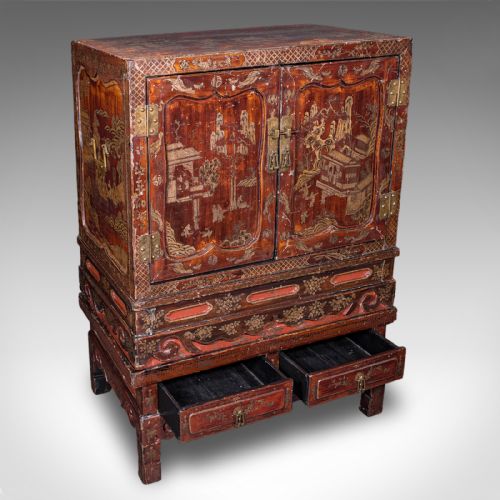
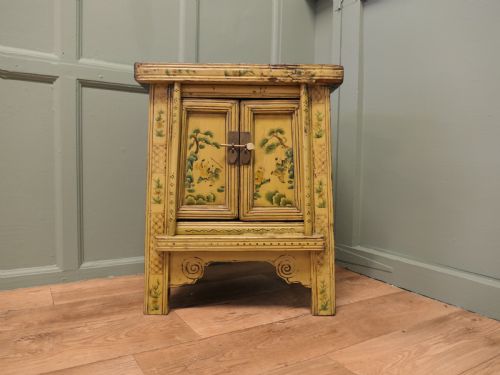
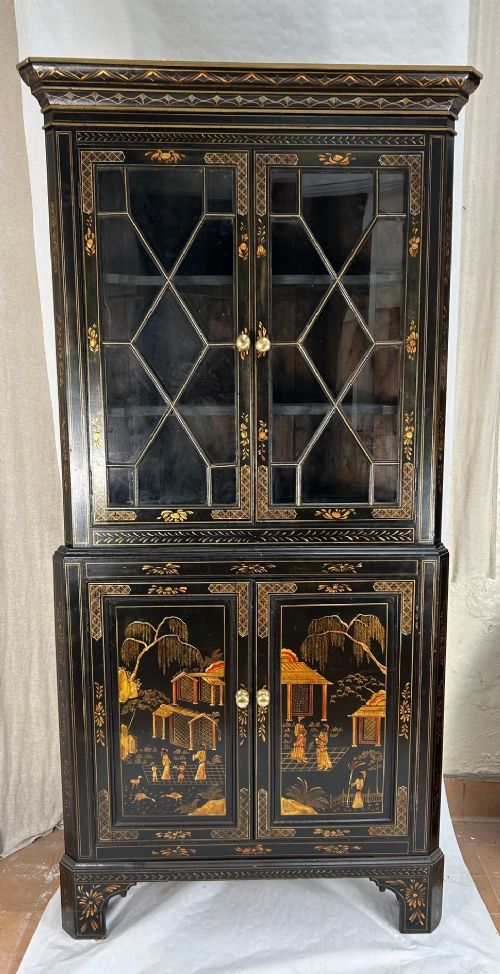
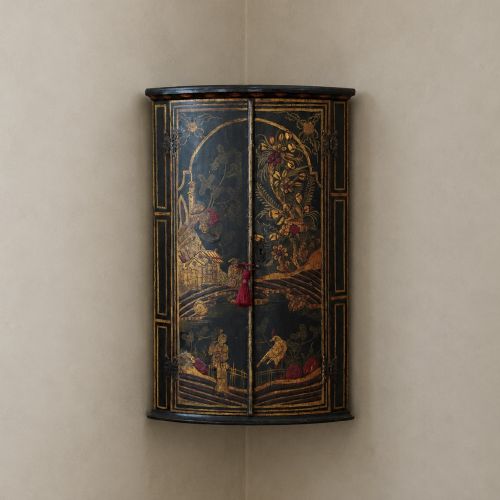
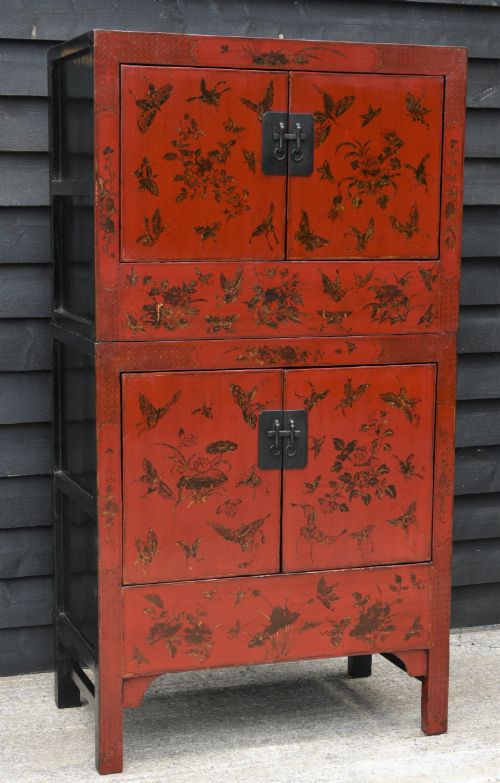
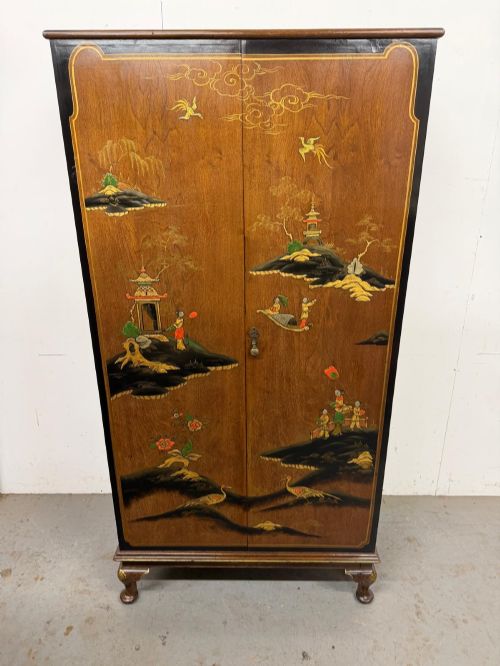
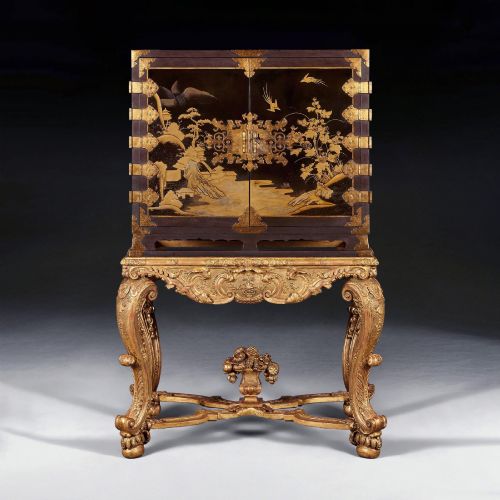
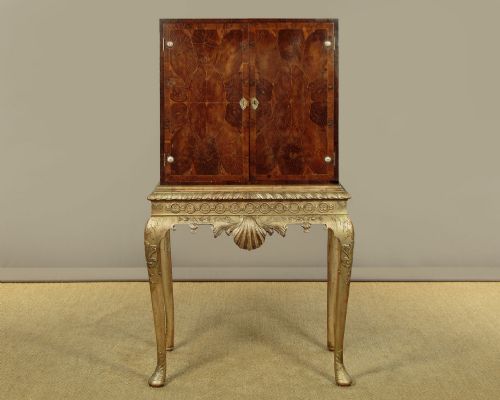
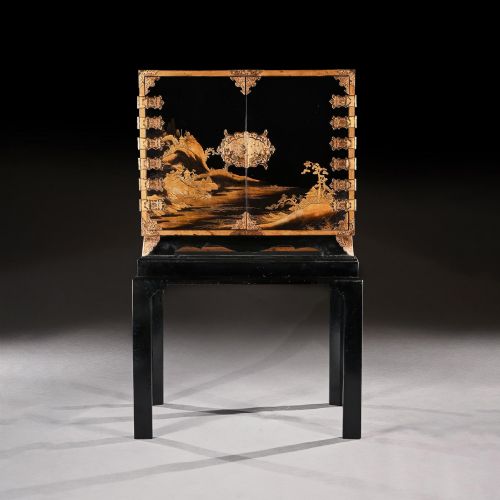
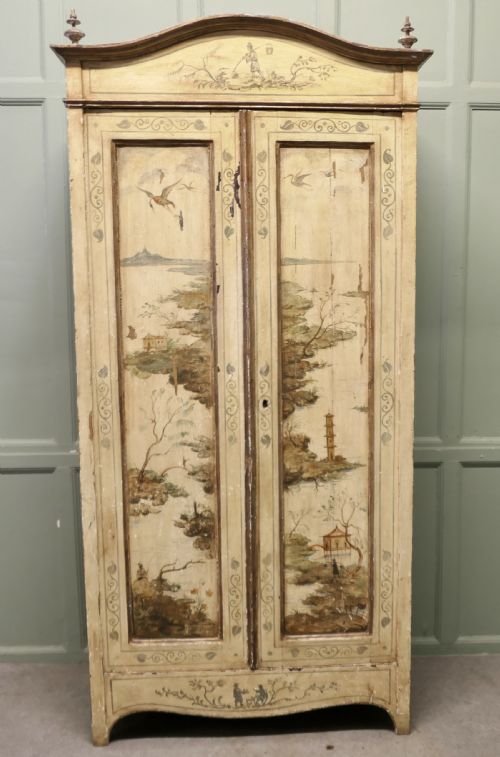
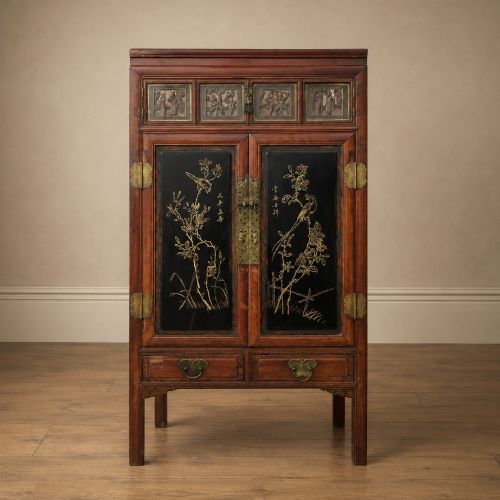
When searching for an antique lacquered cupboard, buyers encounter everything from tall marriage cabinets and compact corner cupboards to elaborate side cabinets on stands. These pieces span the eighteenth, nineteenth, and early twentieth centuries, drawing on diverse origins including traditional Chinese workshops, Japanese periods, and European imitation finishes.
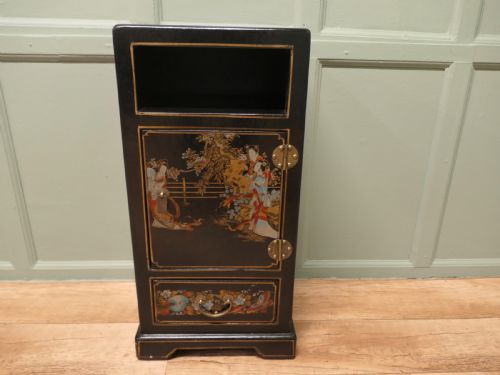
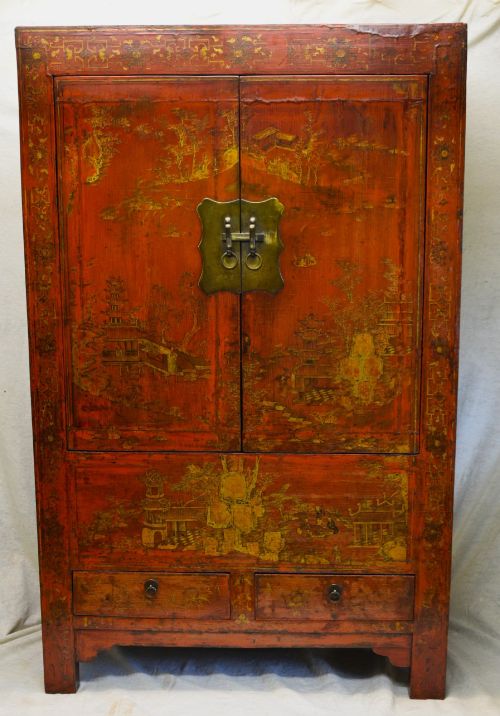
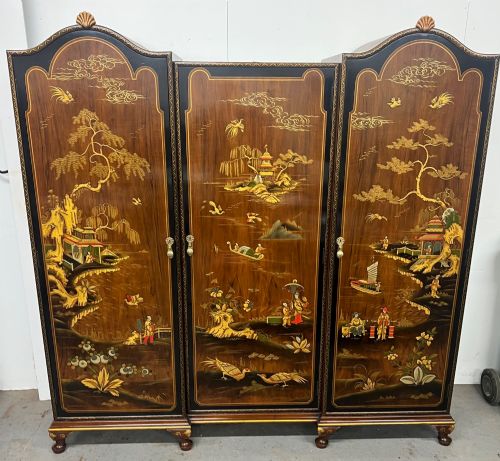
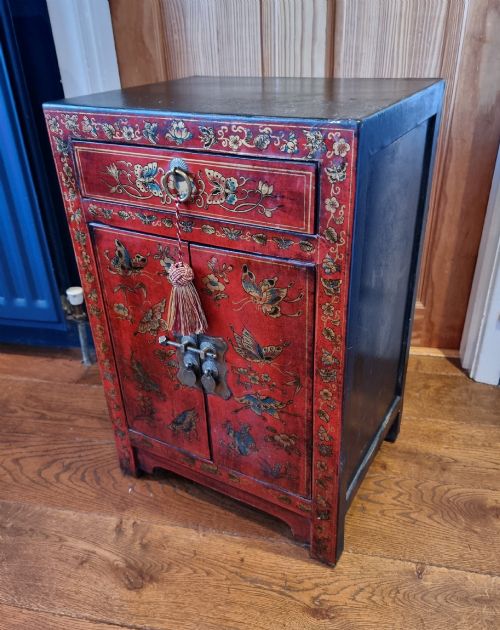
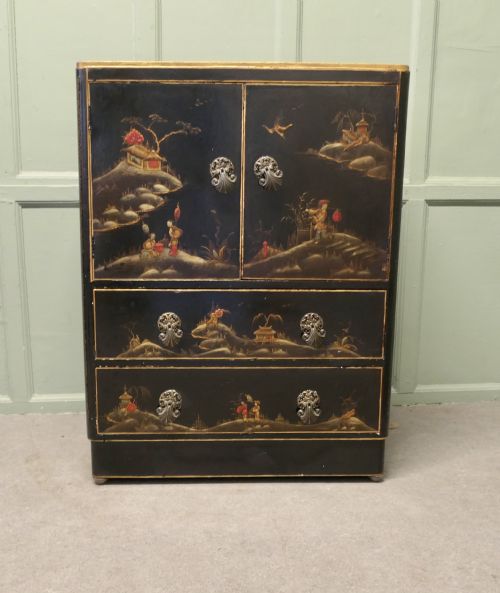
The most common versions on this page are nineteenth-century Chinese wedding cabinets in red or black lacquer and British Chinoiserie corner cupboards from the Georgian and Edwardian eras. Buyers also find twentieth-century cocktail cabinets and apothecary chests, showing how makers adapted oriental designs for Western interiors.
Materials and construction
These pieces rely on solid timber foundations, frequently elm or pine for Chinese marriage cabinets and oak or deal for British Chinoiserie carcases. Artisans applied successive coats of natural lacquer or paint to build a smooth base before adding detail.
Decoration often involved intricate hand-painted outdoor scenes, sometimes heightened with gold leaf, gilt, or brass hardware. European makers achieved similar effects through Japanning, building up layers of varnish to mimic Asian import goods.
Shanxi apothecary chests on this page offer up to eighty tiny drawers once destined for dried roots and herbs.
Assessing quality
Quality rests upon the depth and durability of the surface finish, alongside the crispness of the hand-painted decoration or carved elements. Pieces retaining their original polychrome pigments and gilt details without heavy modern overpainting command greater interest.
Construction integrity also dictates standard, with sturdy cabinet joints, well-hung doors, and original brass or gilt metal mounts elevating a piece above lesser examples.
Maples & Co.·Harrods
The Antique Lacquered Cupboard Glossary
- Chinoiserie
- European decorative style reflecting Chinese artistic influences, popular in furniture and interior design during the eighteenth and early twentieth centuries. Artisans used this style to create fantastical landscape scenes on cabinets and screens.
- Japanning
- European imitation of East Asian lacquerwork developed in the seventeenth and eighteenth centuries. Craftsmen built up layers of varnish on wood before decorating the surface with painted or gilt motifs.
- Marriage cabinet
- Large storage piece traditionally given to couples in China as part of dowry furnishings. These items often feature striking red lacquer and substantial brass or bronze hardware.
- Tansu
- Traditional Japanese mobile storage chest constructed from wood with iron fittings. These functional pieces range from simple step chests to elaborate multi-section designs.
- Giltwood
- Timber carved and coated with gold leaf or gold paint to create a decorative metallic finish. It frequently appears on the stands supporting seventeenth and eighteenth-century lacquer cabinets.
Antique Lacquered Cupboard: Frequently Asked Questions
How do I date an antique lacquered cupboard?
Dating relies on combining the timber species, construction methods, and stylistic cues of the hardware and painted decoration. Eighteenth-century pieces often display hand-cut joinery and aged craquelure in the varnish.
Later Edwardian or twentieth-century examples frequently use standardised fixings and brighter synthetic binders beneath the surface layers.
Where should I place a lacquer cupboard?
These striking cabinets work well as focal points in living rooms, hallways, or dining areas where their painted surfaces and metallic highlights catch the light. Their vertical proportions also make them suitable for bedroom storage.
Keep them away from direct sunlight and strong heat sources to protect the delicate lacquer finishes from fading and drying out.
What is the difference between Chinese and European lacquer?
Authentic Asian lacquer uses sap harvested from specific trees native to the region, building into a tough, water-resistant natural resin through careful drying. European Japanning typically relied on shellac, varnishes, and paints applied over wood.
While both methods produce glossy decorative surfaces, traditional Asian lacquer offers exceptional durability and depth compared to European imitations.
How do I care for an antique lacquered surface?
Maintain the finish by dusting gently with a soft, dry microfiber cloth rather than using commercial spray polishes or abrasive cleaners. Moisture and chemical agents can damage aged layers.
Maintain stable room humidity to prevent the underlying wood from expanding and causing the lacquer surface to crack or lift.