

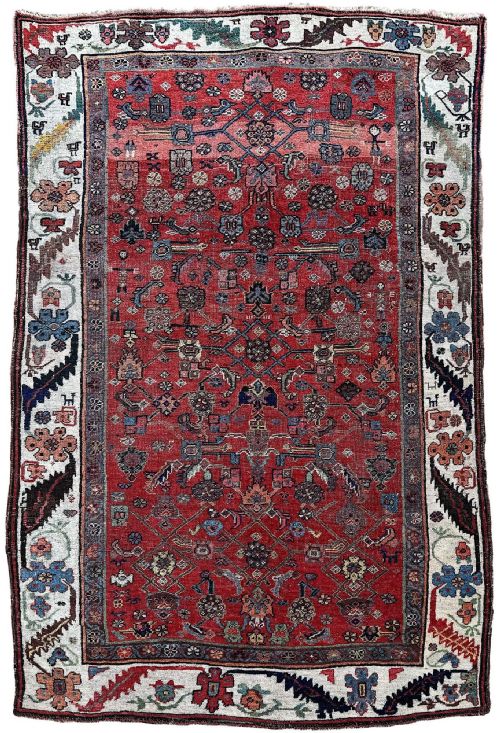
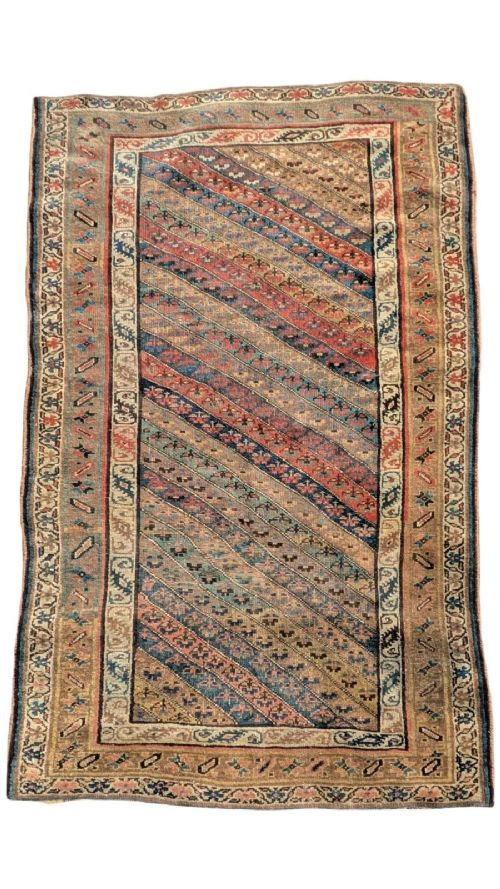
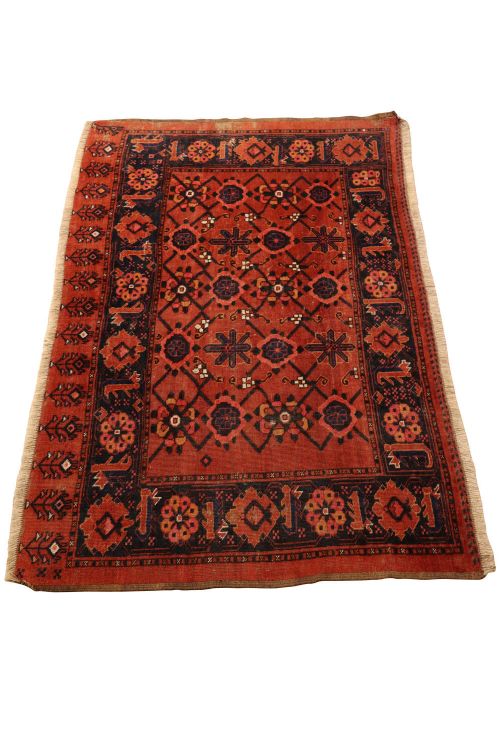


Antique Kurdish Floor Rug
An antique kurdish floor rug brings the heavy weave and tribal geometry of West Persia directly onto the boards.
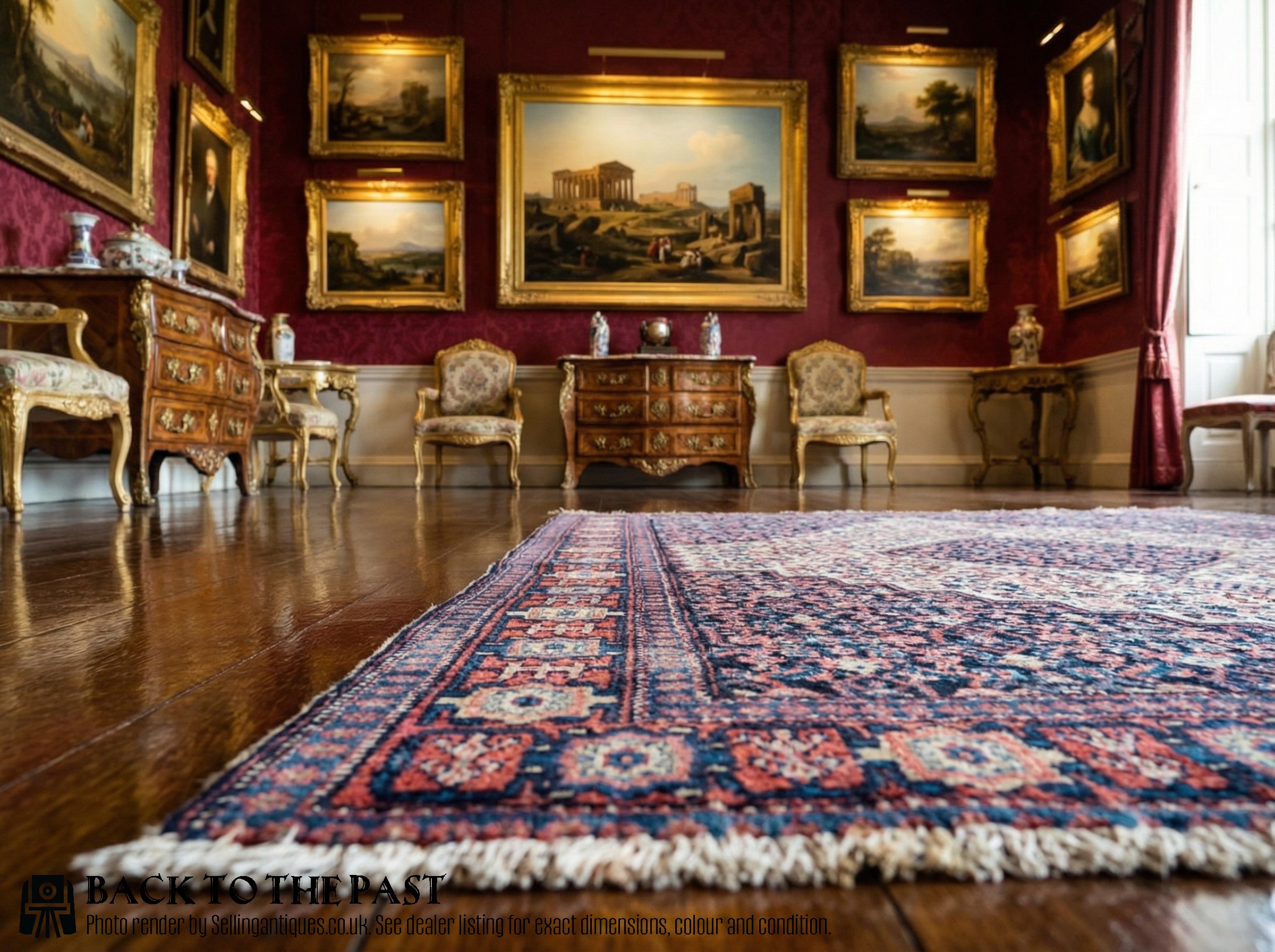
Antique Kurdish Floor Rug
An antique kurdish floor rug is a heavy wool weaving produced by nomadic and village tribes across the rugged mountainous regions of West Persia. These pieces range from compact village mats to elongated runners and room-sized carpets shaped by traditional tribal makers.
The selections encountered most frequently on this page date from the nineteenth century through the early decades of the twentieth century. Examples span various distinct groupings, including Bidjar, Senneh, Jaf, and Bakhtiari tribal productions.
Buyers seek these textiles for their robust construction and deep, saturated palettes that anchor high-traffic spaces. Each piece carries vernacular motifs passed down through generations of weavers.
How they were made
The construction relies on durable wool pile knotted firmly onto sturdy cotton or wool foundations. This dense knotting creates a rigid, resilient handle designed to withstand decades of daily foot traffic.
Dyers utilised natural materials to achieve rich reds, deep blues, and ivory grounds that patinate gracefully over time. Hand-spun wool yarns absorb these organic dyes unevenly, producing subtle tonal variations known as abrash.
Weavers constructed these carpets on portable horizontal looms or stationary village frames. The resulting edges and ends often feature characteristic wool overcast stitching unique to specific tribal groups.
Listings span multiple nineteenth and early twentieth-century periods, constructed primarily from wool pile on cotton or wool foundations.
What varies in quality
Pile density and knot count dictate the crispness of geometric medallions and latch-hook details. Finer weaves allow intricate botanical shrub patterns and complex borders to resolve with distinct clarity.
Structural integrity depends on the original tension of the foundation and the preservation of the selvedges. Tightly beaten wefts prevent the pile from shifting, ensuring the rug retains its architectural shape under heavy use.
Colour saturation and the harmonious balance of natural dyes elevate certain examples above standard village output. A well-preserved palette maintains its depth without excessive fading or clumsy chemical correction.
Quchan Kurds·Sauj Bulagh Tribe·Chahar Mahal Valley
The Antique Kurdish Floor Rug Glossary
- Bidjar
- A durable West Persian carpet type known for its dense construction and heavy wool pile. These pieces are often called the iron rugs of Iran due to their rigid foundation.
- Senneh
- A delicate village weaving style characterised by fine knotting and boteh motifs. These lighter rugs originate from the Kurdistan province.
- Abrash
- A natural variation of colour within a single field caused by changes in dye batches or hand-spun wool. This uneven tone signals authentic traditional dyeing methods.
- Latch hook
- A stepped geometric motif commonly found projecting from medallions or borders in tribal carpets. The design holds symbolic protective qualities in nomadic weaving.
- Kelleh
- A traditional format for a long carpet, typically narrower and longer than standard room sizes. These runners suited the specific proportions of Persian domestic architecture.
Antique Kurdish Floor Rug: Frequently Asked Questions
Where should I place an antique kurdish floor rug?
These sturdy wool textiles suit high-traffic areas such as hallways, living rooms, and studies where durability matters. Their dense construction absorbs foot traffic while providing warmth and grounding the room's colour scheme.
Runners fit naturally along corridors or beside beds, whereas larger carpet formats anchor dining tables or seating groups. Ensure the rug sits flat to protect the foundation yarns from uneven wear.
How do I clean and maintain an old tribal rug?
Regular gentle vacuuming without a beater bar removes trapped grit from the wool pile before it damages the foundation. Lift the rug periodically to clean underneath and prevent moisture accumulation.
Professional specialist cleaning is necessary for deep washing to preserve the natural lanolin in the wool. Avoid harsh chemical spot treatments that strip organic dyes from the yarn.
How can I tell a Bidjar from a Senneh rug?
Bidjar weavings feel exceptionally heavy and stiff due to an intensely packed foundation and thick wool pile. They frequently display bold geometric medallions and robust floral fields designed for heavy utility.
Senneh rugs are much lighter and more flexible, featuring finely knotted surfaces with delicate all-over patterns or single central boteh motifs. The touch and weight immediately separate the two styles.
What causes abrash in traditional Persian carpets?
Abrash occurs naturally when dyers mix small batches of vegetable dye or use different skeins of hand-spun wool. As the yarn absorbs the colour slightly differently, horizontal bands of subtle shade variation appear across the field.
This characteristic confirms the rug was made by hand using traditional village methods rather than industrial chemical dyes. Collectors value these tonal shifts for the authentic character they add to the surface.