



Antique Kurdish Corridor Rug
An antique Kurdish corridor rug brings the dense geometric patterns and robust tribal artistry of nineteenth-century village weavers directly into narrow hallways and long galleries.
Antique Kurdish Corridor Rug
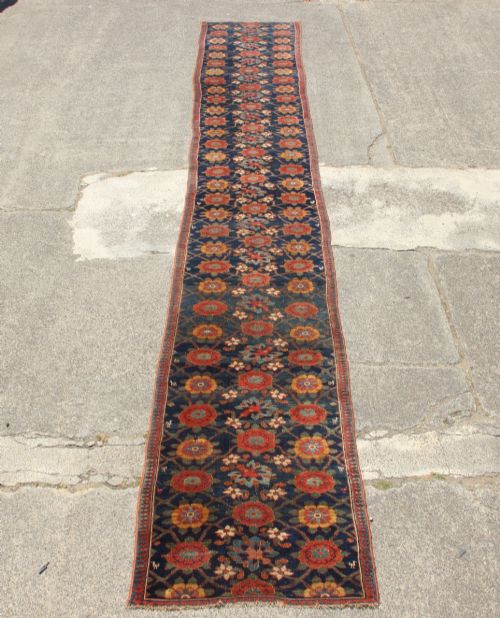
An antique Kurdish corridor rug is an elongated tribal floor covering created by nomadic and village weavers across western Persia. These pieces typically take the form of narrow runners and long carpets designed to fit specific architectural spaces like hallways and landings.
The pieces on this page span several decades from the mid-nineteenth century through the early twentieth century. They manifest in styles recorded as Kurdish tribal, Persian Bidjar, and South Caucasian, reflecting the cross-cultural influences of the region.
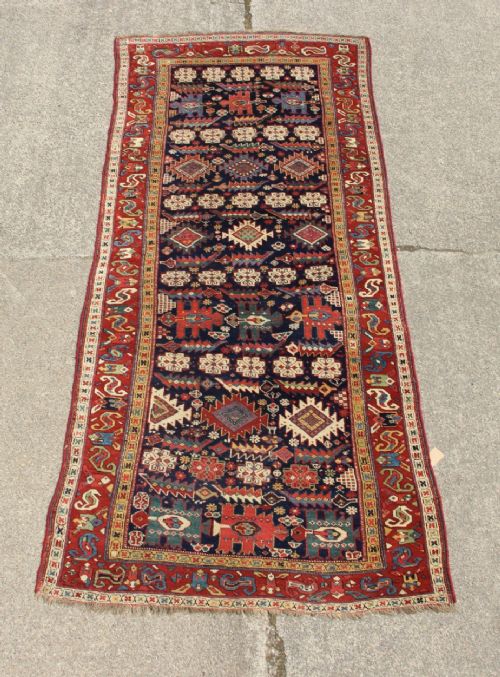
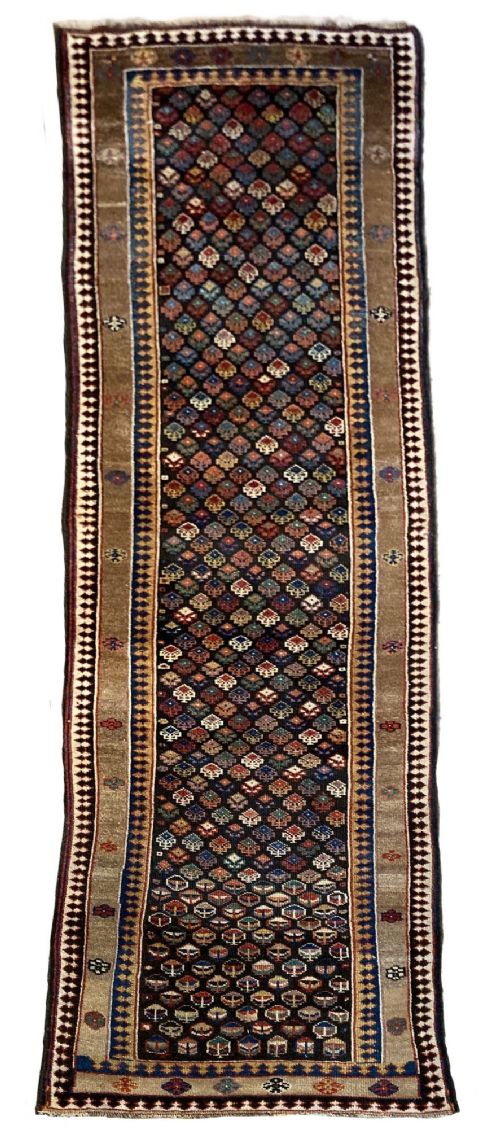
Makers utilised familiar regional formats, producing formats such as the Kelleh and the extended gallery runner. Their visual vocabulary ranges from repeat shrub and Mina Khani motifs to latch-hook medallions and figurative details.
How They Were Made
Weavers constructed these long carpets using durable wool foundations and hand-spun wool pile. Cotton foundation threads also appear in specific village productions, providing structural stability for the elongated format.
Natural dyeing methods produced the deep tones characteristic of these textiles. Hand-spun wool absorbed these colourants unevenly, creating subtle abrash variations across the surface of the runner.
The listings on this page span production dates from the 1850s through the 1930s.
What Varies in Quality
Quality rests upon the density of the weave and the crispness of the tribal design. Tighter knotting supports intricate details such as birds perched on trees or precise Memling gul motifs along the field.
The handling of the wool stock and the retention of original border proportions dictate the visual balance of the piece. Superior examples maintain structural integrity and clear secondary motifs from end to end.
The Antique Kurdish Corridor Rug Glossary
- Kelleh
- A Persian carpet format that is longer than a standard room rug but wider than a corridor runner. It served specific domestic functions in nineteenth-century village homes.
- Mina Khani
- A repeating floral lattice pattern composed of daisy-like blossoms linked by curved vines. This design frequently spans the dark fields of Kurdish and Persian carpets.
- Abrash
- A natural variation in rug pile colour caused by shifts in dye batches or hand-spun wool lots. It manifests as horizontal bands of subtle tone shifts.
- Memling Gul
- An octagonal tribal medallion design featuring hooked or stepped outlines. Named after the Renaissance painter who depicted similar Anatolian carpets in his works.
- Runner
- A long, narrow carpet format intended for corridors, staircases, and narrow hallways. These pieces measure significantly longer than they are wide.
Antique Kurdish Corridor Rug: Frequently Asked Questions
Where were these rugs made?
These textiles originate from the mountainous regions of western Persia, historically inhabited by Kurdish tribes and village communities.
Production centres also encompassed surrounding areas including Bidjar, Hamadan, and parts of the South Caucasus.
How do I care for an old runner?
Protect the textile by placing a quality underlay beneath it to prevent slipping and reduce friction against hard floors. Vacuum gently without using a rotating brush roll.
Rotate the runner periodically to ensure even wear across high-traffic areas of the hallway.
What is a Kelleh carpet?
A Kelleh is a specific format of Persian rug that bridges the dimension between a standard room-sized carpet and a narrow corridor runner. These formats accommodated traditional room layouts.
They offer an extended rectangular shape suited to long spaces.
How are periods identified?
Dating relies on structural analysis, wool preparation methods, and stylistic indicators. Natural dye palettes and hand-spun materials point toward nineteenth-century origins.
Design motifs like latch-hook medallions and shrub patterns also help establish the era of production.