
Antique Kitchen Carver
An antique kitchen carver provides sturdy timber seating for the heart of the home, combining vernacular comfort with enduring domestic utility.
Antique Kitchen Carver
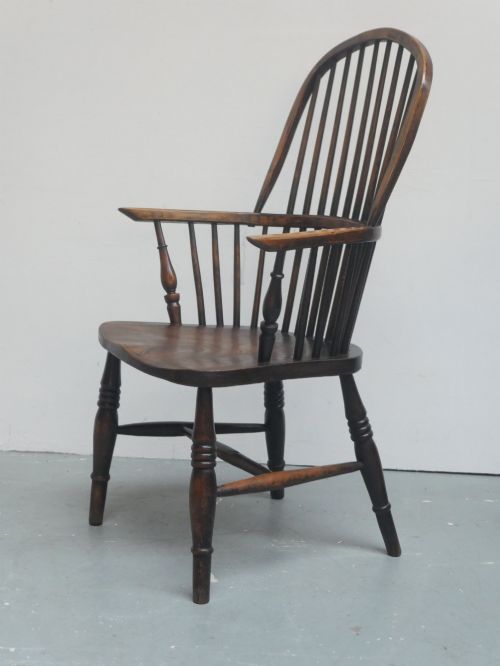
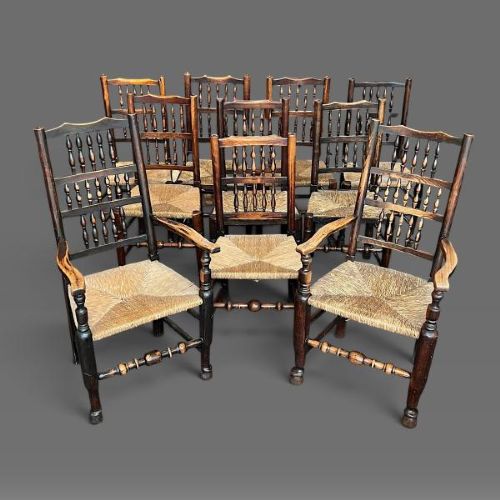
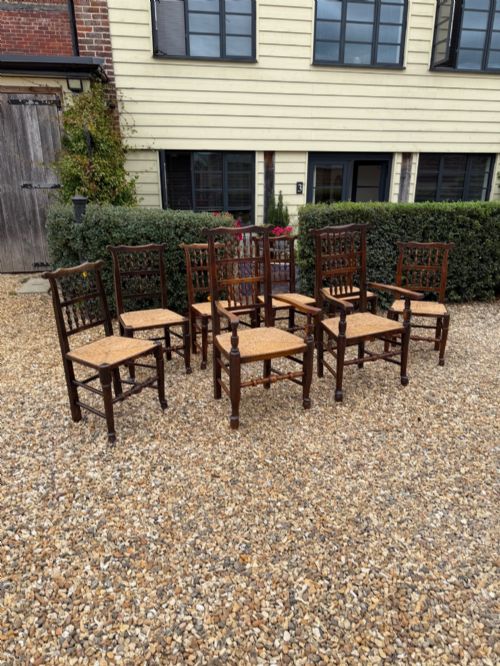
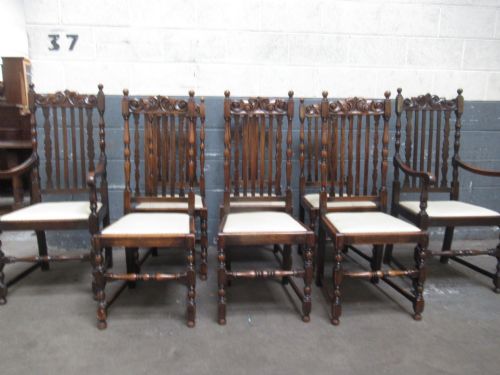
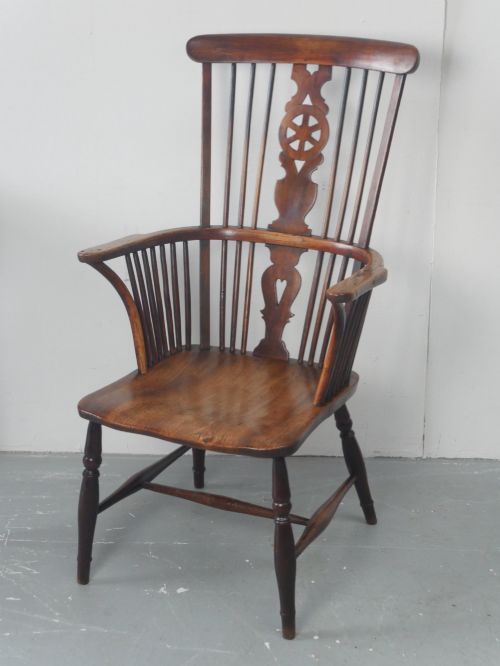
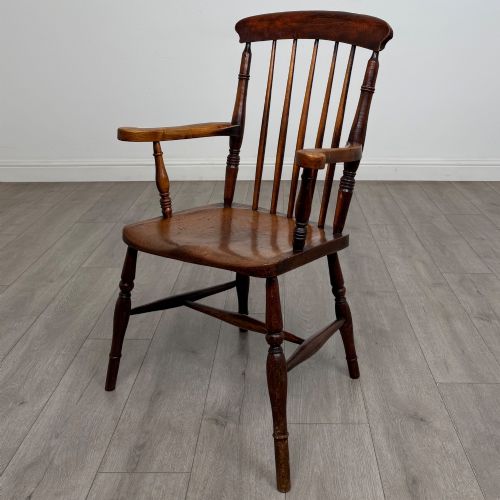
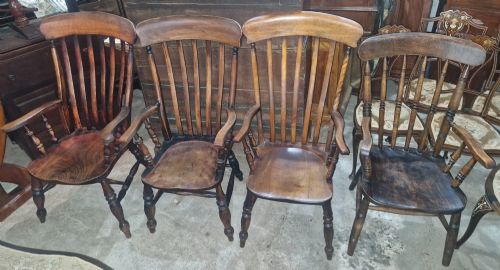
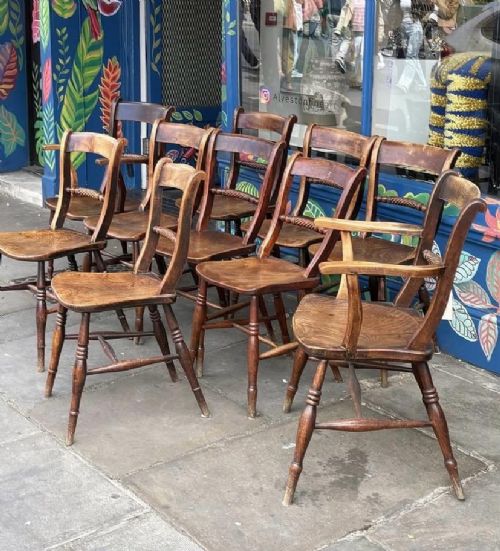
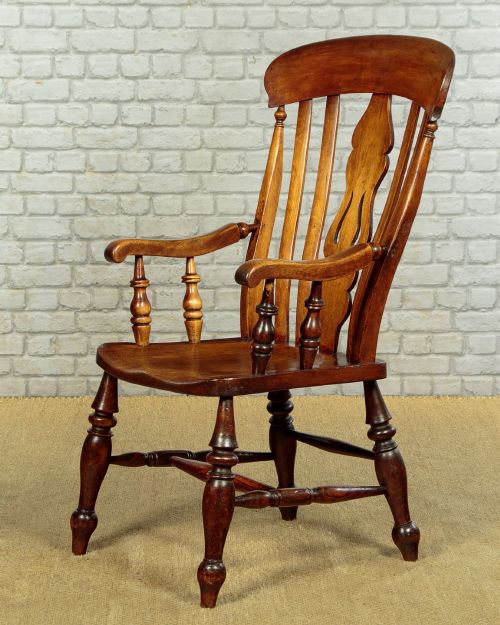
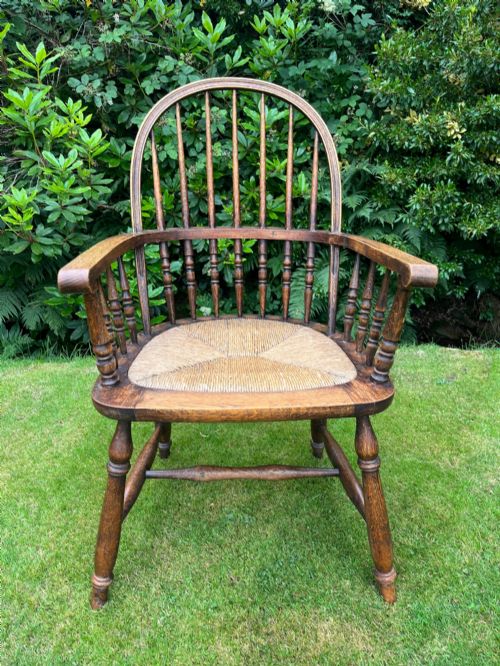
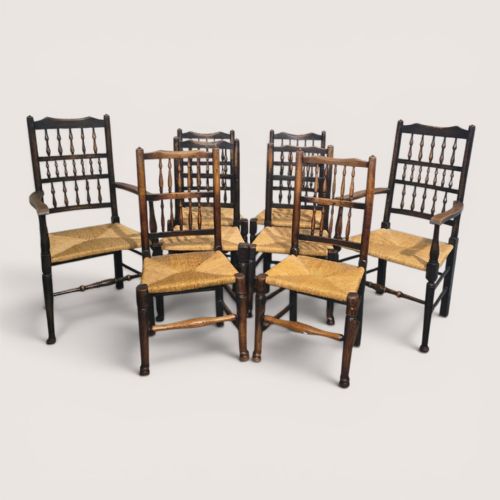
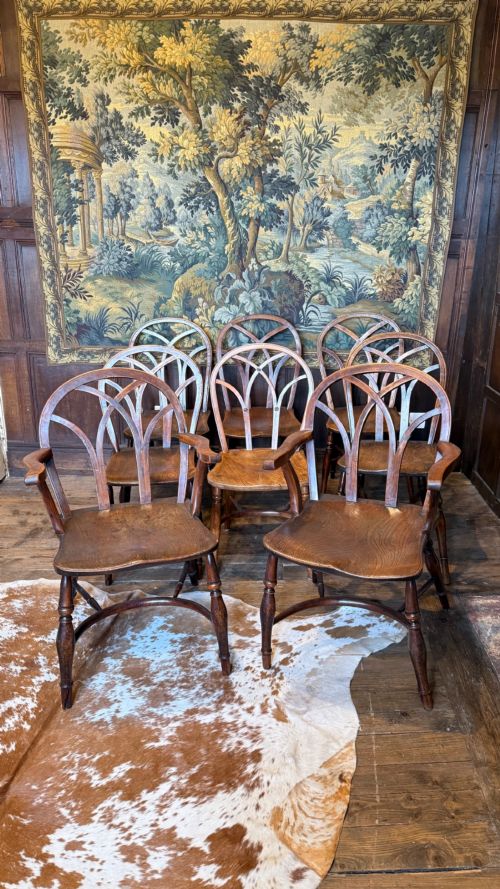
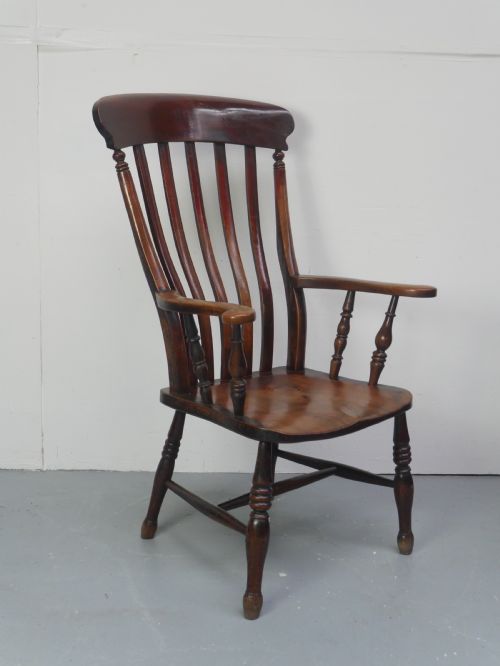
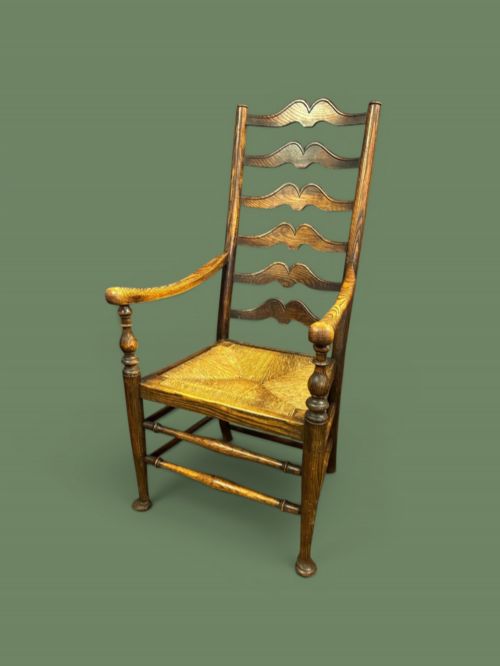
An antique kitchen carver is a substantial timber armchair designed for domestic service, most frequently encountered in regional forms like the Windsor or ladderback.
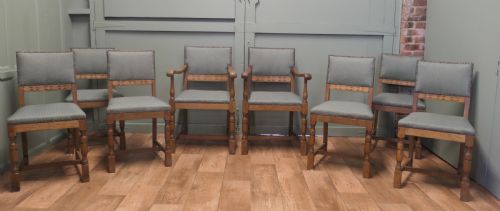
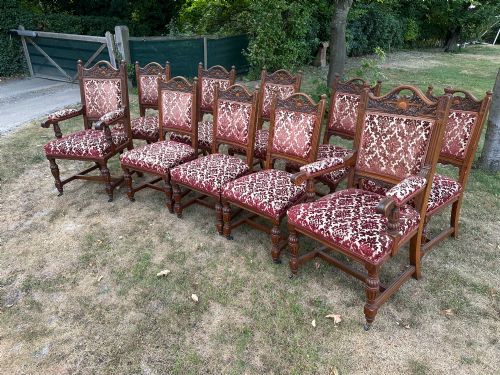
The pieces on this page span the Victorian and Edwardian eras, alongside earlier nineteenth-century examples in English country woods.
Makers built these carvers for daily use around the farmhouse hearth or table, resulting in robust armchairs with generous proportions.
How they were made
Regional craftsmen constructed these carvers using native timbers, pairing elm seats with bent ash or beech spindles and rigid oak frames.
Joinery methods combined traditional turning for the legs and stretchers with steam-bent components for the arms and backs, ensuring structural strength under heavy daily use.
Many surviving carvers bear distinct ink stains and surface dents left behind by generations of busy farmhouse breakfasts.
What varies in quality
Quality rests in the selection of timber figures, the crispness of the turned spindle work, and the harmonious integration of the arms to the main seat.
Better examples maintain their original saddle seats and tight joinery, whereas lesser pieces suffer from excessive wear, replaced components, or stripped joints.
The Antique Kitchen Carver Glossary
- Carver
- An armchair designed to match a set of dining chairs, traditionally placed at the head of the table. These sturdy seats provide supportive armrests for daily dining.
- Windsor
- A traditional wooden chair built with a solid carved wooden seat into which the legs and back spindles are wedged directly. This construction method offers notable structural integrity.
- Spindle
- A slender, turned wooden rod used to form the backrest or structural support of a country chair. Turners shaped these elements on a lathe for uniformity and decorative effect.
- Stretcher
- A horizontal wooden brace connecting the legs of a chair to provide rigidity and strength. Crinoline stretchers form a curved loop beneath the seat for added stability.
Antique Kitchen Carver: Frequently Asked Questions
What is a kitchen carver?
A kitchen carver is a sturdy wooden armchair intended for heavy domestic use around the farmhouse table or hearth.
These armchairs usually feature supportive armrests and heavier timber construction than standard dining chairs.
How do I identify a Windsor chair?
A Windsor chair is characterised by a solid wooden seat into which the legs and back pieces are bored directly.
They often incorporate steam-bent back bows and turned spindles for structural resilience.
Which woods were used?
Country chairmakers utilised native British timbers suited to specific structural demands.
Elm provided strong, split-resistant seats, while ash, beech, and oak formed the turned legs, spindles, and frames.
How do I clean an antique chair?
Maintain the timber surfaces by dusting gently with a dry cloth and applying natural beeswax occasionally.
Avoid harsh modern chemical cleaners that strip the aged patina accumulated over generations of use.