
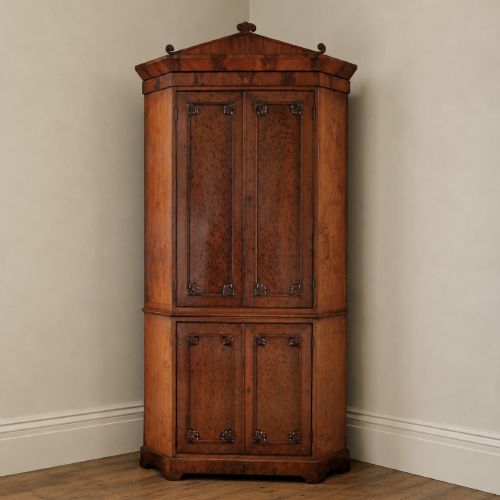
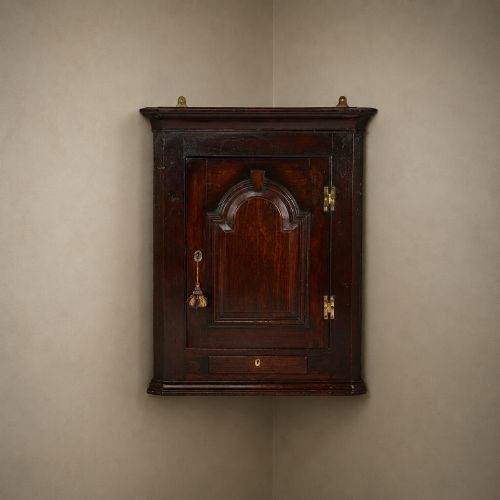


Antique Key Cupboard
An antique key cupboard organises domestic life with timber and brass, offering a secure home for your household ironmongery.
Antique Key Cupboard
When you search for an antique key cupboard, you encounter small wall-mounted and hanging cabinets designed to hold domestic or institutional locks. The evidence spans Georgian, Victorian, and Edwardian periods, alongside pieces from 1900 and the 18th century.
Most examples appear in mahogany, oak, or pine, with occasional use of plum pudding mahogany. Styles range from Georgian and William IV to Arts and Crafts, Aesthetic Movement, and Art Nouveau.
Forms include dedicated key cabinets and night porters lined key cupboards, alongside broader wall cabinets and corner cupboards that share similar hanging and locking functions.
Construction and materials
Cabinet makers utilised solid timbers such as oak, mahogany, and pine, occasionally selecting figured woods like plum pudding mahogany for prominent surfaces. Boxwood often provided contrasting stringing or inlay detail.
Hardware played a central role, combining brass hinges and key escutcheons with iron locks. Glazed doors appeared on selected wall-hanging variants, allowing visibility of contents while maintaining security.
Night porters kept watch over these lined key cupboards long before electronic security arrived.
Assessing quality and craftsmanship
Quality rests upon the selection of timber and the precision of the joinery, particularly in the housing of hanging doors and internal hook strips. Finer cabinets display thoughtful proportions and well-figured grain.
The integrity of original brass hardware and functioning locks with matching keys elevates a piece. Simpler pine variants rely on utility, whilst mahogany and decorative Arts and Crafts iterations reflect greater design ambition.
The Antique Key Cupboard Glossary
- Plum pudding mahogany
- A highly figured tropical timber showing circular markings resembling traditional Christmas pudding. Cabinet makers reserved this decorative veneer for high-status surfaces.
- Escutcheon
- A protective brass plate surrounding a keyhole. It prevents timber wear around the lock.
- Hanging cabinet
- A small storage unit designed to be mounted directly onto a wall rather than resting on the floor. These pieces save floor space in narrow hallways and reception rooms.
- Aesthetic Movement
- A late 19th-century design style prioritising visual beauty over narrative meaning. Pieces from this period emphasise clean lines and artistic craftsmanship.
- Stringing
- Thin lines of contrasting wood inlay used to outline panels and drawers. Boxwood was frequently utilised for this decorative detailing.
Antique Key Cupboard: Frequently Asked Questions
What is an antique key cupboard?
An antique key cupboard is a small wall-mounted storage cabinet designed specifically to organise and secure domestic or institutional keys. These pieces range from simple pine boxes to elaborate mahogany and oak wall cabinets.
Many examples feature internal rows of brass or iron hooks. They provide a practical method for managing household security while displaying period craftsmanship.
How do I date an antique key cupboard?
Dating relies on timber selection, construction methods, and stylistic cues such as Arts and Crafts or Art Nouveau detailing. Georgian and Victorian examples exhibit distinct mouldings and hardware appropriate to their eras.
The presence of original locks, brass hinges, and secondary woods like pine or oak helps narrow down the period of manufacture.
Were these cabinets made for homes?
These cabinets served both domestic residences and larger institutions. Night porters utilised dedicated key cupboards in hotels and grand houses to manage room access.
Smaller hanging cabinets suited domestic reception halls and studies where daily household keys needed safekeeping.