

Antique Kerosene Burner
An antique kerosene burner brings warm nineteenth-century illumination and decorative presence to a room through traditional glass and brass craftsmanship.
Antique Kerosene Burner
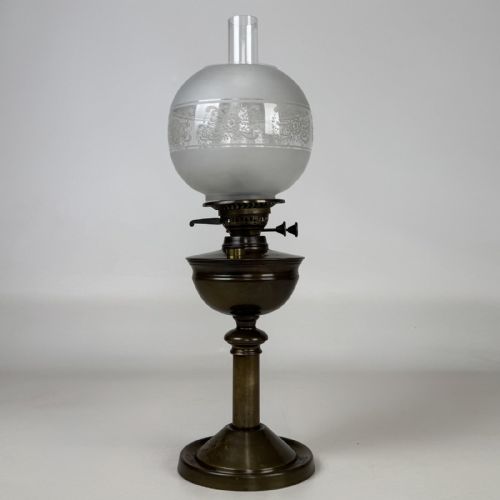
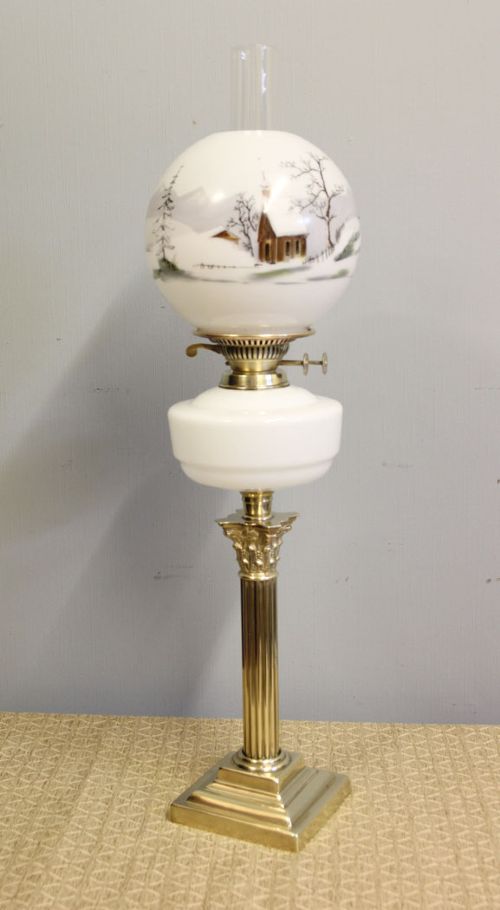
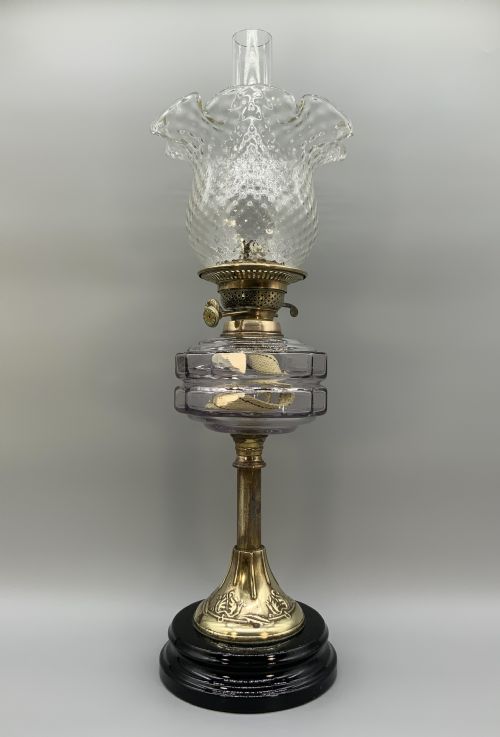
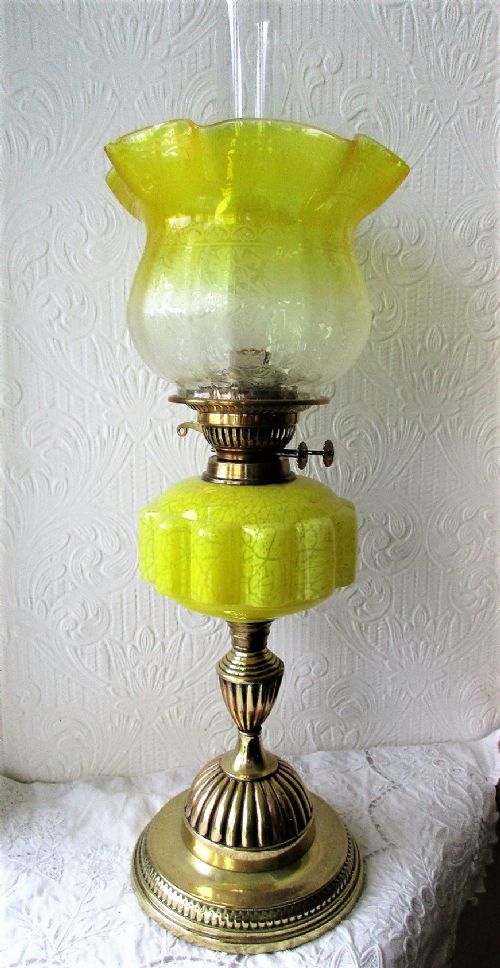
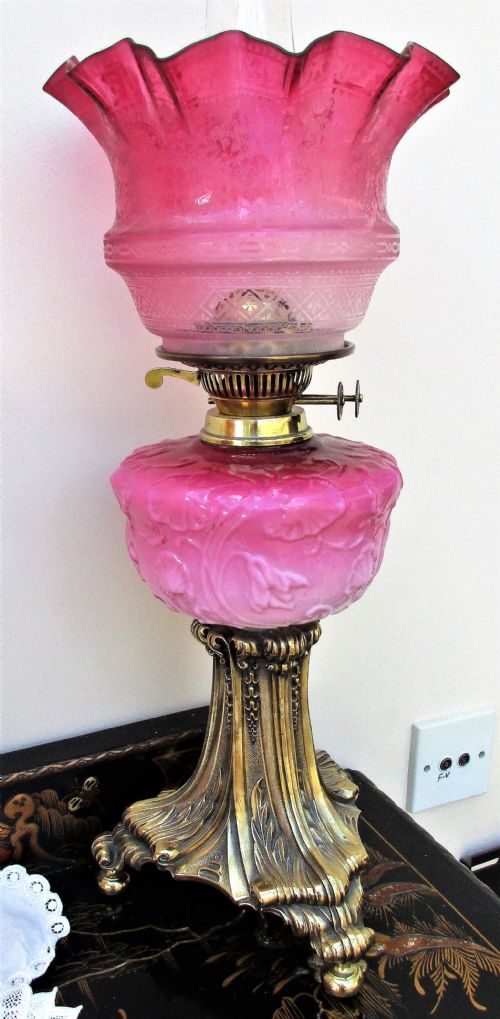
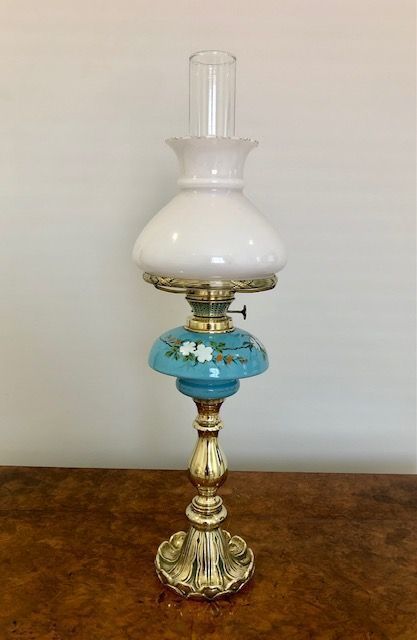
An antique kerosene burner takes the form of an oil or paraffin lamp designed for table use during the Victorian and Edwardian eras. These domestic lighting pieces function primarily as table lamps, featuring decorative fonts and shades supported by sturdy columns.
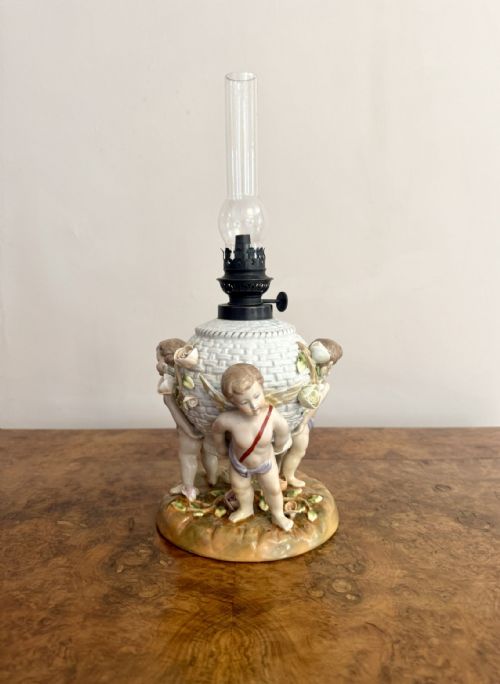
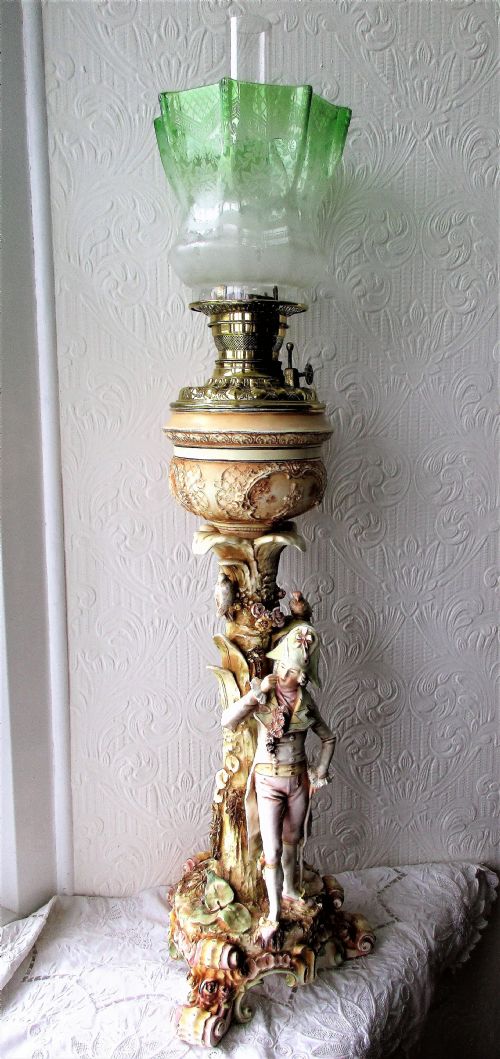
The selections available here stem largely from the nineteenth century, including specific decades such as eighteen eighty and eighteen ninety, alongside Edwardian examples from nineteen hundred. Buyers frequently encounter standard brass column designs and elaborate porcelain figural models.
Makers utilised various terminology in period production, listing these items as oil lamps, table lamps, or specific burner variants like duplex systems. Each piece reflects the interior lighting requirements of homes before widespread electric power.
Materials and construction
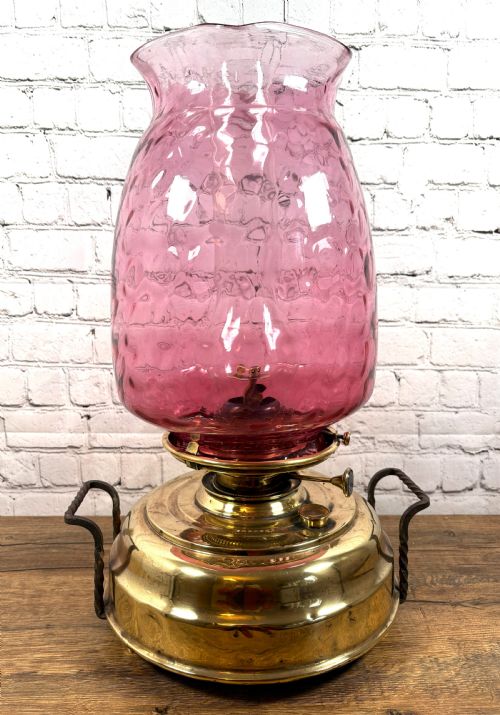
Makers combined heavy cast brass with blown and moulded glass to create the foundational structure of these burners. Metal components provide structural support for columns and burner mechanisms, while glass forms the oil reservoirs and decorative shades.
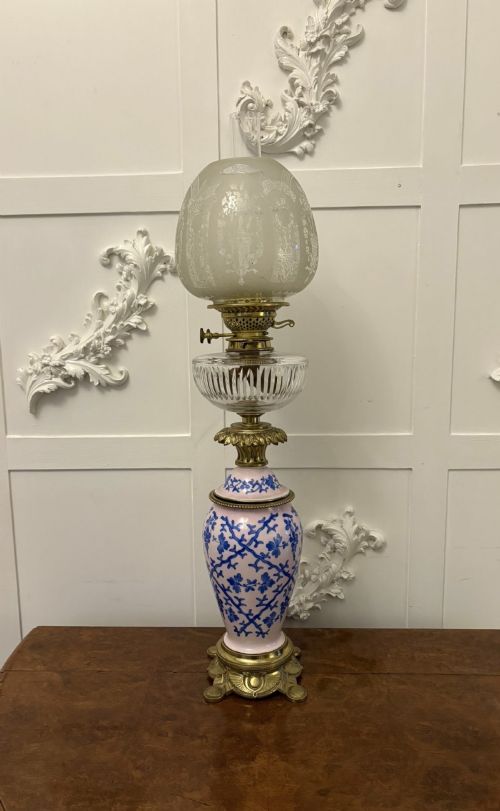
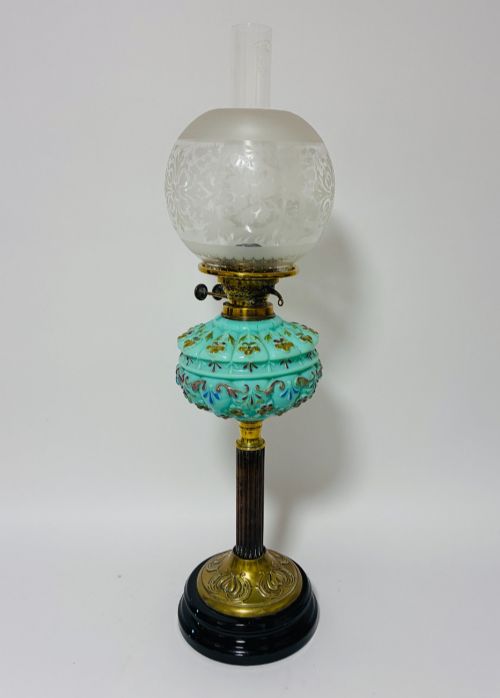
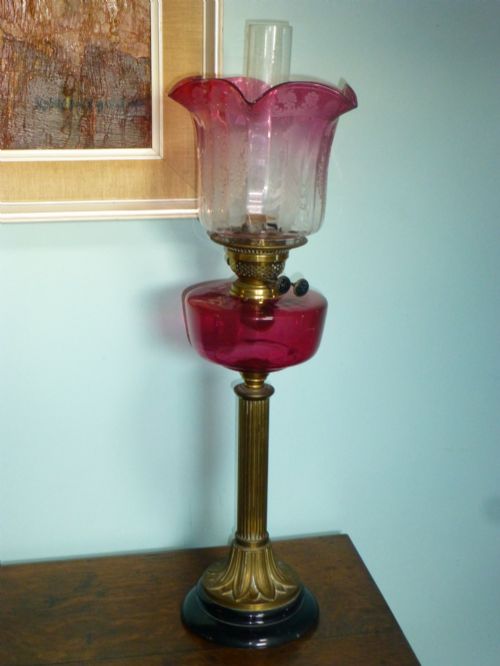
Coloured glass varieties, including cranberry, pink, opaline, satin, and clear crystal, appear frequently across the inventory. Ceramic and porcelain elements are also integrated into the bodies, sometimes featuring hand-painted botanical motifs or winter scenes.
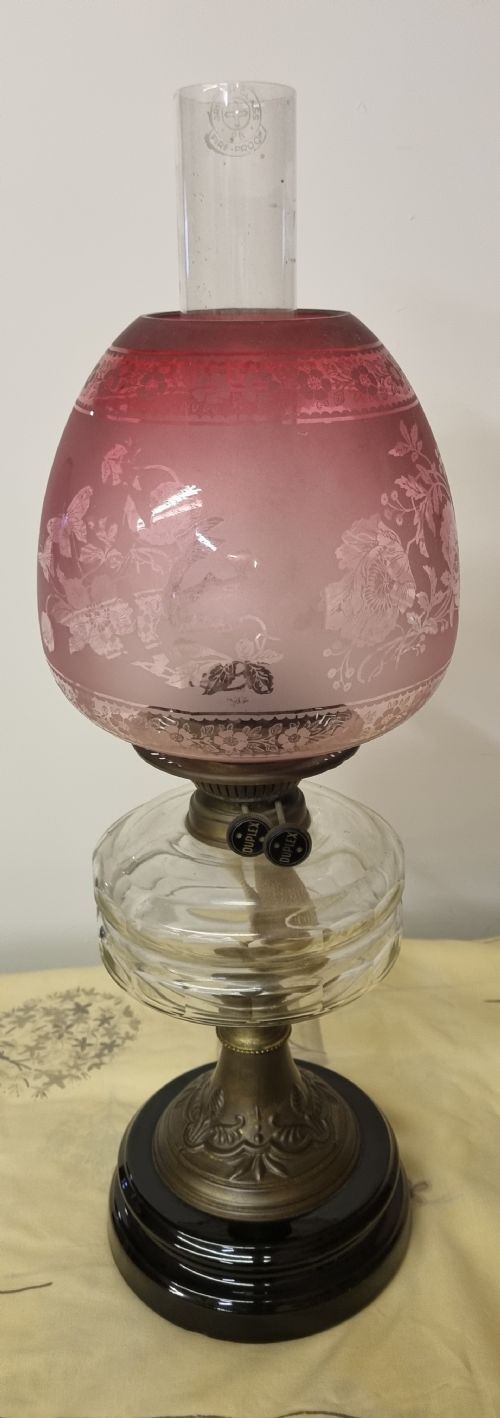
Specialised techniques such as acid etching and hand-blowing shape the decorative tulip shades and globes. Metal plating, including silver finishes, adds reflective surface detail to specific brass and copper components.
Current listings feature brass, glass, and porcelain materials across Victorian, Edwardian, and Art Nouveau styles.
Distinctions in craftsmanship
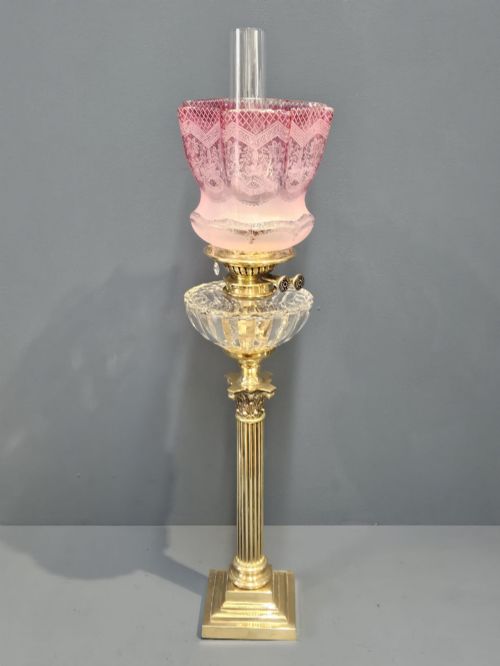
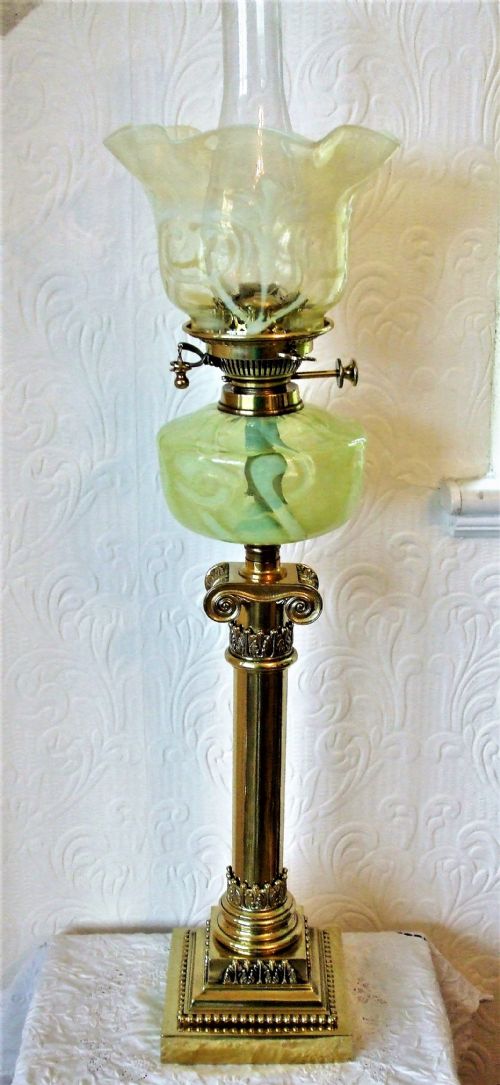
Quality varies significantly in the weight and precision of the brass casting, where heavier Corinthian and Ionic columns indicate superior manufacturing standards. Finer pieces demonstrate crisp architectural detail in the capital and base mouldings.
The artistry of the glass font and shade separates standard production from exceptional examples, particularly in hand-blown cranberry glass and finely etched crystal. Porcelain elements decorated by established potteries exhibit superior glaze retention and hand-finished artistry.
Complex mechanical assemblies, such as double-burner duplex mechanisms and specialised Wild and Wessel setups, represent higher engineering complexity than basic single-wick configurations.
Sitzendorf·Wild and Wessel·Hinks
The Antique Kerosene Burner Glossary
- Duplex burner
- A double-wick mechanism designed to produce a brighter flame than standard single burners. This system required two flat wicks operated by twin control knobs.
- Corinthian column
- An architectural column style featuring ornate, acanthus-leaf capitals utilised for the vertical support shafts of larger lamps. This classical revival form was favoured by Victorian makers.
- Peg lamp
- A small oil lamp fitted with a tapered lower metal or glass spigot designed to drop directly into a candlestick socket or dedicated base rather than standing independently.
- Opaline glass
- A semi-opaque, pale glass type possessing a milky appearance. It diffuses light softly and was frequently moulded into shades for Edwardian table lamps.
Antique Kerosene Burner: Frequently Asked Questions
How do I identify a Victorian oil lamp?
Victorian oil lamps typically feature heavy brass columns, cut glass reservoirs, or moulded porcelain bodies dating from the nineteenth century.
Look for structural hallmarks such as Corinthian capitals, weighted metal bases, and maker-stamped burner mechanisms that indicate period manufacturing.
What is a duplex oil lamp?
A duplex oil lamp utilises a twin-wick burner mechanism designed to increase the overall brightness of the flame.
These double-burner systems require two matching flat wicks and provide significantly more illumination than standard single-wick domestic lamps.
How were coloured glass shades made?
Coloured glass shades were produced through artisanal glassblowing and moulding techniques during the Victorian and Edwardian periods.
Craftspeople introduced metallic oxides into the molten glass to achieve hues like cranberry, pink, and opaline before shaping the glass by hand.
Can I still burn kerosene in these lamps?
Many antique oil lamps retain functional brass burners that can technically house fuel and wicks for operational use.
However, most modern collectors treat these items as decorative display pieces rather than active household light sources due to safety considerations.
What is a peg lamp?
A peg lamp is a compact oil reservoir equipped with a tapered lower peg designed to fit securely inside a separate candleholder or base.
This clever design allowed households to convert existing silver or brass candlesticks into functioning oil-burning table lamps.