

Antique Italian Seats
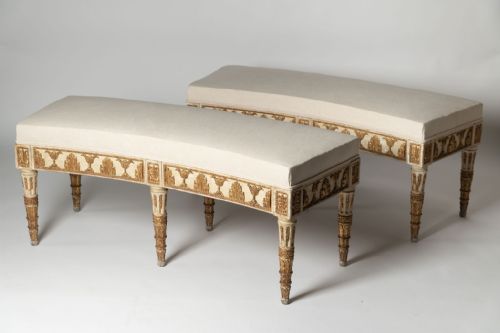
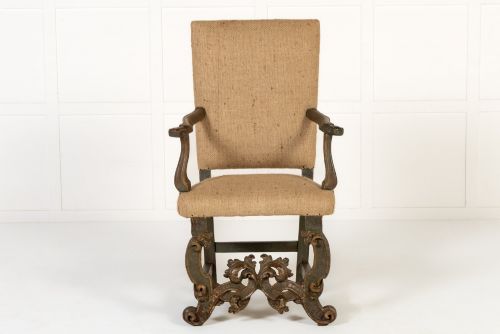
These antique italian seats range from austere seventeenth-century walnut armchairs to gilded neoclassical settees made for grand palazzos.
Antique Italian Seats
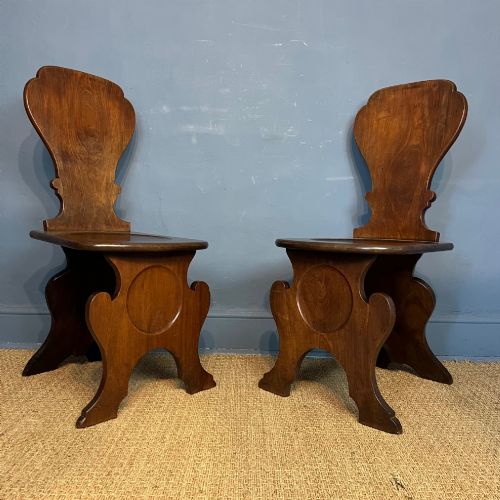
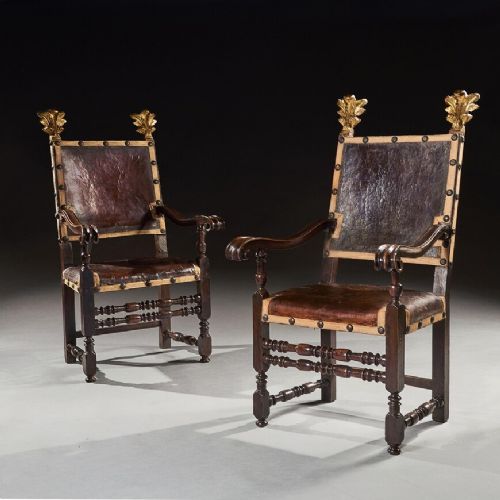
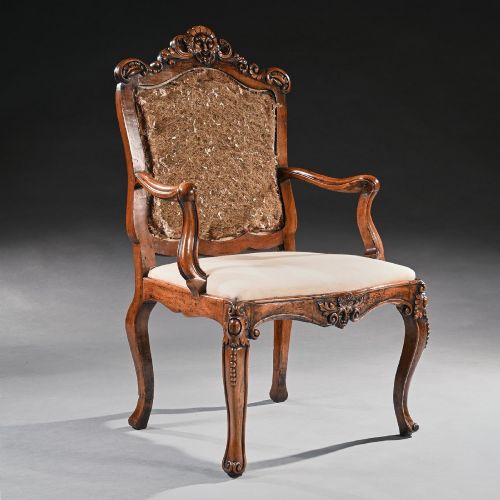
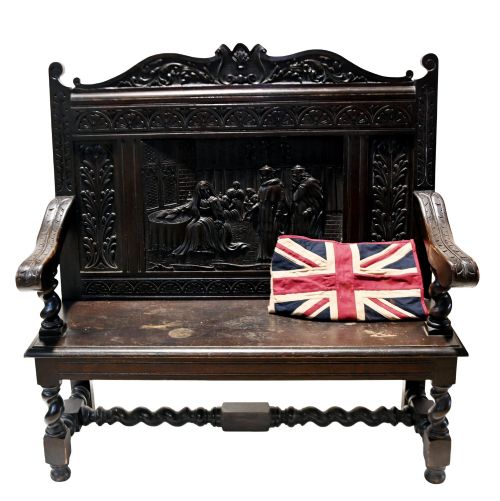
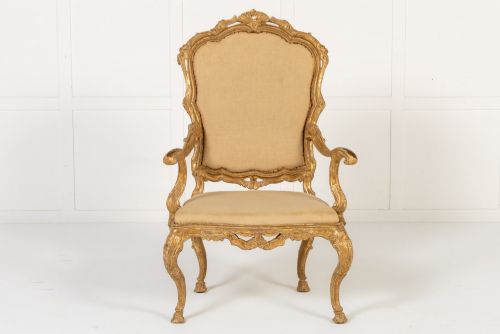
Antique italian seats encompass armchairs, side chairs, hall benches, settees, and stools dating from the seventeenth century through to the Edwardian period. Walnut armchairs and painted wooden chairs from the eighteenth century appear frequently alongside nineteenth-century revival pieces.
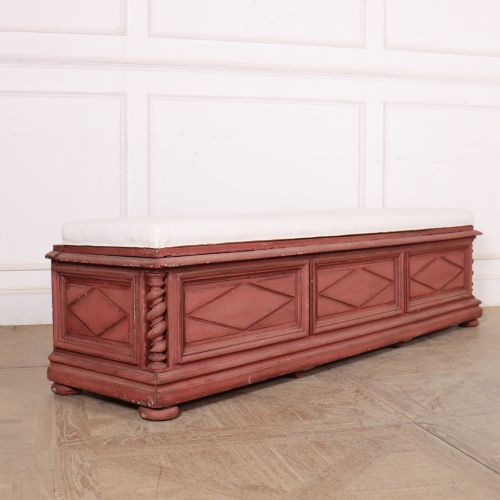
Makers and workshops produced seating forms ranging from heavy cassapanca storage benches to light Venetian gondola chairs and curule stools. Buyers encounter regional variations spanning seventeenth-century Baroque styles, eighteenth-century Rococo carvings, and nineteenth-century Renaissance revivals.
Materials and construction
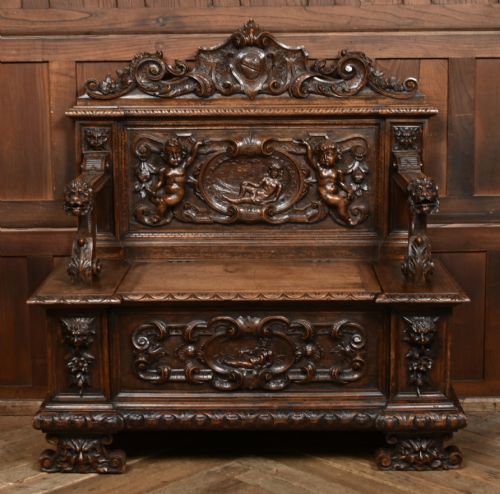
Cabinetmakers constructed the primary framework of these pieces in solid walnut, oak, or fruitwoods, often finishing surfaces with polychrome paint, gesso, or parcel-gilt. Structural joinery relied on traditional methods, while ornamentation involved deep hand-carving, bone inlay, and bobbin turning.
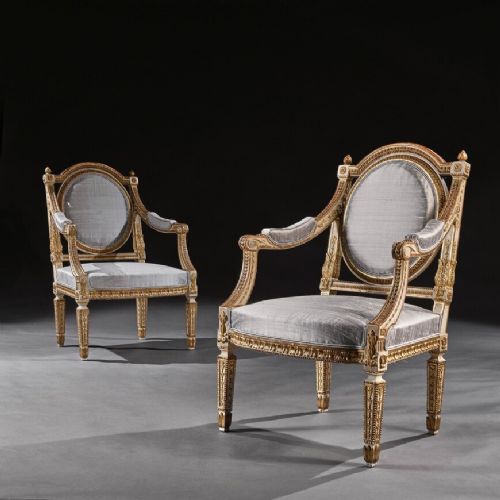
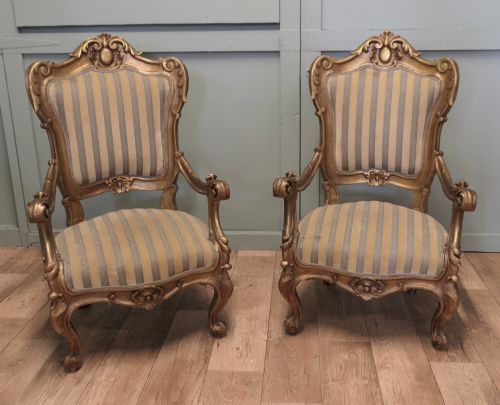
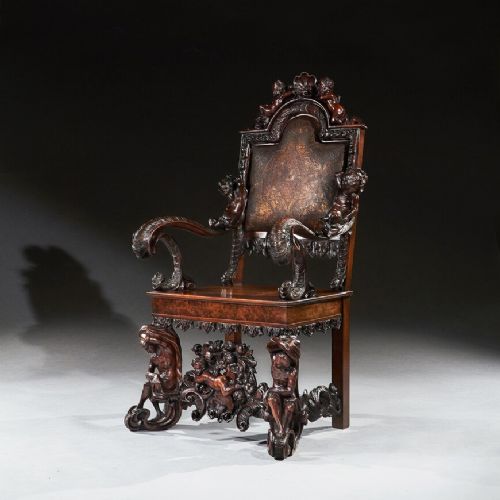
Upholstered items combined wooden frames with traditional textile coverings, leather, or brass detailing, while specialised seating utilised gilded highlights over carved wood. Decorative flourishes include elaborate head rails, figural supports, and parcel-gilt accents.
Antique Italian Seats Retail Price Guide 2026
Typical asking prices for italian seats among the pieces listed under this phrase on Sellingantiques today, from the lower quarter to the upper quarter. They describe what is for sale here now, not the wider market.
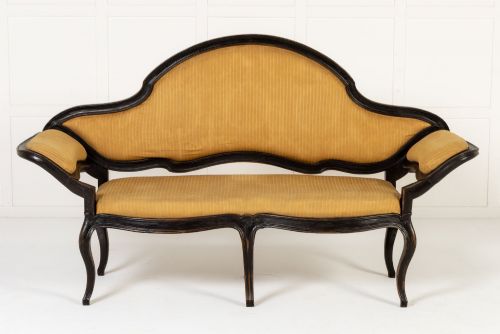
Venetian gondola chairs brought the elegance of canal travel straight into the nineteenth-century parlour.
Assessing quality
Quality rests in the crispness and depth of the hand-carving on the walnut or giltwood frames, distinguishing master workshops from standard production. The preservation of original painted surfaces, authentic patination, and structural integrity across joints and rails dictate the standing of each piece.
Proportion and decorative ambition separate ordinary seating from exhibition-grade examples influenced by prominent carvers. The survival of period textiles, leather, or original gesso enrichments further elevates the standard of a surviving chair or bench.
Andrea Brustolon·White, Allom And Co·Zoffoli
The Antique Italian Seats Glossary
- Cassapanca
- A long wooden bench with a built-in storage chest beneath the seat, frequently carved from solid walnut in Italian workshops.
- Giltwood
- Timber coated with gold leaf over a prepared gesso ground, utilised extensively on Baroque and Neoclassical frames.
- Sgabello
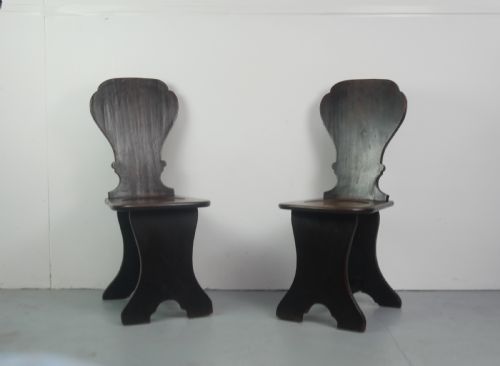
- A rigid wooden hall chair featuring a high back and solid trestle-style supports instead of conventional legs.
- Curule stool
- An ancient X-framed stool design revived during the neoclassical period, often constructed in carved wood.
- Parcel-gilt
- A decorative treatment where selective areas of a wooden or painted surface receive gilding while other parts remain exposed.
Antique Italian Seats: Frequently Asked Questions
How do I identify a seventeenth-century Italian armchair?
Seventeenth-century chairs typically feature heavy walnut construction, straight members, leather upholstery, and restrained barocco carving without the curves of later periods.
Look for structural joinery methods characteristic of the period and a dry, oxidised surface patination that develops over centuries.
What is a Venetian gondola chair?
A Venetian gondola chair is a distinct seating form originating in Venice, characterised by a curved, enveloping backrest designed for domestic interiors.
These pieces often incorporate painted or ebonised finishes reflecting regional taste and lifestyle.
Where were cassapanca benches placed?
Cassapanca benches served as monumental seating in the grand halls and entranceways of Italian palazzos, combining storage for textiles with formal seating.
The high back and carved arms signaled the status of the household to arriving guests.
How do I care for antique giltwood seats?
Giltwood surfaces require gentle dusting with a soft brush and protection from direct sunlight and moisture to prevent the delicate gold leaf from flaking.
Avoid liquid cleaners entirely, as water or modern chemical sprays damage the underlying gesso preparation.