


Antique Italian Pottery Jars
These antique italian pottery jars bring rich colours and centuries of craft straight from Italian workshops into your home.
Antique Italian Pottery Jars
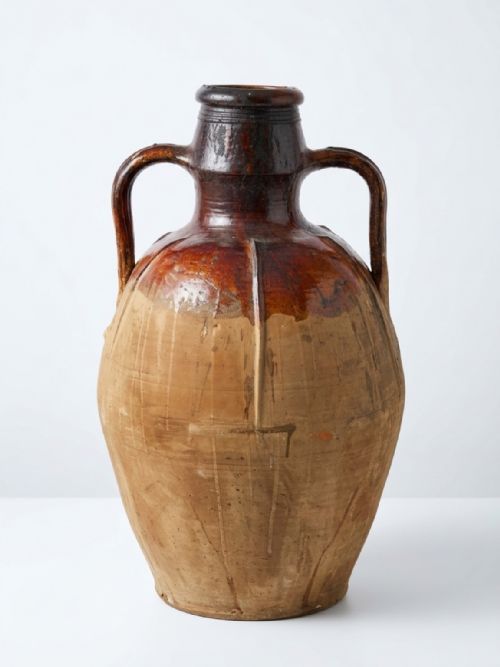
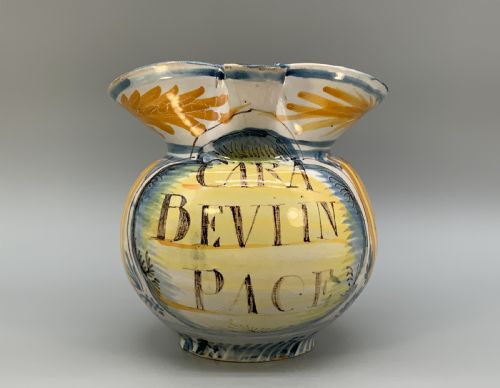
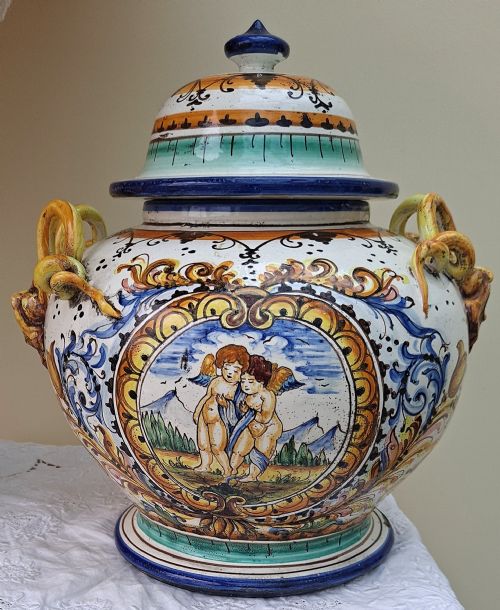
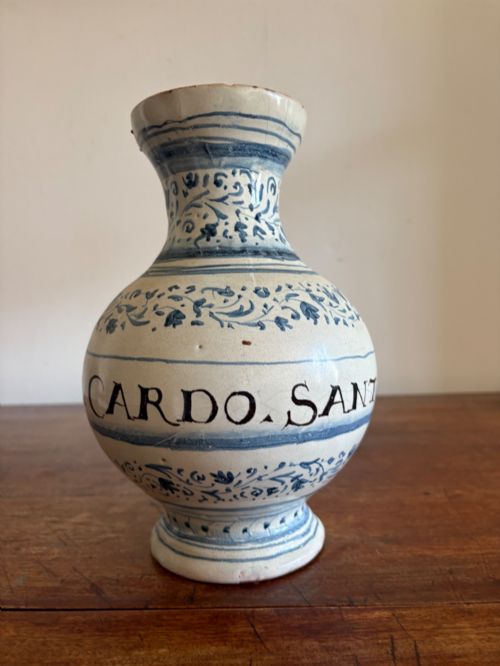
When you search for antique italian pottery jars, you encounter a specialised selection of vessels spanning from the seventeenth century through to the early twentieth century. These pieces encompass apothecary containers, pharmacy jugs, and lidded vases that served practical and decorative roles in historic interiors.
The assortment on this page leans heavily towards nineteenth-century examples alongside significant eighteenth-century forms. You will find iconic shapes such as the tall albarello drug jar alongside larger wine vessels and decorative vases.
How they were made
Potters shaped these vessels from earthenware and terracotta before applying tin glaze to create a smooth, opaque white canvas for painting. Artisans utilised pigments such as blue and white, polychrome, manganese, and yellow to render intricate botanical and figurative designs.
The firing process bonded the tin-glazed earthenware surface with metallic oxides, sealing the clay body and producing the characteristic sheen associated with traditional majolica and faience.
Historic pharmacists kept these jars lined up tight on shelves, trusting a pinched waist so no one dropped the cure.
What varies in quality
The fineness of the hand-painted decoration separates standard production pieces from masterworks. Crisp brushwork in blue and white or rich polychrome palettes elevates a pharmacy jar or vase significantly.
Preservation of the tin glaze and the survival of matching covers or lids dictate the desirability of these vessels. Early seventeenth-century and eighteenth-century examples exhibit distinct handling of clay and glaze compared to later nineteenth-century output.
Gallilleo Chini for Mugello
The Antique Italian Pottery Jars Glossary
- Albarello
- A cylindrical earthenware jar used by apothecaries to store dry drugs, ointments, and spices. This distinct waist-pinched shape allowed pharmacists to store the vessels tightly on shelves.
- Faience
- European tin-glazed pottery produced outside of the Netherlands, closely related in technique and appearance to Italian majolica. The term appears frequently in descriptions of nineteenth-century apothecary wares.
- Polychrome
- Decoration employing multiple distinct colours across the painted surface of the ceramic. This style contrasts with monochrome blue and white schemes.
Antique Italian Pottery Jars: Frequently Asked Questions
What were apothecary jars used for?
Apothecaries used these jars to store dry drugs, herbs, ointments, and wet medicinal preparations in historic pharmacies.
The distinctive shapes kept remedies organised on shelves while protecting sensitive ingredients from light and air.
How do I identify an albarello?
An albarello is a tall, cylindrical jar with a pinched waist that makes it easy to grip with one hand.
This specific form originated in the Middle East and became a staple of Italian pharmacy pottery production.
What is the difference between majolica and faience?
Majolica specifically refers to Italian tin-glazed earthenware, whereas faience is a broader term often applied to similar European wares.
Both types share the fundamental technique of coating a clay body with an opaque white tin glaze before painting.
How should I display these jars at home?
These vessels suit open shelving, sideboards, or mantelpieces where their hand-painted surfaces remain visible.
Keep them away from direct moisture and handle them carefully by the body rather than the rim or lid.