




Antique Italian Earthenware
These pieces of antique italian earthenware are historic ceramic vessels and decorative objects from Italian workshops that bring centuries of vibrant pigment and tin glaze into a room.
Antique Italian Earthenware
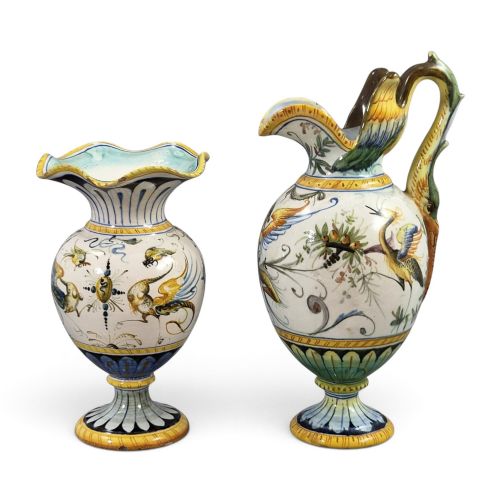
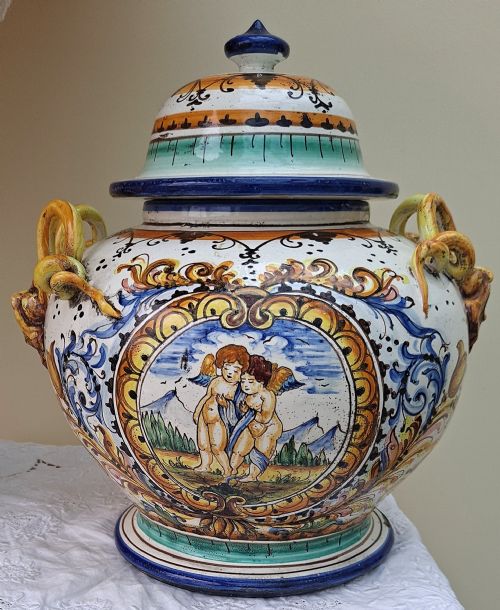
When you search for antique italian earthenware, you encounter a varied tradition of tin-glazed pottery, terracotta planters, and ceramic vessels spanning multiple centuries. The selection on this page leans heavily toward 18th-century and 19th-century majolica, alongside revival pieces produced in Florence and southern Italy.
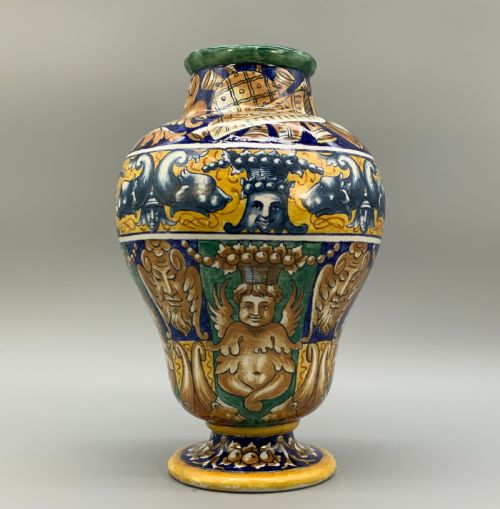
Forms range widely from apothecary jars, albarellos, and wet drug jugs to large chargers, devotional plaques, and garden terracotta. Many items reflect historical revivals such as Renaissance Revival and Italian Baroque styles, echoing shapes found in traditional pharmacies and grand villas.
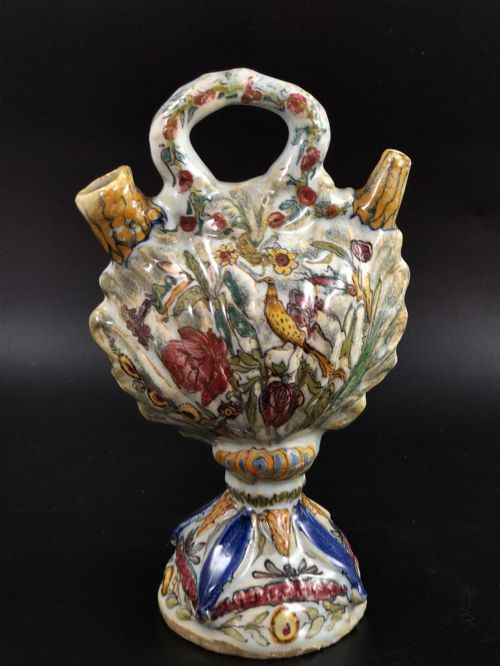
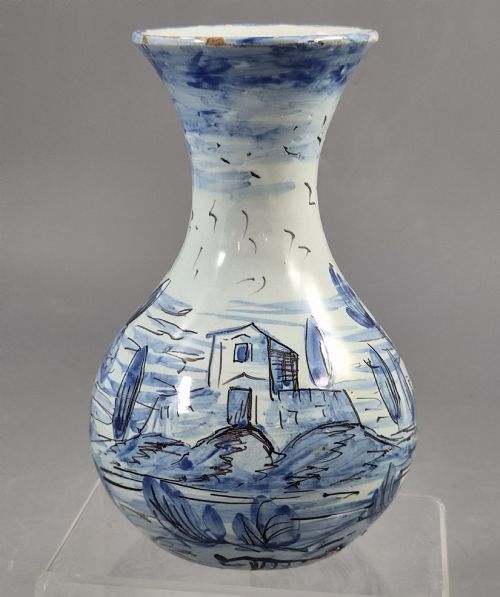
Collectors find both blue and white wares and polychrome pieces bearing figurative scenes, armorials, or botanical motifs like the Garofano pattern. Functional vessels and ornamental vases dominate the offerings, each carrying the distinct weight and texture of historic ceramic manufacture.
How They Were Made
Potters shaped local clays into earthenware bodies before applying an opaque white tin glaze that provided a smooth canvas for painting. Artisans then brushed mineral pigments directly onto the unfired glaze, absorbing the colours before a high-temperature kiln firing fixed the design.
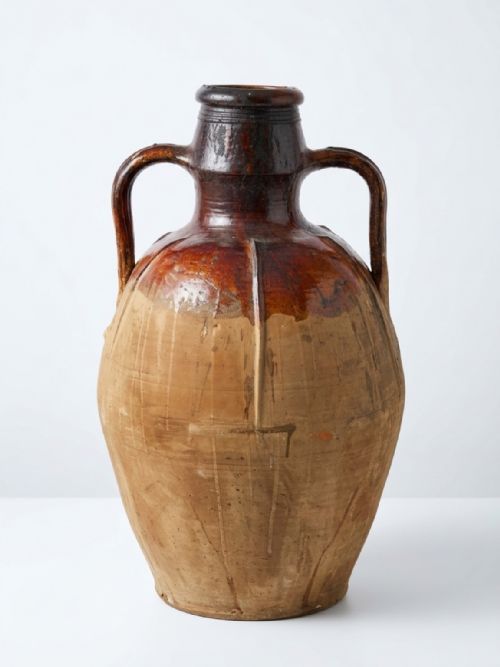
Terracotta pieces relied on moulded or hand-formed structural clay left unglazed or finished with simple surfaces suited to garden urns and large wine jars. Workshops utilised traditional wheel-throwing and slip-casting techniques depending on whether the object was a utilitarian pharmacy jar or an ornamental cabinet vase.
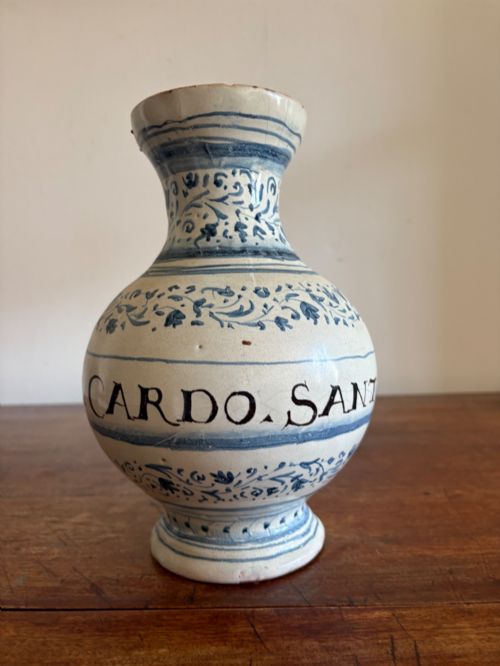
Several pharmacy jars still bear abbreviated Latin inscriptions for medieval remedies, offering a permanent reminder of when a cure involved crushed pearls.
What Varies in Quality
The sophistication of the painted decoration dictates much of the distinction between standard production wares and exceptional works. Master painters achieved fluid lines, subtle tonal shading in polychrome palettes, and sharply detailed historical narratives on large chargers.
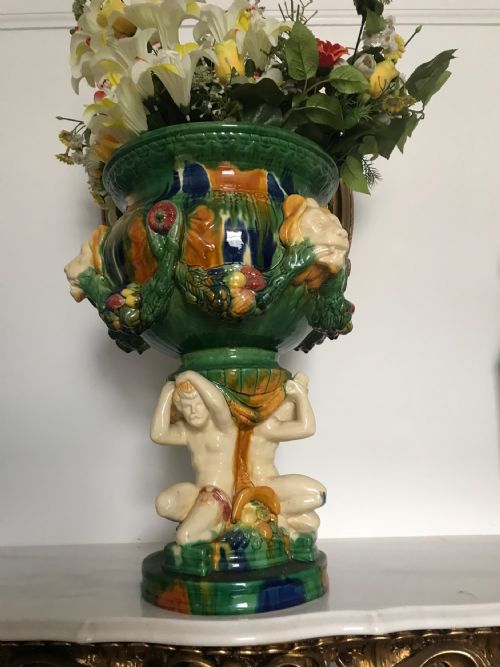
The purity and consistency of the tin glaze also signal the standard of the piece, with finer examples displaying an even, luminous surface free from heavy pitting or excessive kiln blemishes. Additionally, the crispness of moulded relief details on figural bases and architectural planters separates superior studio output from simpler commercial items.
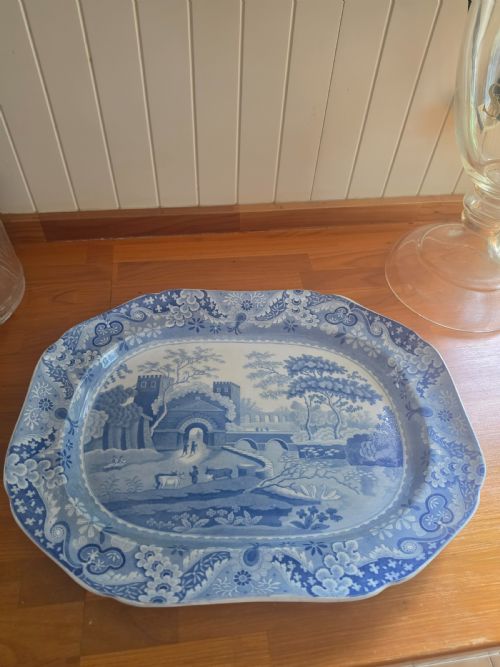
Cantagalli·Mugello·Spode·Minton
The Antique Italian Earthenware Glossary
- Majolica
- A type of earthenware covered with an opaque tin-glaze and painted with metallic oxide colours. It forms the primary decorative ceramic tradition seen across Italian workshop production.
- Albarello
- A cylindrical earthenware jar designed for storing apothecary drugs and dry medicines. Originating in the Middle East, this form became a staple of Italian pharmacy displays.
- Istoriato
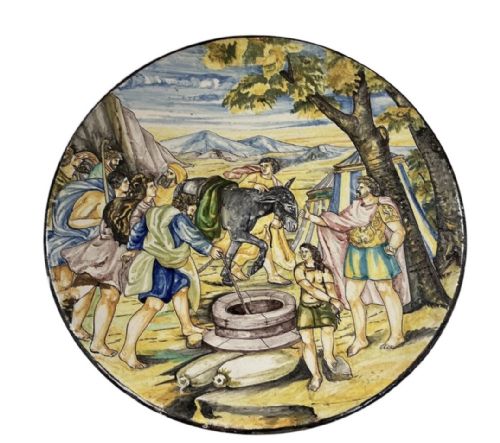
- A style of ceramic decoration featuring painted historical, mythological, or biblical narratives covering the entire surface of a vessel or charger. Painters utilised these complex pictorial scenes during the Renaissance and later revival periods.
- Tin Glaze
- A ceramic glaze made opaque by the addition of tin oxide, creating a white background suitable for hand-painted decoration. This technique underpins the colourful output of traditional Italian faience.
- Fiasca da Pellegrino
- A flattened pilgrim flask traditionally carried by travellers or used for holding liquids. Ceramic versions often feature decorative side lugs for suspension cords.
Antique Italian Earthenware: Frequently Asked Questions
What is an albarello used for?
Albarellos served as drug jars in historic Italian pharmacies and apothecaries, holding dry herbs, ointments, and medicinal powders.
Their distinct cylindrical shape allowed pharmacists to line them up neatly on shelves while easily tying parchment or fabric covers over the rims.
Are these pieces waterproof?
Most antique tin-glazed earthenware and terracotta vessels are porous and not reliably waterproof due to hairline crazing in the glaze or unsealed clay bodies.
Use inner glass liners or protective saucers if you intend to display fresh flowers or plants inside antique vases and planters.
How can I tell a revival piece from an original?
Nineteenth-century revival pieces often display brighter, more uniform pigment colours and heavier potting techniques compared to their earlier 17th-century and 18th-century counterparts.
Examining the foot ring, glaze pooling, and maker marks helps differentiate historic workshop output from later historicist reinterpretations.