
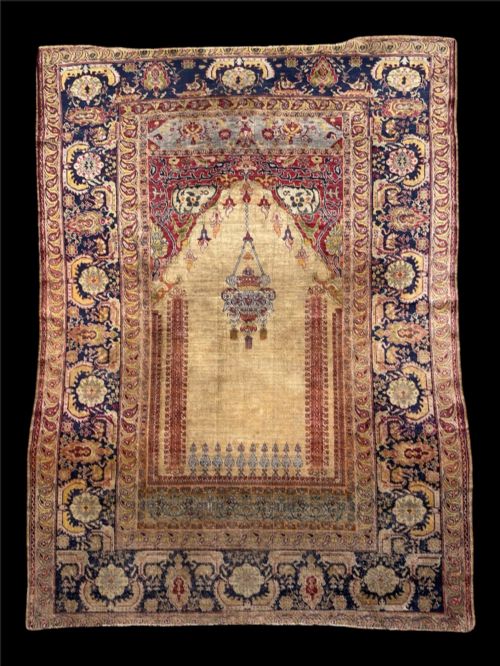


Antique Islamic Prayer Carpet
An antique islamic prayer carpet brings centuries of textile tradition into your home with distinctive mihrab designs and rich wool or silk craftsmanship.
Antique Islamic Prayer Carpet
An antique islamic prayer carpet centres on the distinctive mihrab niche design, intended to direct the worshipper towards Mecca during daily prayers. These woven works span various regional traditions from Turkish weaving centres to Caucasian and Afghan tribal workshops.
The pieces available here appear in formats such as the Ghiordes design, Ladik examples, and Kizil Ayak mosque rugs. They date across multiple periods, including the eighteenth century, the nineteenth century, and early twentieth century examples.
Buyers encounter regional variations in format, from Anatolian and Ottoman workshop pieces to Caucasian Kazak and Shirvan floor coverings. Each type carries specific design motifs characteristic of its distinct origin and weaving tradition.
How they were made
The construction of these carpets relies primarily on wool pile knotted onto foundational warps and wefts of cotton or wool. Certain finer examples utilise silk materials to achieve intricate detail and a softer handle.
Weavers employed traditional hand-knotting techniques, securing coloured yarns row by row to create durable floor coverings and wall hangings. Natural dyes provided the deep palette of tones seen across the Turkish, Caucasian, and Afghan pieces.
Certain carpets manage to record history directly in their wool, bearing inscribed dates like 1326 alongside the weaver's prayer.
What varies in quality
Knot density and structural fineness separate standard examples from superior pieces, influencing how sharply the motifs emerge from the background. The precision of the drawing within the mihrab and borders indicates the skill of the original workshop.
The preservation of the pile and the integrity of the original selvedges and ends determine the condition quality of an antique carpet. Superior pieces retain their original proportions and depth of colour without extensive modern intervention.
The Antique Islamic Prayer Carpet Glossary
- Mihrab
- The arched niche design at one end of a prayer rug that mimics the prayer niche in a mosque. This architectural motif points the worshipper in the correct direction.
- Warp
- The vertical threads stretched tightly on the loom before knotting begins. The fringe of the carpet typically consists of these extended warp threads.
- Weft
- The horizontal threads passed between rows of knots to bind the structure together. Wefts maintain the width and stability of the textile.
- Pile
- The upright cut ends of the knotted yarn that form the usable surface of the carpet. Pile length and density vary according to regional weaving practices.
- Ghiordes
- A traditional weaving town in western Turkey known for distinct prayer rug designs. Carpets bearing this designation often feature characteristic floral columns and mihrab arches.
Antique Islamic Prayer Carpet: Frequently Asked Questions
How do I identify a prayer rug?
A prayer rug is typically recognised by the arched mihrab design at one end, which represents the prayer niche in a mosque. These textiles are generally smaller than room-sized carpets, designed to be portable for individual daily worship.
Older examples from Turkish, Caucasian, and Afghan regions often include lamps, columns, or floral lattices within or framing the central arch.
Where were these carpets made?
The pieces originate from traditional weaving regions across the Middle East, Anatolia, the Caucasus, and Central Asia. Major centres include Ottoman Turkey, Shirvan, and various Afghan tribal areas.
Each region developed distinct palettes, wool qualities, and knotting structures that distinguish an Anatolian piece from a Caucasian Kazak.
How should I care for an antique rug?
Protect an antique textile by placing it in areas with moderate foot traffic and away from direct, harsh sunlight. Regular gentle vacuuming without a rotating power brush helps remove dust from the wool or silk pile.
Professional cleaning tailored for antique rugs should be utilised when deeper maintenance is required to preserve the natural dyes.
What materials were used?
Wool is the predominant material used for the pile of these carpets, offering resilience and rich colour absorption. Foundation threads are commonly spun from cotton or wool, providing structural stability.