






Antique Islamic Copper Metalwork
These antique islamic copper metalwork pieces bring centuries of intricate engraving and rich patination straight into modern rooms.
Antique Islamic Copper Metalwork
When you search for antique islamic copper metalwork, you encounter a diverse array of utilitarian vessels and decorative items spanning multiple centuries and regions. The pieces available range from early bronze and copper creations to later revival items produced across the Middle East and surrounding lands.
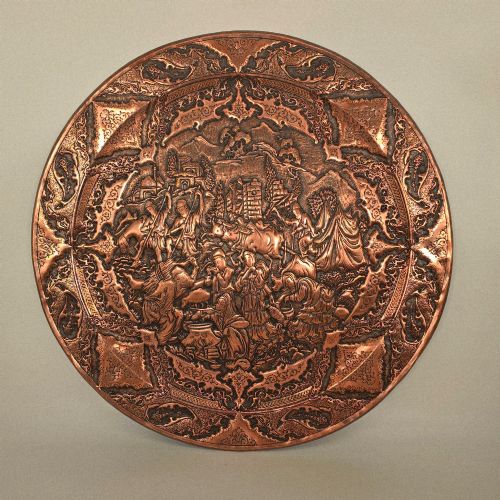
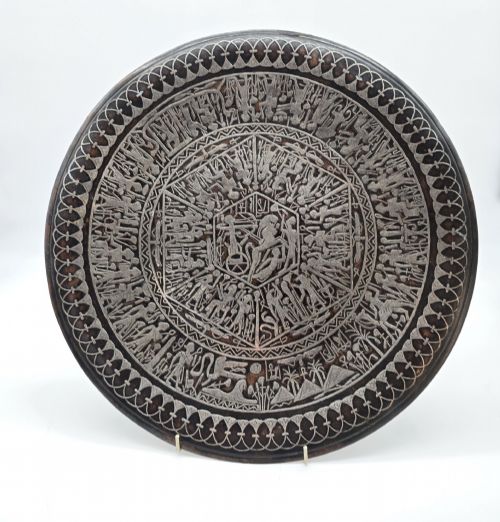
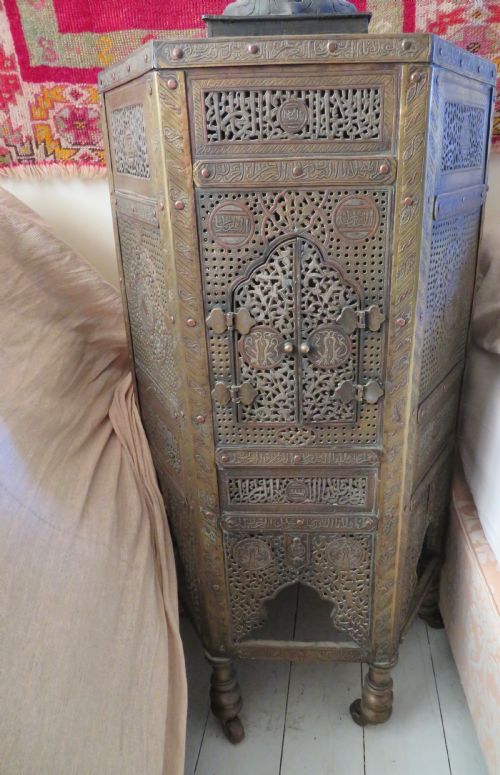
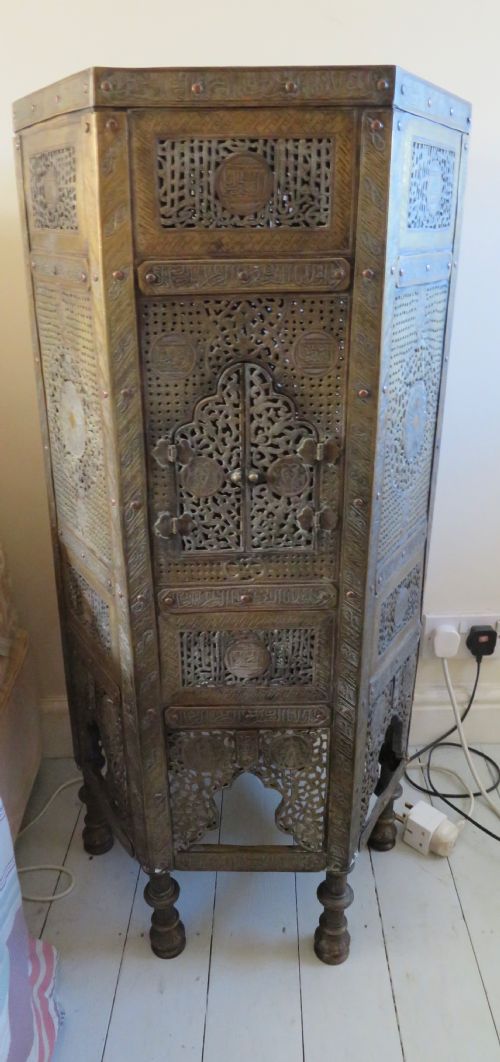
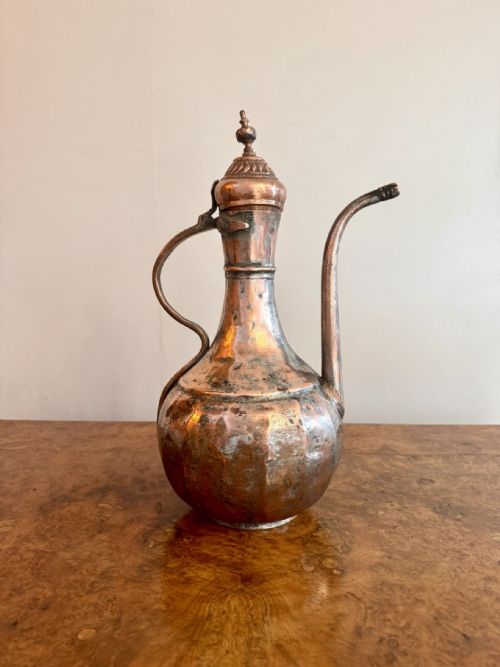
The objects represented on this page include coffee pots, occasional tables known as kursi, wall chargers, decorative bowls, ewers, and ritual vessels. Nineteenth-century examples and revival pieces dominate the selection, showing sustained craftsmanship in copper, brass, and mixed metals.
Materials and Techniques
Craftsmen utilised base metals such as copper, bronze, and brass, frequently combining them with silver, white metal, and tin for contrast and inlay work. Surfaces received detailed treatment through engraving, repoussé, openwork, and silver inlay.
Techniques varied from deep hammering and chasing to damascening and patination, creating complex surface textures. Enamelling also appears on specific panels, demonstrating a mastery of coloration and metal fusion.
Antique Islamic Copper Metalwork Retail Price Guide 2026
Typical asking prices for islamic copper metalwork among the pieces listed under this phrase on Sellingantiques today, from the lower quarter to the upper quarter. They describe what is for sale here now, not the wider market.
One twelfth-century bronze ewer from Persia carries an ancient lineage, having survived centuries of domestic ritual before reaching the modern market.
Judging Quality
Quality rests upon the depth, precision, and clarity of the hand-engraving and metal inlay work. Pieces displaying crisp repoussé details and secure, well-integrated multi-metal inlays sit at the higher end of the scale.
The structural integrity of larger forms like occasional tables and the preservation of the original patination further distinguish superior examples from simpler utilitarian wares.
The Antique Islamic Copper Metalwork Glossary
- Repoussé
- A metalworking technique where the metal is hammered from the reverse side to form a raised design on the front. This method allows artisans to create deep, three-dimensional decorative reliefs on copper and brass surfaces.
- Kursi
- A traditional low hexagonal table or stand often used for holding a Quran or serving coffee. These items frequently feature intricate openwork and metal inlays.
- Cairoware
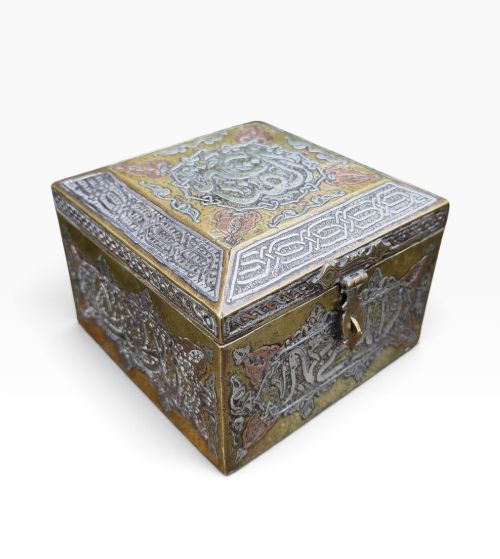
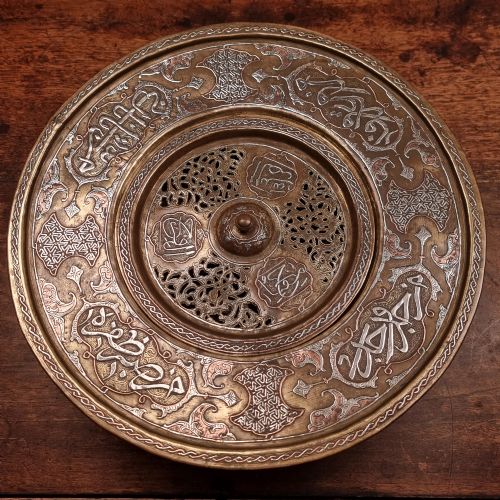
- A style of metalwork originating in Cairo during the late nineteenth and early twentieth centuries, characterised by brass inlaid with silver and copper motifs.
- Ewer
- A large jug with a slender spout and handle, traditionally used for pouring water. Antique examples often double as decorative display pieces.
- Charger
- A large ornamental plate or dish intended for display on a wall or sideboard rather than for practical dining use.
Antique Islamic Copper Metalwork: Frequently Asked Questions
What is cairoware?
Cairoware describes late nineteenth and early twentieth-century metalwork featuring intricate silver and copper inlay upon a brass or copper base. These pieces emerged from workshops responding to European demand for ornate Middle Eastern craftsmanship.
Items in this style typically include hexagonal tables, bowls, and trays covered in dense geometric and calligraphic patterns.
How were these metal items used?
Many objects served practical daily functions in homes, such as coffee pots for brewing, ewers for washing, and bowls for domestic service. Other forms, like wall chargers and decorative panels, were purely ornamental.
Ritual vessels and Quran stands fulfilled specific religious and ceremonial roles within households and public spaces.
How do I care for antique metalwork?
Preserving these pieces requires minimal intervention to protect the historic surface patination and delicate inlays. Gentle dusting with a soft cloth keeps the metal free from harmful debris.
Avoid aggressive metal polishes or chemical cleaners that strip away age and damage the contrasting silver and copper inlay work.
How can I tell the age of these pieces?
Dating relies on stylistic markers, manufacturing techniques, and regional revival periods such as Mamluk or Egyptian revival trends. Nineteenth-century items often show specific machine-assisted or enhanced hand-tooling methods.
Earlier pre-sixteenth-century examples display distinct metallurgical compositions, heavier bronze casting, and hand-chased epigraphic decoration characteristic of medieval Islamic art.