
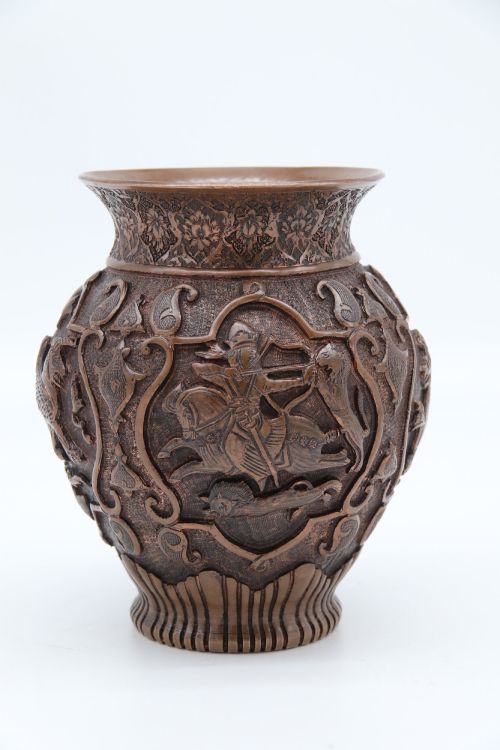


Antique Persian Metalwork
Antique Persian metalwork comprises copper, brass, bronze and silver vessels and trays from centuries of Islamic and regional traditions.
Antique Persian Metalwork
Antique persian metalwork covers items like trays, chargers, vases, coffee pots, ewers, bowls, and candlesticks originating from Persia and neighbouring traditions. These decorative and ritual pieces span multiple eras, from pre-sixteenth century examples up to the nineteenth century.
The objects most frequently met on this page date from the nineteenth century, including brass candlesticks, copper chargers, and mixed metal trays. Alongside authentic Persian pieces, the selection includes related Indo-Persian, Ottoman, and Middle Eastern items in copper, brass, and bronze.
Forms range from large serving trays and monumental ewers to small occasional tables and ritual vessels such as the Kerman-Yazd tradition ab-zan. Each piece demonstrates traditional metalworking techniques passed down through generations of artisans in Islamic metalwork centres.
Materials and Construction Techniques
Craftsmen shaped copper, brass, bronze, and patinated copper through hammering, casting, and piercing to form the bodies of vases, bowls, and trays. Silver and copper inlay work added intricate detail to surfaces, particularly on bronze and copper items.
Surface ornamentation relied heavily on hand-engraving and repoussé work, creating raised and incised patterns across chargers, coffee pots, and plaques. Enamel was also applied to brass surfaces during earlier periods, producing colourful decorative finishes on bowls.
Listings feature copper, brass, bronze, patinated copper, silver, silver plate, mixed metal, and enamel.
Quality Variations in Metalwork
The depth, precision, and clarity of hand-engraving and repoussé work distinguish finer examples from standard production pieces. Crisp lines in engraved brass candlesticks and deeply articulated patterns on copper chargers indicate superior craftsmanship.
Material composition and inlay execution also drive quality, with silver and copper inlay on bronze or patinated copper representing high levels of artisan skill. The weight, structural integrity, and preservation of original patination or enamel further define the better pieces.
The Antique Persian Metalwork Glossary
- Repoussé
- A metalworking technique where the artisan hammers the metal from the reverse side to form a raised design in relief on the front. This method appears frequently on copper trays and vases.
- Ewers
- Large pitchers or jugs with spouts and handles, traditionally used for pouring water in ritual or domestic settings. Examples include bronze aftabas with makara handles.
- Chargers
- Large decorative plates or shallow bowls used for serving or display, often heavily decorated with engraved and repoussé patterns. They form a significant portion of copper and mixed metal listings.
- Patinated
- The natural or induced ageing of a metal surface, changing its colour and texture over time. Patinated copper displays distinctive surface tones developed across decades.
- Ab-zan
- A specific type of ritual vessel associated with the Kerman-Yazd tradition in Persia. These engraved bronze vessels serve specialised ceremonial functions.
Antique Persian Metalwork: Frequently Asked Questions
How were these metal items used?
Many pieces served practical domestic and ritual purposes, from coffee pots and ewers for pouring liquids to large chargers and trays for serving.
Other items, such as candlesticks, decorative plaques, and occasional tables, fulfilled decorative functions within regional homes and public spaces.
How do I date antique metalwork?
Dating relies on stylistic markers, manufacturing techniques, material composition, and specific regional traditions recorded in each piece.
Earlier items from the sixteenth century often feature distinct enamelling or early bronze casting styles, whereas nineteenth-century pieces frequently show repoussé copper and brass work.
How do I care for copper and brass?
Care involves dusting gently with a soft, dry cloth to protect the original surface patination and delicate metal inlay.
Harsh chemical cleaners should be avoided, as they strip away historical patination and can damage engraved or repoussé details.