


Engraved Islamic Metalwork
Engraved islamic metalwork brings centuries of intricate regional artistry into your home through vessels, trays, and functional objects fashioned by skilled hands.
Engraved Islamic Metalwork
Engraved islamic metalwork spans centuries of metal-forming tradition, encompassing utilitarian and decorative objects originating from regions including Persia, Egypt, Syria, and India. When you browse this selection, you encounter forms ranging from monumental basins and coffee pots to travelling pen cases and occasional tables.
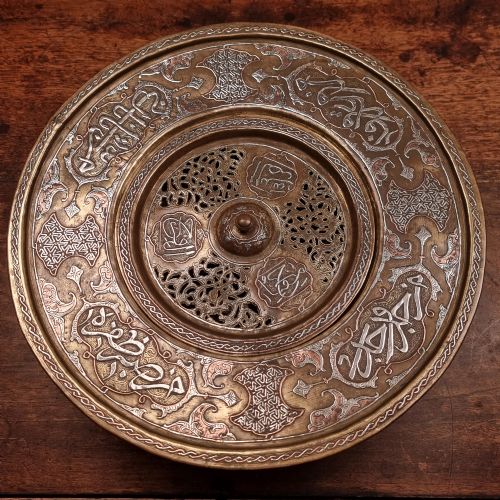
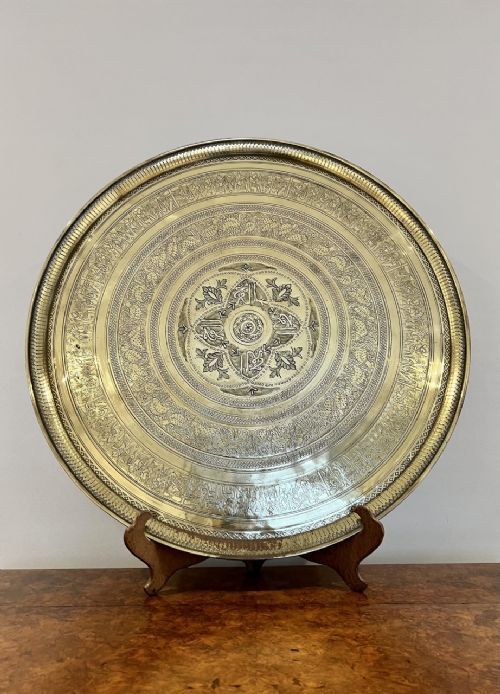
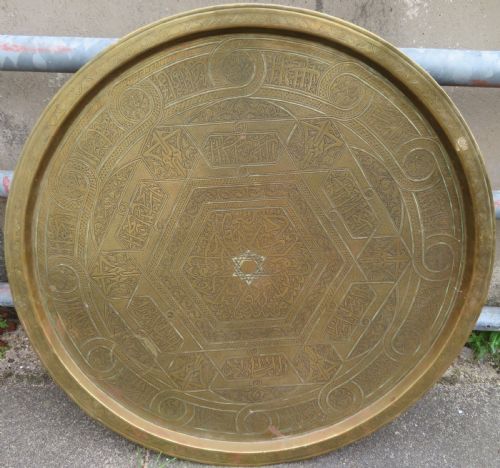
The pieces on this page represent diverse object types intended for domestic, ceremonial, or scholarly use. You find everything from large Cairoware brass trays to ritual bronze vessels and silver inlaid copper dishes.
Assessing quality and execution
Quality in these metal objects rests upon the precision and depth of the hand-engraving and the fineness of any metal inlay work. Pieces displaying crisp, deeply cut lines and secure, complex inlays demonstrate superior craftsmanship compared to shallow or rushed surface markings.
The choice of materials and the harmony of mixed metals influence the visual weight of an object. The integration of silver and copper within bronze or brass bodies requires advanced skill, elevating the sophistication of the piece.
Proportion and structural integrity matter significantly, particularly in large forms like basins, ewers, and tables. Superior examples maintain balanced proportions and robust construction while retaining intricate surface detail.
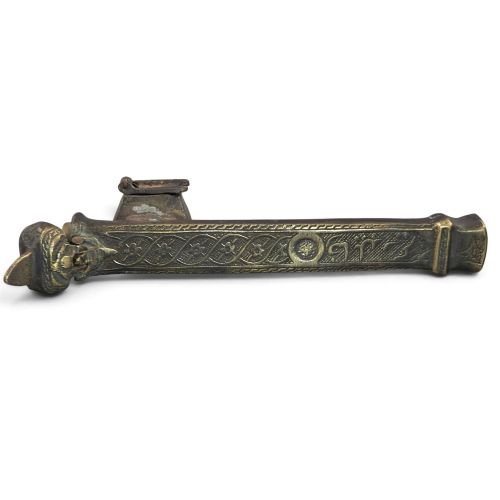
Keep your ink dry and your pen secure with an eighteenth-century travelling pen case made for life on the move.
The Engraved Islamic Metalwork Glossary
- Cairoware
- A term applied to nineteenth-century metalwork produced in Cairo, typically featuring heavily engraved brass inlaid with silver and copper. These pieces often take the form of large trays, bowls, and vases designed for the Western export market.
- Divit qalamdan
- A traditional portable writing set comprising a long inkwell and pen case combined into a single portable unit. These items were often fashioned from brass and highly engraved for travelling scholars.
- Ewer
- A large jug with a slender spout and handle, used historically for pouring water during ritual ablutions or hand-washing before meals. They are frequently cast in bronze or brass and richly engraved.
- Mamluk revival
- A nineteenth-century European and Middle Eastern artistic movement that imitated the complex inlaid metalwork of the medieval Mamluk sultanate. Pieces in this style utilise heavy brass with intricate geometric and calligraphic engraving.
- Veneto-Saracenic
- A classification for metalwork produced in the fifteenth and sixteenth centuries, primarily in Venice or the Levant, by Islamic artisans working for Italian patrons. These objects combine traditional Middle Eastern engraving with shapes tailored to European tastes.
Engraved Islamic Metalwork: Frequently Asked Questions
How were they used historically?
Many of these objects served practical domestic and ritual purposes in daily life, such as serving coffee, washing hands, or holding writing equipment. Trays and basins were central to hospitality customs.
Other items, such as ewers and candlesticks, fulfilled roles in lighting and personal hygiene. Portable objects like pen cases were designed for administrative or scholarly travel.
How do I care for antique metalwork?
Maintenance requires gentle handling to preserve patinated surfaces and delicate metal inlays. Dusting with a soft, dry cloth is generally sufficient for routine care.
Avoid harsh chemical metal polishes that can strip the historic patina or damage silver and copper inlay. Maintaining a stable indoor humidity prevents further oxidation of the base metals.
How can I tell periods apart?
Differentiating periods relies on examining construction techniques, stylistic motifs, and the specific character of the engraving. Earlier pieces often display distinct regional signatures, such as Safavid or Khorasan styles.
Nineteenth-century revival pieces, including Cairoware, frequently exhibit heavier brass substrates and mass-market export characteristics. Comparing inscription styles and inlay materials provides further chronological clues.