

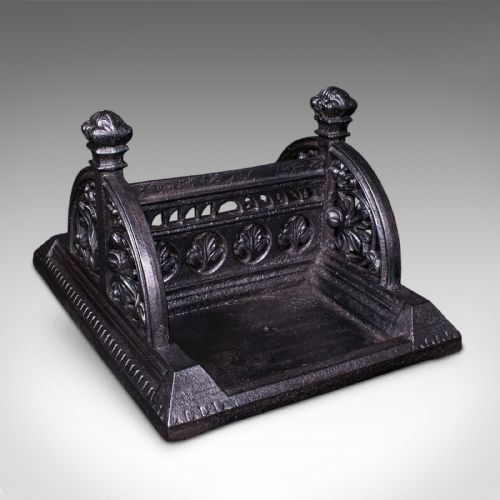
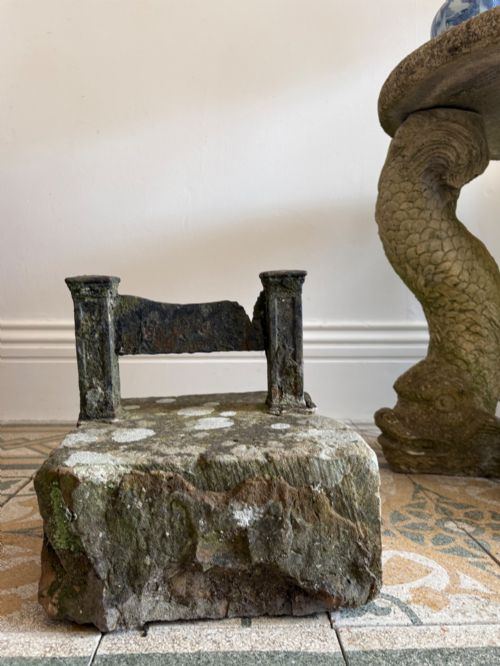


Antique Iron Shoe Cleaner
An antique iron shoe cleaner clears heavy mud from boots before visitors step inside.
Antique Iron Shoe Cleaner
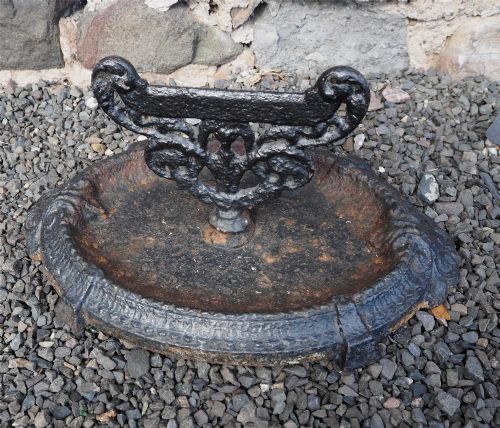
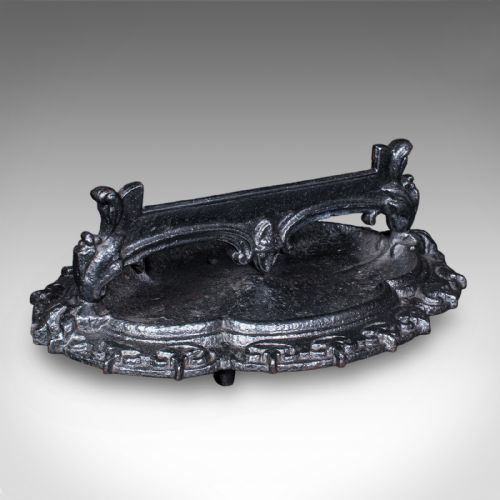
Every antique iron shoe cleaner serves a practical function at the threshold of a doorway, designed to scrape mud from footwear before entry. Buyers searching for an antique iron shoe cleaner encounter functional boot scrapers and shoe pulls originating from the Georgian, Victorian, and Regency periods.
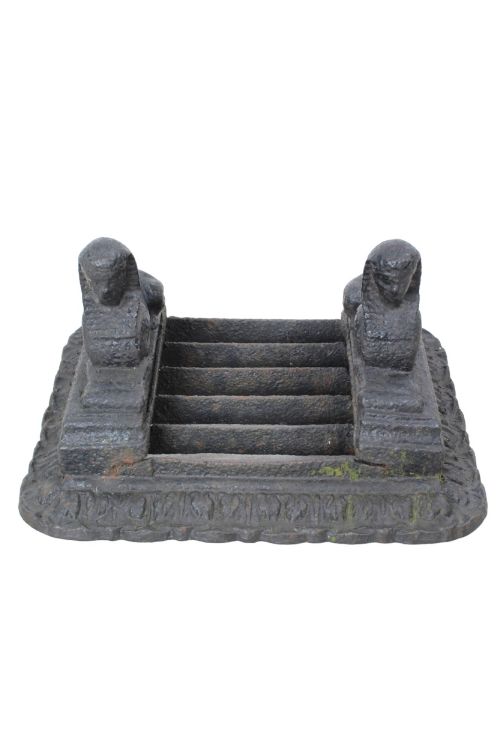
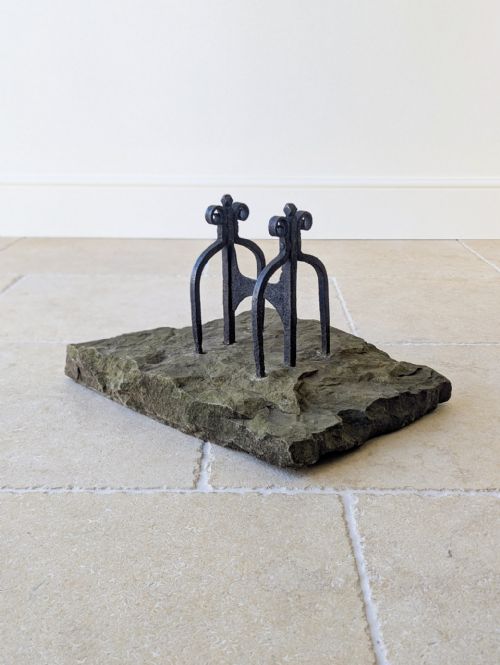
Most examples found on this page consist of durable cast iron or wrought iron, often mounted into stone bases or hewn blocks. These pieces range from simple town house models to elaborate designs incorporating Egyptian Revival or Victorian Gothic Revival styles.
Factors affecting quality
The sophistication of the ironwork sets finer examples apart, particularly where founders employed decorative motifs like lions or distinct architectural revival styles. Castings with crisp detail and integrated stone foundations reflect superior craftsmanship compared to plain utility models.
Condition and completeness also govern the merit of a piece, especially regarding the survival of the original mounting stone and the structural integrity of the iron blade.
Some Victorian designers added cast iron lions to guard the entrance alongside the scraper blade.
Coalbrookdale
The Antique Iron Shoe Cleaner Glossary
- Boot scraper
- A stationary metal blade fixed near an entrance for removing mud from the soles of boots. This forms the primary component of the items listed under this phrase.
- Shoe pull
- A handle or loop attached to a scraper assembly that helps steady the foot while removing wet footwear. It often doubles as a boot jack or helper.
- Yorkstone
- A tough, durable sandstone quarried in Yorkshire, frequently used as a heavy mounting block for exterior ironwork. It provides a stable foundation for the scraper.
- Cast iron
- An iron-carbon alloy poured into moulds to create rigid shapes with ornamental detail. It represents the predominant material seen across these listings.
- Wrought iron
- Iron beaten and worked into shape by a blacksmith rather than cast in a foundry. It yields tougher, fibrous components typical of earlier pieces.
Antique Iron Shoe Cleaner: Frequently Asked Questions
Where were shoe cleaners placed?
These items sit directly outside exterior doorways, usually mounted close to the main entrance of country houses and townhouses. Their primary purpose is to stop mud from reaching interior floor coverings.
Property owners positioned them where guests naturally pause before stepping over the threshold.
How do I date an iron scraper?
Dating relies on stylistic clues, such as Regency curves or Victorian Gothic Revival motifs, alongside the method of manufacture. Cast iron items from the nineteenth century often display standard foundry marks or specific design registrations.
The integration of hewn stone blocks also points towards particular country house traditions from the Georgian era onwards.
Can these scrapers be used outside today?
These robust iron and stone objects suit modern outdoor placement just as well as their original settings. Their hardy materials withstand weathering while fulfilling their traditional function at a doorway.
Proper installation ensures the heavy stone base remains stable in garden soil or paving.
What is the difference between a scraper and a pull?
The scraper is the flat blade that clears mud from the sole, whilst the pull provides a secure handhold or foot leverage point. Many historic entrance designs combine both elements into a single integrated iron casting.
This dual arrangement assists people with balancing while pulling off muddy riding boots.