





Antique Iron Pendant Lamp
An antique iron pendant lamp brings heavy industrial presence and period character into a room through honest metalwork.
Antique Iron Pendant Lamp
An antique iron pendant lamp encompasses ceiling lights, hall lanterns, and chandeliers shaped by Victorian, Edwardian, and early twentieth century hands. Buyers searching this phrase meet fixtures originating from French chateau, industrial, and Gothic revival traditions, spanning eras from the late nineteenth century through the nineteen-thirties.
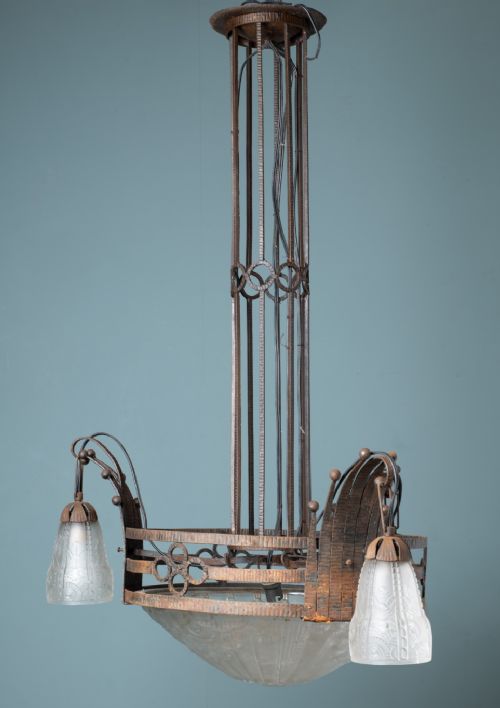
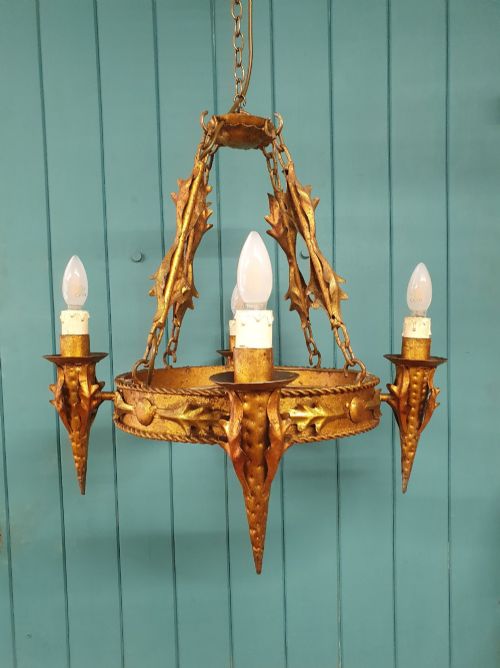
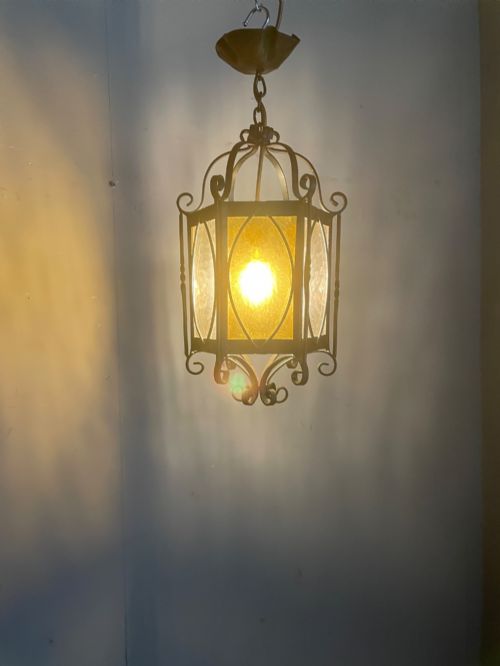
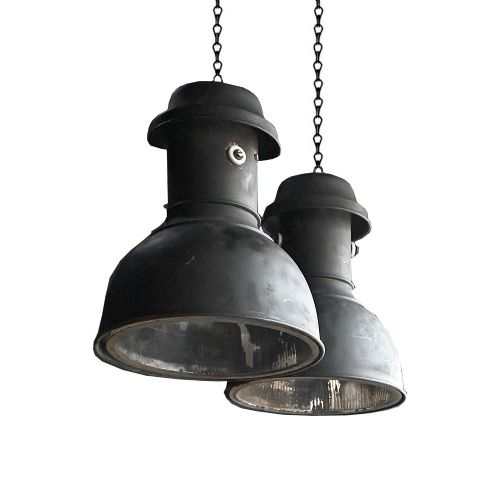
The selections on this page lean heavily toward French hall lanterns and wrought iron chandeliers alongside English factory lights and Arts and Crafts hanging lamps. Forms vary from simple wagon wheel frames to hexagonal glazed lanterns and multi-light fixtures bearing decorative metal scrolls.
Origins stretch across French, English, and Italian workshops, utilising iron structures paired with glass, crystal, and fabric elements. These pieces hang from ceilings to illuminate spaces with historical weight and distinct regional styling.
How they were made
Blacksmiths shaped wrought iron and cast iron by hand, forging structural bands, suspension arms, and decorative scrolls into robust frames. Molten metal took rigid form in casts, while blacksmith-made lanterns relied on hammer and anvil to join structural joints.
Glazing techniques incorporated leaded glass, coloured glass, and pate de verre panels fitted securely into metal cages. Artisans combined iron with brass, gilt metal, and crystal droplets to catch and refract light within the hanging lanterns.
Antique Iron Pendant Lamp Retail Price Guide 2026
Typical asking prices for iron pendant lamp among the pieces listed under this phrase on Sellingantiques today, from the lower quarter to the upper quarter. They describe what is for sale here now, not the wider market.
Early blacksmiths left subtle hammer marks on iron wagon wheels, ensuring no two hanging lanterns share an identical heartbeat.
What varies in quality
The distinction between standard production and exceptional execution lies in the fluency of the metalwork and the integrity of the glass elements. Hand-forged wrought iron with crisp detailing and purposeful proportions separates master blacksmith output from repetitive industrial casting.
Integration of specialised glass, such as signed pate de verre shades or leaded panels with precise soldering, elevates a piece significantly. Surface finishes, whether original gilding or patinated black iron, retain depth and character on superior examples.
Verrerie Des Vosges·Muller Freres
The Antique Iron Pendant Lamp Glossary
- Wrought iron
- Iron that has been heated and worked with tools like hammers rather than cast in a mould. This material displays characteristic fibrous textures and allows for slender, strong structural scrolls.
- Hall lantern
- A ceiling-hung lighting fixture enclosed in glass panels, traditionally designed to illuminate entrance halls and corridors. These pieces protect the flame or bulb from drafts while diffusing light outwards.
- Pate de verre
- A glass-making technique where finely crushed glass is packed into a mould and fused in a kiln. This produces dense, textured art glass with subtle colour gradients.
- Lead crystal
- Glass containing metal oxide that increases weight and brilliance. It refracts light sharply through cut facets.
- Coronet chandelier
- A crown-shaped ceiling light featuring an upper ring from which lights or glass drops are suspended. The silhouette mimics historical royal headwear.
Antique Iron Pendant Lamp: Frequently Asked Questions
How do I hang a heavy iron pendant lamp safely?
Suspension requires fixing directly into ceiling joists or using heavy-duty toggle anchors rated for the weight of the iron and glass fixture. Professional installation ensures the electrical wiring and ceiling hook support the load without strain.
Heavier hall lanterns and wagon wheel chandeliers demand robust chain links and ceiling canopies capable of managing torque and downward pull over decades of use.
Can these antique lamps take modern LED bulbs?
Most antique fixtures accept standard modern LED bulbs provided the wattage and physical dimensions match the original socket clearances. Rewiring may be necessary to meet current safety standards while retaining the original lampholders.
Consulting a qualified electrician ensures the internal wiring safely accommodates low-energy bulbs without compromising the historical integrity of the metal frame.
How do I clean wrought iron and glass shades?
Dust iron frames gently with a dry microfiber cloth and avoid harsh chemical cleaners that strip the historic patina. Glass panels and pate de verre shades can be wiped down with a damp cloth using mild soap before drying thoroughly.
Preserving the surface requires keeping moisture away from unsealed electrical components and treating the metal with microcrystalline wax if corrosion threatens.
What is the difference between a hall lantern and a chandelier?
A hall lantern encloses the light source within glazed or leaded glass panels to shield it from air movement in narrow spaces. A chandelier suspends multiple open or shaded light points radiating from a central stem or ring.
Lanterns prioritise directional containment and structural protection, whereas chandeliers focus on expansive illumination and decorative metalwork display.