


1920s Glass Chandelier
A 1920s glass chandelier brings geometric clarity or period grandeur to a room, combining period illumination with decorative metalwork.
1920s Glass Chandelier
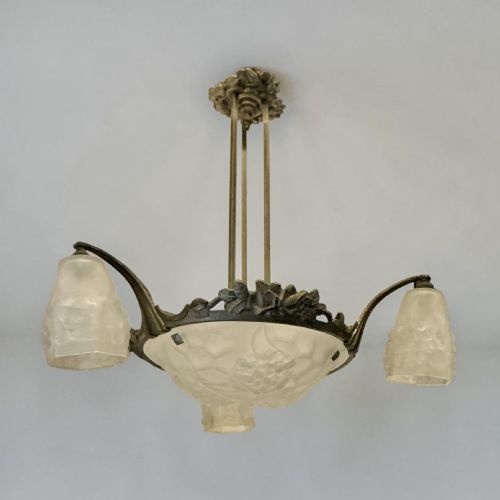
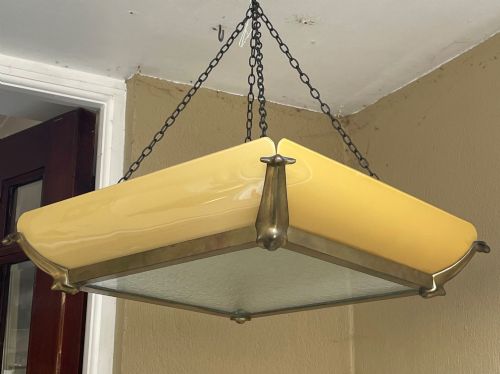
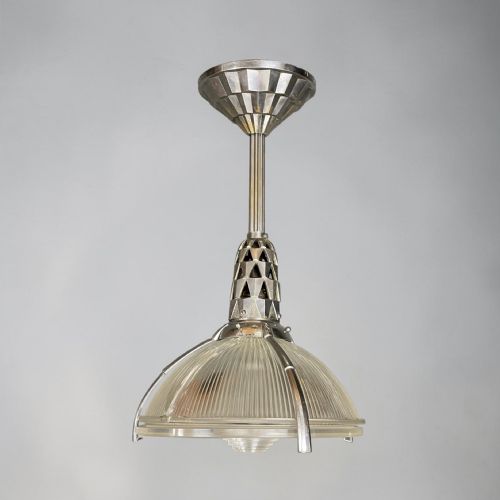
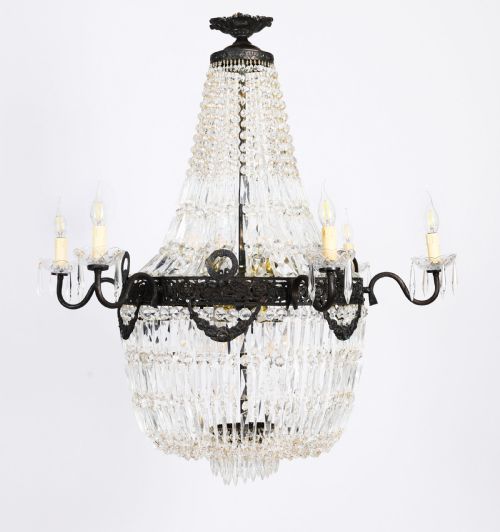
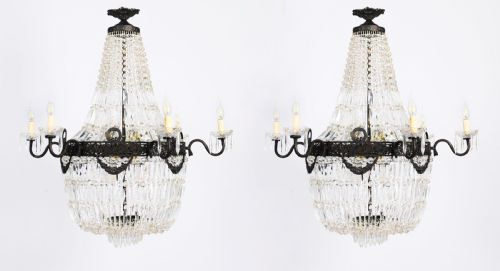
A 1920s glass chandelier encompasses hanging ceiling fixtures designed during the interwar years, spanning strict geometric forms and ornate revival styles. Buyers searching for a 1920s glass chandelier encounter everything from streamlined geometric pendants to grand crystal tent chandeliers rooted in earlier decorative traditions.
The objects on this page bridge the gap between late nineteenth-century ornamentation and modern interwar design. Most examples date from the nineteen-twenties and thirties, drawing on Edwardian precedents alongside Art Deco and Louis Revival aesthetics.
Common configurations range from simple single-bulb ceiling lights to multi-light ballroom fixtures featuring dozens of bulbs. Formats include pendant lights, hanging lanterns, and swan-style chandeliers suited to various ceiling heights and room proportions.
Materials and construction
Makers constructed these fixtures using a combination of cast or spun metal frames and glass components. Brass, chrome, copper, and nickel-plated metal provide the structural armature for glass drops, beads, and moulded shades.
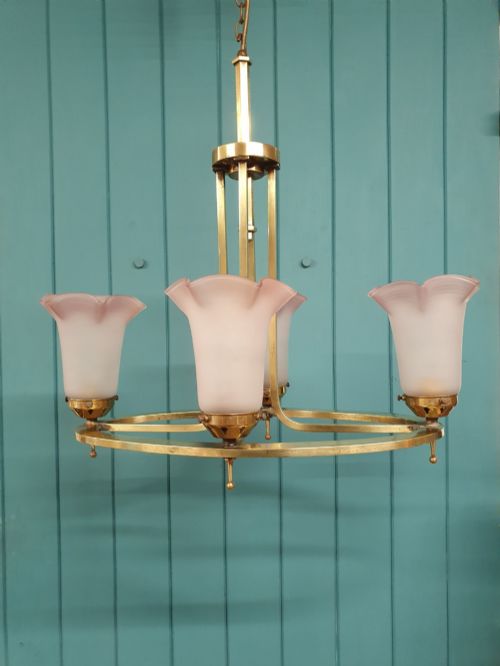
Optical and decorative effects rely heavily on cut glass, crystal, and frosted glass elements. Pieces utilise precision cutting to refract light from multiple internal bulbs, while moulded frosted glass panels diffuse illumination evenly across Art Deco geometric frames.
Object types range from single pendant lights and hanging lanterns to forty-one light ballroom chandeliers.
Factors determining quality
Quality reveals itself in the weight and finish of the metal frame and the clarity of the glass. Superior fixtures employ substantial brass or plated metal work that maintains structural rigidity under the weight of extensive crystal drops.
The refinement of the glass cutting and moulding distinguishes standard production from finer examples. Crisp facets on cut crystal and clean, uniform moulding on frosted shades demonstrate superior workshop standards during manufacture.
Émile-Jacques Ruhlmann·Schneider
The 1920s Glass Chandelier Glossary
- Art Deco
- A design style of the nineteen-twenties and thirties characterised by sleek geometric shapes, stylised motifs, and streamlined forms. It marks a clear departure from heavy nineteenth-century historicism.
- Cut crystal
- High-purity glass shaped by grinding and polishing to create sharp facets that maximise light refraction. It appears frequently on grand revival chandeliers.
- Tent chandelier
- A lighting form featuring strings of glass beads gathered from a crown down to a wider metallic band, creating a tent-like silhouette. This classic ballroom configuration provides layered vertical illumination.
- Louis Revival
- An eclectic nineteenth and early twentieth-century style resurrecting French court aesthetics from the seventeenth and eighteenth centuries. These pieces incorporate ornate scrolling arms and abundant crystal drops.
- Frosted glass
- Glass treated with acid etching or sandblasting to create a matte, translucent surface. It diffuses glare while maintaining a soft, even glow across ceiling fixtures.
1920s Glass Chandelier: Frequently Asked Questions
How do I clean a glass chandelier?
Remove delicate glass drops and beads individually where possible, washing them in warm soapy water before drying with a soft lint-free cloth. Wipe down the metal frame with a dry or lightly dampened cloth to preserve the original plating or brass patina.
Avoid using harsh chemical cleaners that can strip vintage metallic finishes or damage fragile glass surfaces. Regular dusting with a feather duster prevents heavy grime buildup between deep cleans.
Are these chandeliers compatible with modern wiring?
Many vintage fixtures retain older internal wiring that requires professional rewiring to meet contemporary safety standards. Electricians can easily adapt lamp holders to accept modern LED bulbs while preserving the original exterior appearance.
Ensure a qualified professional inspects the ceiling canopy and chain suspension before installation to support the full weight of the fixture safely.
What rooms suit a 1920s chandelier?
Larger multi-light ballroom chandeliers require high ceilings and generous floor space to balance their visual weight in living rooms or dining halls. Compact pendant lights and single-tier fixtures fit comfortably in hallways, bedrooms, or standard-height reception rooms.
Matching the fixture style to the architectural period of the room enhances the overall interior cohesion.
How do I tell Art Deco from revival styles?
Art Deco fixtures rely on symmetry, stepped zig-zags, and clean metallic lines without historical references. Revival pieces emulate earlier French court or Regency aesthetics through scrolling arms, leafy appliques, and cascading crystal drops.
Examining the metal framing and glass silhouettes clarifies whether a piece leans toward interwar modernism or traditional ornamentation.