
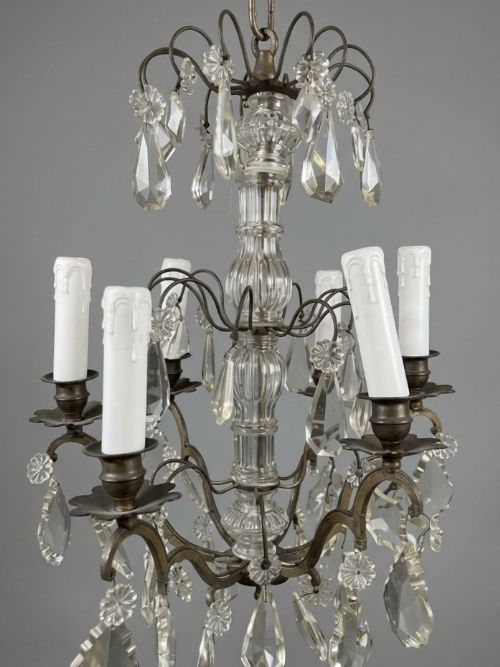
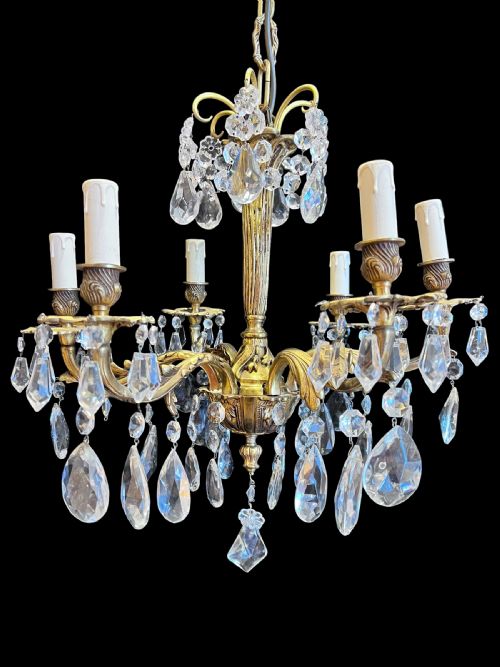
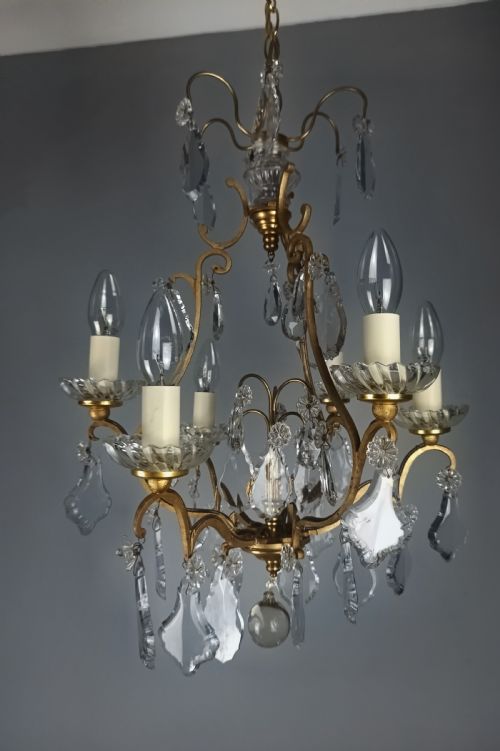
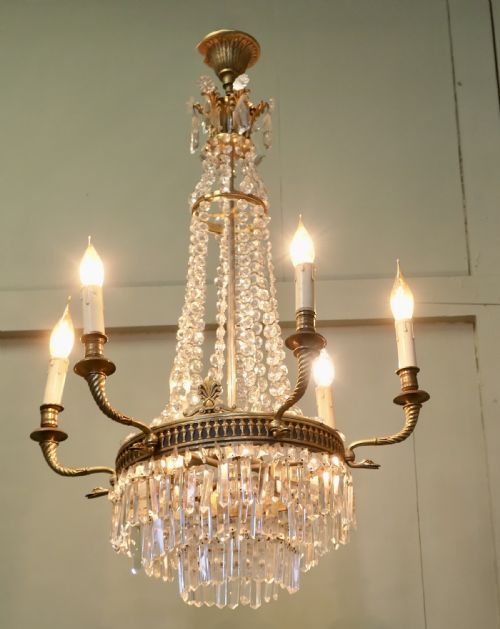
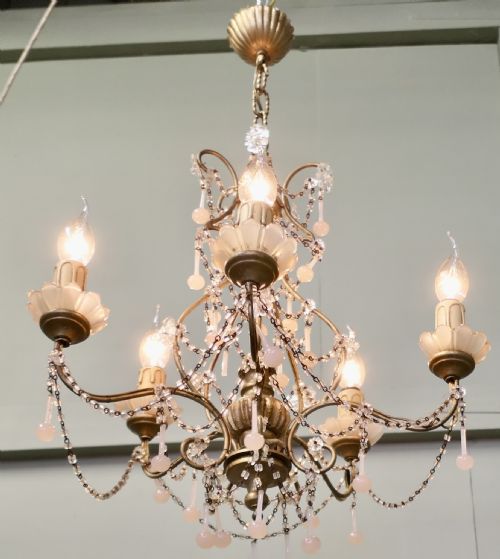
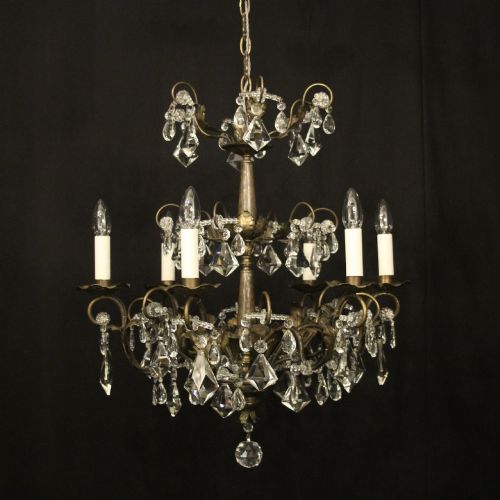
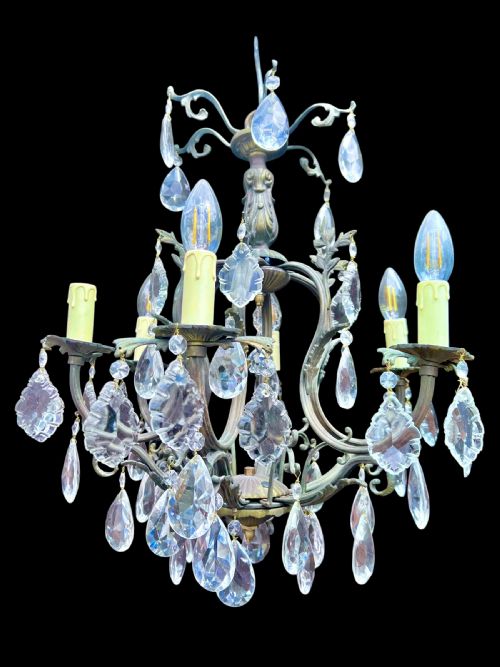
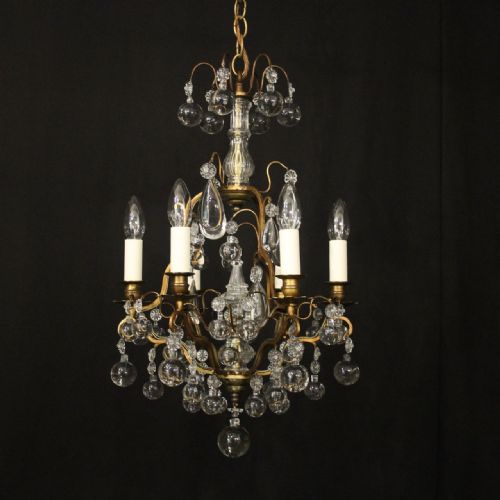
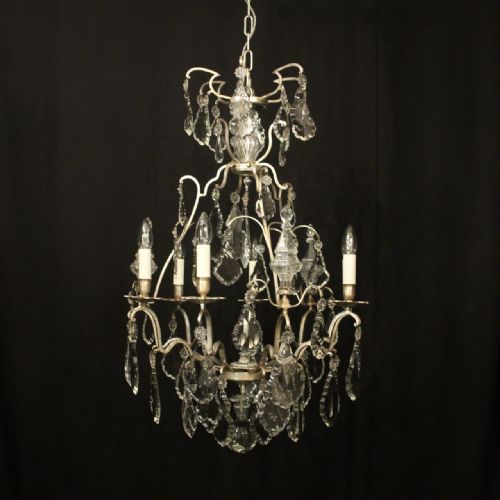


Six Arm Glass Chandelier
A six arm glass chandelier brings instant architectural presence and clear brilliance to a room, drawing the eye upward.
Six Arm Glass Chandelier
A six arm glass chandelier provides a balanced arrangement of six distinct branches designed to hold light sources within a decorative frame. When looking for a six arm glass chandelier, buyers encounter examples originating from French, Italian, English, and Swedish workshops spanning the nineteenth century through the 1930s.
The styles range from elaborate French Rococo Revival and Empire designs to Venetian Art Deco and Italian Neo-Classical forms. Birdcage structures, tent and waterfall formations, and swan styles appear frequently across these decades.
Most pieces date from the early twentieth century, particularly the 1920s and 1930s, alongside older nineteenth-century alternatives. These light fittings suit spaces requiring period character and concentrated illumination.
Materials and construction methods
Makers constructed the structural frames using brass, gilded brass, or bronze, often enhanced with silvered or gilt metal finishes. These metallic skeletons support the weight of the branches and the suspended glass components.
Hanging elements rely on clear cut glass and crystal, sometimes accented with coloured glass fruits. Individual glass drops, beads, and prisms are linked to the frame to refract light across the room.
The listings show pieces spanning from the nineteenth century through the 1930s, utilising brass, gilt metal, and cut glass.
Factors determining quality
The sophistication of the metalwork and the clarity of the glass dictate the grade of a piece. Fine castings with crisp chasing on ormolu or gilded brass frames stand apart from simpler metal structures.
The depth of hand-cut facets on the crystal and glass drops influences how light disperses. Complete sets of matching prisms and balanced proportions across all six branches indicate superior workshop execution.
The Six Arm Glass Chandelier Glossary
- Birdcage chandelier
- A lighting fixture featuring a curved metal frame that resembles the profile of an avian enclosure, densely hung with crystal drops. This construction style creates a rounded, volumetric silhouette.
- Tent and waterfall chandelier
- A design incorporating an upper canopy of glass beads gathered into a tent shape above a cascading arrangement of drops. The lower tiers spill outward like water.
- Ormolu
- Finely ground high-carat gold applied to a bronze base using a mercury amalgamation process. This technique yields a warm, durable metallic finish found on French frames.
- Cut glass
- Glass decorated by grinding facets into the surface using a wheel to increase light refraction. Master cutters achieved sharp geometric patterns that sparkle under illumination.
- Venetian Art Deco
- A decorative movement originating in Italy during the early twentieth century characterised by stylised forms and coloured glass elements. Pieces in this style often incorporate pink or tinted components.
Six Arm Glass Chandelier: Frequently Asked Questions
How do I hang a heavy chandelier safely?
Suspension requires securing the fixture directly into a ceiling joist or structural timber using a rated metal hook and chain. Professional installation by an electrician ensures the weight of the metal and glass is properly supported.
Electrical wiring must be inspected and updated to meet current safety standards before connecting the fixture to the mains supply.
What is a birdcage frame?
A birdcage frame uses curved metal straps radiating from a central axis to form an open, rounded cage structure. This framework supports dense layers of crystal garlands and cascading drops.
The design allows light to pass through internal and external tiers of glass simultaneously.
How do I clean an antique glass chandelier?
Cleaning involves wiping each glass drop and crystal pendant individually using a mild solution of warm water and a gentle cleaning agent. Leaving the pieces attached to the frame prevents accidental damage to the delicate wiring and old metal links.
Soft cloths should be used to dry every component thoroughly to prevent water spots on the cut surfaces.
Can I replace missing crystal drops?
Matching replacement drops requires finding antique glass or crystal components that match the approximate age, cut pattern, and dimensions of the originals. Dealers and specialist restorers maintain stocks of vintage glass elements for this purpose.
Consistency in glass tint and facet style maintains the visual harmony of the fixture.
How do I date an older chandelier?
Dating relies on examining the manufacturing techniques visible in the metal casting, the method of wiring or lack thereof, and the style of the glass cutting. French Empire and nineteenth-century pieces display heavier cast bronze or ormolu mounts, whereas 1920s and 1930s examples often feature lighter brass frameworks and distinct Art Deco colour accents.
Documented regional characteristics, such as Swedish cut glass or Venetian tinted elements, also provide chronological clues.