



Vintage Glass Bowl Light
A vintage glass bowl light brings architectural illumination to a room, casting soft radiance through pressed, cut or opalescent glass basins.
Vintage Glass Bowl Light
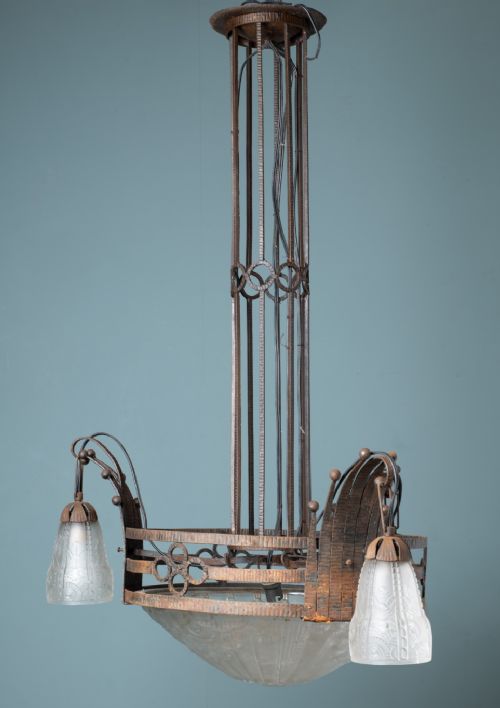
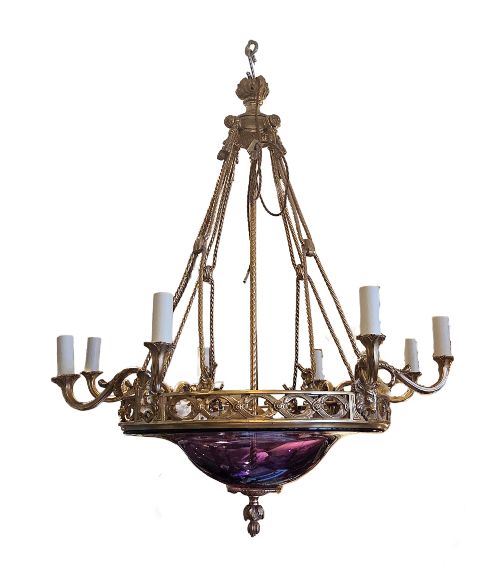
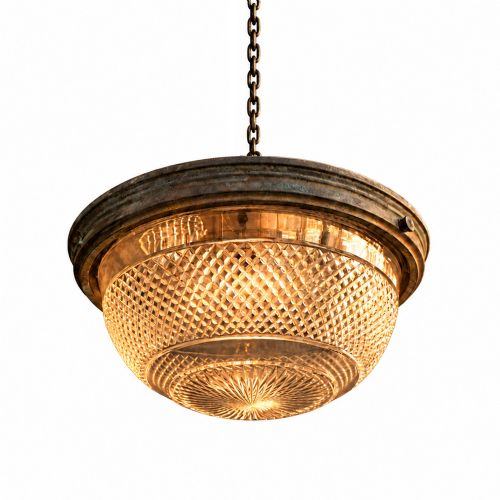
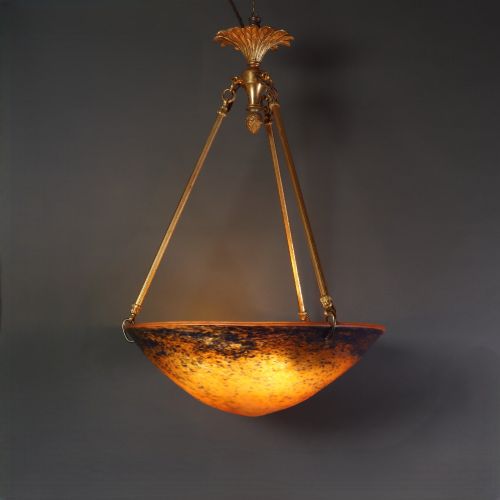
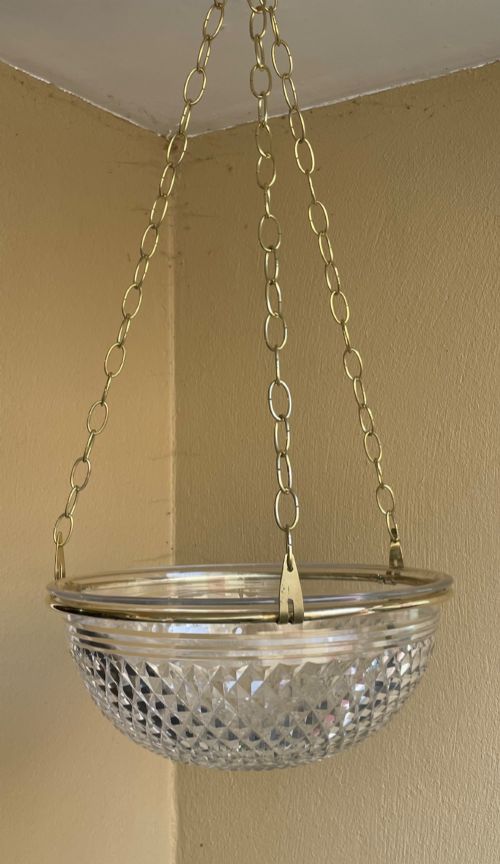
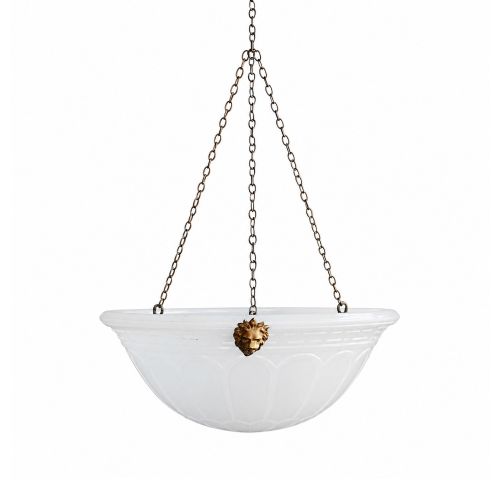
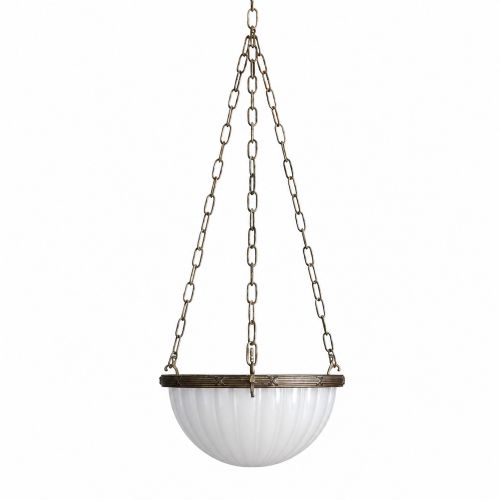
A vintage glass bowl light encompasses ceiling-hung fixtures, pendants and plafonniers designed to diffuse light evenly across a space. These pieces range from substantial Victorian cut glass dishes to streamlined Art Deco bowls and early twentieth-century moonstone or opalescent shades.
The most frequent examples encountered on this page date from the Edwardian era through the nineteen-thirties, typically suspended by metal chains or mounted flush against the ceiling. Forms vary from simple opaline basins to elaborate fixtures featuring bronze mounts, rams head motifs or painted glass details.
Originating across England, France and Italy, these lights serve primarily as central ceiling illumination for hallways, reception rooms and dining spaces. The selection balances utilitarian utility with decorative period styling, spanning Arts and Crafts severity to ornate neoclassical bronze work.
Distinctions in quality
Quality reveals itself in the depth and clarity of the glass, where heavier crystal and crisper hand-cut facets or pressed patterns demonstrate superior craftsmanship. Thicker glass bowls hold sharper details, particularly in opalescent and moulded botanical or geometric motifs.
The supporting metal hardware separates standard production from finer pieces through the weight of the bronze or brass, the precision of the casting, and integrated decorative elements. Original suspension systems and matched metal components indicate a higher grade of manufacture.
Vintage Glass Bowl Light Retail Price Guide 2026
Typical asking prices for vintage glass bowl light among the pieces listed under this phrase on Sellingantiques today, from the lower quarter to the upper quarter. They describe what is for sale here now, not the wider market.
Certain early twentieth-century dining rooms relied on fruit-shaped glass lamps to cast a strangely appetising glow over the roast.
René Lalique·Tiffany
The Vintage Glass Bowl Light Glossary
- Plafonnier
- A ceiling light fixture where the glass bowl sits flush or close to the ceiling surface. This French term typically describes shallow bowl shades.
- Moonstone glass
- A type of semi-translucent white glass that resembles the milky appearance of a moonstone. It diffuses light with minimal glare.
- Opalescent glass
- Glass exhibiting a milky iridescence that reflects blue tones in daylight and amber when lit from within. It gained popularity during the Art Deco period.
- Campana urn
- A bell-shaped vessel with a flared rim and footed base, often seen in classical bases and lamp supports. The shape derives from ancient Roman pottery.
- Cut glass
- Glass decorated by grinding facets and patterns into the surface using a wheel. This technique creates sharp light refraction and heavy, tactile bowls.
Vintage Glass Bowl Light: Frequently Asked Questions
How do I hang a vintage bowl light?
Most ceiling-hung fixtures utilise standard ceiling roses and suspension chains attached to the original metal mounts. Professional installation ensures the electrical wiring meets modern safety standards while preserving the antique hardware.
Weight distribution requires proper ceiling joist fixing, particularly for heavy crystal, bronze and cut glass bowls. Electricians can adjust suspension drop lengths to suit specific room ceiling heights.
What rooms suit a plafonnier?
Flush and semi-flush plafonniers suit hallways, bedrooms and rooms with lower ceilings where hanging pendants prove impractical. Their profile provides ambient overhead illumination without obstructing vertical space.
Entrance halls benefit particularly from the downward spread of light through textured or opalescent glass bowls. Kitchens and dining areas also utilise these fixtures for direct, diffused surface lighting.
Can I replace missing glass bowls?
Finding exact replacement bowls for antique metal mounts presents significant challenges due to unique period dimensions and handmade variations. Most fixtures are sold as complete units with their original glass.
Matching a replacement requires careful measurement of fitter diameters and depth tolerances. Surviving matched sets represent much higher integrity than married components.