



Antique Intaglio Seal
An antique intaglio seal presses a carved crest, portrait or motto into hot wax, bridging centuries of correspondence through miniature sculpture.
Antique Intaglio Seal
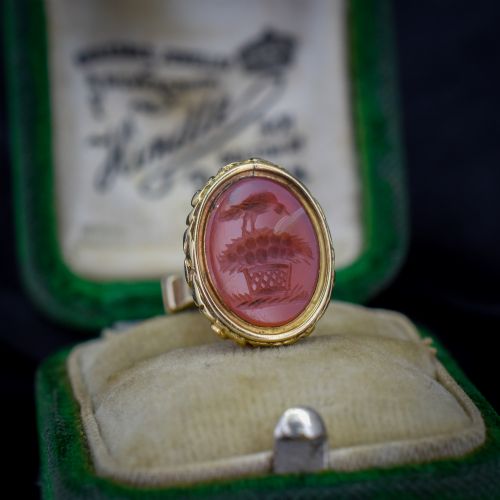
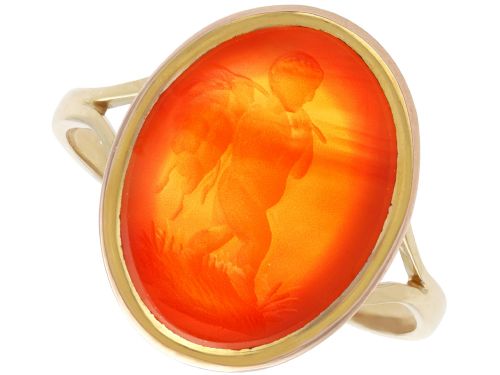
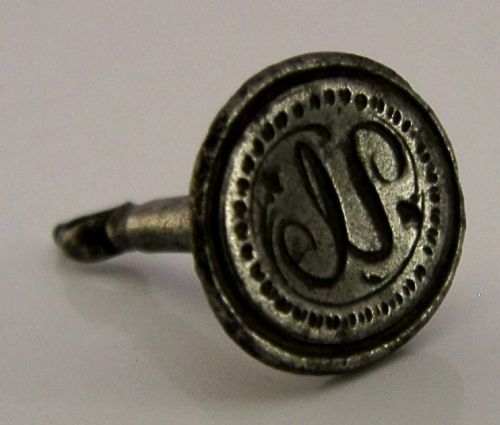
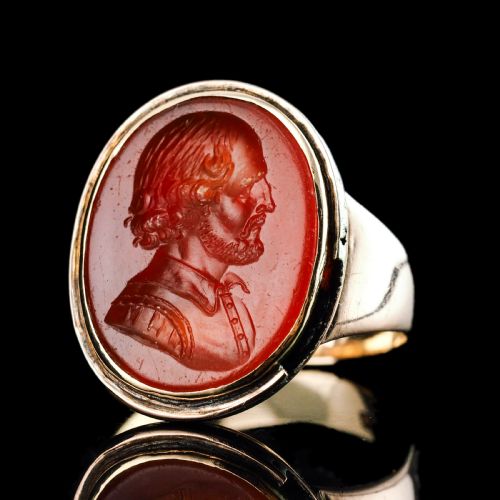
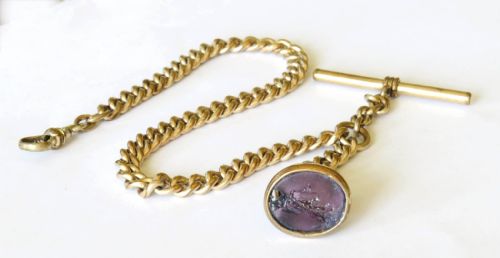
Every antique intaglio seal on this page functions as a personal stamp, taking the form of a finger ring, a desk accessory, or a fob pendant designed to hang from a pocket chain. You will encounter these pieces across multiple eras, ranging from Georgian and Victorian specimens to Edwardian and mid-century examples.
The materials used for the carved matrices include carnelian, bloodstone, glass, plaster, gypsum, rock crystal, chalcedony, sardonyx, and agate. Mounts and rings rely on gold, 9ct yellow gold, 18ct gold, silver, bronze, steel, gilt metal, and wood.
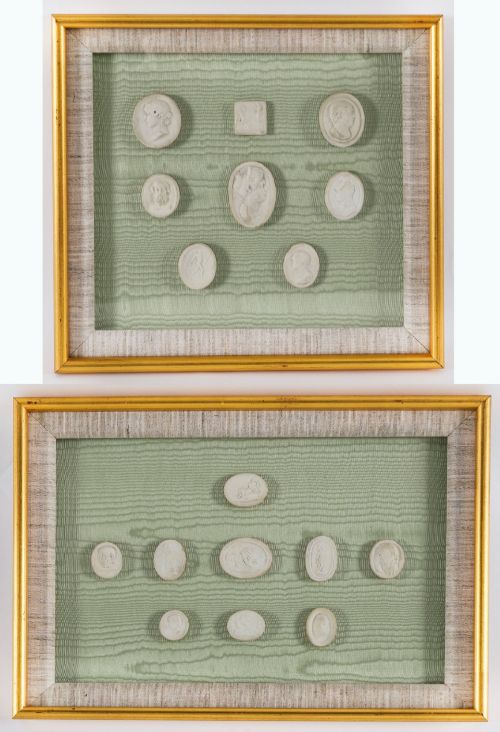
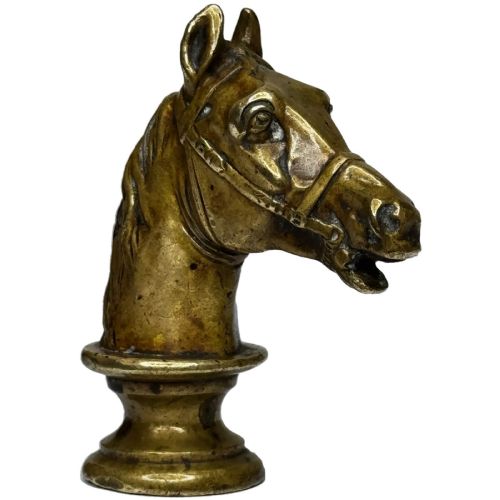
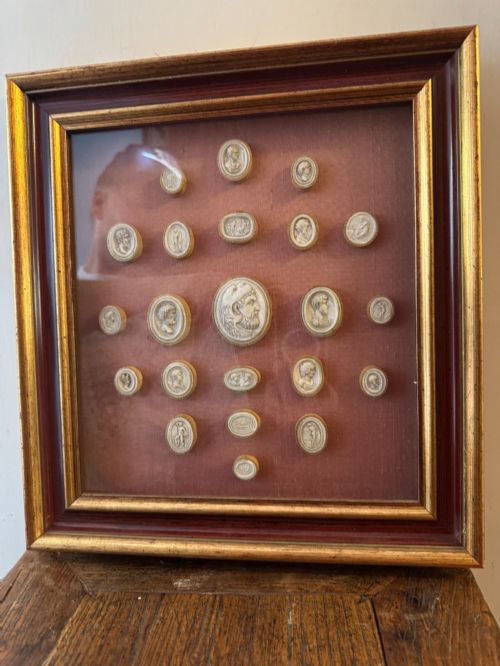
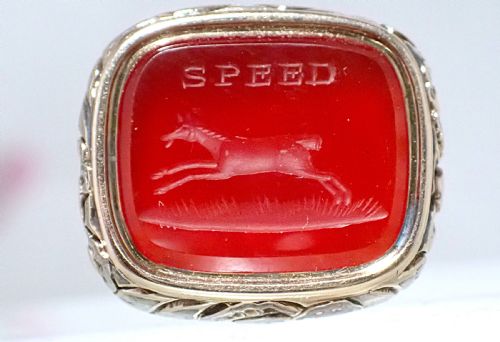
Fob seals and desk seals dominate the selection, alongside signet rings and framed Grand Tour plaster panels. Subjects span armorial crests, horse heads, classical figures, portraits of figures like William Shakespeare and Napoleon Bonaparte, and specific words such as speed.
Materials and construction
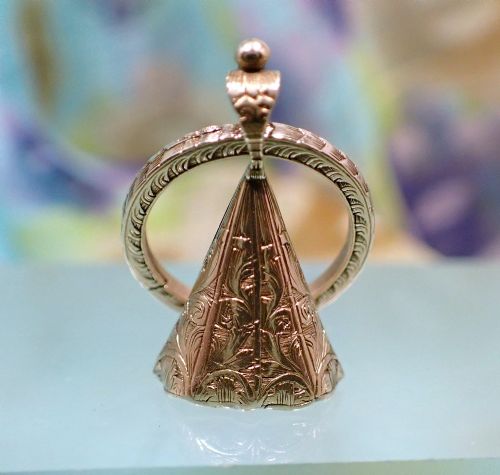
Carvers cut intaglio designs beneath the surface of hardstones and glass so that the resulting wax impression stands in relief. Goldsmiths and metalworkers housed these carved stones in swivel mounts, heavy fob pendants, and signet ring bezels using gold casing, solid 9ct or 18ct gold, and cut steel.
Grand Tour pieces utilise plaster and gypsum cast from ancient originals, mounted in wood or framed for display. Desk seals pair turned wooden handles with metal or glass matrices, while medieval examples cast bronze directly into signet forms.
Antique Intaglio Seal Retail Price Guide 2026
Typical asking prices for intaglio seal among the pieces listed under this phrase on Sellingantiques today, from the lower quarter to the upper quarter. They describe what is for sale here now, not the wider market.
The selection spans functional desk accessories, pocket watch fobs, signet rings, and framed Grand Tour plaster panels.
Distinctions in craftsmanship
The choice of hardstone influences value, with richly coloured carnelian, deep bloodstone, and banded agate holding more presence than moulded glass or plaster, unless the latter forms part of a curated Grand Tour collection.
The Antique Intaglio Seal Glossary
- Intaglio
- A design carved into the surface of a gemstone or glass so that an impression in wax creates a raised relief. This technique reverses the image, requiring inscriptions to face the correct direction in the stone.
- Fob seal
- A small pendant seal designed to dangle from a pocket watch chain or ribbon. These pieces typically feature an ornate handle and a swivel mechanism to display the matrix.
- Grand Tour
- A cultural journey undertaken by wealthy young Europeans in the eighteenth and nineteenth centuries, commemorated by acquiring souvenirs such as plaster and gypsum intaglio panels.
- Armorial
- A design displaying a coat of arms or heraldic crest belonging to a specific family. These seals were used to authenticate official documents and letters.
- Matrix
- The face of the seal bearing the carved design that stamps the wax. It can be carved from stone, metal, or glass.
Antique Intaglio Seal: Frequently Asked Questions
How were antique intaglio seals used?
Owners pressed the carved stone matrix into heated sealing wax dropped onto folded letters and documents. The resulting impression closed the parchment securely and acted as a signature.
Fob seals hung from pocket watch chains for daily use, while desk seals remained stationed in studies alongside inkwells and letter openers.
How do I date an intaglio seal?
Stylistic clues such as neoclassical motifs, Georgian proportions, or Victorian weight provide initial chronological markers. Hallmarks stamped on gold or silver mounts offer precise assay office dates where present.
The choice of subject matter, from Napoleonic themes to medieval bronze forms, also aligns the piece with specific historical revivals.
Can I still use an antique seal with wax?
Hardstone and metal matrices remain durable enough to stamp modern sealing wax without sustaining damage. Ensure the stone is securely set in its mount before applying pressure.
Cleaning old wax residue from the carved crevices with a soft brush helps maintain a crisp impression.