
Antique Inlay Storage Cabinet
An antique inlay storage cabinet brings together timber, craft and interior utility from the eighteenth, nineteenth and twentieth centuries.
Antique Inlay Storage Cabinet
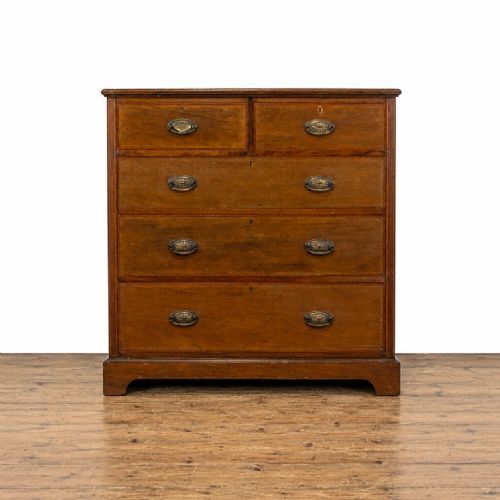
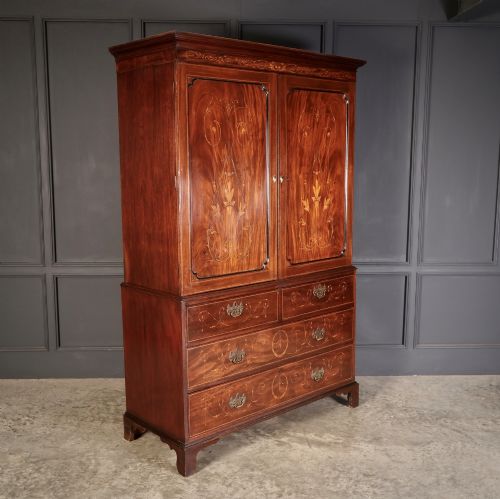
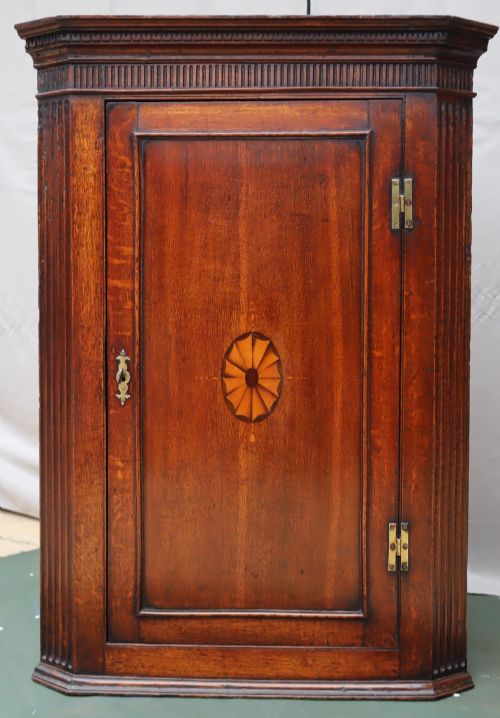
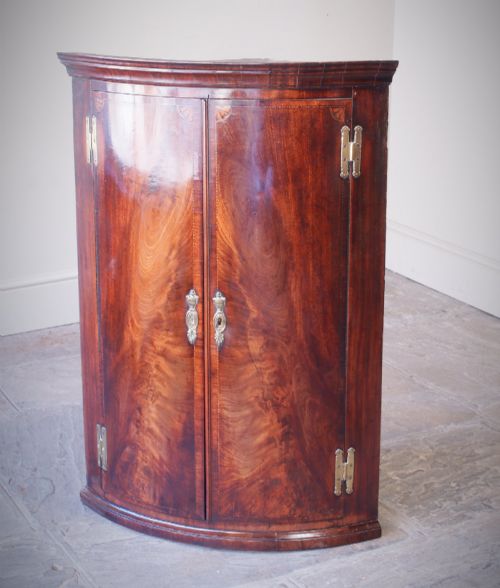
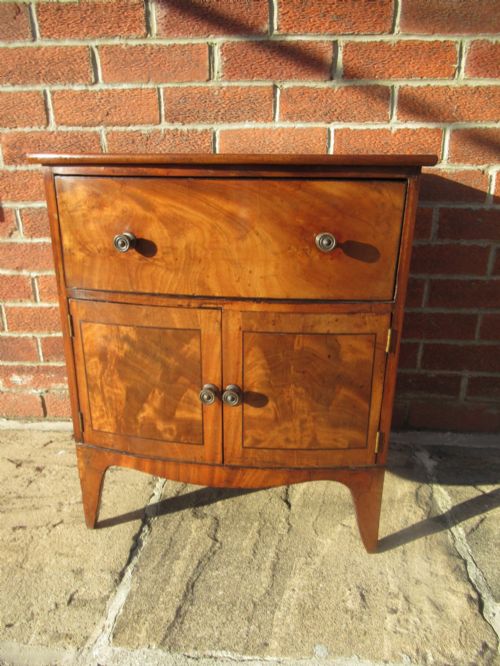
When searching for an antique inlay storage cabinet, buyers encounter a diverse selection of furniture forms designed to hold domestic goods. The evidence reveals pieces spanning the Georgian, Victorian, Edwardian and later eras, created as linen presses, wardrobes, bookcases, sideboards and commodes.
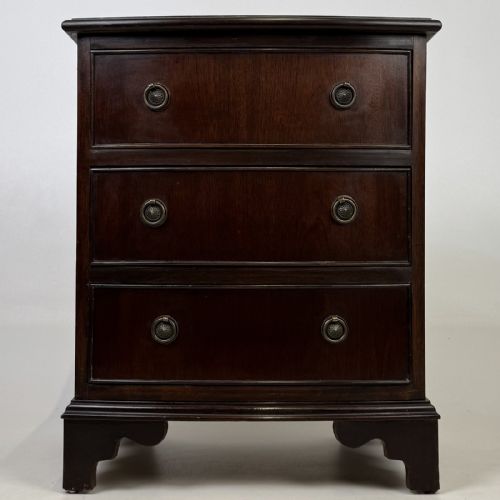
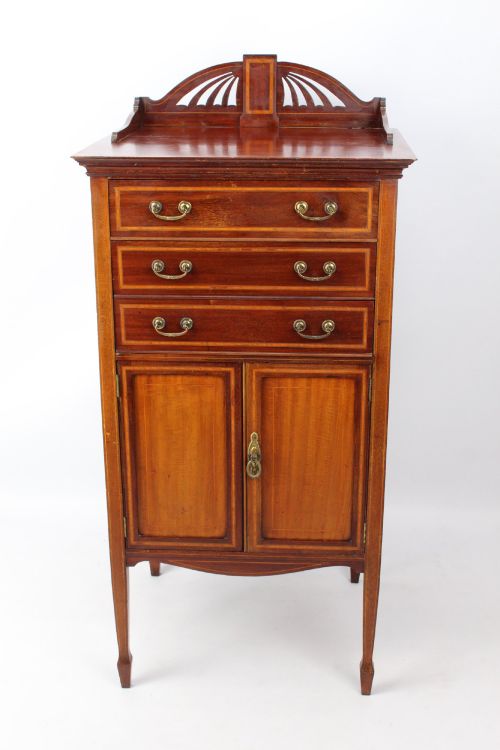
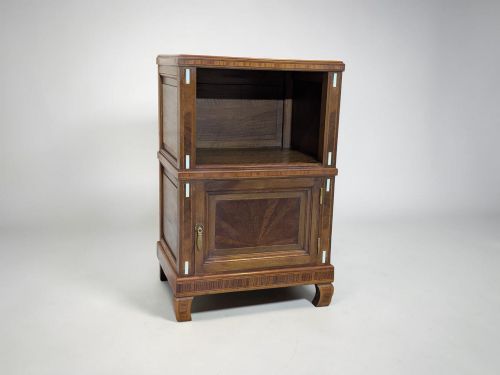
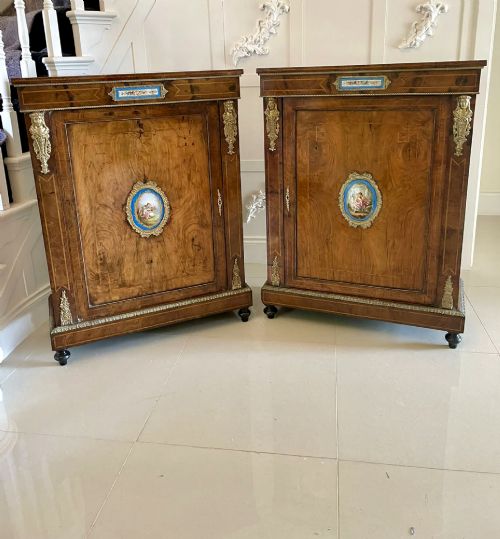
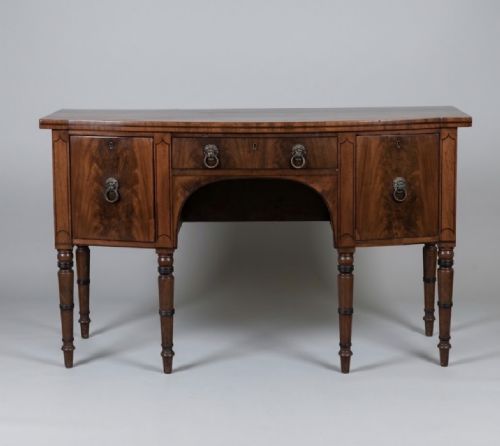
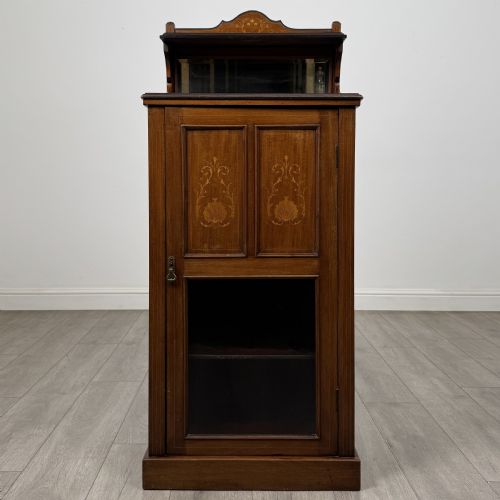
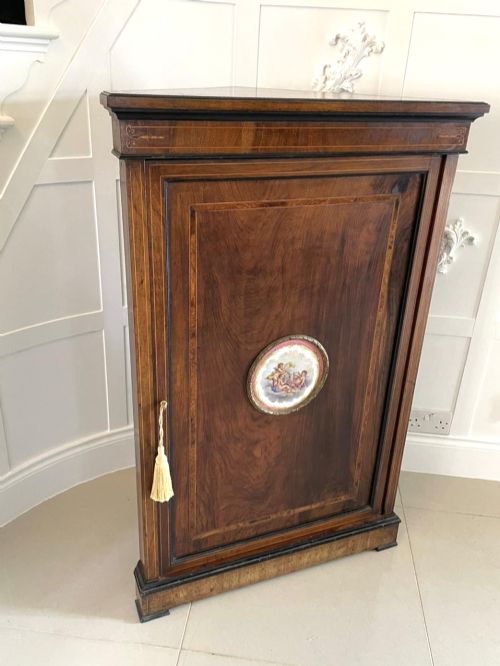
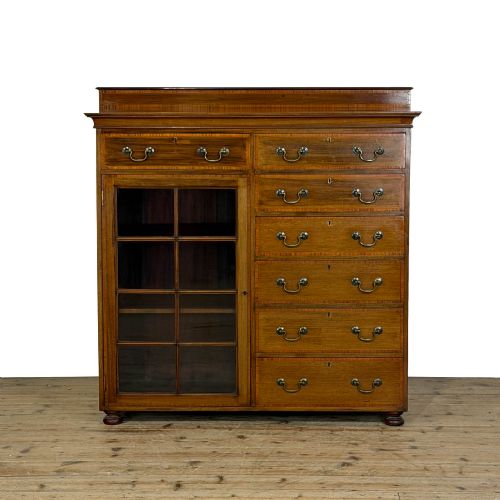
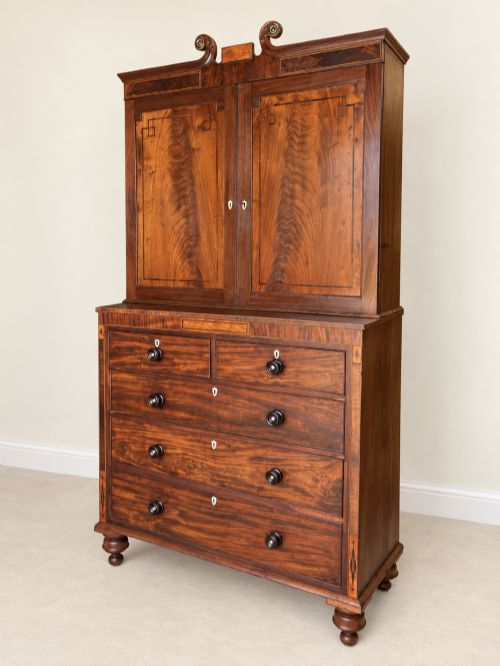
The most common examples on this page are mahogany and walnut cabinets incorporating satinwood inlay, brass mounts and glass panels. These range from compact bedside cupboards and music cabinets to large Georgian linen presses and serpentine credenzas.
Originating from English, French, Dutch and Italian workshops, these items serve both decorative and practical functions in modern rooms. Buyers select them for their historical timber and the intricate craftsmanship visible on their doors and drawer fronts.
Materials and methods of construction
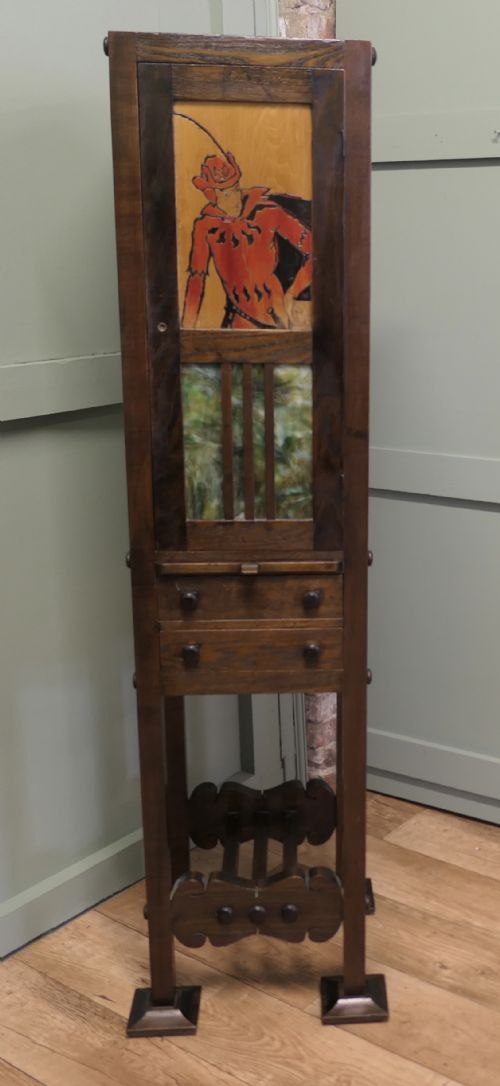
Makers constructed these cabinets using dense primary hardwoods such as mahogany, walnut, oak and satinwood, frequently enhanced with contrasting veneers and marquetry details. Artisans utilised brass for handles, key escutcheons and decorative mounts, alongside ormolu accents on select nineteenth-century pieces.
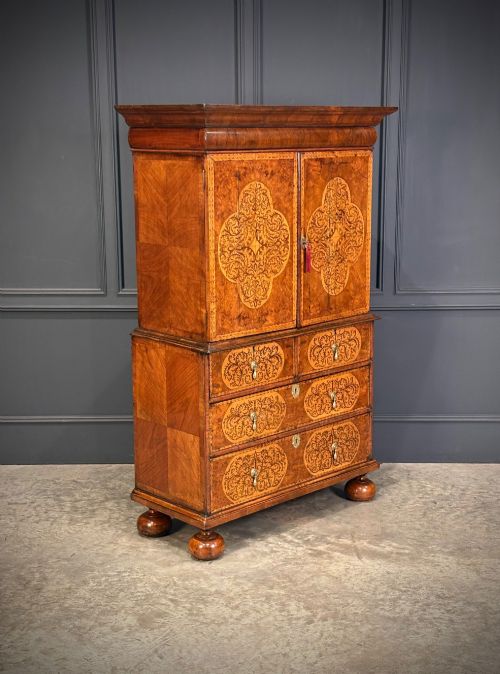
Inlay work involved cutting intricate patterns of lighter woods, such as satinwood, into the darker foundation timber of the cabinet frame or drawer fronts. French and Dutch examples frequently display floral marquetry, while Georgian and Sheraton Revival pieces favour symmetrical geometric banding and shell motifs.
Listings feature mahogany, walnut, oak and satinwood across pieces dating from the eighteenth century to the twentieth century.
Distinctions in quality and execution
The standard of an antique inlay storage cabinet depends on the precision of the cabinetmaking and the depth of the timber figure. Finer examples display tight, continuous grain patterns, perfectly flush veneer work, and crisp edges along the inlaid borders.
Hardware and internal fittings also divide ordinary pieces from exceptional ones. Superior cabinets retain original brass handles, working locks with keys, and well-fitted interior shelving or linen slides made from secondary timbers like oak or pine.
GM Elwood for JS Henry·maples & co·Maison Gagneau
The Antique Inlay Storage Cabinet Glossary
- Marquetry
- Decorative veneer work arranged in pictorial or floral patterns across the surface of a cabinet. It differs from simple inlay by covering the entire panel with fitted pieces of various woods.
- Linen Press
- A tall storage piece featuring upper sliding trays enclosed by doors, positioned above a base chest of drawers. Eighteenth and nineteenth-century examples often incorporate extensive satinwood inlay.
- Ormolu
- Gilded bronze mounts applied to the corners and panels of nineteenth-century credenzas and commodes. This technique adds metallic contrast to dark walnut and mahogany carcasses.
- Serpentine
- A curved furniture front characterised by a convex centre flanked by concave ends. This undulating shape requires advanced woodworking skill and appears frequently on quality chests and sideboards.
- Credenza
- A low cabinet, typically flanked by glass-fronted display sections and mounted with ormolu. Victorian versions frequently showcase burr walnut and floral marquetry.
Antique Inlay Storage Cabinet: Frequently Asked Questions
What rooms suit an antique inlay storage cabinet?
These cabinets adapt readily to living rooms, hallways and bedrooms depending on their internal configuration. Bookcases and display cabinets house books and objects, while wardrobes and linen presses provide concealed bedroom storage.
Compact bedside cabinets and music cabinets fit neatly into smaller spaces while retaining historical character. Their polished mahogany and walnut surfaces complement both traditional and contemporary interior colour schemes.
How do I care for antique wood and inlay?
Maintain timber surfaces by applying natural beeswax occasionally to nourish the grain and prevent the wood from drying out. Avoid placing these pieces near direct heat sources or in strong sunlight, which can fade satinwood and lift delicate veneers.
Dust regularly with a soft, dry cloth rather than using silicone-based polishes that build up over time. Ensure the room humidity remains stable to protect the structure of the cabinet and its decorative inlay.
How do I tell Edwardian pieces from Georgian ones?
Georgian cabinets from the eighteenth century typically feature heavier solid timbers, hand-cut dovetails and restrained architectural proportions. Their inlay often consists of simple stringing or satinwood fan motifs.
Edwardian pieces from the early twentieth century often display lighter construction, Sheraton Revival influences, and bright satinwood or mahogany veneers. They frequently utilise machine-sawn components alongside traditional hand joinery.
Were these cabinets used only for linen?
While linen presses were originally designed to store folded household linens on internal sliding trays, many adapted over time for general clothing storage. Other forms like music cabinets, smokers' cupboards and collector's cabinets served specialised domestic purposes.
Today, owners utilise these compartments for modern storage needs such as glassware, paperwork or media equipment. The varied internal layouts accommodate diverse organizational requirements without altering the exterior appearance.