

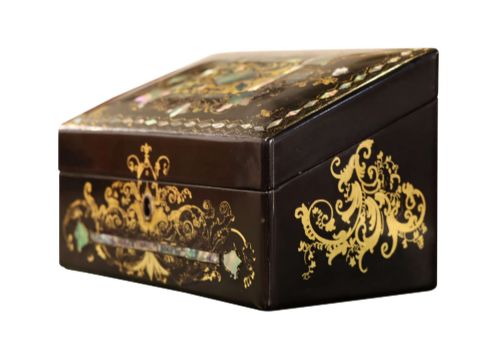



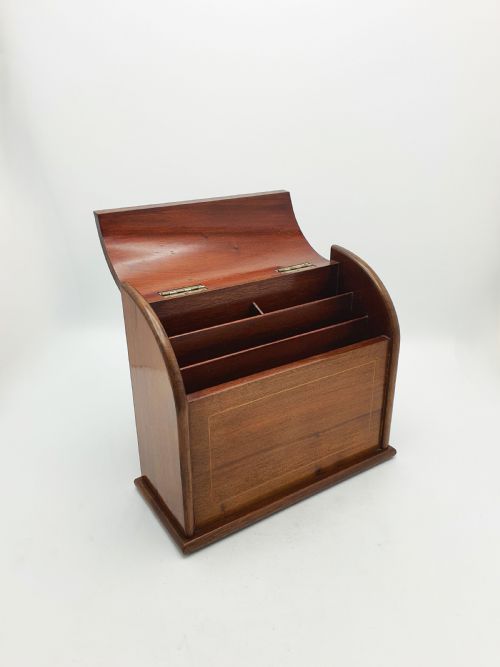


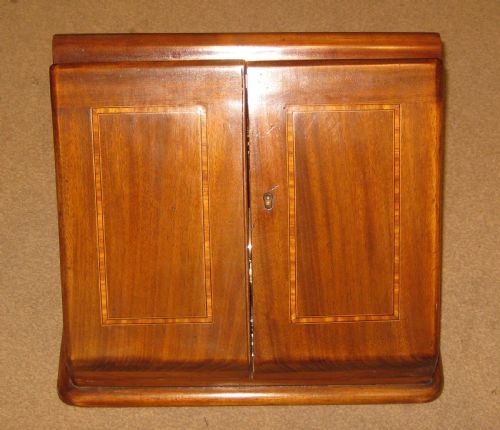


Antique Inlaid Letter Box
An antique inlaid letter box keeps incoming mail sorted with the kind of craftsmanship that transforms a routine desk into a structured study.
Antique Inlaid Letter Box
An antique inlaid letter box brings architectural order to correspondence through dedicated compartments, drop slots and hinged lids. These desk accessories serve as practical repositories for mail, arriving in forms such as stationery cabinets, correspondence chests, and desk tidies.
The pieces appearing in this selection span the Victorian, Edwardian, Georgian, and eighteenth-century periods, alongside Anglo-Indian and French Napoleon III examples. Such boxes reflect the changing domestic habits of households that relied heavily on daily postal deliveries.
Buyers frequently encounter mahogany, walnut, and rosewood constructions enhanced by contrasting wood inlays, boxwood stringing, and marquetry. These materials provide the durable structure necessary to protect paper goods over centuries of use.
Markers of quality and execution
Quality reveals itself in the precision of the inlay and the crispness of the exterior wood grain. Finer examples display meticulous boxwood stringing and well-matched veneers that wrap seamlessly around the box carcase.
Internal arrangement and hardware also dictate distinction. Superior pieces feature thoughtfully divided correspondence compartments, robust brass mounts, and original hinges that operate smoothly without sagging.
Antique Inlaid Letter Box Retail Price Guide 2026
Typical asking prices for inlaid letter box among the pieces listed under this phrase on Sellingantiques today, from the lower quarter to the upper quarter. They describe what is for sale here now, not the wider market.
The listings span multiple centuries, incorporating eighteenth-century Sheraton satinwood alongside Victorian and Edwardian mahogany and walnut pieces.
Edmund Nye·C.G. Hope Hastings
The Antique Inlaid Letter Box Glossary
- Tunbridge Ware
- A type of woodwork featuring mosaic patterns constructed from thousands of tiny coloured wood blocks arranged to form pictorial or geometric designs. This technique originated in the Kent town of Tunbridge Wells during the nineteenth century.
- Marquetry
- The art of applying pieces of veneer to a structure to form decorative patterns and pictures. Craftsmen cut various woods to fit together precisely before gluing them to the box surface.
- Stationery Cabinet
- A desk furniture form designed with doors or a falling front to store writing paper, envelopes, and correspondence. These cabinets often contain tiered interior shelves and dedicated letter slots.
- Ormolu
- Gilded bronze ornamentation applied to furniture and decorative boxes. This finish provides a bright metallic contrast against dark woods such as mahogany and rosewood.
- Pietra Dura
- An inlay technique using cut and fitted polished coloured stones to create images. This method appears on luxury nineteenth-century boxes alongside exotic timber carcases.
Antique Inlaid Letter Box: Frequently Asked Questions
What is an antique letter box used for?
These boxes provided a secure, designated place for household or office mail awaiting collection or reply. Compartments inside kept incoming and outgoing correspondence neatly sorted.
Today, they function practically on desks for holding modern stationery, letters, and small paper goods while adding period character to a room.
How do I date an antique letter box?
Dating relies on identifying the prevailing timber fashions, construction methods, and hardware styles of specific periods like the Victorian era or the eighteenth century. Mahogany and satinwood often point to earlier Georgian or Sheraton pieces, while coromandel and varied marquetry frequently indicate later nineteenth-century manufacture.
Maker signatures, specific lock stamps, and documented decorative motifs help narrow the date further within a decade or two.
What is Tunbridge ware?
Tunbridge ware describes wooden objects decorated with mosaic designs made from numerous tiny blocks of naturally coloured timbers. These minute tiles create intricate geometric or floral bands without the use of paint.
Pieces featuring this technique require careful handling to preserve the thousands of microscopic wood elements that make up the surface pattern.
Where should I place a letter box at home?
An antique letter box sits comfortably on a study desk, a library table, or a hallway console where correspondence was historically managed. Placing it away from direct sunlight and strong heat sources protects the polished wood veneer and internal linings from drying out.
Keeping the box in a stable environment ensures the wood and brass elements remain secure for daily use.