

Antique Inlaid Clothes Press
An antique inlaid clothes press combines deep storage with fine cabinetmaking, bringing grand proportions and rich timbers into a room.
Antique Inlaid Clothes Press
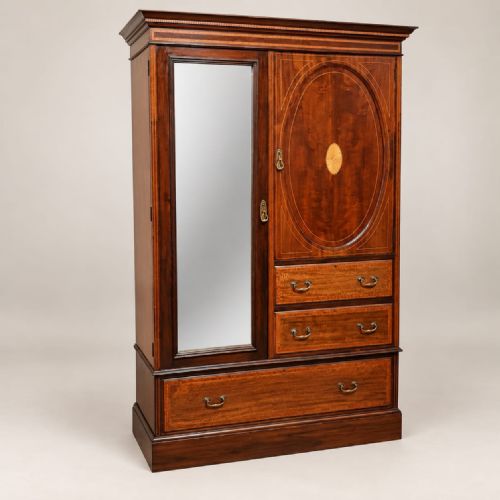
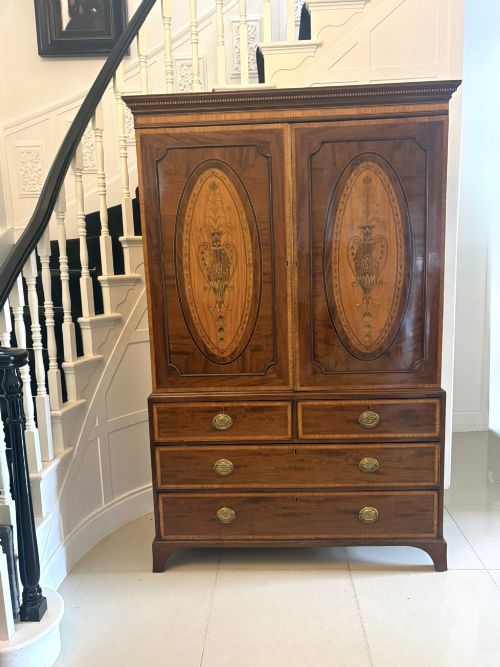
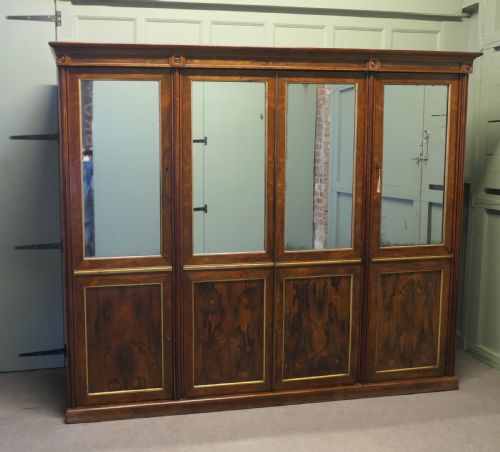
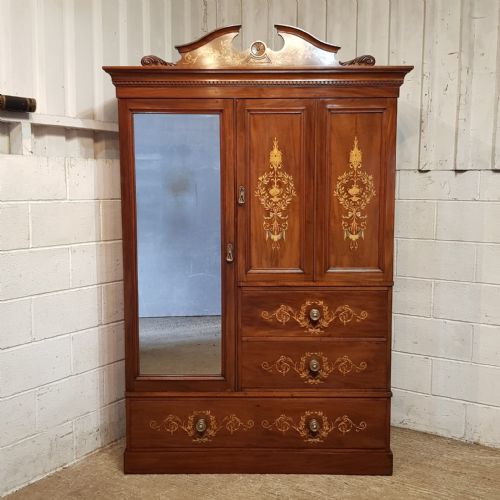
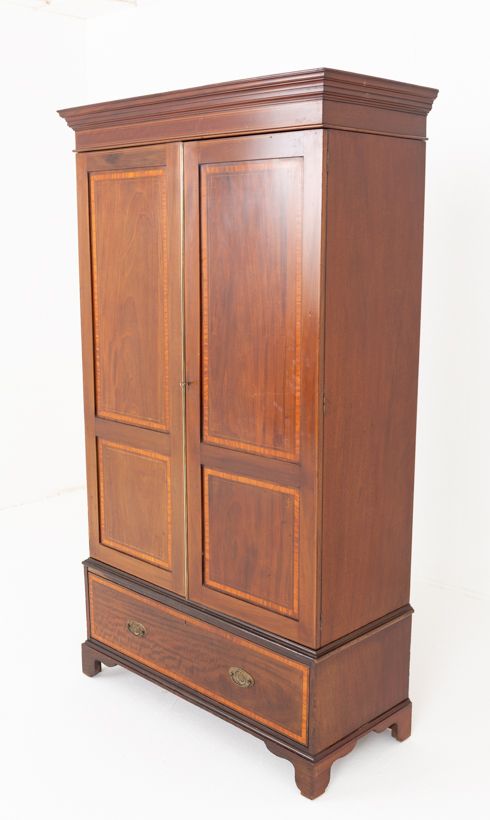
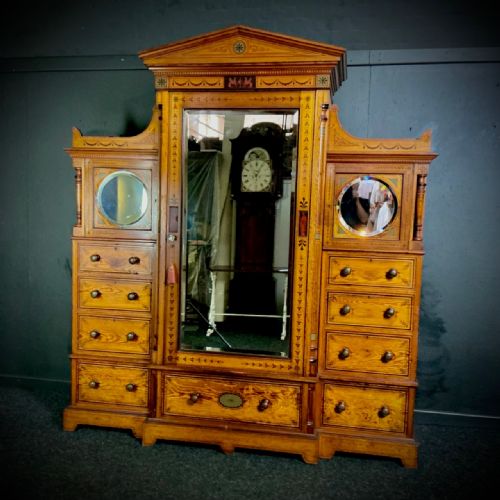
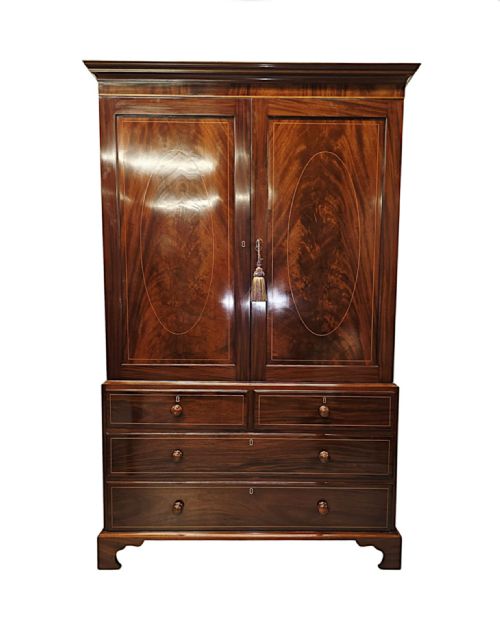
An antique inlaid clothes press serves as a commanding storage piece for garments and household linens, merging upper cupboard space with lower drawer sections. These pieces span Georgian, Victorian and Edwardian eras, appearing alongside related terms such as linen presses, compactums and gentlemen's wardrobes. Mahogany forms the backbone of these pieces, frequently paired with contrasting satinwood or boxwood details.
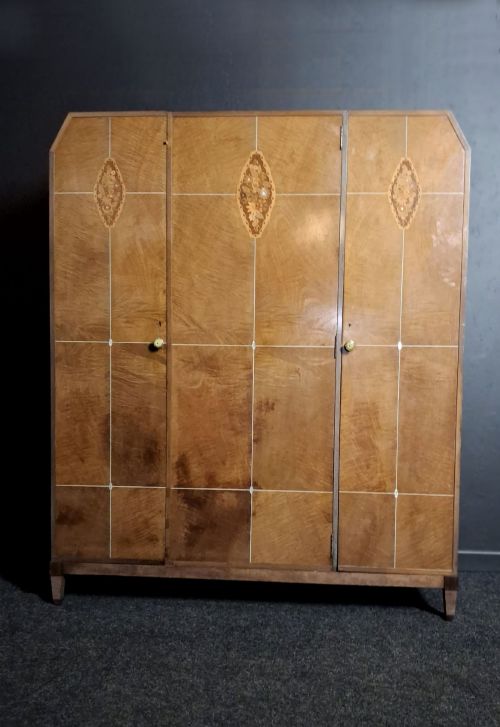
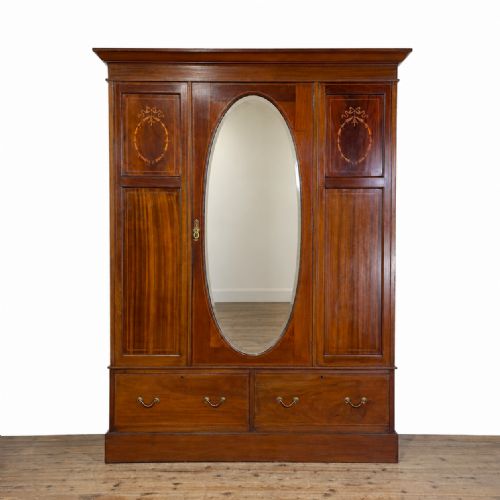
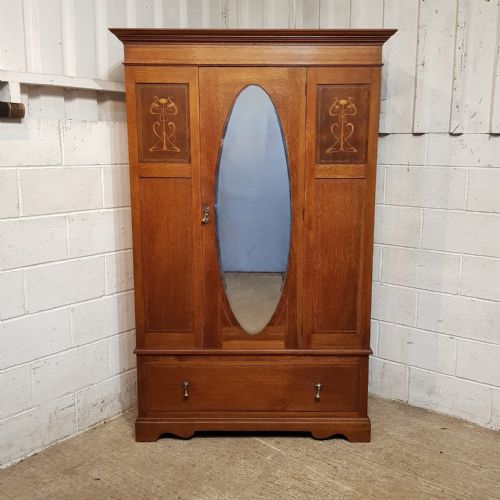
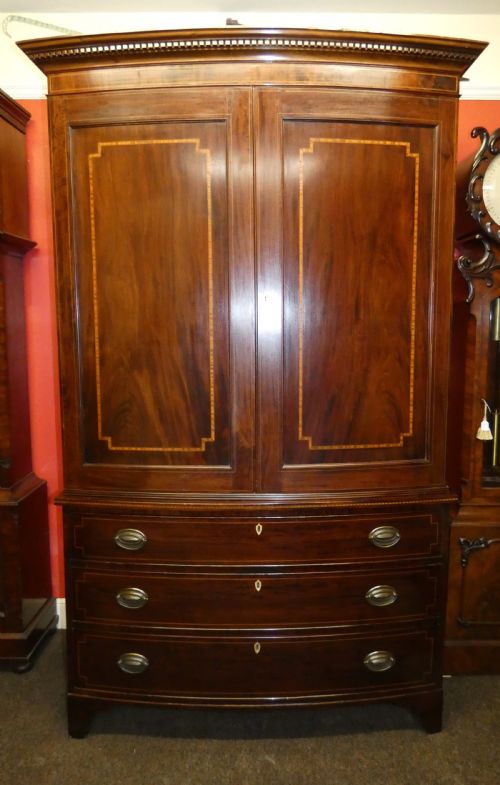
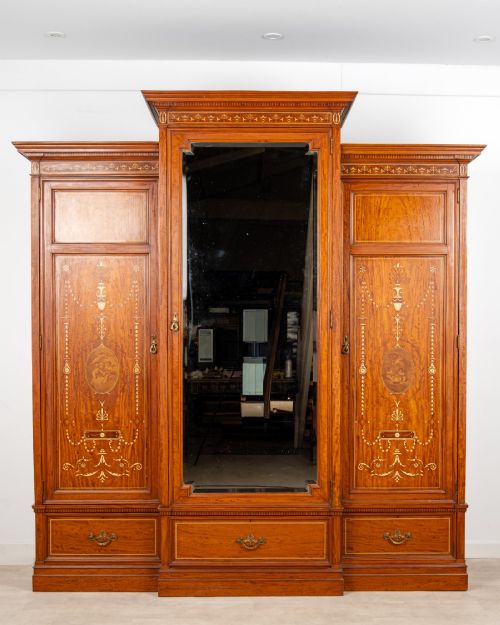
The Edwardian and late Victorian iterations emerge most frequently on this page, often taking the form of large triple wardrobes or compactum formats. Georgian examples bring a different presence through flame mahogany and formal banding, while Arts & Crafts variants utilise oak or pitch pine. Buyers encounter diverse silhouettes ranging from bowfront profiles to breakfront designs and narrow clothes presses.
How They Were Made
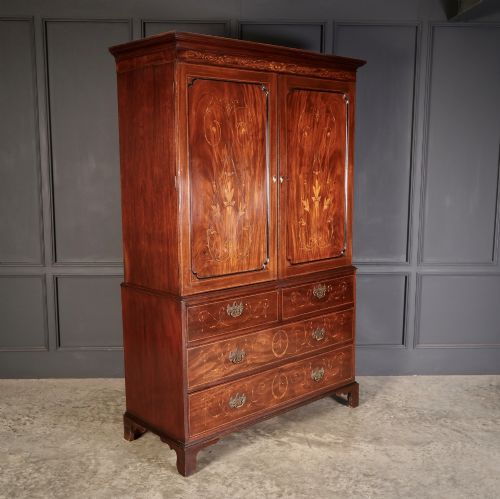
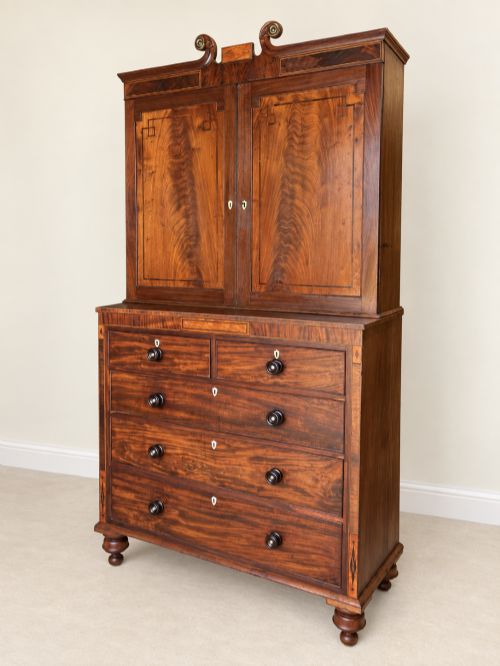
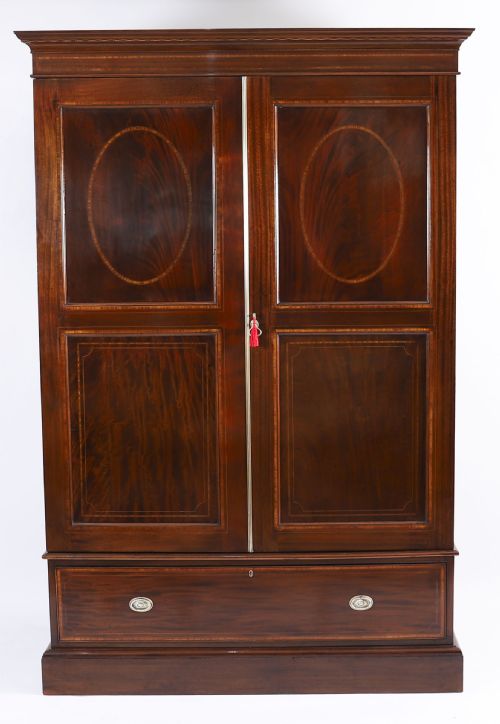
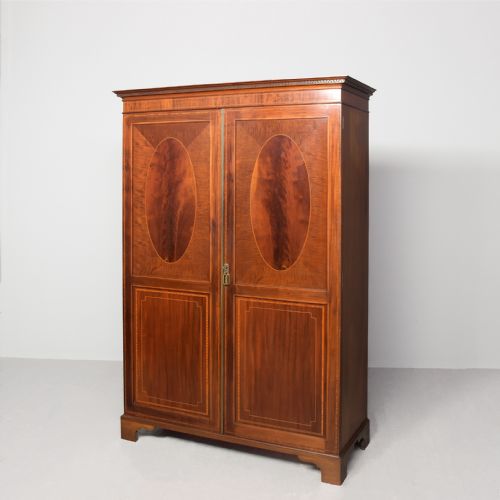
Cabinetmakers constructed these frames primarily in mahogany, rosewood and oak, incorporating secondary timbers such as satinwood and boxwood for decorative banding and marquetry. Workshops applied intricate wood veneers over solid carcases, utilising flame mahogany to create striking natural grain patterns across large double or triple doors.
Inlaid decoration relied on precise contrasting timber insertions, forming geometric borders or floral motifs into the primary wood surface. Brass hardware, mirrored door panels and glass elements completed the construction on later Victorian and Edwardian examples.
Antique Inlaid Clothes Press Retail Price Guide 2026
Typical asking prices for inlaid clothes press among the pieces listed under this phrase on Sellingantiques today, from the lower quarter to the upper quarter. They describe what is for sale here now, not the wider market.
Some gentlemen's wardrobes manage to conceal enough compartments and sliding trays to rival a Victorian shipping trunk.
What Varies in Quality
The refinement of the timber selection dictates the upper tier of these pieces, separating standard production from exceptional cabinet work. Flame mahogany with deep, animated figuring and meticulous satinwood banding indicate superior workshop standards.
Construction depth and internal fitting complexity define the distinction between basic cupboards and high-tier compactum wardrobes. Comprehensive internal linen slides, untouched brass handles and integrated matching bedside cabinetry elevate the standing of an individual piece.
maples & co·Druce & Co.·Wylie Lochhead·Waring & Gillow
The Antique Inlaid Clothes Press Glossary
- Clothes press
- A large storage cabinet designed specifically for holding folded garments and linen, typically featuring internal sliding trays behind upper doors.
- Compactum
- A comprehensive fitted wardrobe design that integrates multiple storage compartments, drawers, hanging space and shelves into a single footprint.
- Marquetry
- The art of forming decorative patterns on wood surfaces by fitting together small pieces of different coloured veneers.
- Banding
- A narrow strip of contrasting timber inlaid around the edges of drawer fronts or door panels to create a formal border.
- Flame mahogany
- A highly figured timber veneer cut from the branch junction of the mahogany tree, displaying a distinctive flame-like ripple effect.
Antique Inlaid Clothes Press: Frequently Asked Questions
What is an antique clothes press?
An antique clothes press is a tall storage cabinet traditionally used for holding folded garments and household linens. It typically combines upper cupboard doors with a chest of drawers forming the base.
Inside the upper section, these pieces frequently contain sliding wooden trays rather than hanging space. This design reflects their original purpose before modern wardrobes with full-length clothes rails became standard.
How do I date an inlaid press?
Dating relies on observing the combination of timber choices, carcass proportions and decorative inlay styles. Georgian pieces favour flame mahogany with subtle satinwood banding, while Edwardian versions often incorporate painted satinwood or extensive mirrors.
Construction methods inside the drawer boxes and the type of secondary timbers used also help confirm the period of manufacture. Cabinet styles shifted from formal Georgian proportions to heavier Victorian breakfronts and lighter Edwardian compactums.
Will a clothes press hold modern clothes?
Clothes presses offer substantial internal volume, though their configuration varies significantly between periods. Georgian and Victorian presses primarily feature internal shelves or linen slides suited for folded items.
Some later Edwardian combination wardrobes incorporate hanging rails alongside traditional drawer stacks. Buyers should check the internal depth and layout to determine whether the piece accommodates modern garments.
Where should I place a clothes press?
These large storage pieces require a substantial wall space and adequate clearance for wide opening doors. Bedrooms and large dressing rooms provide the natural setting for their original purpose.
Because many examples stand quite tall and deep, measuring ceiling height and access stairwells remains essential before positioning them in a home.