

Antique Inlaid Armchairs
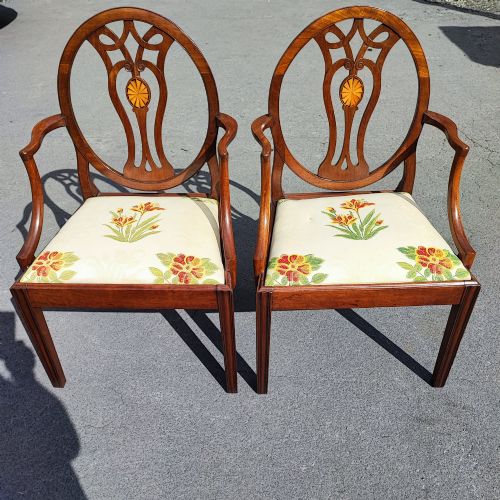
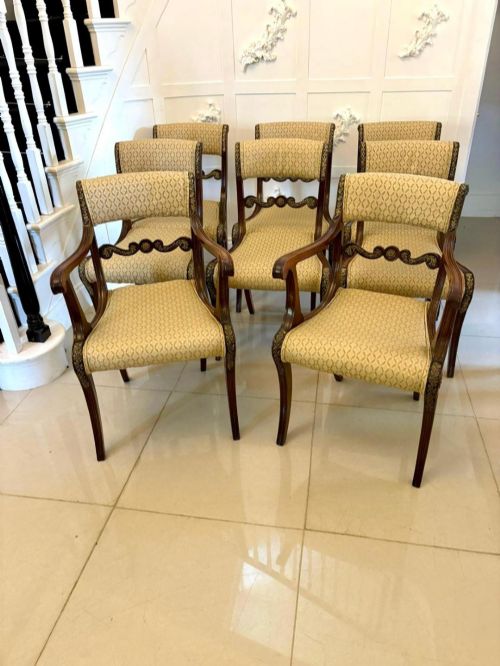
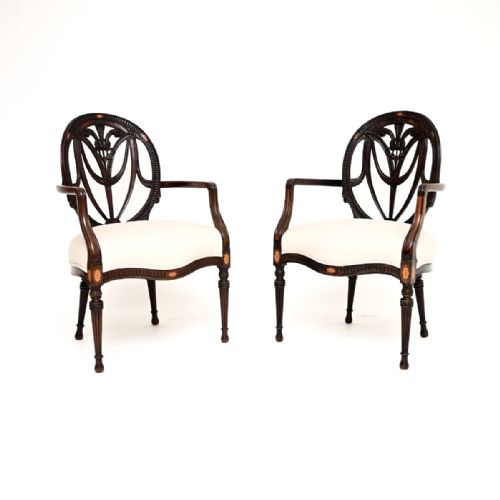
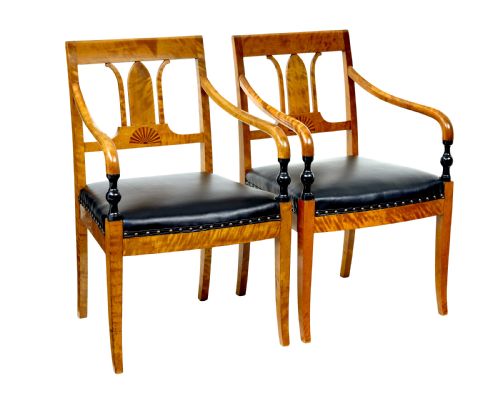
Antique inlaid armchairs bring together substantial timber frames and delicate contrasting wood details, offering seating that serves as both a functional chair and a decorative centrepiece.
Antique Inlaid Armchairs
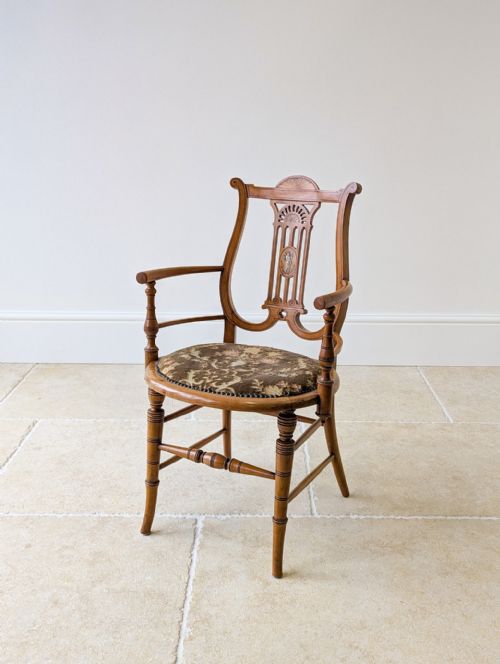
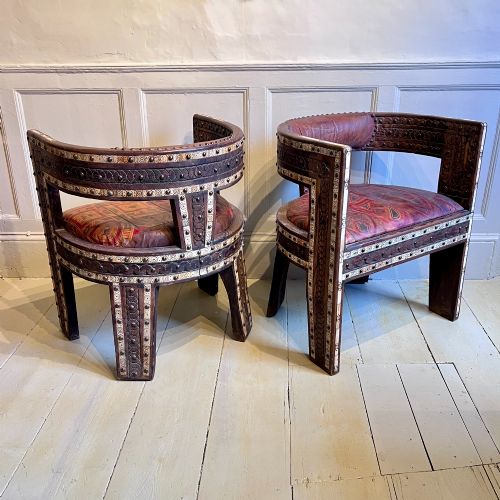
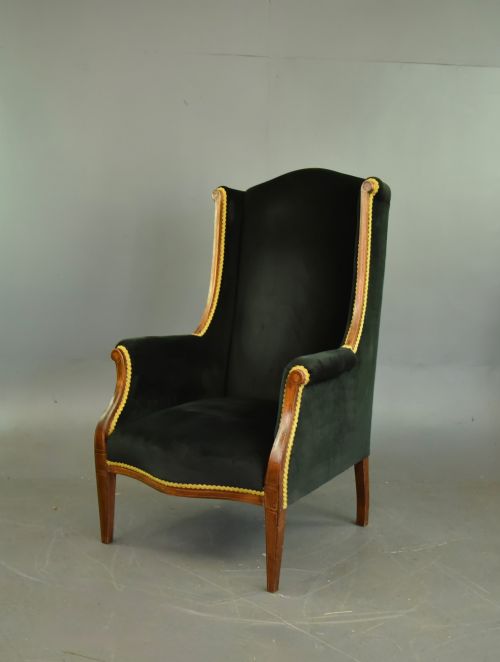
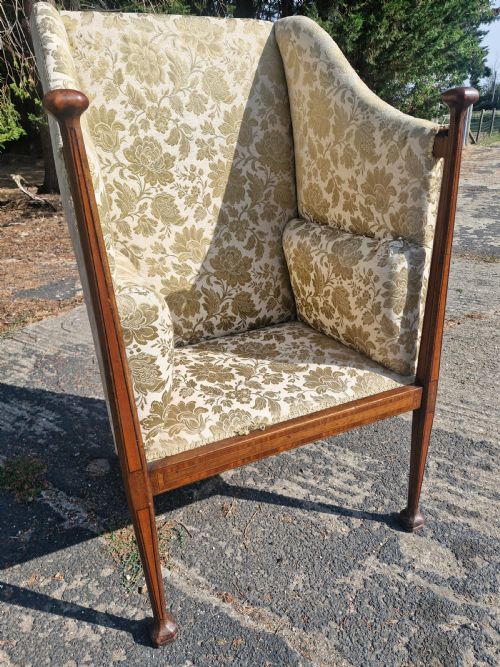
When you search for antique inlaid armchairs, you encounter seated furniture embellished with contrasting wood details, brass, or mother of pearl set into the primary timber frame. The selection leans heavily towards Edwardian and nineteenth century examples, with Sheraton Revival styles and corner chair formats appearing with notable frequency.
Makers utilised various timber species such as mahogany, satinwood, walnut, and oak to build frames that range from compact salon seating to library armchairs. These pieces often arrive as matched pairs or individual carver chairs designed for desks, corners, or drawing rooms.
How they were made
The construction relies on solid timber frames shaped by traditional joinery methods, providing the structural integrity required for daily use. Mahogany and walnut form the primary support, while lighter timbers like satinwood and birch provide the contrasting surfaces needed for decorative motifs.
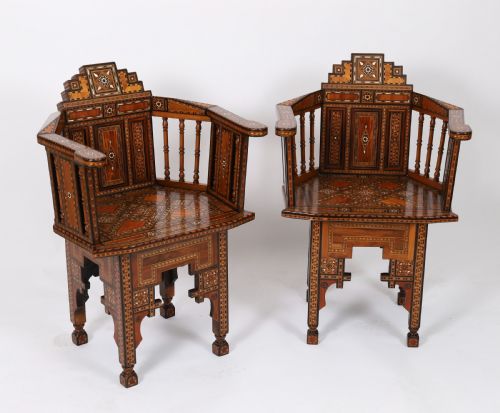
Craftsmen applied wood inlay, stringing, and parquetry directly into recessed channels carved into the timber surface. Metal elements such as brass wire or mother of pearl panels also appear, secured precisely into the wood grain to create geometric or floral patterns.
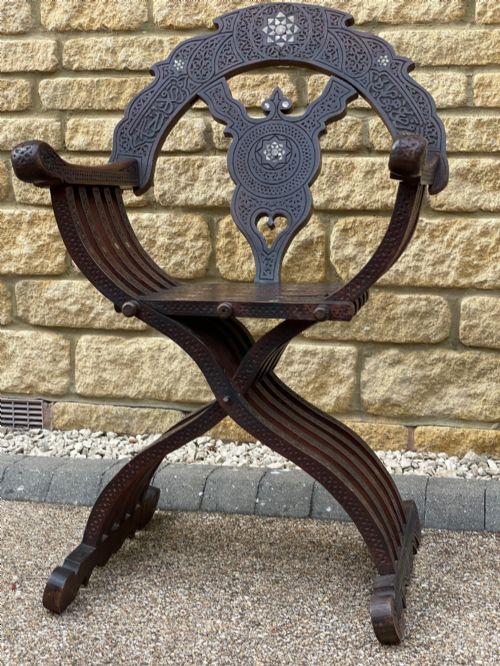
Several armchairs incorporate mother of pearl panels depicting intricate Levantine street scenes right beneath your elbows.
What varies in quality
The precision of the inlay work marks the difference between standard production and superior craftsmanship, visible in the tight joints where contrasting woods meet the primary frame without visible gaps or excessive filler. Crisp carving on the arms and legs further distinguishes finer pieces from simpler workshop output.
Timber selection dictates the overall presence of the chair, with well-figured grain patterns and substantial stock thickness elevating the piece. The integrity of the underlying structure, including stable joinery and original upholstery foundations, separates well-preserved examples from heavily restored items.
Liberty and Co
The Antique Inlaid Armchairs Glossary
- Inlay
- A decorative technique where pieces of contrasting material are inserted into recessed portions of a base timber. This method creates flat, patterned surfaces across the backrests and rails of the chair.
- Satinwood
- A durable, light yellow timber prized for its lustrous grain. Artisans utilise it extensively for contrasting panels and banding within mahogany frames.
- Parquetry
- A geometric mosaic of wood pieces used for decorative effect. Syrian and Levantine pieces often display intricate parquetry work utilising multiple types of wood and mother of pearl.
- Sheraton Revival
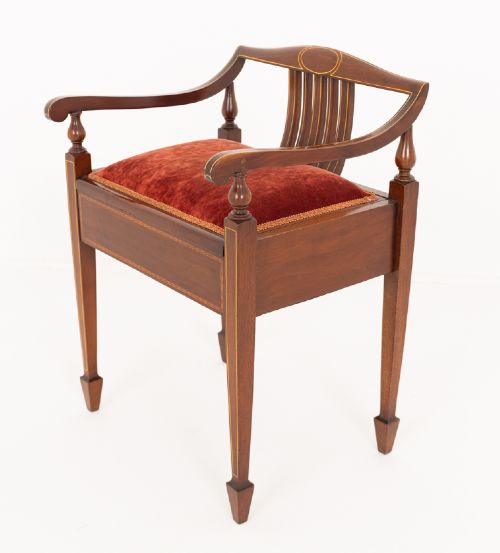
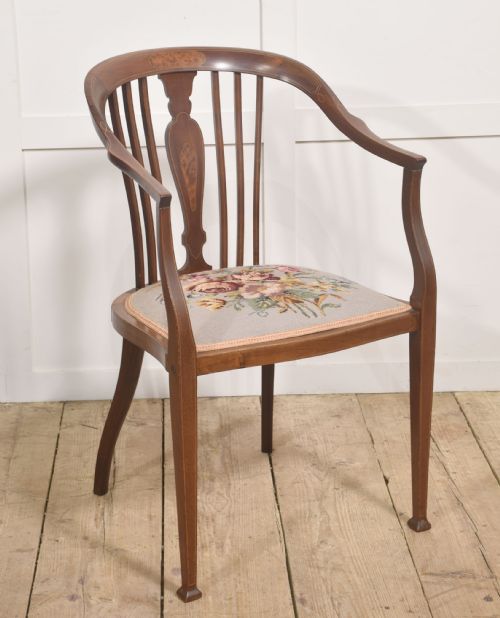
- A late nineteenth and early twentieth century design movement that reinterprets eighteenth century neoclassical furniture forms. Chairs in this style typically feature slender tapered legs and delicate inlaid urn or bellflower motifs.
- Corner Chair
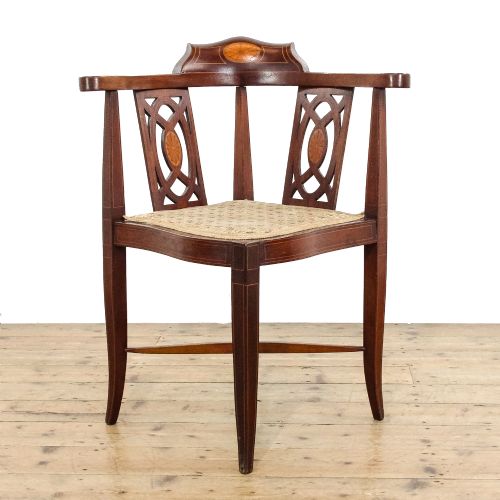
- A seat designed to fit into the corner of a room, featuring a diagonal orientation with a continuous curved armrest supported by multiple uprights. These chairs frequently incorporate inlaid details on the top rail.
Antique Inlaid Armchairs: Frequently Asked Questions
How do I identify a Sheraton Revival armchair?
Sheraton Revival armchairs date from the late nineteenth or early twentieth century and draw inspiration from eighteenth century neoclassical designs. They typically feature mahogany or satinwood frames with straight tapered legs and delicate contrasting stringing.
You will often notice symmetrical motifs such as urns, husks, or paterae inlaid into the splats or top rails. The overall construction prioritises a lighter, more slender visual profile compared to heavier Victorian forms.
Where were corner armchairs placed historically?
Corner armchairs served as versatile seating options positioned in the angles of panelled rooms or hallways where standard chairs would obstruct pathways. Their diagonal design allowed them to tuck neatly into room perimeters while providing a supportive backrest from two adjacent sides.
During the Edwardian period, similar forms functioned as occasional salon chairs or desk seating. Their compact footprints made them easy to relocate within domestic interiors as needed.
What is the difference between inlay and parquetry?
In inlay involves setting contrasting materials into a prepared cavity on a solid wood surface to form specific linear or pictorial designs. The surrounding timber remains the dominant visual element across the primary structure.
Parquetry constructs entire geometric surfaces by assembling small, precisely cut tiles of various woods or shell. This technique covers panels entirely, creating repeating mosaic patterns common in Syrian and Levantine furniture.
How should I care for antique inlaid wood?
Keep inlaid armchairs away from direct sunlight and heat sources to prevent the timber from drying out and causing the delicate inlay elements to loosen. Maintaining stable indoor humidity protects both the wood glue and the surrounding grain.
Dust the surfaces regularly with a soft, dry cloth and apply occasional high quality wax polish formulated for antique furniture. Avoid using liquid silicone or harsh chemical cleaners that can penetrate microscopic gaps around the inlay.