



Blue Upholstery Chairs
Blue upholstery chairs bring rich colour and classic comfort to a room, spanning formal French revival seating and sturdy Victorian frames.
Blue Upholstery Chairs
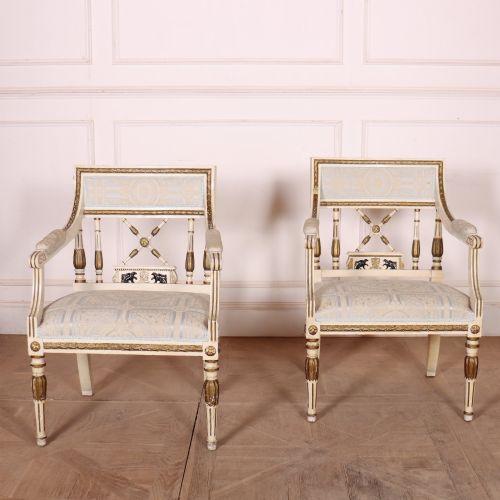
Period pieces include walnut frames, mahogany salon chairs, and oak dining sets reflecting styles such as Queen Anne Revival, Swedish Empire, and Art Deco. These items merge historical woodwork with enduring textile upholstery.
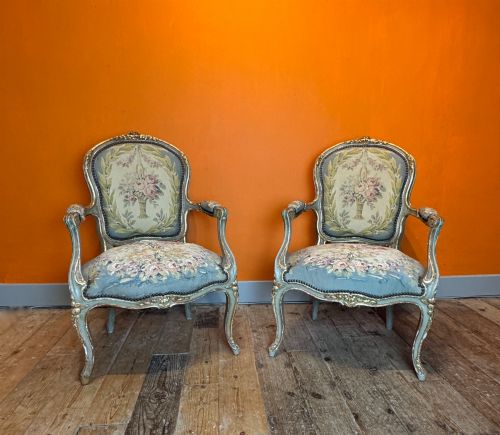
Origin and form vary widely, encompassing Continental armchairs, Scottish clan chairs, and French Louis-style fauteuils. Buyers find both upholstered examples and frames ready for fresh fabric.
Materials and construction
The wooden frames underpinning these chairs rely on traditional hardwoods like walnut, mahogany, oak, and painted wood. Craftspeople shaped these materials using carving, turning, and parcel gilding techniques.
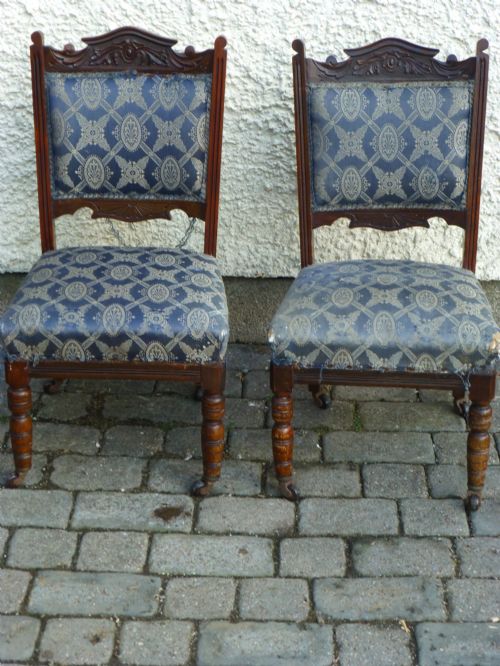
Upholstery methods incorporate traditional fabric, textile, velvet, silk, and ticking secured to the internal structure. Metal components such as brass castors frequently support the legs of Victorian and Edwardian examples.
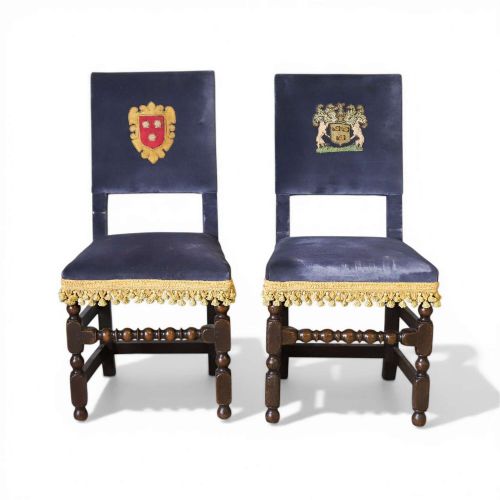
Scottish oak clan chairs complete with heraldic crests sit comfortably alongside French gilt fauteuils on this page.
Evaluating build and finish
Quality in these chairs rests upon the integrity of the timber frame, whether carved walnut, inlaid mahogany, or sturdy oak. Original period upholstery and detailed decorative work like parcel gilding elevate a piece above standard production.
Maker attribution significantly influences a piece, with established workshops demonstrating superior joinery and proportional balance compared to unsigned vernacular examples.
Howard and Sons
The Blue Upholstery Chairs Glossary
- Fauteuil
- An open-armed French armchair with an exposed wooden frame, typically upholstered on the seat, back, and armrests.
- Parcel Gilt
- A decorative technique where specific areas of a wooden or metal frame are partially covered with gold leaf or gilt.
- Nursing Chair
- A low-seated Victorian chair designed to allow a person to sit comfortably while holding an infant or dressing.
- Club Armchair
- A deep, heavily upholstered comfortable chair traditionally associated with gentleman's clubs and lounging.
- Castor
- A small wheel attached to the bottom of furniture legs to facilitate movement across floors.
Blue Upholstery Chairs: Frequently Asked Questions
How do I identify a Victorian armchair?
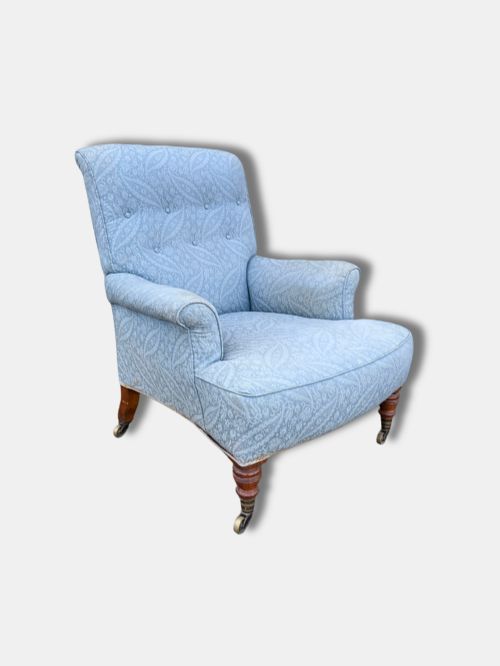
Victorian armchairs typically feature dense hardwood frames such as walnut or mahogany, often paired with turned front legs and brass castors. Their upholstery styles range from deep buttoning to geometric patterns.
Looking underneath reveals the construction methods and materials characteristic of mid-to-late 19th-century cabinet making, distinguishing them from later Edwardian or revival pieces.
What is the difference between a salon chair and a club chair?
Salon chairs are lighter, more decorative seating options designed for formal entertaining rooms, frequently utilising exposed polished wood, silk, or inlaid mahogany.
Club chairs are deeper, heavier, and built primarily for relaxation and heavy use, often upholstered in sturdy fabrics or ticking.
Can I reupholster a period chair?
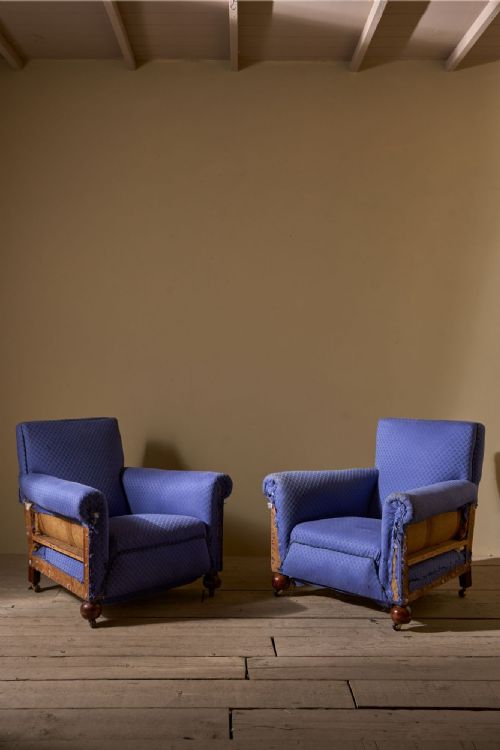
Many period chairs, including 19th-century nursing chairs and Victorian frames, are specifically acquired for re-upholstery to suit modern interiors.
Preserving the underlying wooden frame and original webbing ensures the historical integrity of the piece while allowing a fresh textile finish.
How do I care for antique wooden chair frames?
Maintaining the exposed timber requires dusting with a dry cloth and occasionally applying appropriate furniture wax to nourish the walnut, mahogany, or oak.
Keep wooden frames away from direct heat sources and strong sunlight to prevent the wood from drying out and the upholstery from fading.