
Antique Indian Inlaid Wood
Antique indian inlaid wood comprises decorative tables, mirrors and chests crafted from exotic timbers and detailed with contrasting geometric or figurative work.
Antique Indian Inlaid Wood
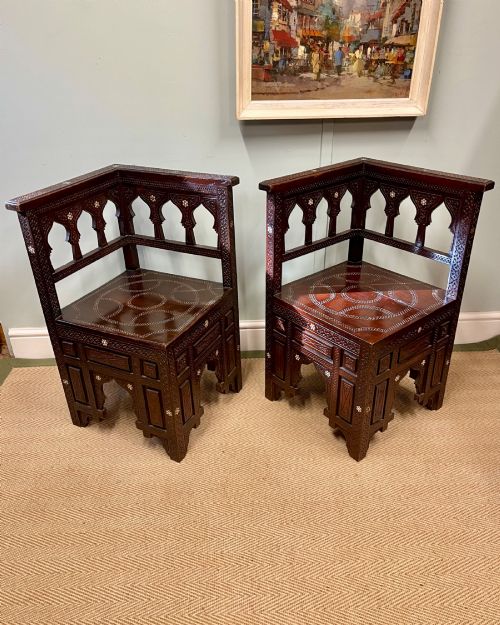
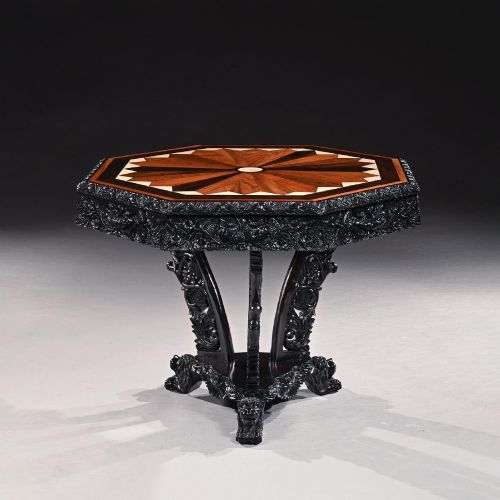
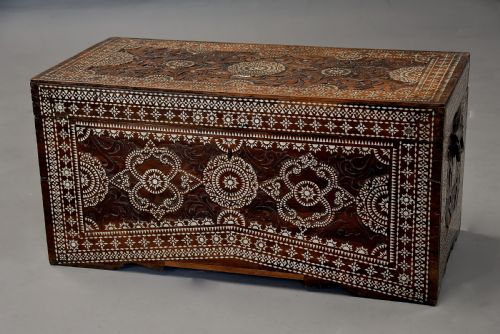
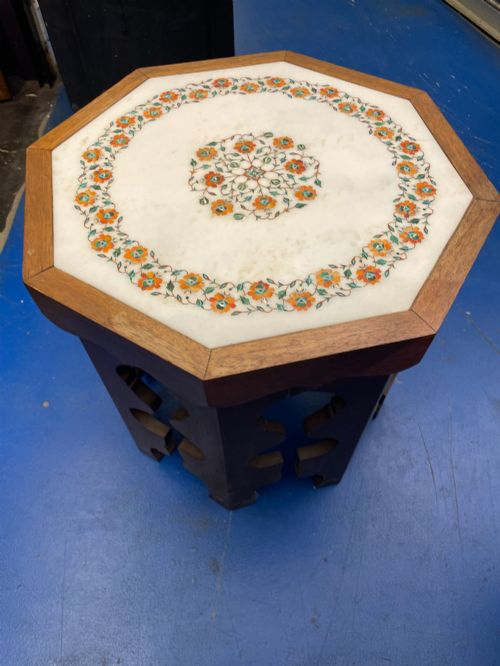
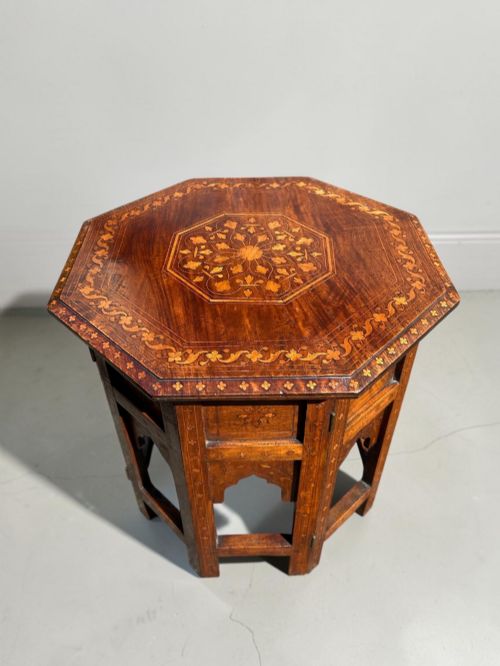
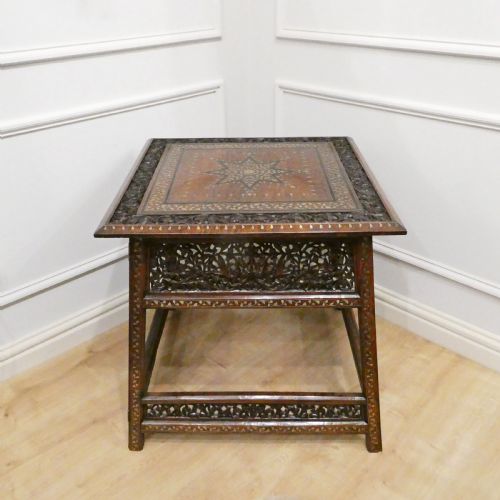
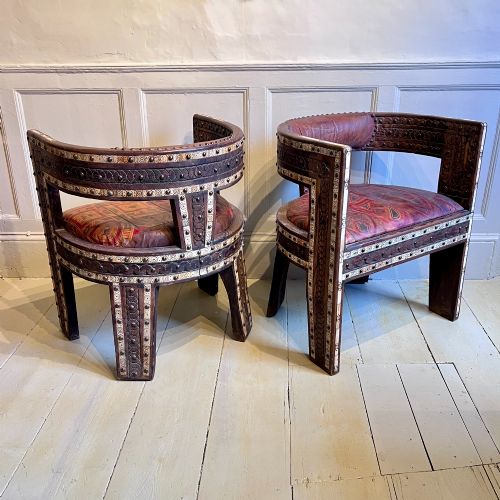
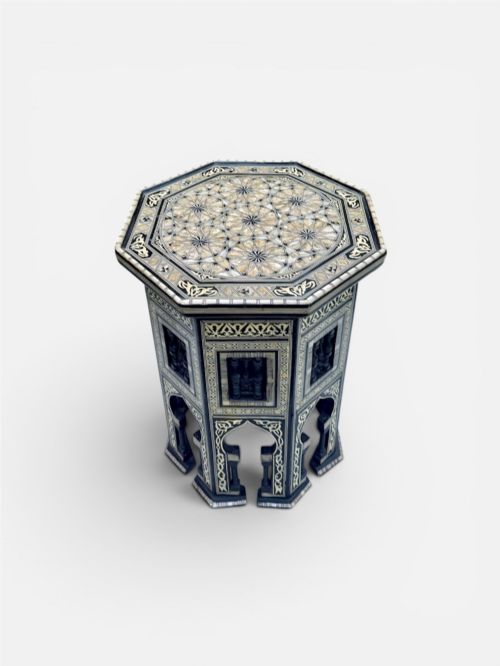
Antique indian inlaid wood encompasses a varied selection of domestic furnishings and decorative objects created during the nineteenth and early twentieth centuries. Buyers seeking these pieces encounter folding chess tables, occasional tables, wall mirrors and storage boxes originating from distinct regional workshops. The material heritage reflects both indigenous craftsmanship and nineteenth-century colonial patronage, resulting in forms that range from octagonal centre tables to carved dowry chests.
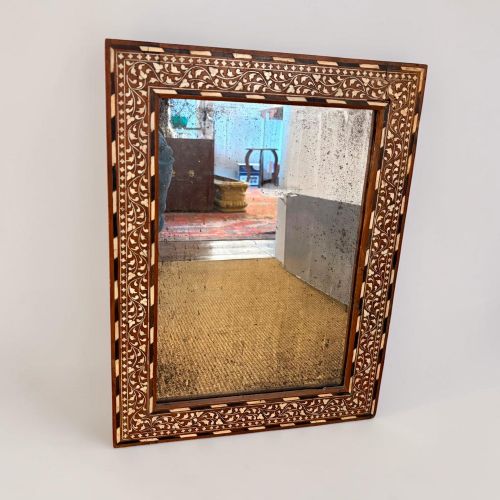
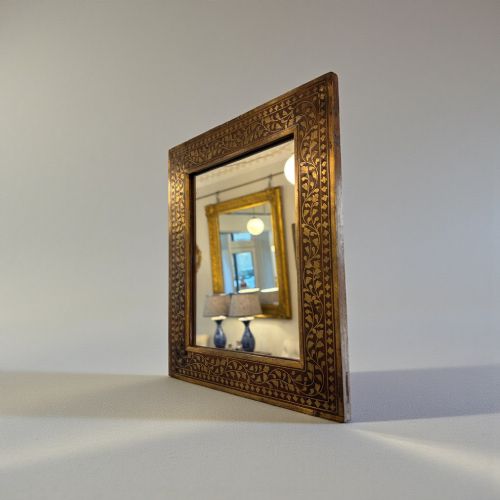
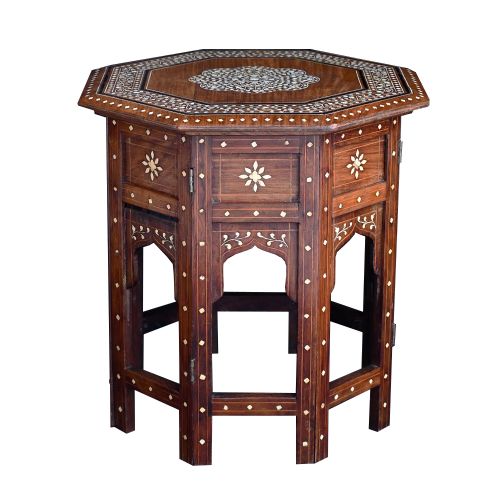
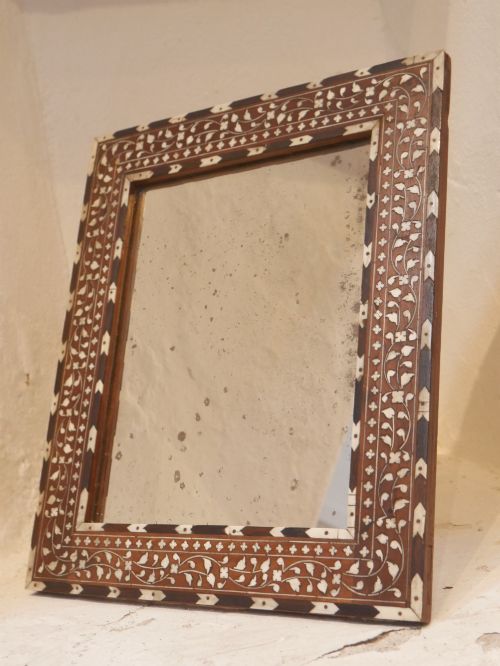
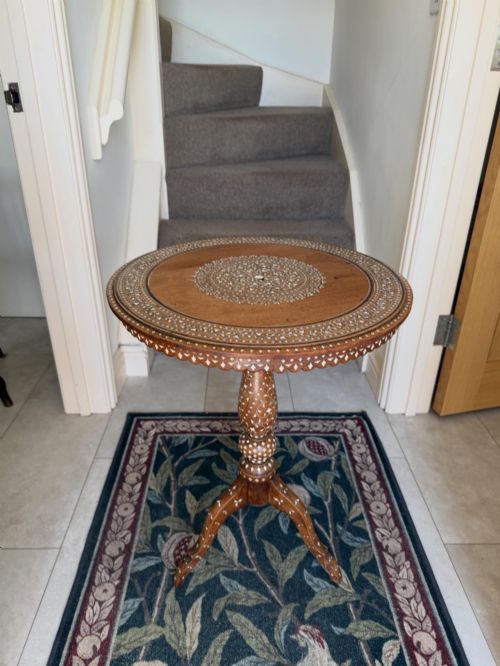
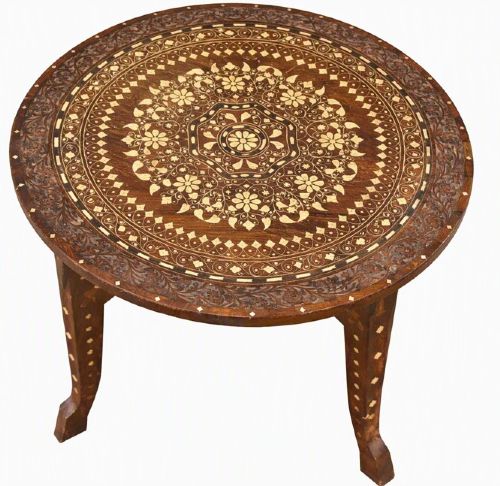
The version most commonly met on this page is the occasional or side table, frequently associated with the town of Hoshiarpur in the Punjab. These examples typically employ dense hardwoods decorated with intricate geometric patterns in brass, bone or ivory. Alongside tables, wall mirrors and smaller boxes appear regularly, demonstrating similar meticulous surface ornamentation.
How they were made
The construction of these pieces relies upon dense foundation timbers such as teak, shisham, ebony, rosewood and sandalwood, chosen for their stability and dark grain. Artisans carve the primary wood structure with deep relief work before preparing channels to receive the contrasting decorative elements. This combination of structural joinery and surface carving forms the framework for the subsequent inlay process.
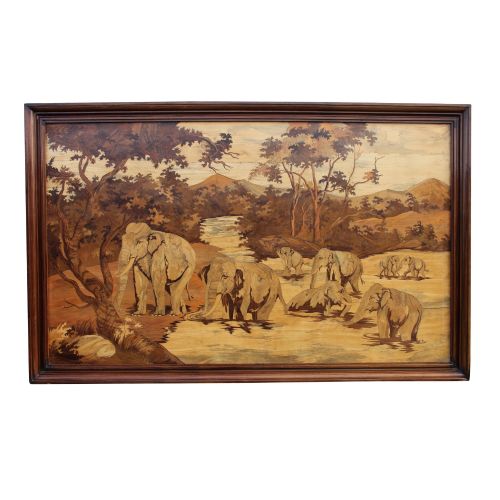
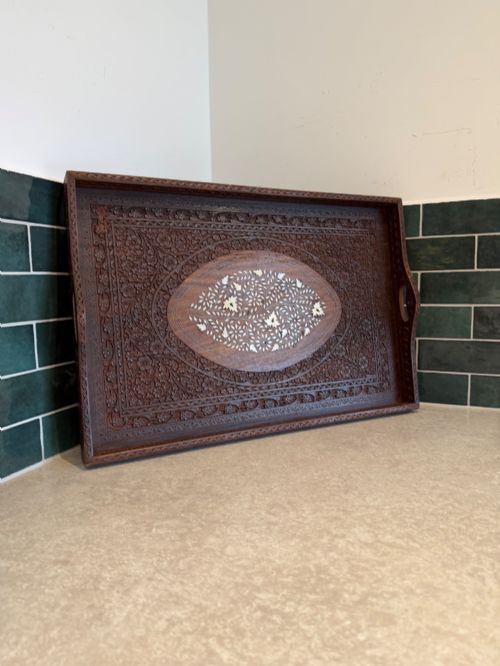
Makers insert fine slivers of bone, mother-of-pearl, brass wire and ivory into the prepared wooden recesses to build up complex botanical or geometric motifs. Specimen wood marquetry also appears, utilising contrasting natural tones of exotic timbers arranged in precise repeating patterns. The surfaces are then smoothed and polished to highlight the contrast between the dark host wood and the pale or metallic inlay.
The listings span the eighteenth through the early twentieth centuries, featuring folding chess tables, wall mirrors and occasional furniture in teak, ebony and rosewood.
What varies in quality
The distinction between ordinary and exceptional pieces rests upon the precision and complexity of the surface decoration. Superior items display tightly fitted inlay work with minimal filler, maintaining crisp lines across intricate geometric grids and figurative panels. Lesser examples often feature wider gaps around the inserts and simpler, repetitive stamping rather than hand-cut detailing.
Material selection further defines the hierarchy of these objects, particularly the choice of primary timber and the inclusion of precious inserts such as ivory or mother-of-pearl. Dense, heavy woods like ebony and calamander command attention alongside finely figured sandalwood and specialist regional work. The depth and architectural ambition of the carved frames also separate standard production wares from masterwork commissions.
The Antique Indian Inlaid Wood Glossary
- Hoshiarpur
- A historic centre in the Punjab renowned for specialised woodworking and intricate inlay techniques. Pieces from this region frequently incorporate bone, brass and ivory into dense geometric patterns.
- Marquetry
- The art of applying small pieces of veneer to a structure to form decorative patterns or pictures. This technique utilises the natural grain and colour variations of exotic woods.
- Damchiya
- A traditional Indian dowry chest or storage cabinet featuring substantial carved woodwork. These cabinets serve as functional furniture and decorative centrepieces.
- Shisham
- A durable Indian rosewood commonly utilised as a primary timber for regional furniture production. Its dense grain provides a stable base for detailed carving and inlay.
- Toradar
- A traditional South Asian matchlock firearm featuring extensive decorative ornamentation. These weapons often incorporate elaborate bone and brass inlay along the wooden stock.
Antique Indian Inlaid Wood: Frequently Asked Questions
What is Hoshiarpur furniture?
Hoshiarpur furniture refers to decorative wooden items produced in the Punjab town of Hoshiarpur during the nineteenth and early twentieth centuries. These pieces are characterised by dense surface carving and meticulous inlay work.
Craftsmen utilised materials such as brass, bone and ivory set into dark hardwoods to create elaborate geometric and figurative designs. Tables, mirrors and screens from this tradition remain sought after by collectors of decorative arts.
How do I care for inlaid wood?
Caring for antique inlaid wood requires maintaining stable environmental conditions away from direct sunlight and strong heat sources. Sudden changes in temperature can cause the timber to shrink and loosen the delicate inserts.
Dust the surface gently with a dry, soft cloth and avoid applying modern liquid polishes or moisture directly to the material. Natural wax can be applied sparingly to protect the wood grain when the surface appears dry.
Are these pieces made of ivory?
Many nineteenth-century Indian inlaid objects utilise genuine animal ivory alongside bone for the pale elements of their geometric designs. International regulations govern the trade and transfer of items containing these materials.
Buyers should examine the physical characteristics of the white inserts closely to distinguish between bone, ivory and synthetic alternatives. Documentation regarding the age and composition of the piece helps clarify compliance with current heritage regulations.
What is Anglo-Indian style?
Anglo-Indian style describes furniture and decorative objects manufactured in India under British colonial rule for both local European residents and export markets. These works combine traditional eastern forms with western functional requirements.
Examples range from campaign desks to octagonal tables and tea chests, blending European furniture types with intricate Indian craftsmanship. The resulting pieces showcase a distinct fusion of design sensibilities from the nineteenth century.