


Antique Index Filing Cabinet
An antique index filing cabinet organises papers with sturdy craftsmanship, bringing period character and practical storage to a modern study.

Antique Index Filing Cabinet
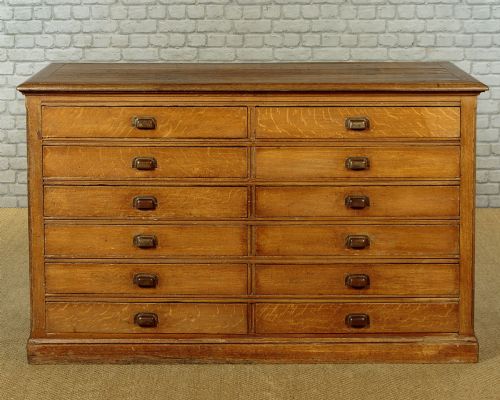
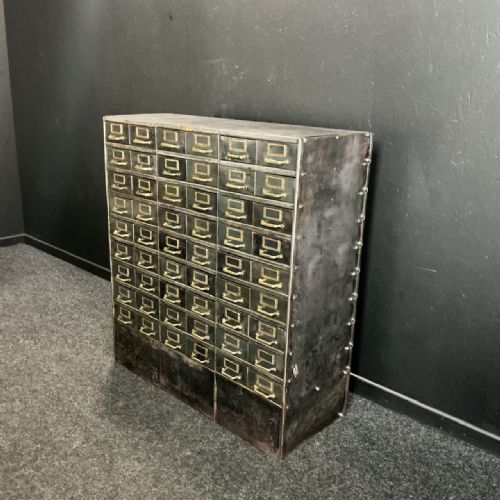
An antique index filing cabinet provides compact storage through banks of small drawers, desktop units, and tall sectional pieces designed for paperwork or cards. The items found here span the nineteenth and twentieth centuries, incorporating Edwardian, Victorian, and industrial designs.
Most examples discovered on this page take the form of oak, mahogany, or walnut drawer banks and patent letter files. Makers utilised robust timbers and specialised mechanisms to sort documents efficiently in offices, libraries, and workshops of the past.
Buyers encounter diverse configurations, from simple pine office units to complex walnut jewellers cabinets and library card sets. These pieces reflect the filing needs of various trades before modern steel systems took over.
How they were made
Carpenters constructed these cabinets primarily using solid hardwoods like oak, mahogany, and walnut, alongside softer pine and beech. Joinery techniques such as dovetailed drawer construction ensured the frames withstood daily hauling and sliding.
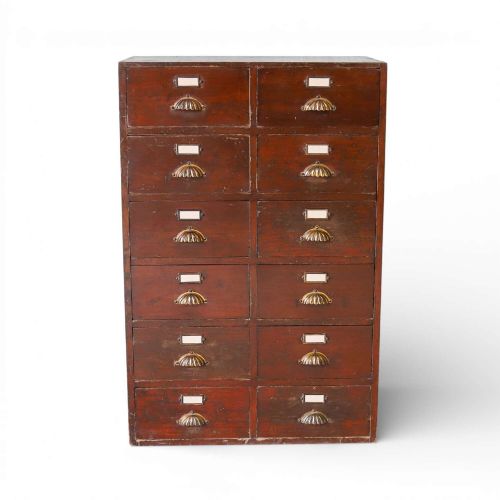
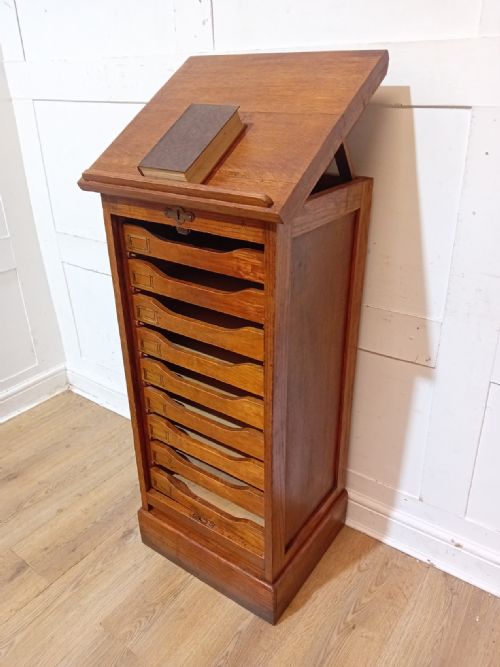
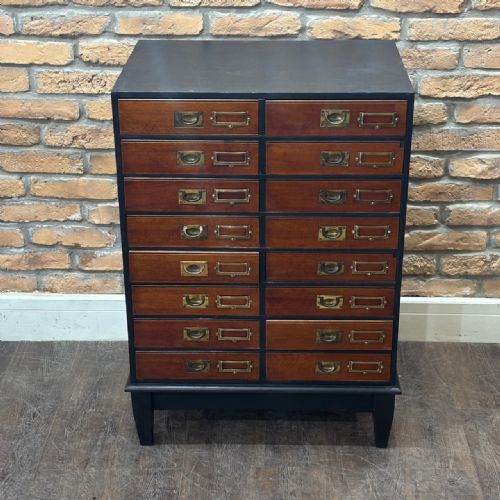
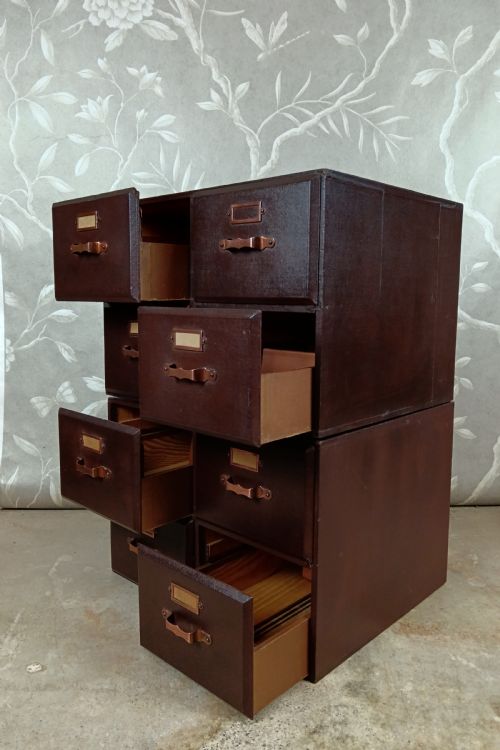
Manufacturers fitted brass label holders and shell pulls to the drawer fronts to help users identify contents quickly. Patent locking systems, tambour doors, and leather accents appeared on specialised bureau and cartonnieres items.
Listings feature pieces spanning the nineteenth and twentieth centuries, constructed in oak, mahogany, walnut, pine, and metal.
What varies in quality
The choice of primary timber sets the tone, with richly figured walnut and dense mahogany sitting at a different level from utility pine or beech. The presence of original hardware, including stamped brass handles and patent mechanism parts, elevates a piece.
Execution of the joinery and the survival of makers marks or patent inscriptions separate standard commercial office furniture from finer bespoke creations. Condition ranges from complete examples ready for placement to projects needing careful restoration.
Amberg·Shannon·Globe Wernicke·D Napier and Sons
The Antique Index Filing Cabinet Glossary
- Cartonniere
- A freestanding set of small drawers or compartments used for holding papers and documents. These French pieces often feature leather accents.
- Tambour
- A flexible door made of narrow strips of wood glued to canvas, allowing it to slide sideways around a track to reveal internal shelving or drawers.
- Shell pull
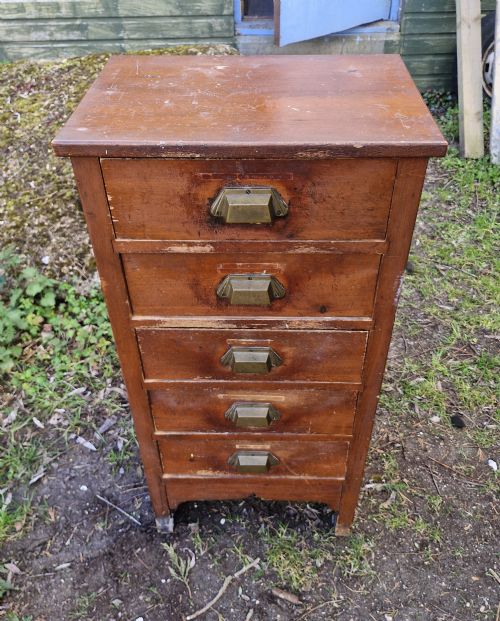
- A pressed or cast metal handle shaped like a semi-circular shell, commonly found on Victorian and Edwardian office furniture to hold identification labels.
- Haberdashery cabinet
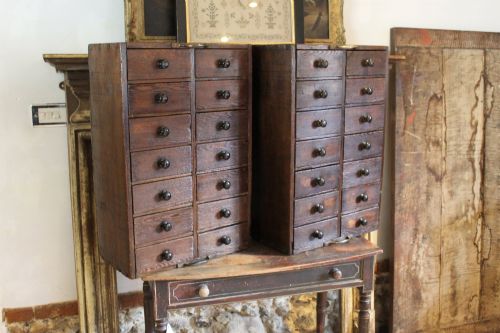
- A multi-drawer storage unit originally designed for retail shops to display small goods, now utilised for domestic organisation and filing.
- Patent letter file
- A proprietary storage system featuring internal mechanisms and indexed folders to keep correspondence organised and secure.
Antique Index Filing Cabinet: Frequently Asked Questions
What were antique index filing cabinets used for?
These cabinets served offices, libraries, and legal chambers for sorting correspondence, library index cards, and trade samples. Their numerous shallow drawers kept papers flat and categorised before standard suspension folders existed.
Today they suit similar organisational roles in homes, holding stationery, craft supplies, or small collections while adding period architectural interest to a room.
How do I tell Edwardian from Victorian filing cabinets?
Victorian pieces tend to feature heavier proportions, deep carved details, and darker mahogany or walnut timbers. They often date from an era when office furniture prioritised imposing status alongside utility.
Edwardian examples frequently show lighter woods like satin walnut or oak, reflecting a shift toward simpler lines and functional workspace design around the turn of the twentieth century.
Are these cabinets suitable for modern paper sizes?
Many index and card filing units were built for specific index cards or folded letters rather than modern A4 sheets. Collectors should check internal drawer dimensions carefully before purchasing a cabinet for contemporary office use.
Larger banks of drawers and haberdashery units often accommodate modern stationery flat within their wider compartments, making them practical for daily administrative tasks.
How should I care for wood and brass on these cabinets?
Maintain the timber surfaces with occasional applications of appropriate furniture wax to nourish the grain and protect the finish from drying out. Avoid harsh chemical cleaners that might strip the historic patina.
Keep brass pulls and label holders clean with a soft dry cloth, taking care not to rub abrasive polishes against the surrounding wood drawer fronts.