


Antique Index Chest
An antique index chest offers multi-drawer utility and structured storage, bringing period character and practical sorting space to a room.
Antique Index Chest
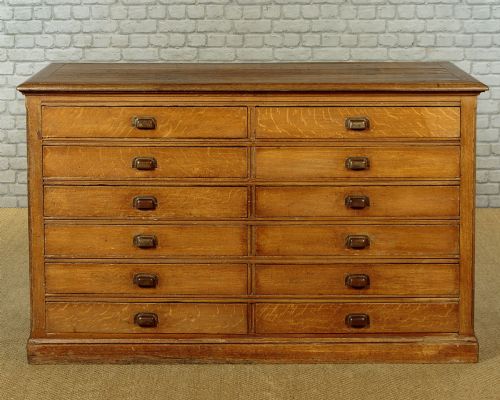
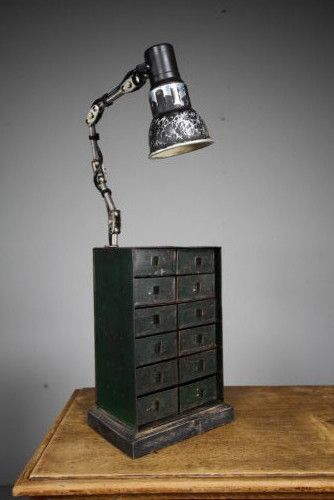
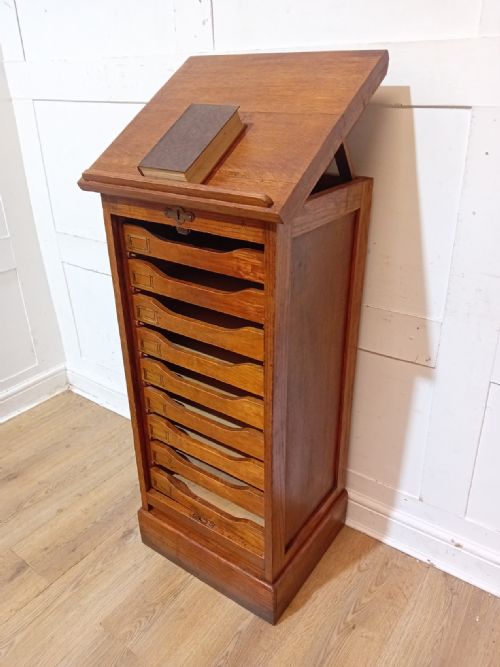
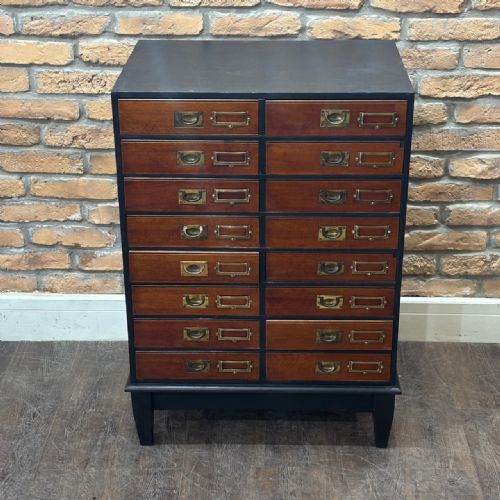
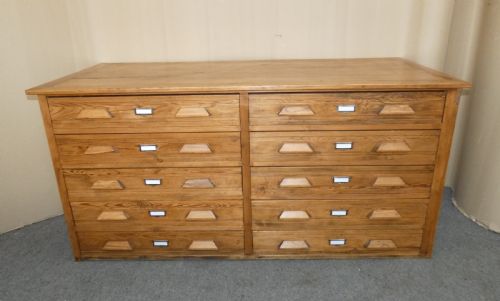
An antique index chest provides multi-compartment storage designed for filing, collections and hardware, appearing in forms such as filing cabinets, banks of drawers and haberdashers' units. When exploring an antique index chest on this page, buyers meet pieces spanning the Victorian and Edwardian eras through to the early twentieth century.
These items originate from office, shop and workshop settings, constructed as tall banks of small drawers, desktop units and large shop fittings. The selection includes examples in oak, mahogany, walnut and pine, reflecting the utilitarian and commercial roots of the form.
How they were made
Cabinet makers utilised dense hardwoods such as mahogany, walnut and oak, alongside pine and beech for secondary framing and internal partitions. Metal components, including brass and steel, formed handles, label holders and patent mechanisms.
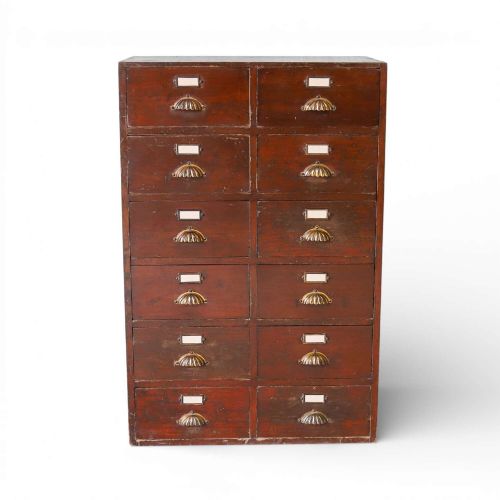
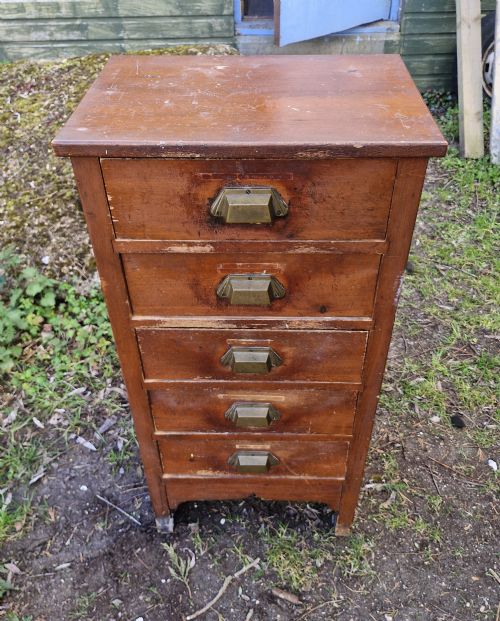
Construction methods focused on durability, employing multi-drawer configurations housed within robust carcases. Drawer fronts frequently featured brass shell pulls and integrated label holders to assist with organisation.
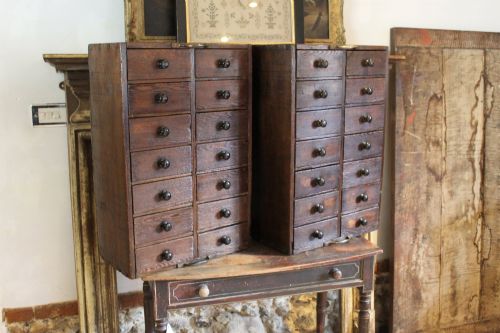
One exceptional workshop piece incorporates sixty-six individual drawers for sorting minute items.
What varies in quality
Quality rests in the integrity of the timber selection and the complexity of the drawer arrangement, ranging from simple pine units to finely figured walnut and mahogany carcases. Pieces retaining original brass hardware, working patent filing systems and maker attributions command greater interest.
The scale of the piece alters its character, from compact desktop filing drawers to expansive banks containing dozens of small compartments. Surface finishes, whether polished wood or painted shop fittings, dictate the visual presence of each chest.
D Napier And Sons·Brady·Shannon
The Antique Index Chest Glossary
- Bank of drawers
- A multi-tiered cabinetry form featuring numerous small drawers arranged vertically or horizontally, commonly utilised in offices and workshops for sorting items.
- Cartonniere
- A French desk accessory or cabinet containing stacked compartments or shallow drawers for holding papers and correspondence.
- Haberdashers cabinet
- A glazed or multi-drawer storage unit originally designed for retail display and textile storage in drapery shops.
- Shell pull
- A stamped metal handle shaped like a half-shell, frequently combined with an integrated slot for paper index labels.
- Patent cabinet
- A specialised storage unit incorporating a proprietary mechanical filing system designed for lateral or vertical document indexing.
Antique Index Chest: Frequently Asked Questions
How do I date an antique index chest?
Dating relies on timber choices, construction methods, hardware styles and patent markings found on the piece.
Victorian and Edwardian examples often display specific brass shell pulls, label holders and maker stamps from firms like Shannon or Amberg.
What woods were used in these cabinets?
Cabinet makers utilised timbers such as oak, mahogany, walnut, pine and beech depending on the intended commercial or domestic setting.
Hardwoods predominated in office and legal furniture, while pine and painted finishes appeared frequently in shop fittings and workrooms.
Are index chests suitable for modern offices?
Their numerous shallow drawers provide practical storage for stationery, craft materials and contemporary paperwork.
Their compact footprints and period timber finishes allow them to integrate easily into home studies and living spaces.