
Antique Hunting Artwork
Antique hunting artwork captures field sports, equestrian scenes and game through centuries of oil paintings, watercolours and prints.
Antique Hunting Artwork
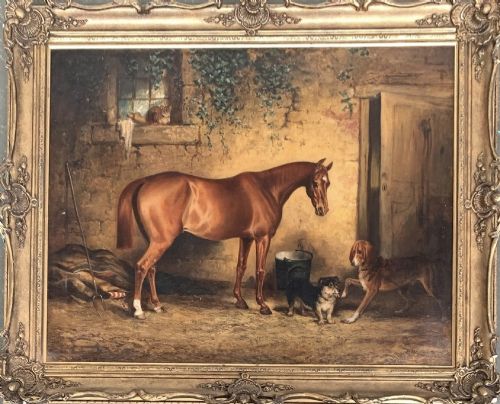
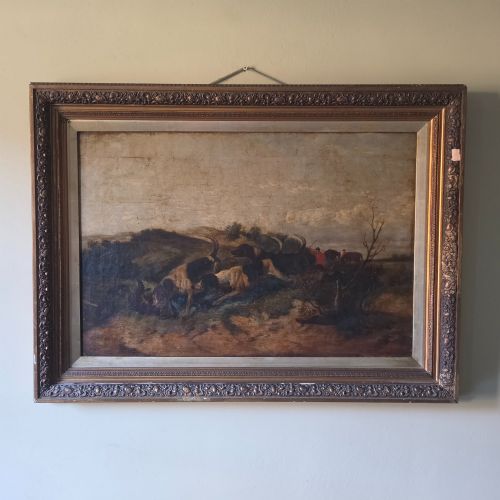
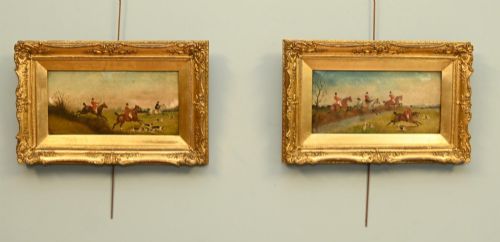
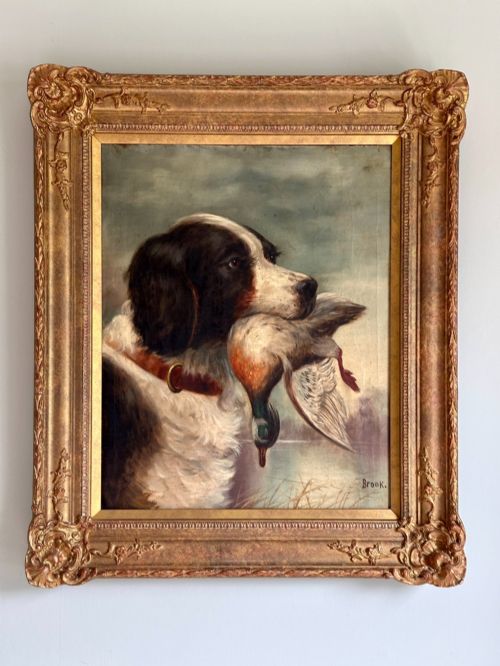
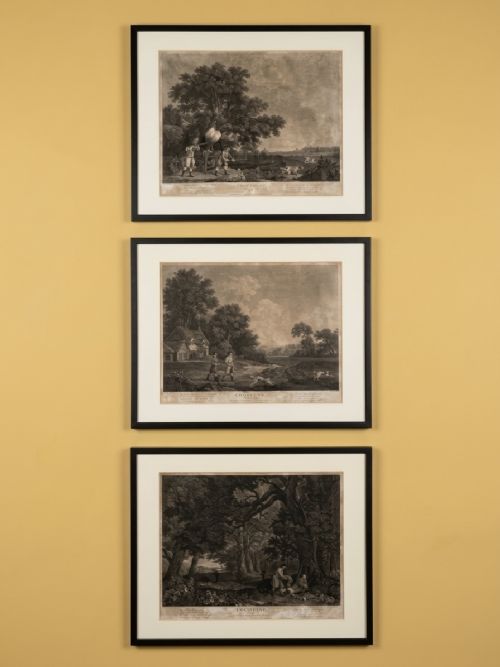
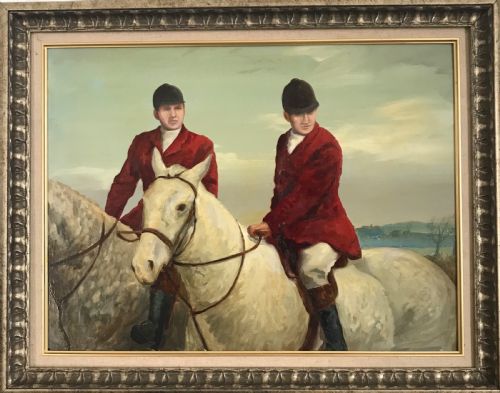
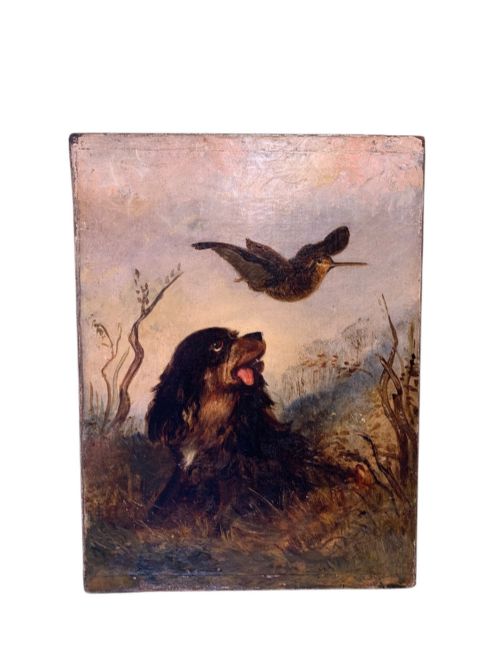
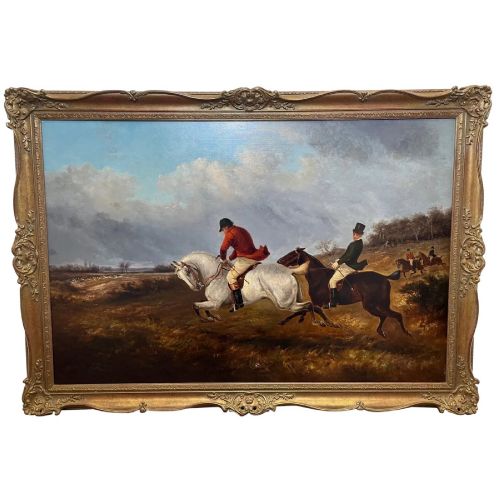
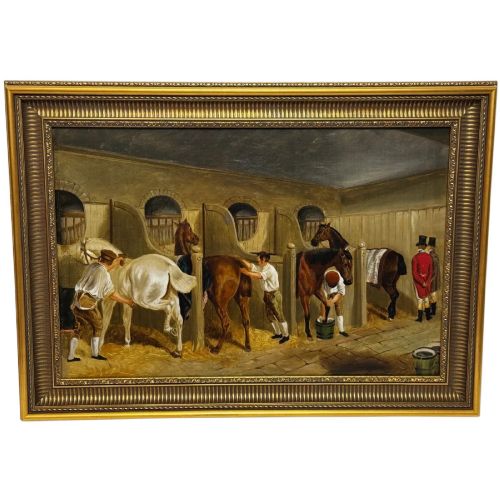
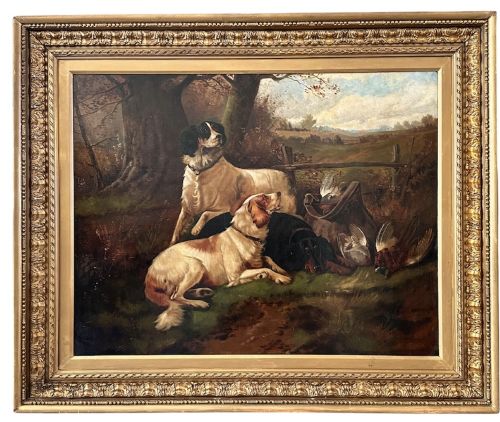
When you search for antique hunting artwork, you encounter visual records of field sports, equestrian pursuits and game spanning from the seventeenth century through to the mid-twentieth century. The selection leans heavily towards nineteenth-century and Victorian oil paintings, watercolours and framed prints depicting hounds, horses, huntsmen and the day's bag. These pieces range from intimate watercolours of individual dogs to large canvases showing mounted packs and grand country pursuits.
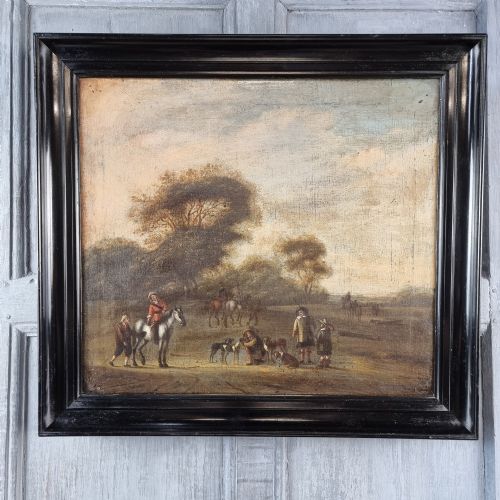
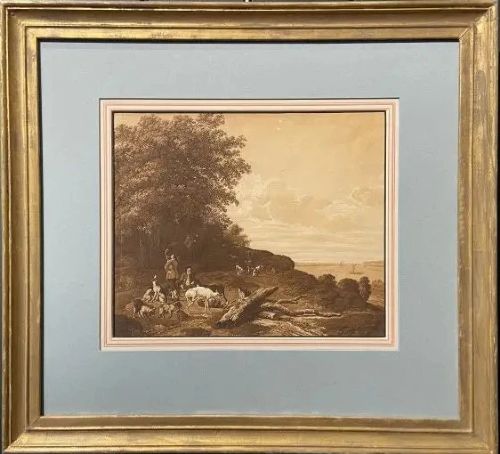
The material forms vary from delicate bodycolour and hand-coloured engravings to robust oil paintings on canvas and board, alongside reverse silhouette paintings on glass and embroidered tapestries. Subjects stretch from Dutch Golden Age landscapes to specific British hunts like the Berkeley and the Quorn, recorded by named artists and regional schools alike.
Materials and construction
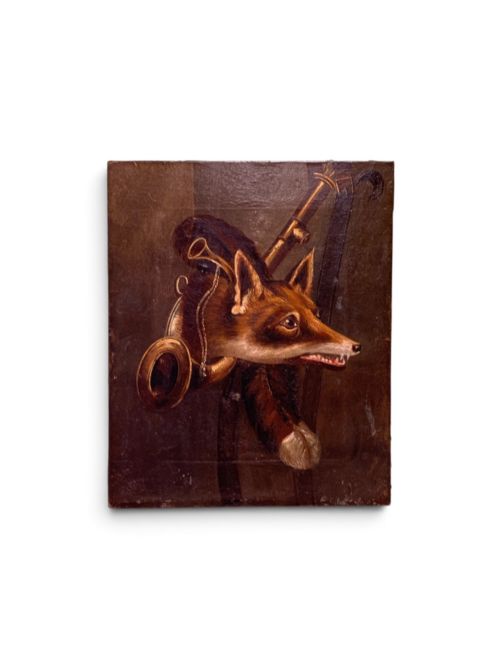
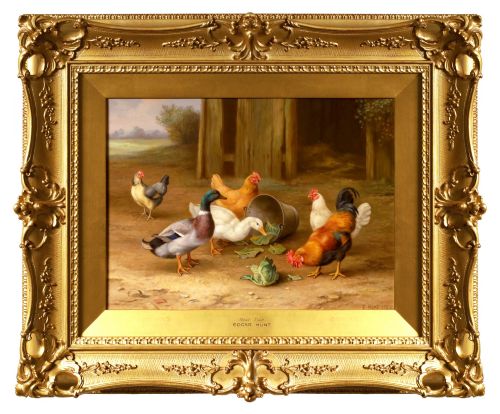
The physical objects rely primarily on oil paint applied to canvas or wood board, alongside watercolours and bodycolour on paper. Canvas supports are frequently stretched within gilt wood frames that complement the grand scale of nineteenth-century sporting scenes.
Printmakers utilised lithography and engraving techniques on paper, sometimes hand-colouring the finished impressions. Glass and textiles also serve as bases, seen in reverse silhouette paintings and wool embroidered tapestries depicting classical hunting themes.
Several hounds are recorded by their actual names, ensuring Lady and her litter achieve immortality in oil.
Factors of quality
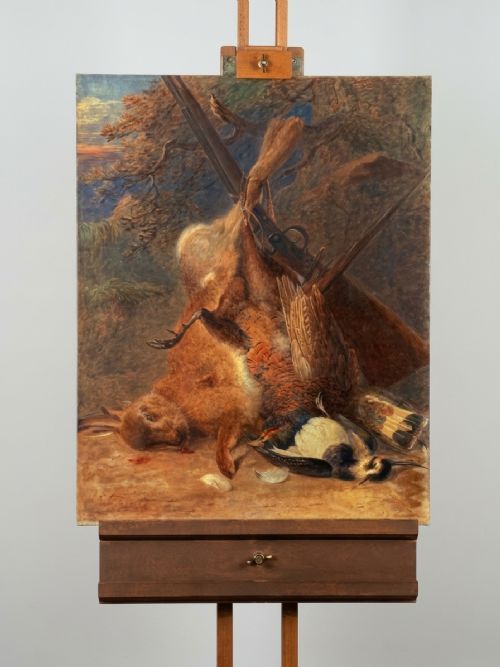
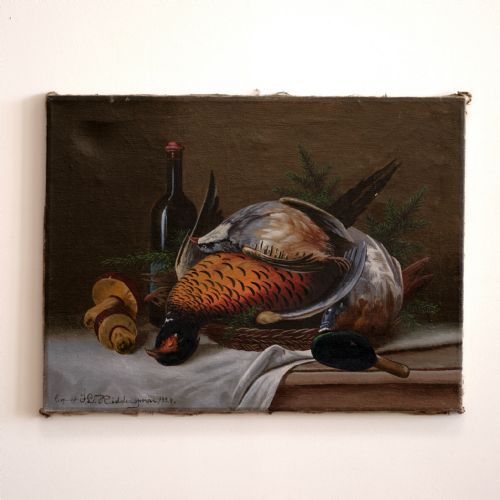
Quality rests upon the artist's command of anatomy, particularly the complex musculature of horses and hounds in motion, combined with compositional balance. Master works capture the dynamic tension of a hunt or the precise textures of feathers and fur in a still life, whereas lesser pieces display stiff figures and generic landscapes.
The integrity of the original medium also dictates standard, with well-preserved oil paint showing minimal craquelure and watercolours retaining their original pigment vibrancy without fading. Original gilt wood frames that match the period of the artwork elevate the overall standard of the piece.
Thomas Smythe·Michelangelo Meucci·Johannes Lingelbach·John Sargent Noble·Edgar Hunt·Sir Edwin Henry Landseer·John Sherrin·Benjamin Blake·Thomas Hicks·Arthur Wardle·Samuel Raven·Philip Henry Rideout·George Armfield·Colin Graeme Roe·Charles Faulkner
The Antique Hunting Artwork Glossary
- Bodycolour
- Watercolour paint mixed with a white pigment to make it opaque, creating denser passages of colour in works on paper.
- Craquelure
- The fine network of cracking formed in old paint or varnish as it ages over time.
- Trompe l'oeil
- An optical illusion in painting designed to trick the viewer into perceiving painted objects as three-dimensional reality.
- Lithography
- A printing process based on the repulsion of oil and water, used to produce multiple impressions on paper.
- Aquatint
- An intaglio printmaking technique that produces tonal areas resembling watercolour washes.
Antique Hunting Artwork: Frequently Asked Questions
What subjects appear in hunting art?
The imagery covers fox hunting, hare coursing, equestrian portraits, gun dogs with game, and still life compositions of dead game and fruit.
These subjects reflect the rural pursuits and country sports favoured across the Georgian, Victorian and Edwardian periods.
How do I identify the period of a painting?
Dating relies on the costume of the figures, the style of the gilt wood frame, and written signatures or inscriptions on the reverse of the canvas.
Changes in painting technique and prevailing artistic conventions across the seventeenth, eighteenth and nineteenth centuries also provide chronological markers.
Where should I hang these artworks?
These pieces suit traditional study spaces, libraries and living rooms with classic interior decoration that pairs well with equestrian and sporting subjects.
Placing works away from direct sunlight protects vulnerable watercolours and oil pigments from fading over time.
What is the difference between an oil painting and a print?
Oil paintings feature textured layers of pigment applied directly to canvas or board by hand, making each piece a unique creation.
Prints are mechanically or manually reproduced impressions on paper from a master plate, block or stone, often produced in multiples.