





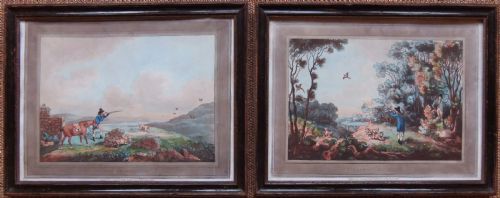

Antique Aquatint Engravings
Antique aquatint engravings bring graphic records of nineteenth-century life to the wall, offering sharp detail and subtle tonal gradation that draws the eye.
Antique Aquatint Engravings
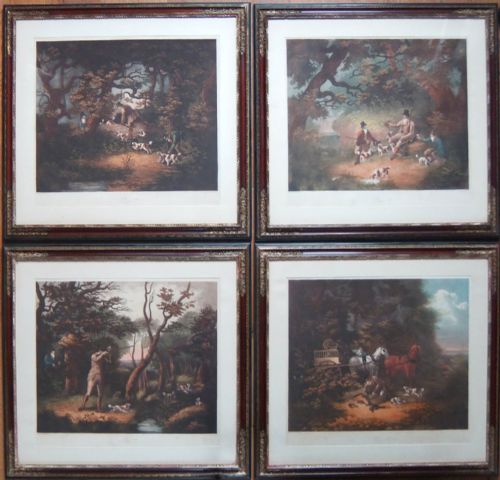
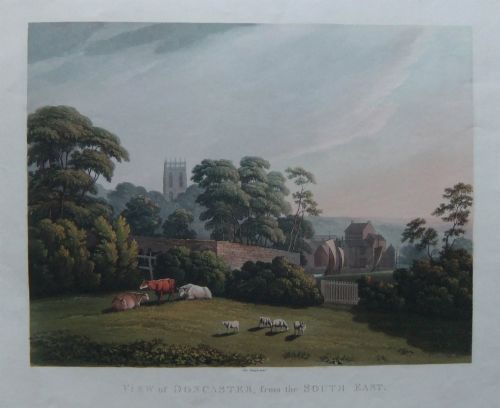
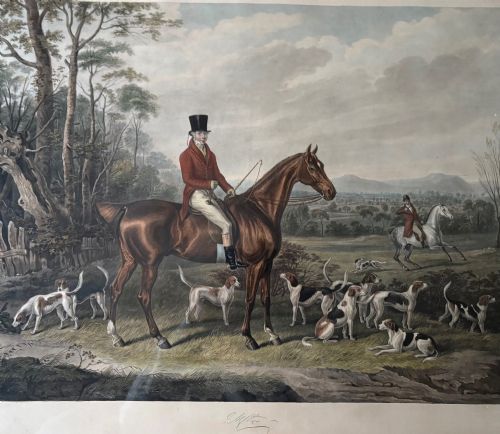
Antique aquatint engravings capture subjects ranging from Georgian sporting scenes and maritime views to architectural interiors and topographical panoramas. Buyers meet these works as framed wall art or loose prints, often preserved behind glass in period wood frames.
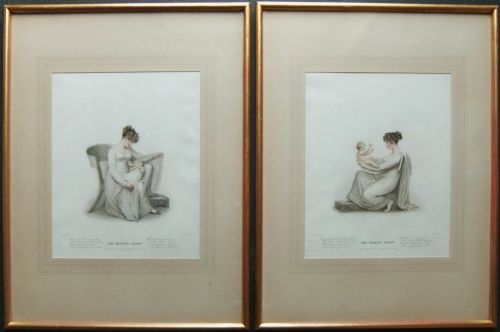
The material record spans the Georgian, Regency, and Victorian eras, with dates clustering around the early nineteenth century. Many examples employ hand-colouring over the printed ink lines to enhance the visual depth of the subject.
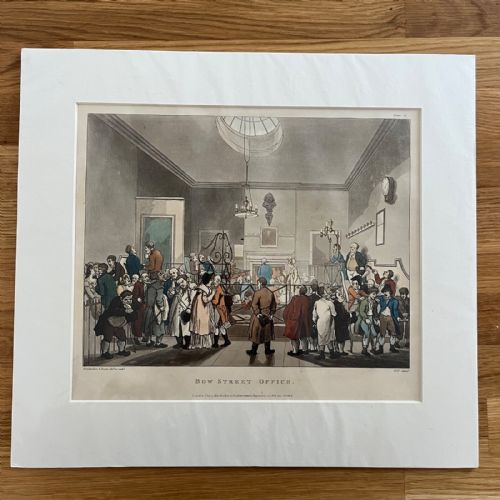
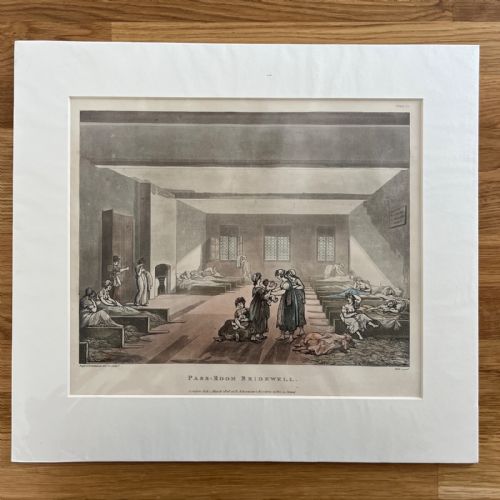
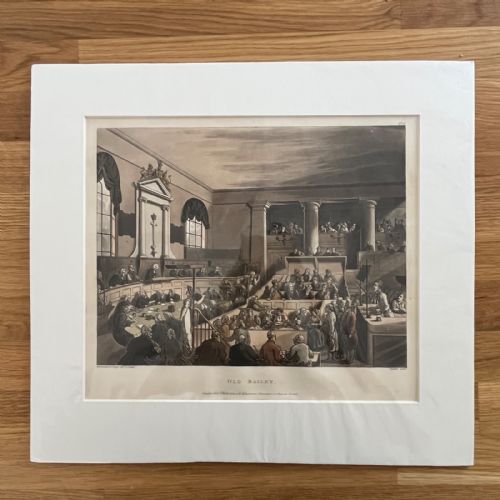
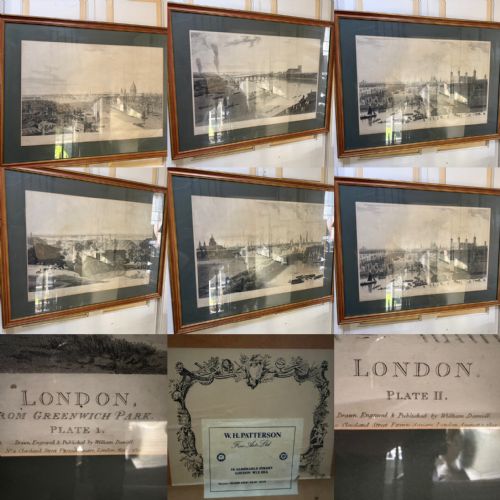
The selection includes complete sets of four or six prints, such as hunting scenes or panoramic views of London, alongside individual plates from notable publications like Ackermann's Microcosm of London.
Materials and printmaking technique
The process relies on copper or steel plates treated with resin to create a porous ground that acid bites into, producing tonal areas resembling watercolour washes rather than simple lines. Printers applied black or brown ink to the prepared plate before transferring the image onto laid or wove paper.
Finishing often involved the addition of delicate watercolour washes applied by hand over the monochrome impression. Framed pieces typically utilise wood, gilt, or gold leaf mouldings to house the paper artwork securely.
Antique Aquatint Engravings Retail Price Guide 2026
Typical asking prices for aquatint engravings among the pieces listed under this phrase on Sellingantiques today, from the lower quarter to the upper quarter. They describe what is for sale here now, not the wider market.
Listings feature paper, ink, and watercolour supported by wood and gilt frames across Georgian and Victorian periods.
Assessing quality in the medium
Quality rests upon the crispness of the plate impression and the subtlety of the tonal grain achieved during the acid biting process. Strong impressions display clear definition in figures and architecture without blurring or ink bleeding.
The preservation of the paper support and the vibrancy of any hand-applied watercolour washes heavily influence the visual impact of the work. Complete sets maintained together in matching frames hold greater interest than isolated or mismatched plates.
Dean Wolstenholme·Rowlandson and Pugin·Stadler·Adam Buck·W. Collard·Alken·William Daniell·W J Huggins·Charles Hunt·Francis Calcroft Turner·Sam. Howitt
The Antique Aquatint Engravings Glossary
- Aquatint
- A printmaking technique that uses acid to etch resin-covered copper plates, creating tonal areas that mimic watercolour washes. This method allows for smooth gradients of shadow and light.
- Hand-coloured
- The application of transparent watercolours by hand to a monochrome print after the impression is pulled. This technique added realism and visual appeal to topographical and sporting plates.
- Plate mark
- The indentation left in the paper by the edge of the metal printing plate under the pressure of the press. Its presence confirms an original intaglio print.
- Wove paper
- Paper manufactured on a fine wire mesh screen, producing a smooth surface without the ribbed texture of laid paper. It became the standard support for fine prints in the nineteenth century.
- Topographical print
- An artwork depicting a specific locality, building, or landscape view. These prints served as visual records before the widespread use of photography.
Antique Aquatint Engravings: Frequently Asked Questions
How should I hang antique aquatint engravings?
Keep framed prints away from direct sunlight to prevent the paper from yellowing and the delicate watercolour washes from fading over time.
Ensure they hang on interior walls where humidity and temperature remain relatively stable.
Are these prints hand coloured?
Many examples from this period feature delicate watercolour washes applied by hand over the printed ink lines to add colour to the figures and backgrounds.
Close inspection under a magnifying glass often reveals the brushstrokes within the coloured areas.
What is the difference between an engraving and an aquatint?
Engraving relies on lines cut directly into the metal plate with a sharp tool, while aquatint uses acid to bite tonal areas that resemble washes.
Many nineteenth-century plates combined both techniques, using engraved lines for outlines and aquatint for shading.
Can I buy these prints as complete sets?
Surviving sets of four or six related subjects, such as sporting scenes or panoramic city views, occasionally appear together in the listings.
Complete sets remain particularly desirable for preserving the original publishing format.