

Antique Sporting Wall Art
Antique sporting wall art brings the energy of the hunt, the turf and the field directly into a room through historic oils, watercolours and prints.
Antique Sporting Wall Art
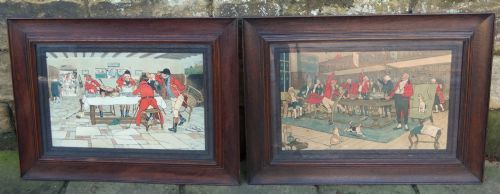
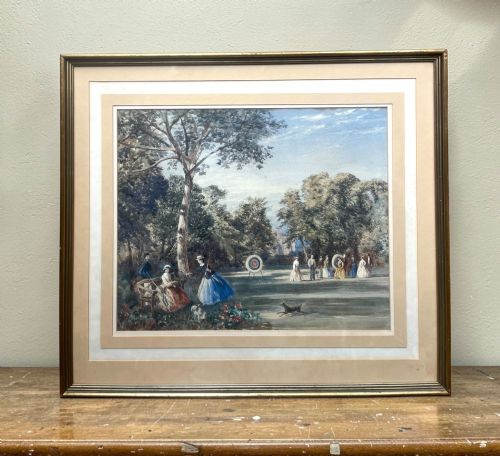
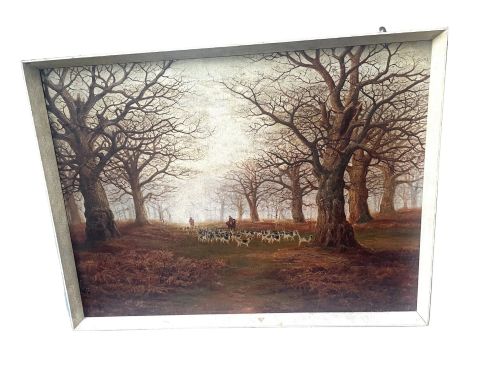
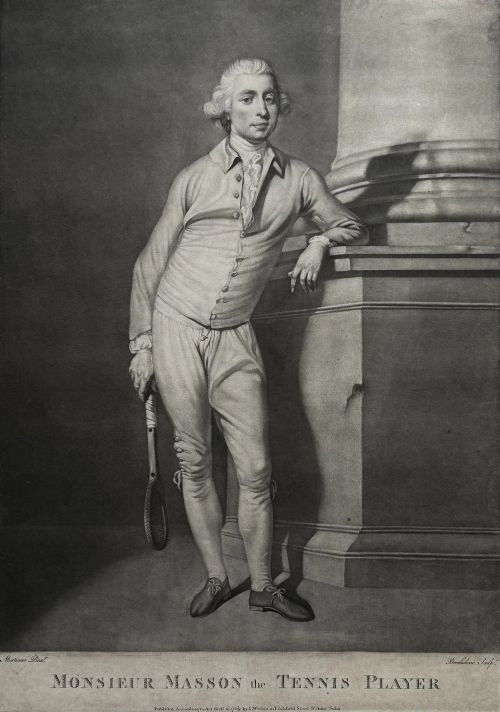
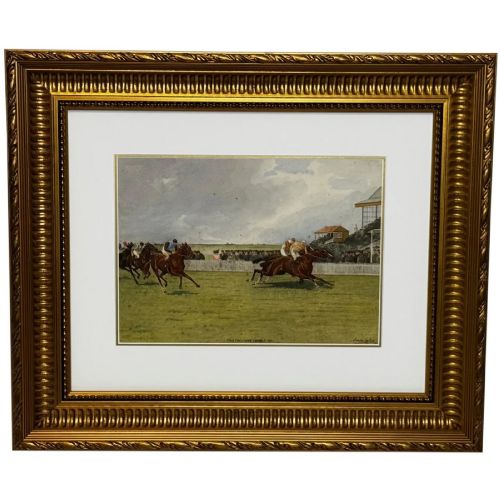
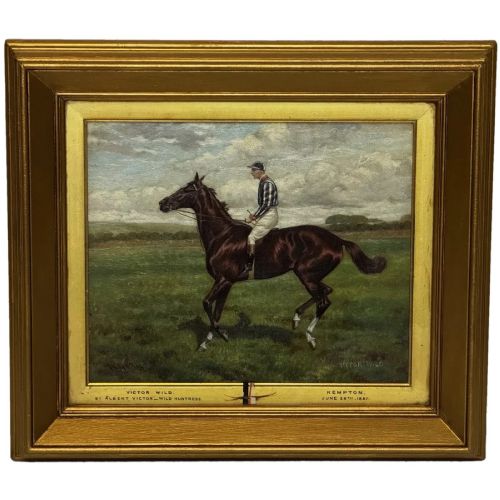
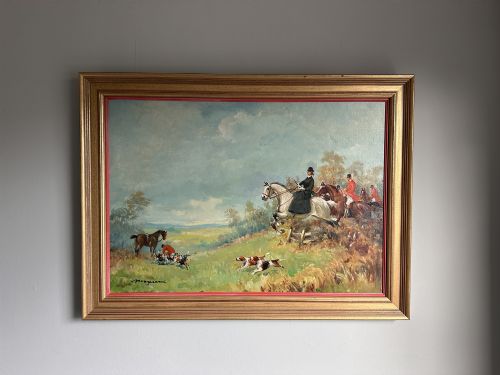
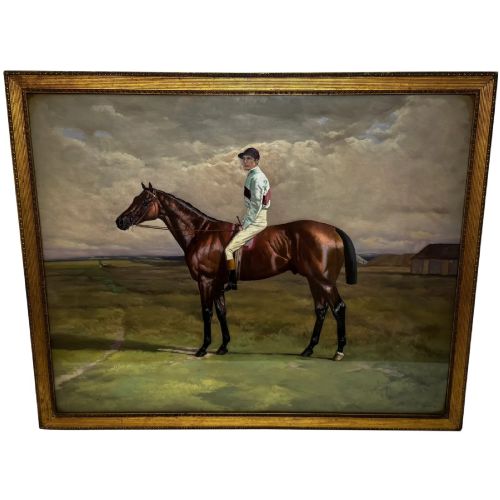
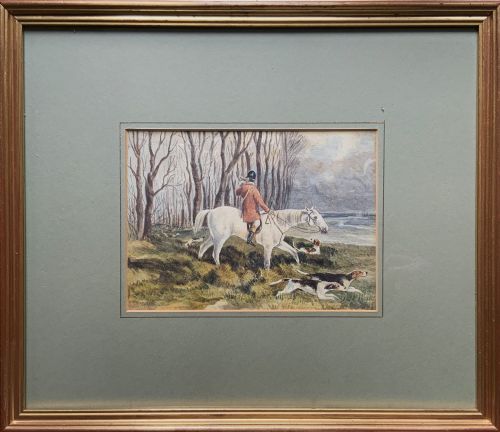
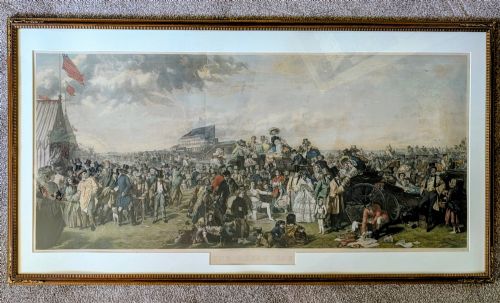
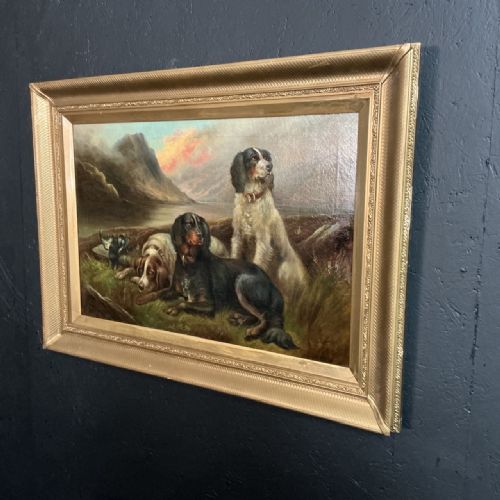
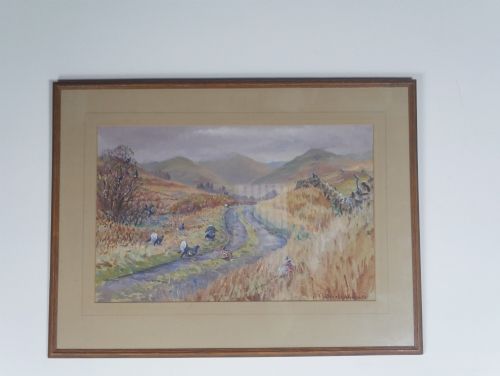
When searching for antique sporting wall art, buyers encounter a rich mix of framed watercolours, oil paintings on canvas, hand-coloured engravings and lithographs dedicated to traditional pastimes. These works capture specific pursuits such as fox hunting, horse racing, shooting, archery, tennis and polo across periods spanning the Georgian era, the Victorian age and the Edwardian decades.
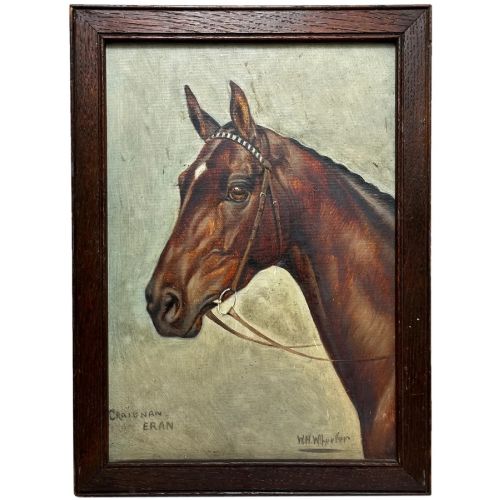
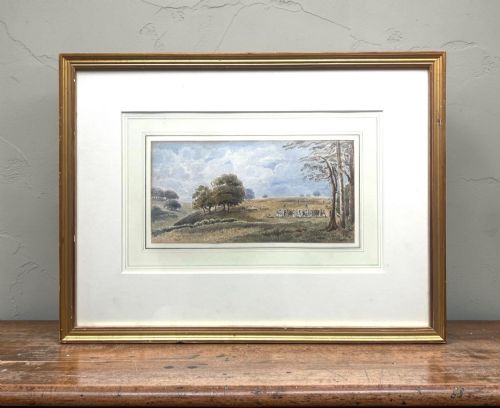
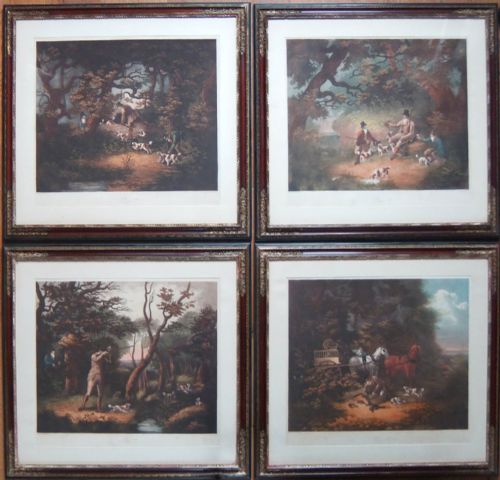
The most common formats on this page are nineteenth-century oil paintings and watercolours depicting horses, hounds and riders, alongside printed series after established artists. Pieces range from intimate framed watercolours of dogs and archers to large canvases celebrating racehorses, winners and country hunts.
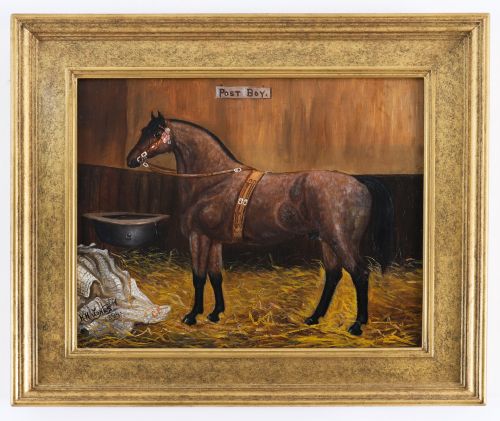
Subjects frequently focus on equestrian scenes, gun dogs, carriage travel and notable racehorses identified by name, offering a direct record of British sporting life. Dating ranges from the eighteenth century through to mid-century British school paintings and vintage cycle posters.
Materials and Techniques
The physical construction of these pieces relies heavily on traditional supports such as canvas, paper and wooden panels, paired with oil paint, watercolour or printmaking methods. Oil paintings are executed on canvas, sometimes supported by wood or giltwood frames, whilst works on paper utilise watercolour, lithography or engraving techniques.
Framing forms an integral part of the physical object, with period examples often retaining wood, giltwood or gold leaf surrounds under glass where works on paper demand protection. Hand-colouring enhances many of the engraved and printed series, adding depth to depictions of costumes, horses and landscapes.
Antique Sporting Wall Art Retail Price Guide 2026
Typical asking prices for sporting wall art among the pieces listed under this phrase on Sellingantiques today, from the lower quarter to the upper quarter. They describe what is for sale here now, not the wider market.
Listings span the eighteenth, nineteenth and twentieth centuries, incorporating works in oil on canvas, watercolour, engraving and lithography.
Assessing Quality and Execution
Quality in these works rests upon the artist's command of anatomy, movement and composition, particularly in the difficult rendering of horses, dogs and figures in motion. Superior pieces display confident brushwork or precise engraving lines that convey the tension of a race or the quiet stance of a hunter in a stable.
The relationship between the subject and its contemporary framing also dictates standard, as original giltwood and oak frames suited to the Victorian or Edwardian period preserve the integrity of the piece. Attribution to named artists or documented provenance linking a canvas to a specific estate or sporting event elevates the historical importance of the work.
Cecil Aldin·Herbert St.John Jones·Dean Wolstenholme·Richard Brookshaw·Isaac Cullin·Alfred Charles Havell·William Powell Frith·Wright Barker·Charles Bilger Spalding·Lionel Ellis·Henry Barraud·Henry Alken·Philip H Rideout·Edmund Bristow·Edward Armfield·William Woollett·George Stubbs·Thomas Smythe·Francois Faber·George Finch Mason·John Sargent Noble·George Wright·Fred Fitzpatrick
The Antique Sporting Wall Art Glossary
- Engraving
- A printmaking technique where an image is incised into a metal plate using a sharp tool before being inked and pressed onto paper.
- Lithography
- A planographic printing process based on the repulsion of oil and water, widely used for nineteenth-century posters and sporting scenes.
- Giltwood
- Wood carved and coated with a thin layer of gold leaf, commonly used for traditional picture frames.
- Watercolour
- A paint consisting of pigment suspended in a water-soluble binder, frequently utilised for nineteenth-century architectural and sporting studies on paper.
- Provenance
- The documented history of ownership of an antique object, establishing its authenticity and past location.
Antique Sporting Wall Art: Frequently Asked Questions
How do I date an old hunting painting?
Dating relies heavily on costume details, saddle design and the style of the wooden frame or stretcher bars at the back of the canvas. Many nineteenth-century works include signatures, dates or inscriptions on the reverse noting the horse or rider.
Comparative analysis of the artist's working period also helps narrow down the decade, particularly when the subject matches documented races or hunts from the Victorian era.
Are watercolours as durable as oil paintings?
Watercolours on paper require protection behind glass and conservation-grade framing to prevent fading from direct sunlight and damage from damp conditions. Oil paintings on canvas are generally more robust but still benefit from stable indoor humidity and avoidance of extreme temperature shifts.
Both mediums have survived well over a century when kept in sensible domestic environments away from direct heat sources.
What subjects are most common in British sporting art?
Fox hunting scenes, portraits of prized hunters and racehorses, shooting parties with gun dogs, and coaching prints dominate the traditional categories. Archery, tennis and polo also appear, particularly in late Victorian and Edwardian works.
These subjects reflected the leisure pursuits of the landowners and gentry who commissioned the original paintings and prints.
How should I hang framed prints versus oil canvases?
Oil paintings on canvas are heavier and typically require secure wall fixings into masonry or studs, supported by sturdy wire or D-rings attached to the wooden stretcher. Framed watercolours and prints under glass demand similar care but are sensitive to moisture, making damp exterior walls unsuitable.
Spacing pieces at eye level away from direct sunlight ensures both the paper and the pigments remain stable over time.