




Antique Hope Chest
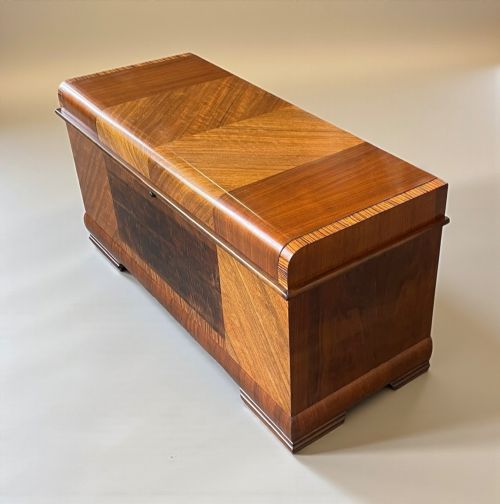
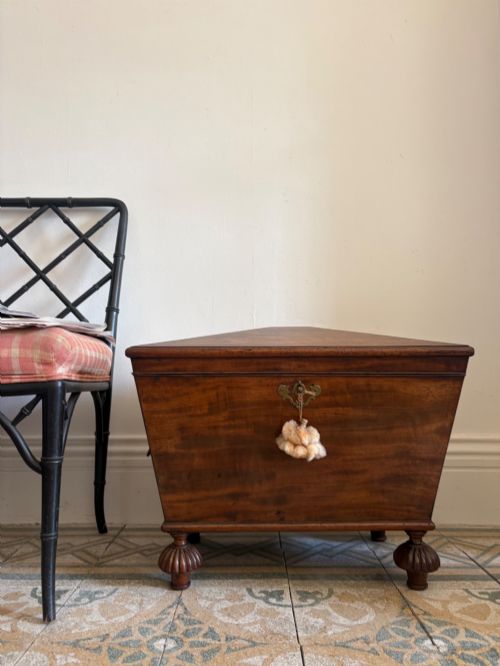
An antique hope chest holds generations of domestic textile storage, built from sturdy oak, pine, teak, and camphor wood across centuries of craftsmanship.
Antique Hope Chest
When you search for an antique hope chest, you encounter a broad category of domestic storage boxes, marriage trunks, dowry chests, and coffers created to house linens, blankets, and valuables. These pieces span from early seventeenth-century joined oak examples to nineteenth-century painted marriage trunks and colonial import chests.
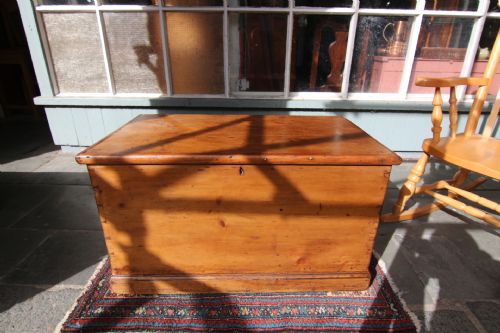
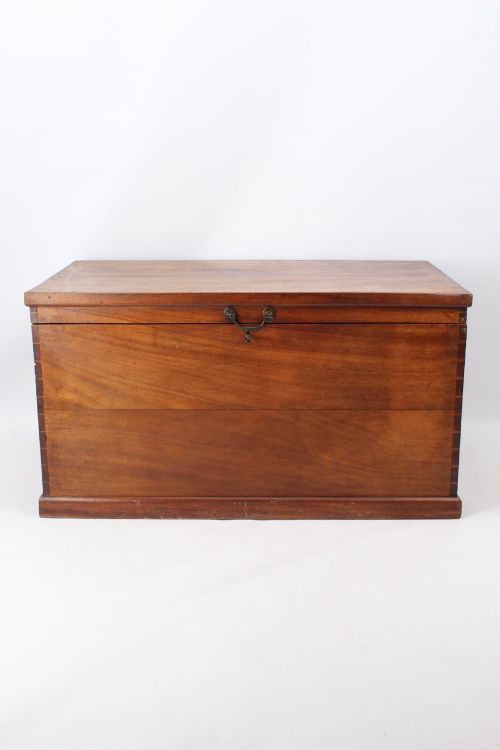
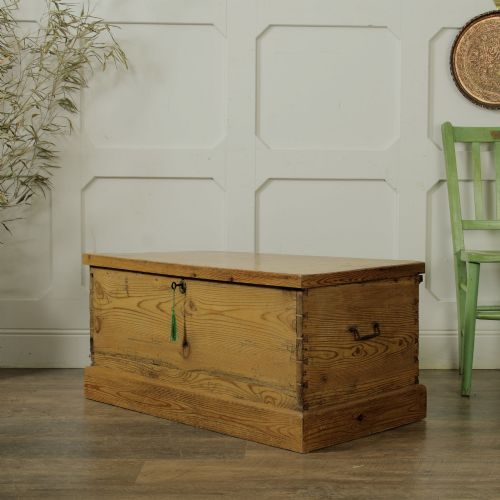
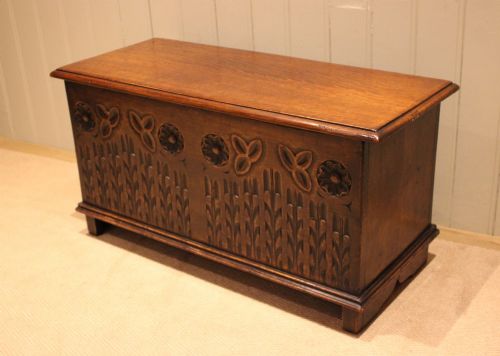
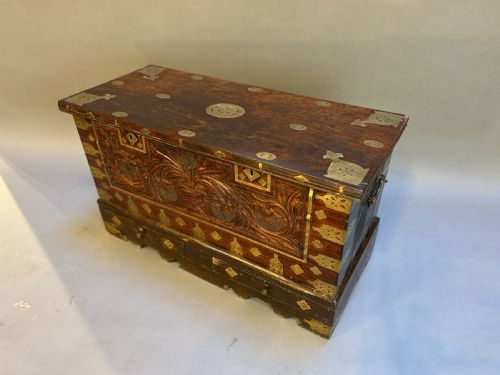
The version you are most likely to meet on this page is a nineteenth-century pine or hardwood chest, often featuring internal drawers, brass fittings, or carved details. Alongside these sit heavier seventeenth-century oak coffers and specialised regional forms such as Zanzibar and camphor wood trunks.
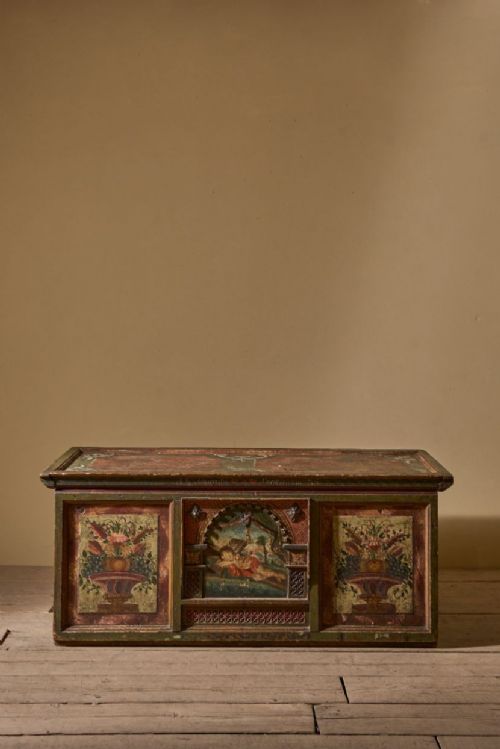
Origin and regional style shape these pieces profoundly, ranging from rustic pine boxes and Arts and Crafts oak coffers to heavily carved Oriental camphor wood trunks and Spanish painted blanket chests with Moorish decoration. Each format reflects the domestic customs and available timbers of its maker's locale.
How they were made
Cabinetmakers and joiners constructed these chests using traditional framing methods, utilising solid domestic timbers like oak and pine for structural integrity, or dense imported woods like teak, mahogany, and camphor wood for specialised storage. Panels were typically tongue-and-groove or pegged into heavy frameworks to accommodate wood movement over time.
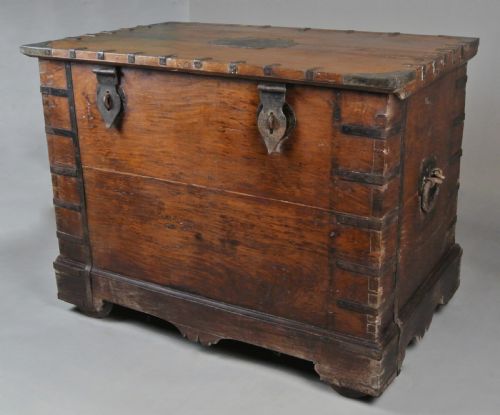
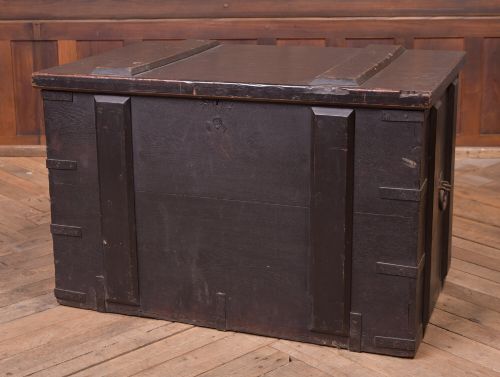
Metal hardware played a crucial structural and decorative role, with blacksmiths and metalworkers forging iron bands, hinges, and brass studs that reinforced corners and secured heavy lids. Many examples incorporate intricate hand-carved ornamentation directly into the solid timber or feature painted polychrome decoration applied over prepared ground layers.
Listings feature structural materials ranging from native oak, pine, and mahogany to imported teak, camphor wood, and brass-bound hardwoods.
What varies in quality
The standard of timber selection and joinery marks the primary division between utilitarian storage boxes and high-status furniture. Superior examples employ quarter-sawn oak with medullary rays, finely figured mahogany, or select camphor wood, assembled with tight dovetails or pegged mortise and tenon joints.
The sophistication of surface ornamentation and hardware integrity further distinguish the range. Deep, crisp hand-carving, original painted decoration, and substantial brass or iron mountings elevate a piece from a simple domestic container to a notable work of regional craftsmanship.
The Antique Hope Chest Glossary
- Coffer
- A heavy wooden chest traditionally used for storing valuables, money, or documents, usually constructed with a joined oak frame.
- Mule chest
- A storage chest fitted with one or more drawers in the base beneath the main compartment, bridging the form of a chest and a chest of drawers.
- Dowry chest
- A specialised storage box prepared for a bride to collect household linens and garments prior to marriage, often painted or elaborately carved.
- Camphor wood
- A fragrant Asian timber utilised for storage chests because its natural oils repel insects and protect textiles.
- Zanzibar chest
- A heavily brass-studded and bound hardwood trunk originating from East Africa and India, featuring intricate decorative metalwork.
Antique Hope Chest: Frequently Asked Questions
What is an antique hope chest?
An antique hope chest is a traditional storage box used historically by young adults to collect household linens, clothing, and blankets in anticipation of marriage or moving into a new home.
These pieces encompass regional variations like seventeenth-century oak coffers, nineteenth-century pine blanket boxes, and carved camphor wood trunks from international trade routes.
How were antique chests used?
Families utilised these sturdy boxes at the foot of beds or in hallways for dense storage of heavy woollens, household textiles, and personal valuables before built-in closets became common.
Many designs doubled as impromptu seating benches or tables within smaller living quarters due to their flat, reinforced lids.
How do I identify seventeenth-century oak?
Seventeenth-century oak chests display visible medullary rays and open pores within the timber, resulting from traditional quarter-sawing methods that yielded stable, highly figured boards.
Construction typically relies on pegged mortise and tenon joinery within a heavy frame surrounding recessed flat panels.
Why use camphor wood for chests?
Cabinetmakers selected camphor wood for storage trunks because the dense timber produces a distinctive aromatic oil that naturally deters moths and silverfish from damaging stored woollens and linens.
This functional advantage made imported camphor wood chests highly desirable possessions throughout the nineteenth and early twentieth centuries.