

Antique Highland Art
Antique highland art captures the rugged landscape, cattle and lochs of Scotland through nineteenth and early twentieth-century oil paintings and watercolours.
Antique Highland Art
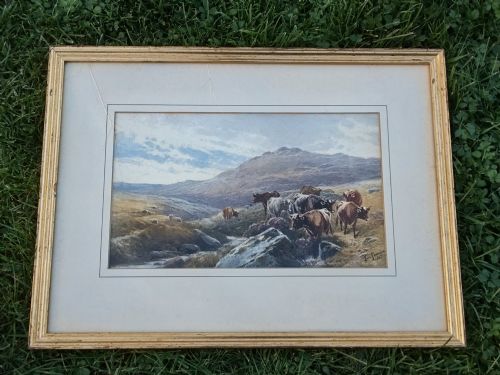
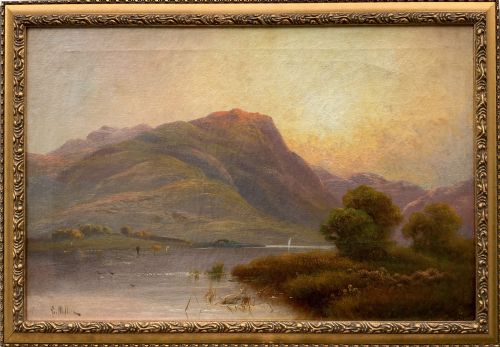
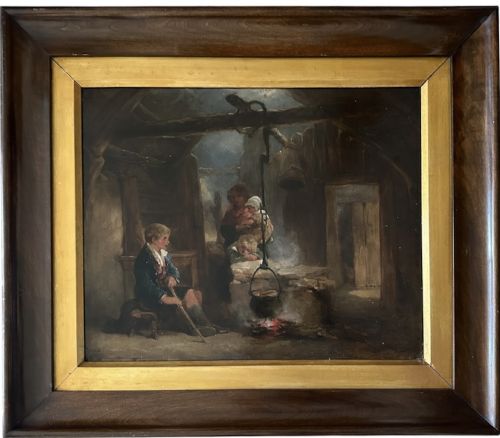
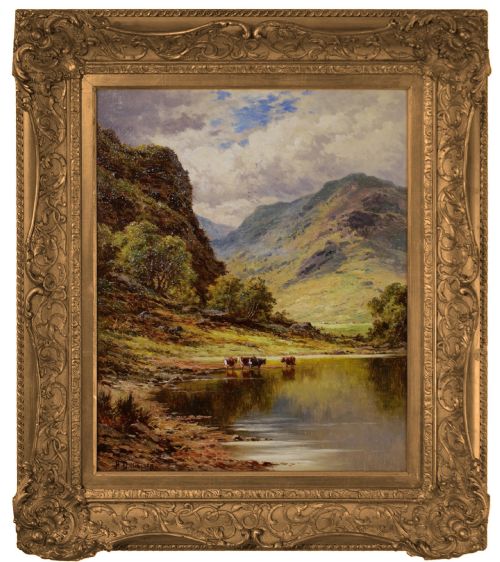
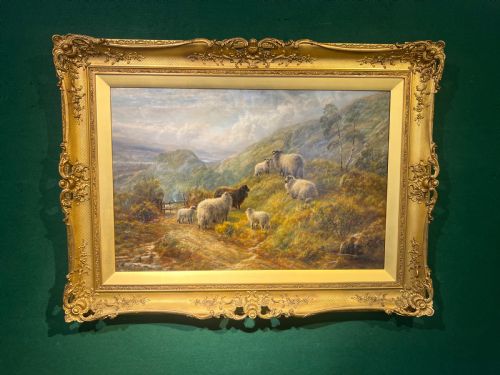
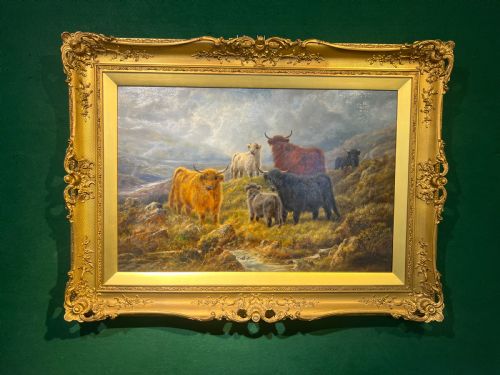
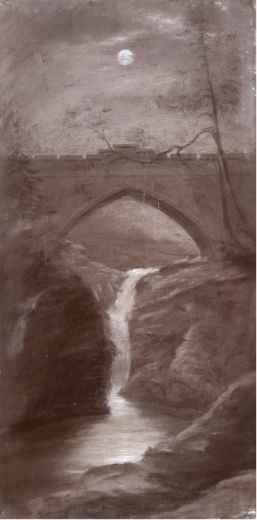
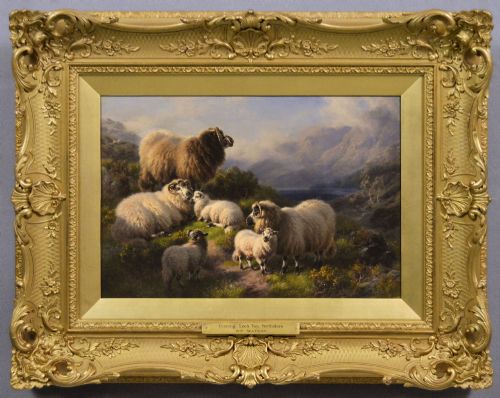
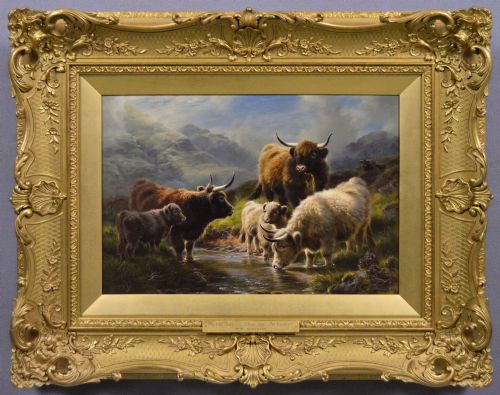
Antique highland art encompasses nineteenth-century and early twentieth-century oil paintings, watercolours and charcoal drawings depicting Scottish landscapes, lochs, glens and figures. These works range from expansive views of sheep and cattle by water to intimate scenes of crofts, often framed in period giltwood and gesso.
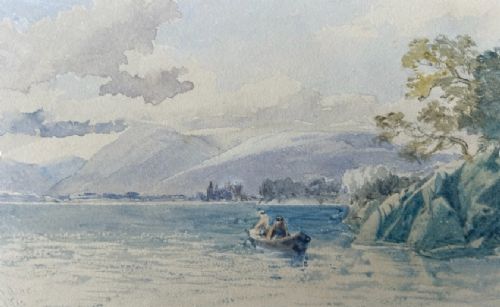
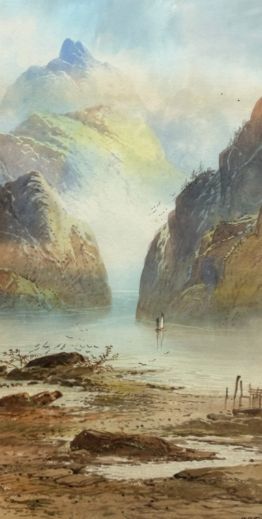
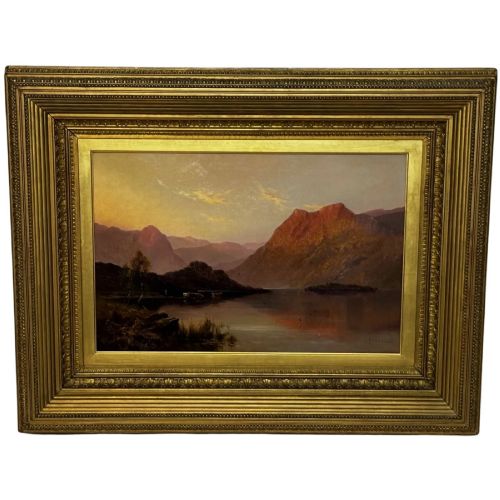
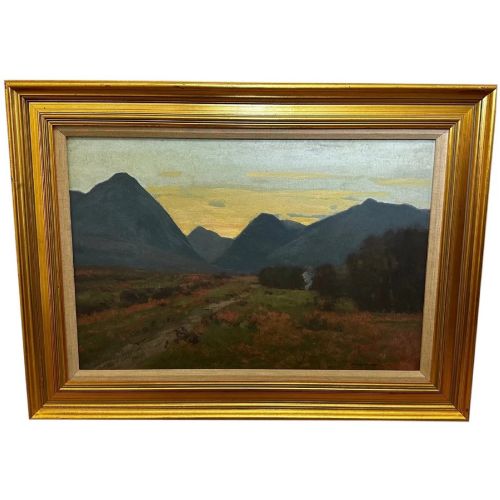
The most common pieces on this page are Victorian and Edwardian oil paintings on canvas or wood panel, alongside watercolours. Artists recorded specific locations such as Loch Lomond, Arran and Glen Tay, applying realist and impressionist techniques to capture changing weather and highland atmosphere.
How they were made
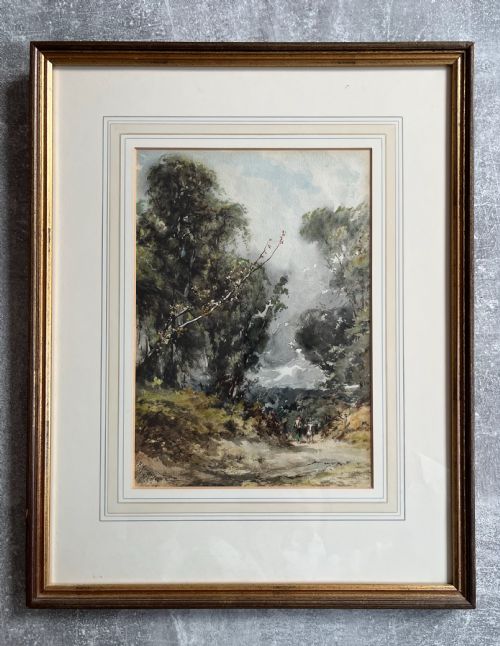
Painters utilised oil paint on canvas or wood panel, applying pigment to build texture in skies, heather and animal coats. Watercolours on paper capture lighter washes and atmospheric mists over lochs.
Many works sit within original giltwood and gesso frames, which provide structural support and ornamental definition to the canvas edges.
Princes and princesses occasionally traded royal formality for a kilt, appearing in painted scenes of Highland hunting expeditions.
What varies in quality
Quality rests in the handling of light, atmosphere and anatomical proportion within the landscape and figures. Superior works convey distinct weather conditions and convincing depth in the terrain, rather than relying on formulaic compositions of cattle and mountains.
The proficiency of brushwork and the preservation of the original canvas, paint layer and frame determine the distinction between standard commercial production and a skilled academic or regional artist's output.
William Beattie-Brown·George Fotherly Hargitt·Thomas Miles Richardson Jnr·William Henry Earp·Tom Campbell·Alfred Fontville de Breanski Jr·George Houston·Henry H. Parker·Robert Watson·William Watson Jnr·Robert Cleminson·George Rankin·Douglas Cameron·Charles Leslie·Vernon DeBeauvoir Ward·Alexander Wellwood Rattray·Everett Watson Mellor·Joseph Knight·William George Tennick·Archibald Kay·Henry Robinson Hall·William Henry Mander·James Kyd·Colin Graeme Roe
The Antique Highland Art Glossary
- Gesso
- A plaster-like mixture applied to wood frames to create a smooth surface for gilding. This material forms the ornate moulded decoration around the edges of Victorian oil paintings.
- Giltwood
- Timber coated with gold leaf or metallic powder. It provides the reflective, decorative border typical of nineteenth-century picture frames.
- Wood Panel
- A rigid flat support made from timber used by artists instead of canvas. Panels provide a stable, firm surface for detailed brushwork in oil paint.
- Watercolour
- Paint consisting of transparent pigment suspended in a water-based solution. Artists applied these mixtures to paper to achieve luminous washes of Highland light and mist.
Antique Highland Art: Frequently Asked Questions
What subjects appear in antique highland art?
These works focus primarily on Scottish topography, featuring recognizable locations like Loch Lomond, Arran and Glen Tay alongside mountainous backdrops. Common motifs include Highland cattle, sheep, red deer, game birds and figures in traditional dress or rural settings.
Artists also depicted passing weather showers, crofts, and lochside scenes. The emphasis remains on the natural terrain and rural life of nineteenth and early twentieth-century Scotland.
How do I date a highland landscape painting?
Dating relies on stylistic markers, artist signatures, framing materials and historical records associated with the canvas or panel. Victorian works often feature heavier, ornate giltwood and gesso frames alongside detailed academic realism, while later pieces show looser brushwork typical of the early twentieth century.
Examining the back of the stretcher, artist inscriptions, and panel stamps can provide further evidence of the period of creation. Comparing the specific style to documented works by known artists helps narrow the decade.
Where were these paintings originally displayed?
Nineteenth and early twentieth-century patrons typically hung these framed works in the reception rooms, drawing rooms and libraries of British townhouses and country residences. They served to project a romanticized appreciation of Scottish scenery and rural heritage.
Today, collectors place them in similar domestic settings, often pairing them with traditional wood furniture and period interiors. Their scale makes them suitable as focal points above mantelpieces or along principal hallways.
Are watercolours as durable as oil paintings?
Watercolours on paper require careful protection from direct sunlight and moisture to prevent fading of the pigments and degradation of the paper support. They are typically framed under glass with conservation mount board to maintain their condition.
Oil paintings on canvas or wood panel offer greater resilience against environmental factors, though both mediums benefit from stable indoor humidity and temperature levels away from direct heat sources.